

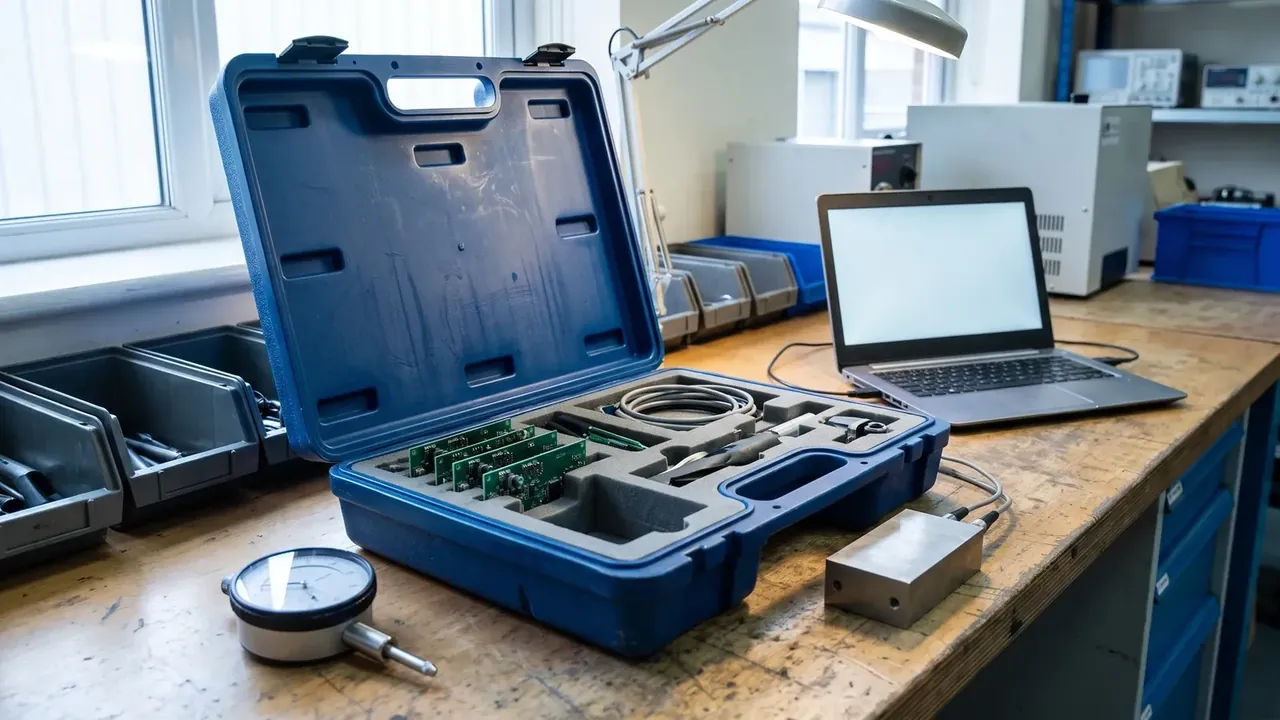
Quick answer: Loaded with the same 24 L of tools, a moulded Tool Box weighs 2.4 kg and carries 24 kg, while a steel chest weighs 9.5 kg for 22 kg of load. The bag is lightest but takes no sharp edges.
Table of contents
- Five Measures That Decide a Tool Box Comparison
- Protection Measured Rather Than Claimed
- Volume Efficiency and Access Time
- Own Weight and Carrying Cost
- Life and Maintenance Cost Per Year
- FAQ
1. Five Measures That Decide a Tool Box Comparison
A Tool Box comparison turns into a price list quickly, and price reflects material, not trade-offs. Split it into five measures: protection, volume efficiency, access time, load-to-weight ratio and cost per year.
| Option | Weight | Price |
|---|---|---|
| Moulded case, 2.8 mm | 2.4 kg | 95 yuan |
| Steel chest, 0.8 mm | 9.5 kg | 180 yuan |
| Soft bag, 1680D | 1.6 kg | 120 yuan |
| Tool cart, five drawers | 65 kg | 1200 yuan |
| Storage bin, 2.0 mm | 1.9 kg | 35 yuan |
2. Protection Measured Rather Than Claimed
Drop testing gives the hardest numbers. Loaded on concrete, one hit per face: the moulded Tool Box keeps its corners from 1.0 m, the steel chest has its door seam out by 3 mm at 0.8 m, and the storage bin splits a base corner at 0.6 m.
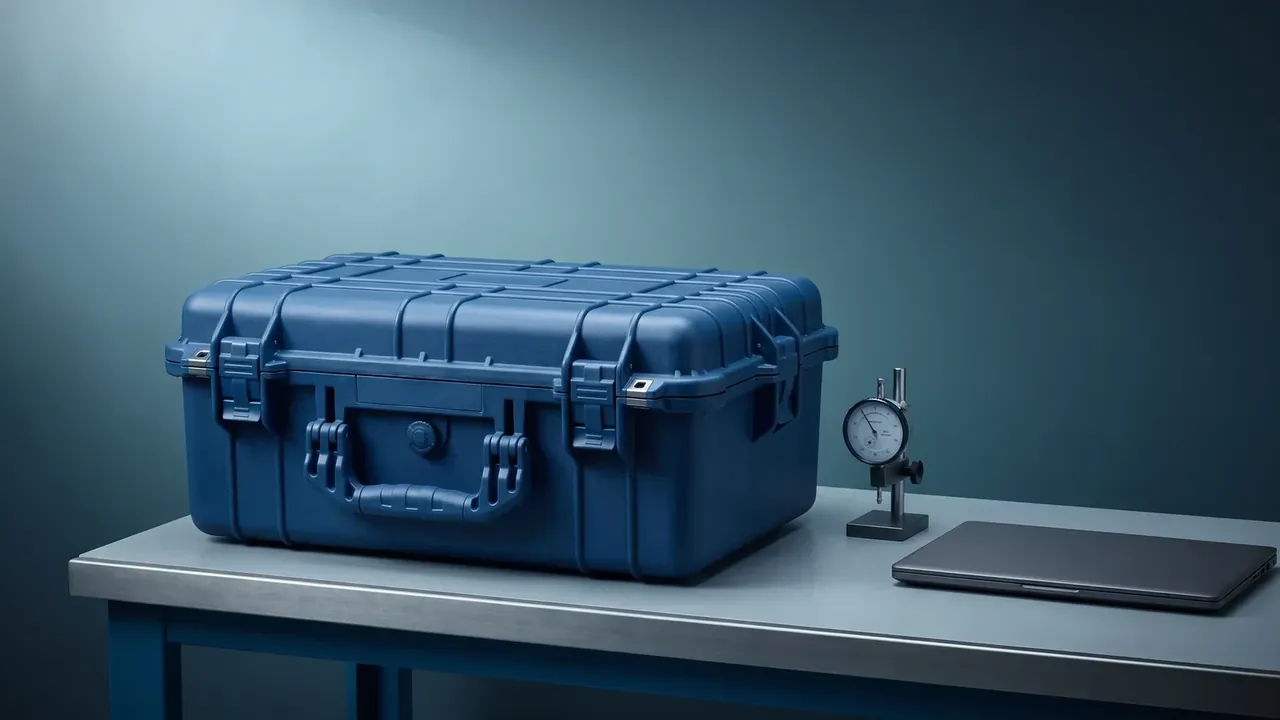
Sealing has three grades: IP54 is a double lip at 25 percent compression, IP65 needs 30, and an unsealed case only blocks dust. A steel chest gap over 0.5 mm lets dust in within four hours, and cold-rolled 0.8 mm steel rusts at the cut edge after 48 hours of salt spray.
3. Volume Efficiency and Access Time
Volume efficiency is net volume over outside volume: 0.66 for the moulded case, 0.52 for the steel chest, 0.74 for the bag, 0.70 for the bin and 0.55 for the cart.
Access splits in two. The bag puts an item back in 2 s but takes 11 s to find it; the cart takes 4 s at the drawer and 18 s to walk back; a moulded Tool Box takes 6 s out and 5 s back.
| Option | Efficiency | Take out | Put back |
|---|---|---|---|
| Moulded case | 0.66 | 6 s | 5 s |
| Steel chest | 0.52 | 8 s | 6 s |
| Soft bag | 0.74 | 11 s | 2 s |
| Tool cart | 0.55 | 4 s | 3 s |
4. Own Weight and Carrying Cost
Load-to-weight ratio reads 10 for the moulded case, 2.3 for the steel chest, 11 for the bag, 6.3 for the bin and 1.8 for the cart. A high ratio is not comfort: at 25 kg the bag sags 12 mm at the base.
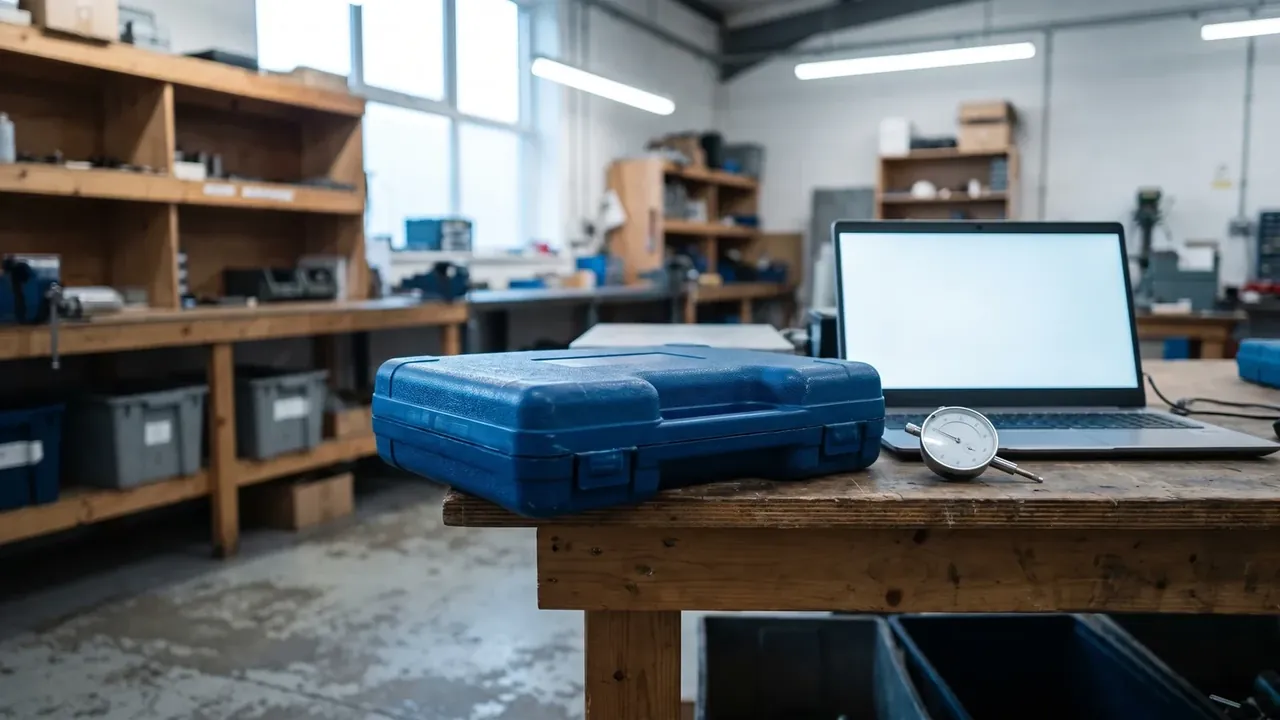
Carrying cost is person-metres. Over 100 m the moulded case runs at 26 kg loaded with no set-down; the steel chest passes 30 kg loaded and needs two people; the cart cannot take stairs.
5. Life and Maintenance Cost Per Year
Over five years the moulded case lands at 19 yuan a year, the steel chest at 84 with four hours of paint, the bag at 80 because it lasts 18 months, the cart at 126 across ten years, the bin at 17.5 over two-year swaps.
| Option | Purchase | Life | Upkeep | Per year |
|---|---|---|---|---|
| Moulded case | 95 yuan | 5 years | None | 19 yuan |
| Steel chest | 180 yuan | 5 years | 0.8 h paint | 84 yuan |
| Soft bag | 120 yuan | 1.5 years | None | 80 yuan |
| Tool cart | 1200 yuan | 10 years | 0.5 h grease | 126 yuan |
| Storage bin | 35 yuan | 2 years | None | 17.5 yuan |
The bin is cheapest until you divide by usable litres: 0.44 a litre against 0.79 for the moulded case, 3.2 for the cart and 4.4 for the bag.
Conclusion
No option wins all five: the bag wins volume, the cart access, the bin cost per year, and a moulded Tool Box settles in the middle on protection, weight and upkeep. Measure the site, the carry distance and the load, and the shortlist collapses to one Tool Box.
This article discusses only the container (case body) side of specifications and design intent, and does not cover any handling, loading or use of the contents.
Related Reading
- Steel tool chests measured against the alternatives
- How tool bag materials differ in practice
- How a tool box lid is built
- Choosing a hardware tool box by duty
Related Products
- 8 Series — Gun Cases; Military Equipment Cases; Camera Equipment Cases; Drone Cases; Watch Cases; Knife Cases; First Aid Cases; Electronics Equipment Cases
- WL8-2812 PP Gun Case — model WL8-2812
- All protective cases and toolboxes: 7 series, 158 models