

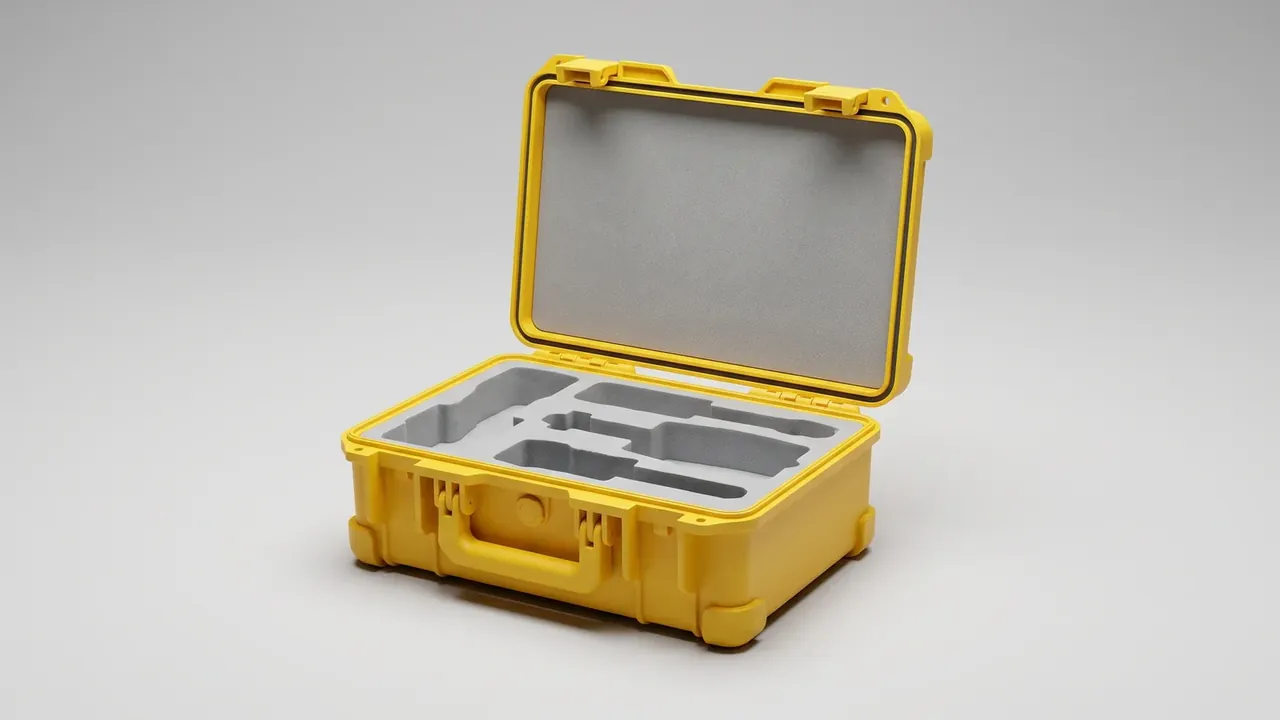
Quick answer: Most tool box procurement problems are settled before the inquiry leaves your desk. State six elements and quotes become comparable; read the tooling charge and the break point to see when a tier gets cheaper; MOQ follows press, colourant and liner.
Table of contents
- What a Tool Box Inquiry Has to State
- Reading a Tiered Quotation
- What Drives MOQ and Lead Time
- Incoming Inspection from Count to Sample
- Contract Terms and Payment Milestones
- FAQ
1. What a Tool Box Inquiry Has to State
A vague inquiry guarantees quotes you cannot compare: any blank is filled by the supplier's habit.
| Element | What to state | If left blank |
|---|---|---|
| Shell and cavity | External sizes, clear size, tolerance | Quoted on the nearest existing mould |
| Wall and weight | Nominal wall, maximum net weight | Thin wall wins on price, loses on load |
| Hardware | Latch count, hinge type, handle load | Downgraded parts priced into your budget |
| Liner | Egg crate, cut foam or tray | Quote excludes the liner |
| Packing | Inner packing, carton grade, pallet | Revised before shipment, with delay |
| Delivery | Destination, batch, terms | Freight basis differs, comparison void |
With all six stated, differences come only from process and margin; weight and hardware are what buyers skip.
2. Reading a Tiered Quotation
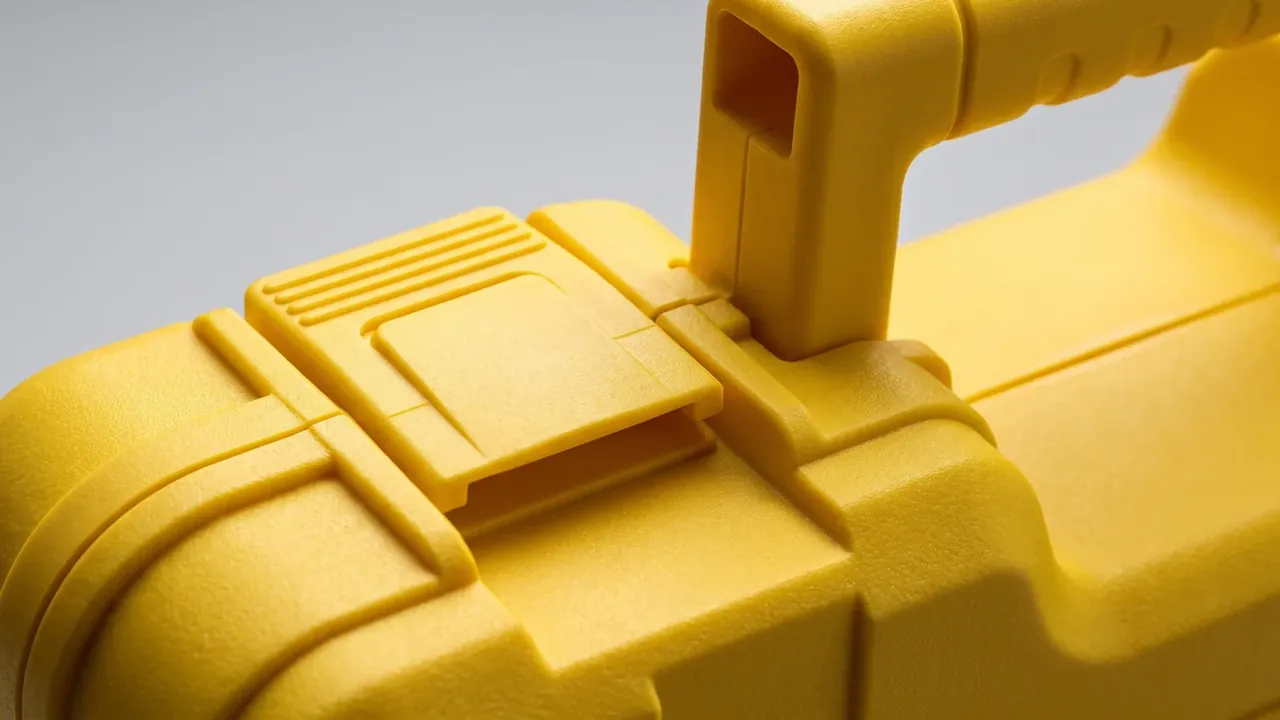
A tool box tier price is not simply cheaper at volume. Tooling is one-off, so doubling the batch halves its share, while unit cost falls as mould changes drop.
| Batch (units) | Unit price index | Tooling per unit | Note |
|---|---|---|---|
| 500 | 100 | 76 | Near MOQ, heaviest share |
| 1000 | 94 | 38 | Share halves, price falls visibly |
| 3000 | 88 | 12.7 | Near process limit |
| 5000 | 85 | 7.6 | Resin and labour now rule |
From 500 to 1000 units the saving is largest because tooling dominates; from 3000 to 5000 the price moves three points, so room sits in resin and packing. At a few hundred units, negotiate how tooling is paid.
3. What Drives MOQ and Lead Time
MOQ follows press, colourant and liner. A large shell needs a 650-tonne machine running one cavity at a 95 s cycle, about 700 units a day, and a mould change takes 2.5 h, so orders under 500 units rarely fit a normal schedule.
Colourant comes in 25 kg packs and one colour covers about 800 shells; below that the remainder is scrapped and the loss lands in the price. A die-cut tray needs 300 units; cut foam needs none.
A normal tool box order runs 25 to 35 days from drawing approval to shipment, sampling takes 7 days, and peak season adds 15 days. Before a trade show, reserve that window.
4. Incoming Inspection from Count to Sample
Inspection starts with the count. Check carton by carton against the packing list and sign only when marks, numbers and quantities agree; a lot without documents waits.
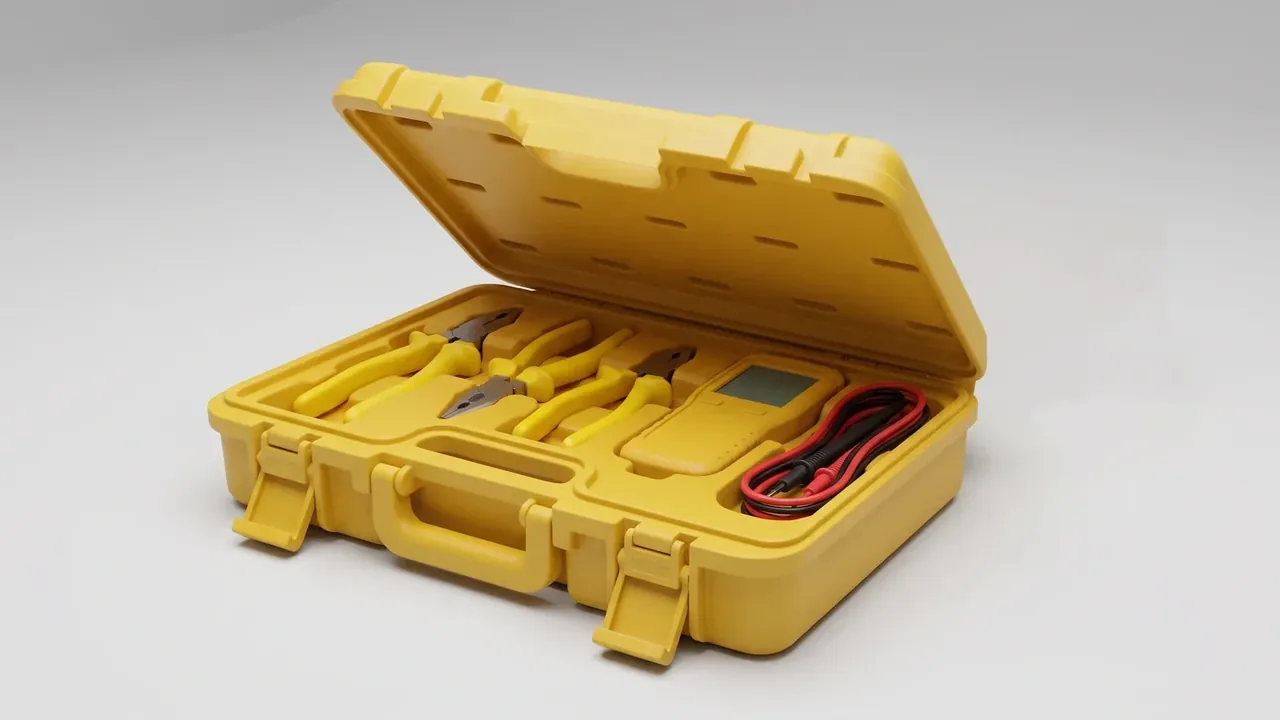
Four sample groups do the work: appearance 20 units for colour, flash and print; dimensions 5; sealing 3 on pressure decay; weight 5 against the quoted net weight, where a 3 percent gap points to a thinner wall or a changed liner.
Retained samples are most often skipped. Keep 2 units per lot for 12 months with lot number and date; in a colour dispute that tool box sample is the evidence.
5. Contract Terms and Payment Milestones
Four numbers matter: quote validity, advance ratio, warranty and late penalty. Quotes hold 30 days; 30 percent with the order and 70 percent after acceptance is common.
| Milestone | Share | Trigger | Documents |
|---|---|---|---|
| Order | 30% | Drawing and sample approved | Contract, sample receipt |
| Before shipment | 0 | Inspection passed | Pre-shipment report |
| Arrival | 70% | Sampling passed | Inspection sheet, invoice |
| Warranty | 0 | Batch defect found | Photos, corrective plan |
Warranty runs 12 months for cracking, latch failure and sealing loss. A penalty of 0.3 percent per day capped at 5 percent gives a date teeth.
Conclusion
Procurement saves money in a fixed order: first by removing rework, then by negotiating price. A complete inquiry makes quotes comparable, the break point shows what is worth attacking, and MOQ follows the press. Fix the inspection sheet, sample and milestones, and tool box procurement becomes a stable supply line.
This article discusses only the container (case body) side of specifications and design intent, and does not cover any handling, loading or use of the contents.
Related Reading
- How to write an inquiry that does not bounce back
- Which points matter in supplier qualification
- Scheduling and delivering mixed orders
- Cost gap between a tool box and alternatives
Related Products
- 8 Series — Gun Cases; Military Equipment Cases; Camera Equipment Cases; Drone Cases; Watch Cases; Knife Cases; First Aid Cases; Electronics Equipment Cases
- WL8-2812 PP Gun Case — model WL8-2812
- All protective cases and toolboxes: 7 series, 158 models