

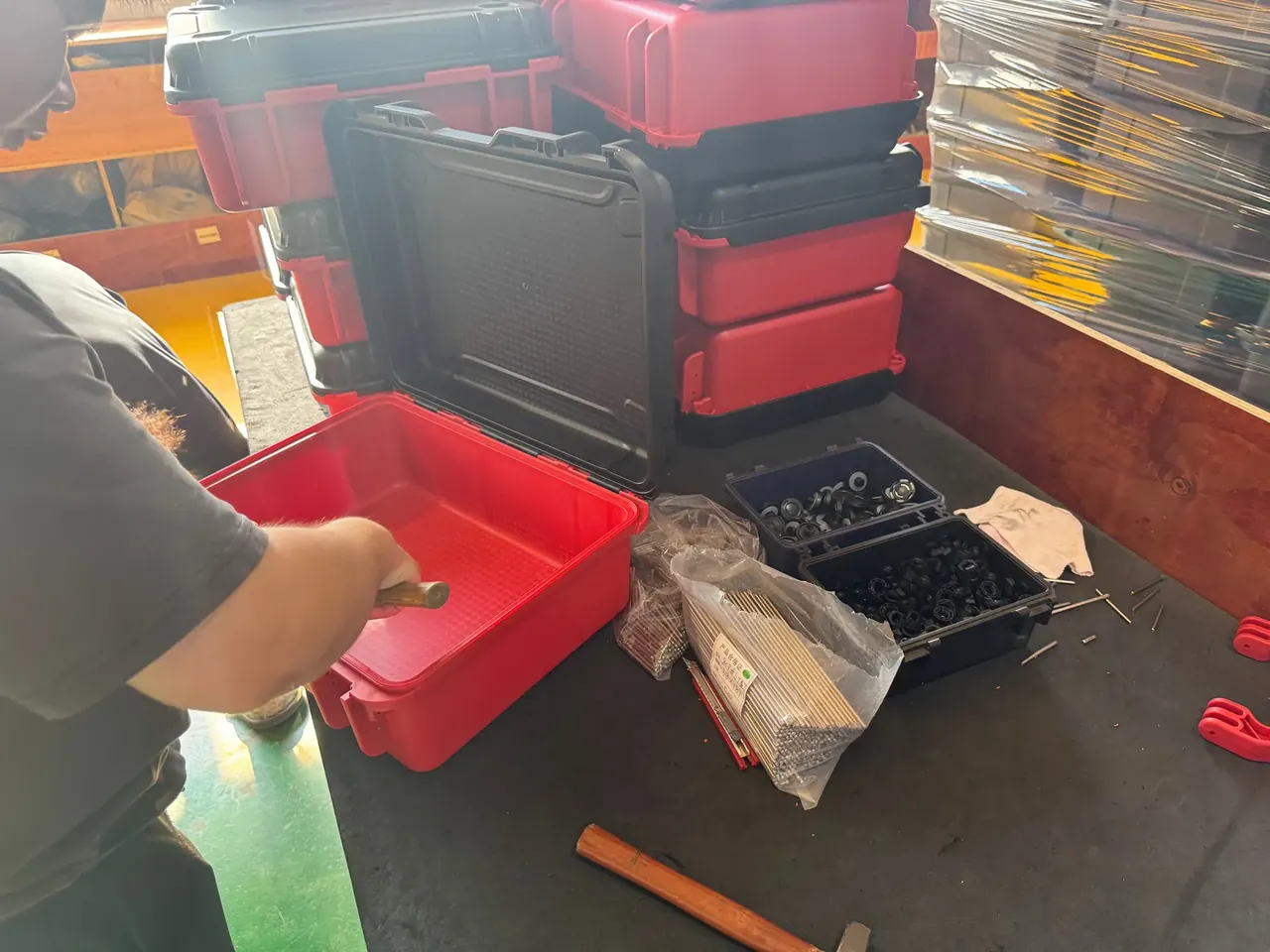
Quick answer: A Tool Carrier earns its cost only where a shift visits three or more positions with the same tool set. Line inspection, field repair, picking, event build, cabling rooms and remote fieldwork repeat that pattern; the test is moves per shift times re-packing minutes.
Table of contents
- Which Sites Really Save Time with a Tool Carrier
- Line Inspection and Changeover: One Unit Carries Three Sets
- Field Service: From the Tailgate to the Machine
- Order Picking and Line-Side Replenishment: One Bin, One Order
- Three Configurations Side by Side
- FAQ
1. Which Sites Really Save Time with a Tool Carrier
Multiply positions visited per shift by minutes spent re-packing at each. Below thirty, a bag does the same job for less; above forty, the lost time is the business case.
Six sites keep returning that verdict: line inspection, field maintenance, picking, exhibition build, cabling rooms and remote work. In all of them the tool list barely changes while the location moves several times a day.
| Site | Moves per shift | Typical load | Deciding feature |
|---|---|---|---|
| Line inspection | 8 to 12 | 16 to 22 kg | Three pull-out trays |
| Field repair | 3 to 6, up to 800 m | 26 to 34 kg | 75 mm wheels, telescopic handle |
| Picking | Over 20 | 8 to 14 kg | One bin per order |
2. Line Inspection and Changeover: One Unit Carries Three Sets
A mixed-model line changes over four times a shift; collecting gauges, wrenches and couplings takes six minutes each time, or twenty-four minutes of searching. Loaded as three sets into one Tool Carrier, the unit rolls to the line and the search falls under forty seconds.
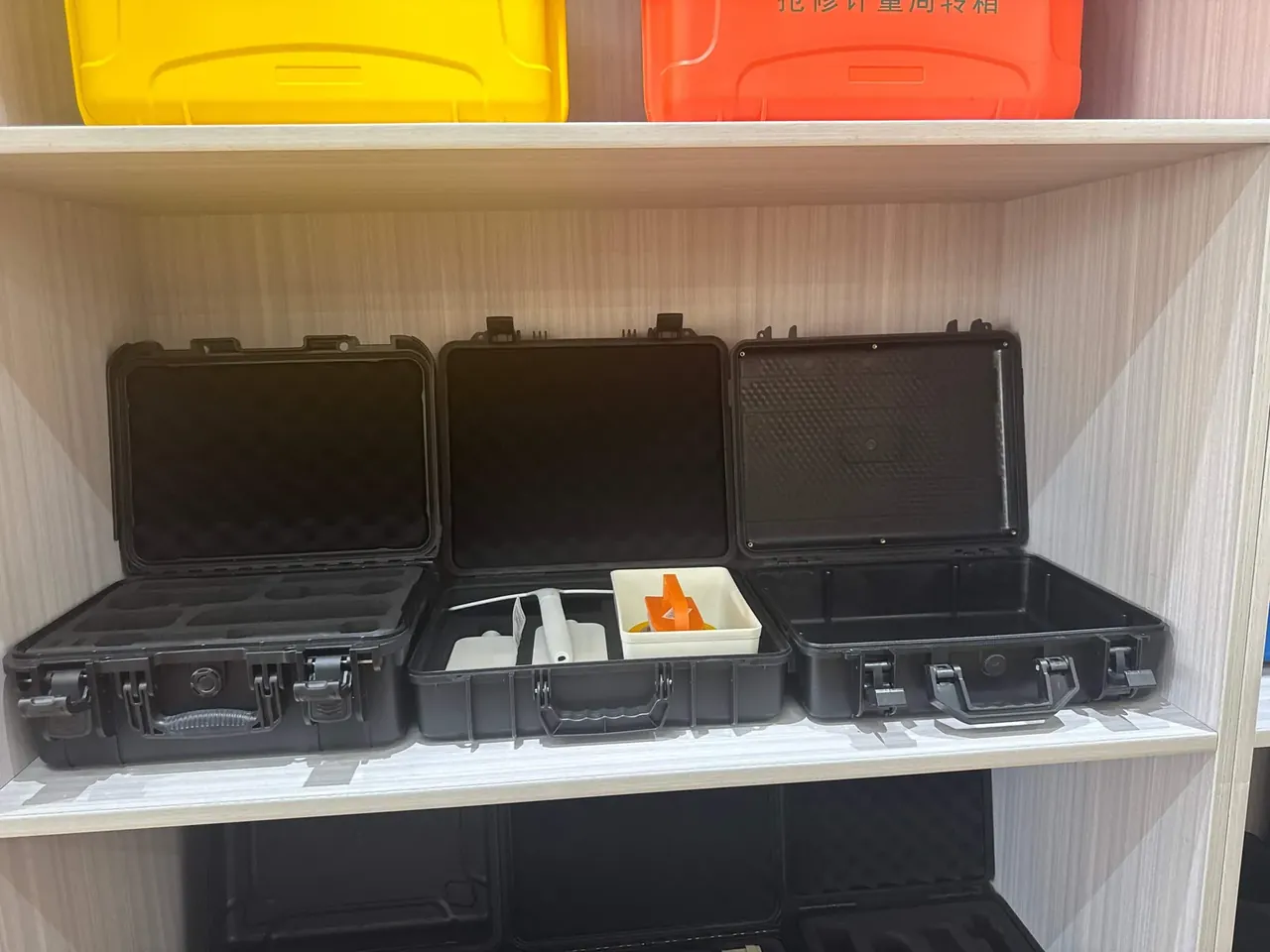
Sets divide by product family: gauges and fixtures share a tray, 30 mm foam between levels, each tray pulling out so only the needed layer travels. The body is 560 × 410 × 230 mm, 6.8 kg empty, carrying 19 kg.
The price is idle volume: three sets ride together and one is used per changeover, so a family running under twice a month gets a removable insert. Too many fixed compartments leave every tray half full.
3. Field Service: From the Tailgate to the Machine
Between workshop and site lie gravel, a stair, a fifteen-degree ramp; the case absorbs repeated impact there, not static weight, and failures cluster at the wheel housings.
The spec needs four figures: wheels of 75 mm clear gravel joints; a loaded unit dropped from 1.2 m keeps every latch closed; sealing reaches IP65; after four hours at minus 20°C the lid does not craze. Height stays under 300 mm, so a crouching technician reaches the bottom layer.
4. Order Picking and Line-Side Replenishment: One Bin, One Order
Picking has the highest move count, over twenty per shift with three or four items per stop. The role shifts from holding tools to holding tasks: one bin per pick list, a 60 × 30 mm label, the unit sent to the line.
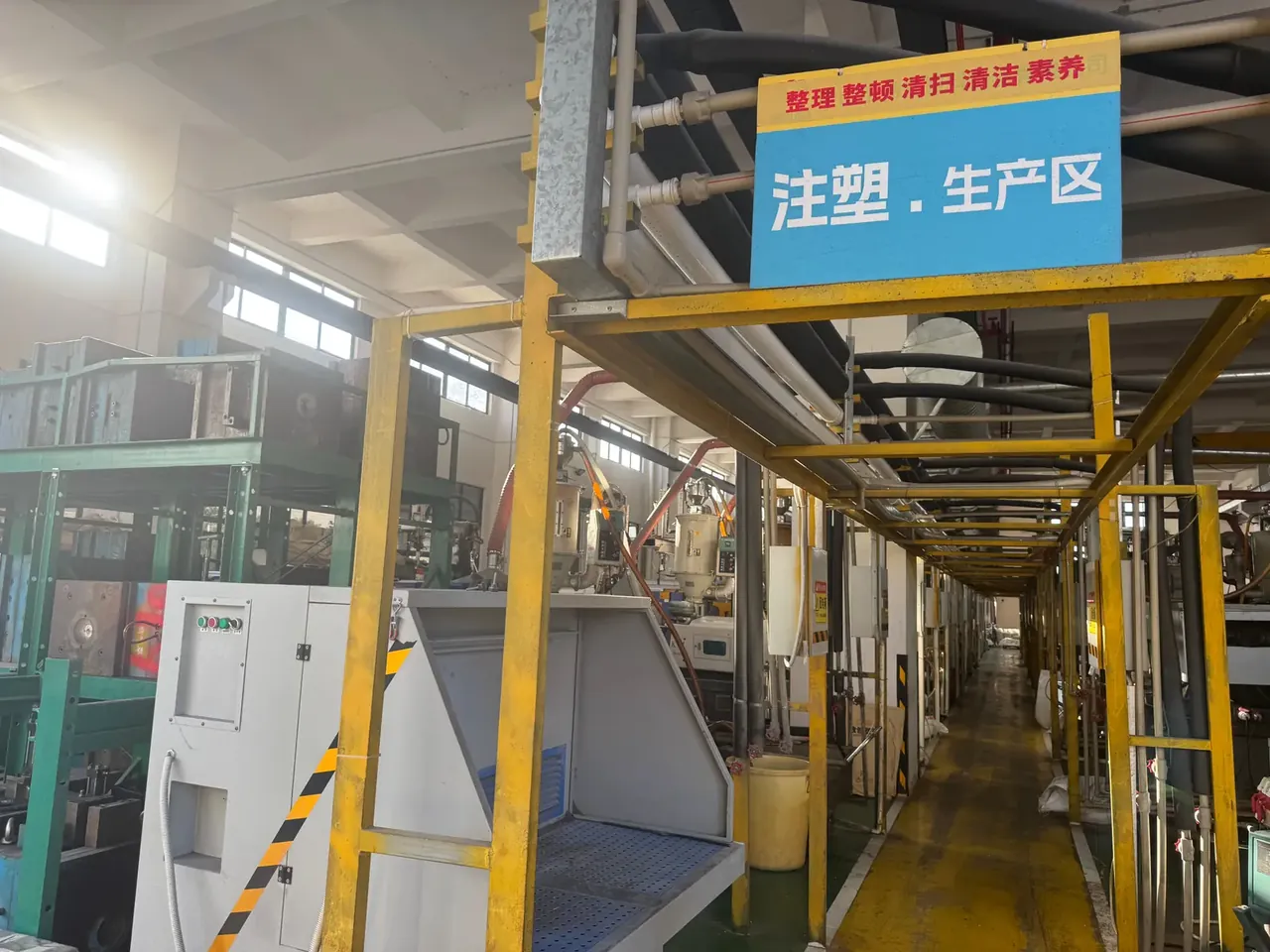
Dividers here are the opposite of foam: thin-walled, washable, removable in one sheet. A 1.5 mm tray moulded single-cavity on a 480-tonne press, 42-second cycle, 6 mm drain holes, dries upside down in ten minutes.
Return trips get forgotten: units that cannot nest come back singly and turnover halves; a stacking lip puts four empties under 720 mm.
5. Three Configurations Side by Side
Three configurations follow from that: under 18 kg by hand suits the light type, family layering the inspection type, a 300 m walk the field type.
Between two, specify the heavier, because ground and weight do not shrink with a category label.
| Item | Light commuting | Line inspection | Field repair |
|---|---|---|---|
| Empty weight | 5.2 kg | 6.8 kg | 11.4 kg |
| Load | 12 to 18 kg | 16 to 22 kg | 26 to 34 kg |
| Carrying | Folding handle | Handle plus side grips | Wheels, telescopic handle |
| Dividers | Single adjustable panel | Three pull-out trays | Two deep trays |
Conclusion
The question reduces to one multiplication: moves per shift times re-packing minutes, passing forty. Inspection needs layering and trays, field repair needs wheels and sealing, picking needs one bin per order. Settle the site first, and a Tool Carrier will not end up an expensive storage box.
This article discusses only the container (case body) side of specifications and design intent, and does not cover any handling, loading or use of the contents.
Related Reading
- How a tool carrier is built and defined
- Setting payload and carrying method
- Fixing a tool carrier inside a vehicle
- Using compartment storage at the workstation
Related Products
- 8 Series — Gun Cases; Military Equipment Cases; Camera Equipment Cases; Drone Cases; Watch Cases; Knife Cases; First Aid Cases; Electronics Equipment Cases
- WL8-2812 PP Gun Case — model WL8-2812
- All protective cases and toolboxes: 7 series, 158 models