

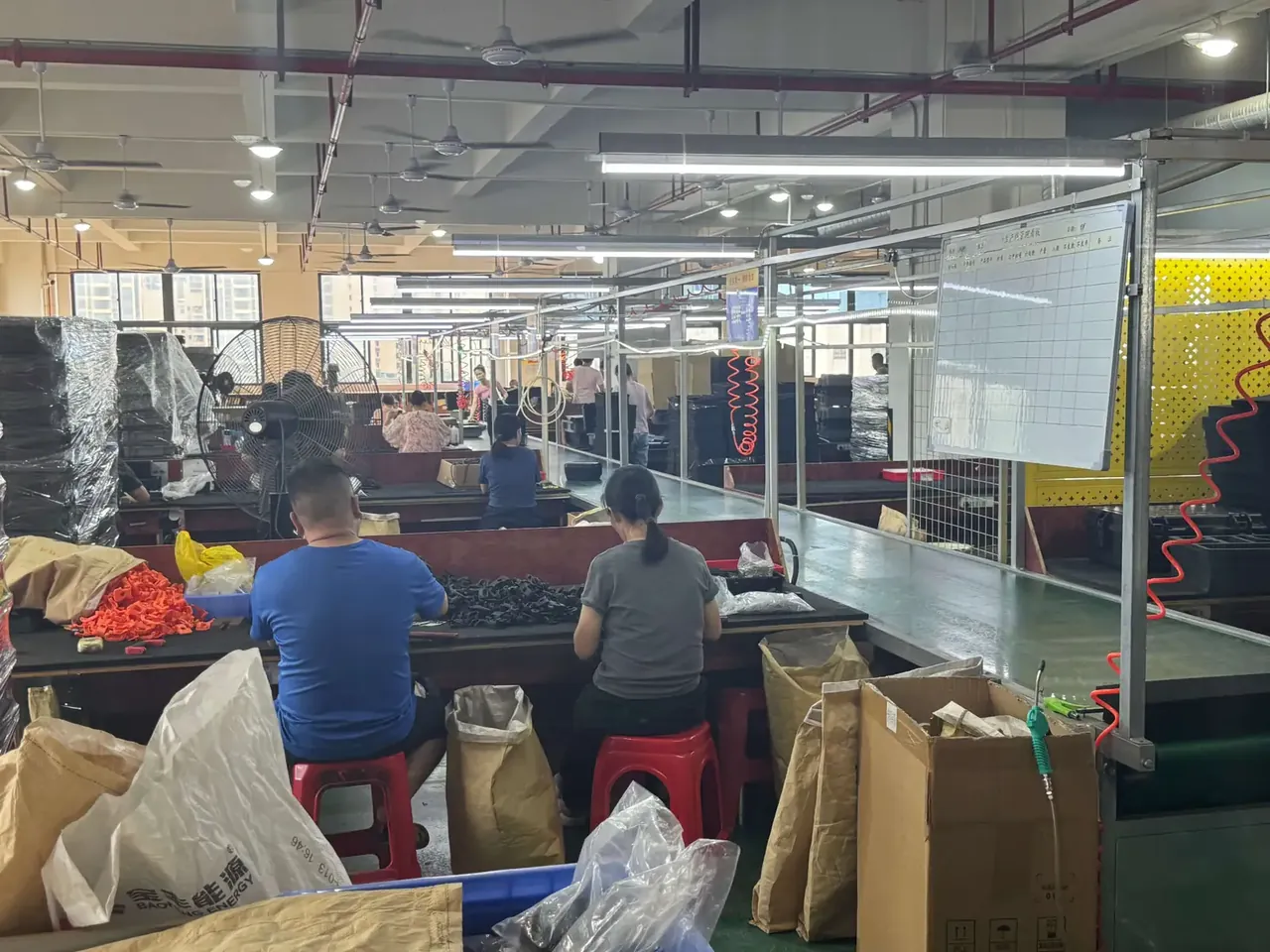
Quick answer: A fair Tool Carrier comparison rests on packing time per shift, draw time per item, footprint and loaded weight ratio. A bag wins on draw speed, a cabinet on capacity, a cart inside one floor, and this one on moving a set.
Table of contents
- Four Dimensions That Make a Tool Carrier Comparison Useful
- Against a Tool Bag: Draw Speed and Shoulder Load
- Against a Cabinet or a Cart: Movement and Footprint
- Against Returnable and One-Way Packaging: The Life Ledger
- A Shortlist for the Four Options
- FAQ
1. Four Dimensions That Make a Tool Carrier Comparison Useful
Compare on packing time, draw time, footprint and loaded weight ratio: the first two decide whether people use it, the last two whether the aisle has room.
Packing is the number buyers skip. A bag is re-laid at every stop and takes twelve minutes; a Tool Carrier preset by position takes one, because tools return to their foam slots. Eleven minutes a stop, five stops a day, is four hours a week.
| Dimension | Tool Carrier | Tool bag | Cabinet | Cart |
|---|---|---|---|---|
| Packing per shift | 1 minute | 12 minutes | None | 3 minutes |
| Draw per item | 4.2 s | 3.1 s | 6.5 s | 5.4 s |
| Footprint | 0.24 m² | 0.08 m² | 0.62 m² | 0.45 m² |
2. Against a Tool Bag: Draw Speed and Shoulder Load
The bag draws faster, 3.1 seconds against 4.2, because there is no lid. That lasts a moment; packing and carrying go against it. A 22 kg bag hangs on two 50 mm straps, and four hours leaves marks until morning.
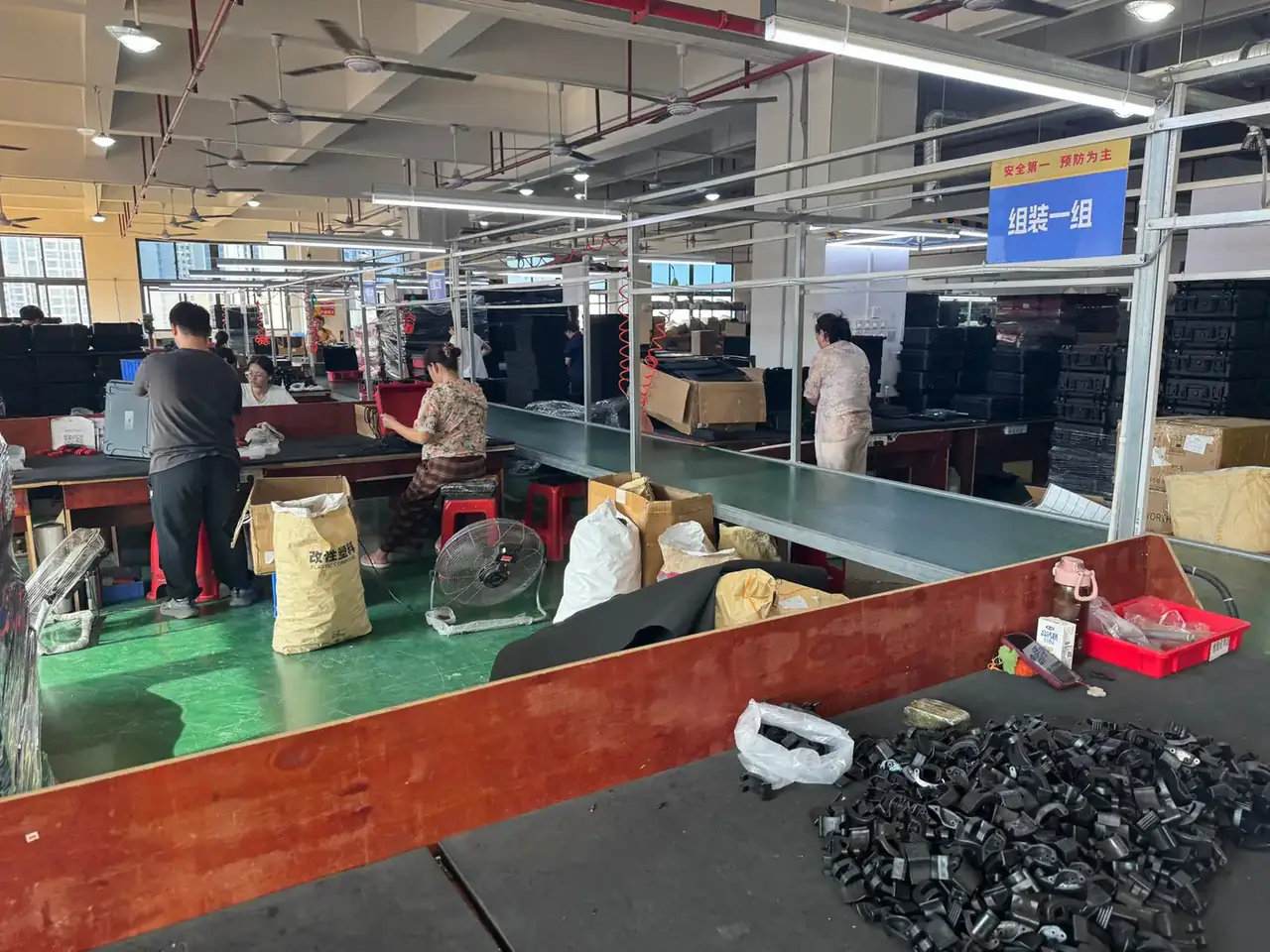
A Tool Carrier hands the load to a handle or wheels: 9.6 kg body, 34.6 kg with 25 kg inside, which is where wheels stop being optional. Judge posture, not payload: one hand to waist height tops out near forty percent of body weight.
The split follows: hands free, take a bag; tools set down and picked by position, take the carrier. Price is not the dividing line.
3. Against a Cabinet or a Cart: Movement and Footprint
A cabinet wins on capacity and loses on movement. A 900 mm double-door unit takes 0.62 m² and passes 120 kg loaded, so castors move it on flat floor only and a forklift covers inter-shop trips. A Tool Carrier takes 0.24 m² with 25 kg.
A cart sits between: 0.45 m², pushable, but drawers slide open and need locking; over a 15 mm threshold an unlocked drawer travels 40 mm.
Travel per shift decides: under 50 m a cabinet wins, 50 to 300 m a cart, beyond 300 m only wheels hold up.
| Option | Footprint | Loaded weight | One move | Workable range |
|---|---|---|---|---|
| Cabinet | 0.62 m² | 120 kg | Forklift | Static |
| Cart | 0.45 m² | 60 kg | 90 seconds | 50 to 300 m |
| Tool Carrier | 0.24 m² | 25 to 35 kg | 25 seconds | Over 300 m |
4. Against Returnable and One-Way Packaging: The Life Ledger
Shipping often compares a Tool Carrier with cartons on unit price. An 18 yuan carton, three thousand a year, comes to 54,000 yuan and is gone; a carrier at 420 yuan, 120 units, comes to 50,400 over six cycles, or 8,400 a year.
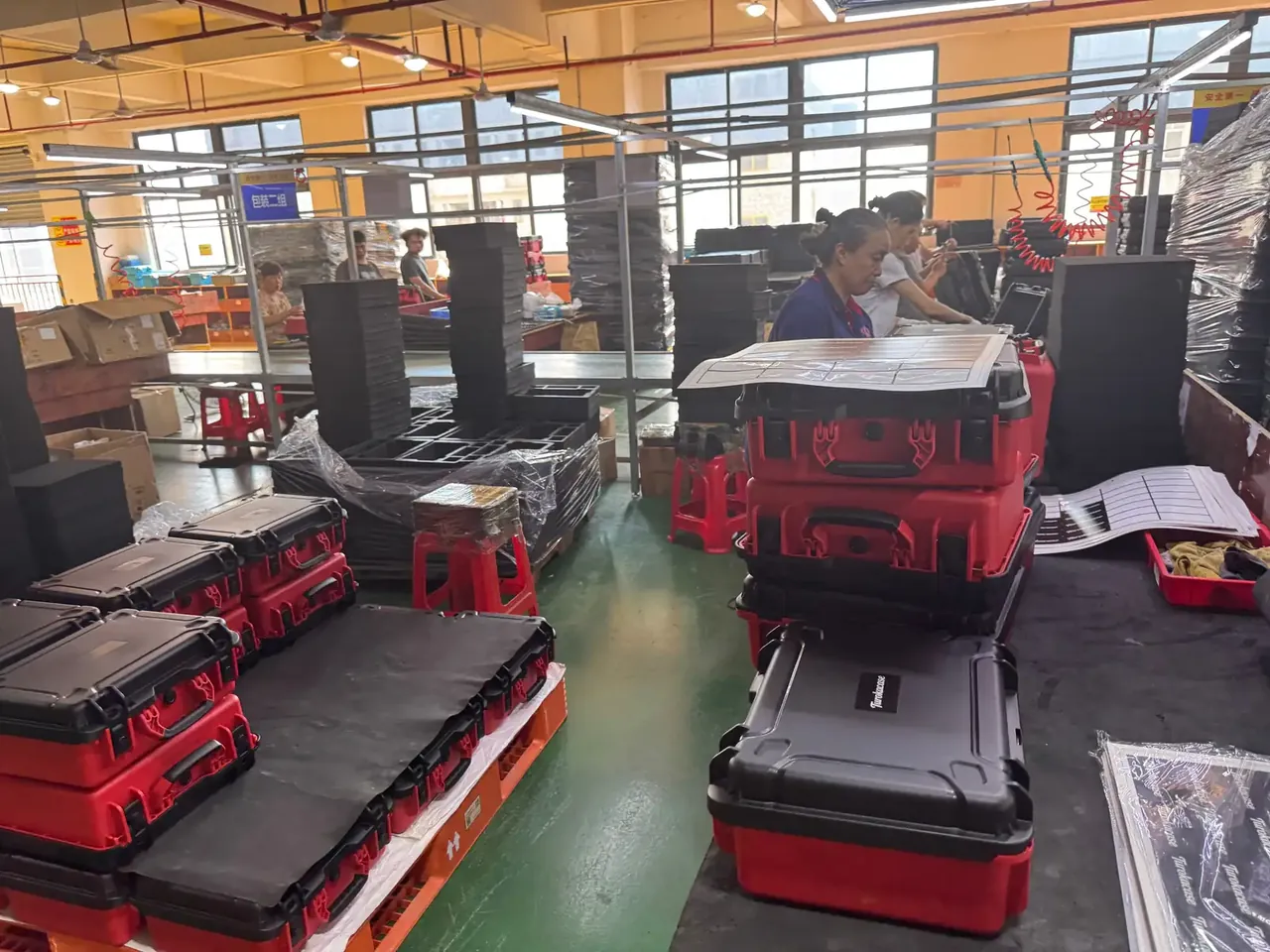
Life sits in three parts: a hinge under 0.4 mm pin clearance after 20,000 cycles, latches without red rust after 168 hours of salt spray, a base dished under 0.8 mm by a 30 kg load left 24 hours. Those three decide six years or eight months.
One-way packaging turns over every eight months, being built for a single trip. Returnable bins recirculate but carry no division, so draw speed falls back to bag level.
5. A Shortlist for the Four Options
Take a bag to carry, a cabinet to leave in place, a cart to patrol one floor, a wheeled Tool Carrier to move a set between areas. Mixing works only when profiles match: the carrier must line up with cart shelves and rack openings, or a second repack returns the minutes. Fix profile, stack height and forklift pocket at the drawing stage.
In short: a bag for the person, a cabinet for a station, a cart for one floor, wheels for anything that crosses a wall.
Conclusion
Four dimensions settle it: a bag for free hands, a cabinet for capacity, a cart for one floor, and a Tool Carrier for moving a whole set between areas. None is more advanced; they cover different distances and packing counts. Measure travel and repacking first, and the purchase will not duplicate the bag on the shelf.
This article discusses only the container (case body) side of specifications and design intent, and does not cover any handling, loading or use of the contents.
Related Reading
- Choosing between a tool box and its alternatives
- Mobile tool cabinets against the alternatives
- Tool bags and what replaces them
- Tool chest specifications and drawer layout
Related Products
- 8 Series — Gun Cases; Military Equipment Cases; Camera Equipment Cases; Drone Cases; Watch Cases; Knife Cases; First Aid Cases; Electronics Equipment Cases
- WL8-2812 PP Gun Case — model WL8-2812
- All protective cases and toolboxes: 7 series, 158 models