

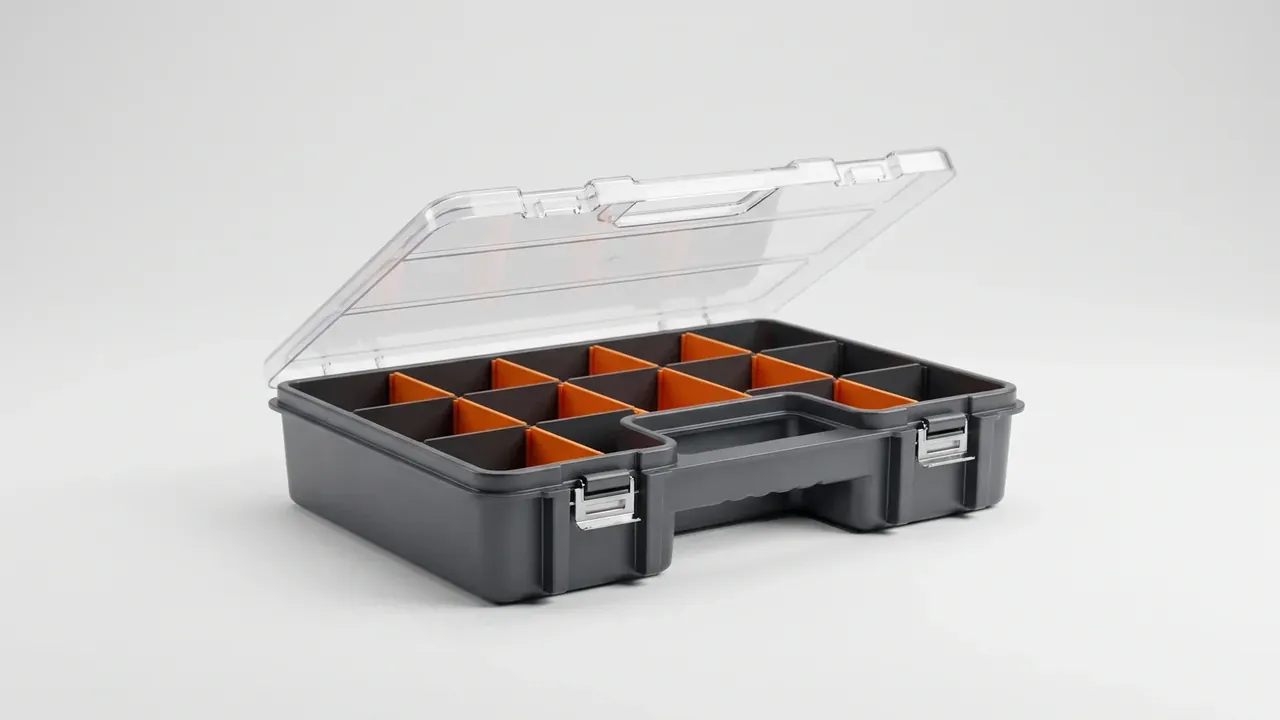
Quick answer: Close the specification before you ask for a price. Compartment count, handle style and latch material all change the mould, so fix dimensions, load rating and latch type in the RFQ first, then split tooling, MOQ and delivery into separate lines. That usually pulls the spread between quotes from about 30 percent to under 8 percent.
Table of contents
- Three Lists to Fix Before You Buy a Tool Carrier
- Breaking a Quotation into a Real Unit Price
- MOQ, Tooling Amortisation and Split Deliveries
- Reading Lead Times and Press Schedules
- Inspection and Payment Terms in the Contract
- FAQ
1. Three Lists to Fix Before You Buy a Tool Carrier
Two tool carriers can share an outer footprint yet differ in compartment count, handle and latch. An RFQ that only says the case must hold a 40-piece socket set gets three stock designs back.
Issue three lists instead: specification for outer size, internal depth and load rating; acceptance for colour, flash, latch force and drop height; commercial for quantities, packing and payment.
Internal depth is the field most often omitted. A 420×320×120 mm case may be only 95 mm deep inside, and a 2.5 mm divider wall instead of 3.5 mm decides whether one more row of tools fits.
| List | Required fields | Usually omitted |
|---|---|---|
| Specification | 420×320×120 mm outer, 95 mm internal depth, 12 compartments | Internal depth and divider wall |
| Acceptance | ΔE ≤ 1.5, 30–50 N latch force, 1.2 m drop | Drop orientation and cycles |
| Commercial | 300 pcs pilot, 2000 pcs production, East China warehouse | Pilot and production split |
300 samples plus 2000 units prices 12 percent above one 2300-piece order.
2. Breaking a Quotation into a Real Unit Price
Most quotes arrive blended; ask for bare shell, assembly, packing and tooling separately.
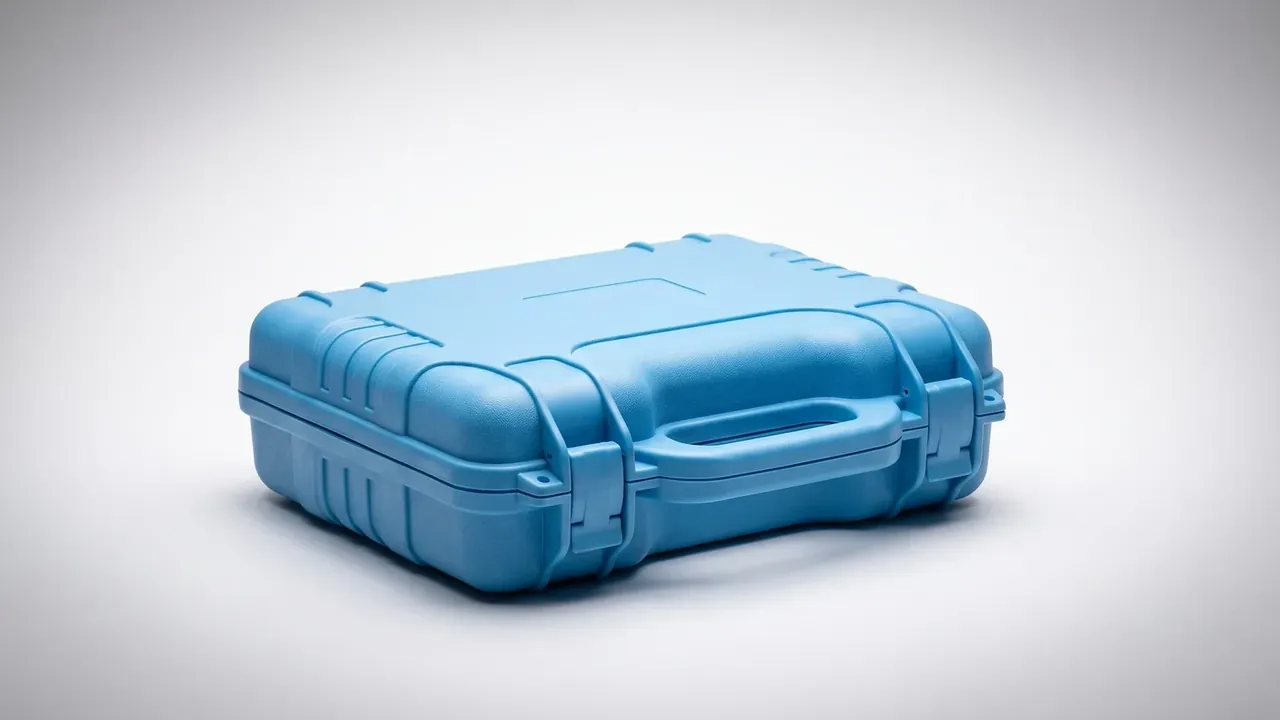
On a 380-tonne press with two cavities at a 45-second cycle, the case takes roughly 480 g of polypropylene. Bare shell to assembled part adds CNY 6 to 9 for dividers, latches and handle. A quote under CNY 3 for assembly usually means the dividers are moulded in one piece, freezing the compartment size.
Align the basis: 13 percent VAT included, delivered to warehouse, one PE bag and a five-ply carton per case.
Weight tells the same story: two cases of identical outer size that differ by 40 g carry about 0.3 mm of wall thickness.
3. MOQ, Tooling Amortisation and Split Deliveries
MOQ is a tooling question in disguise. A new mould quotes at CNY 42,000: over 500 pieces that is CNY 84 each, over 2000 pieces CNY 21 — a CNY 63 swing on one mould. A split delivery adds a second material pull and mould change, typically 3 to 5 percent.
| First order | Tooling per unit | Bare shell | Landed unit cost |
|---|---|---|---|
| 500 pcs | CNY 84 | CNY 46 | CNY 130 |
| 1200 pcs | CNY 35 | CNY 43 | CNY 78 |
| 2400 pcs | CNY 17.5 | CNY 41 | CNY 58.5 |
A first order of 800 to 1200 pieces absorbs most tooling; above 20,000 units a year, spread it over three shipments.
4. Reading Lead Times and Press Schedules
A lead time is a chain: 5 to 7 days of material preparation, 3 of moulding, 2 of assembly, 2 of inspection and packing, 3 to 5 of transport.
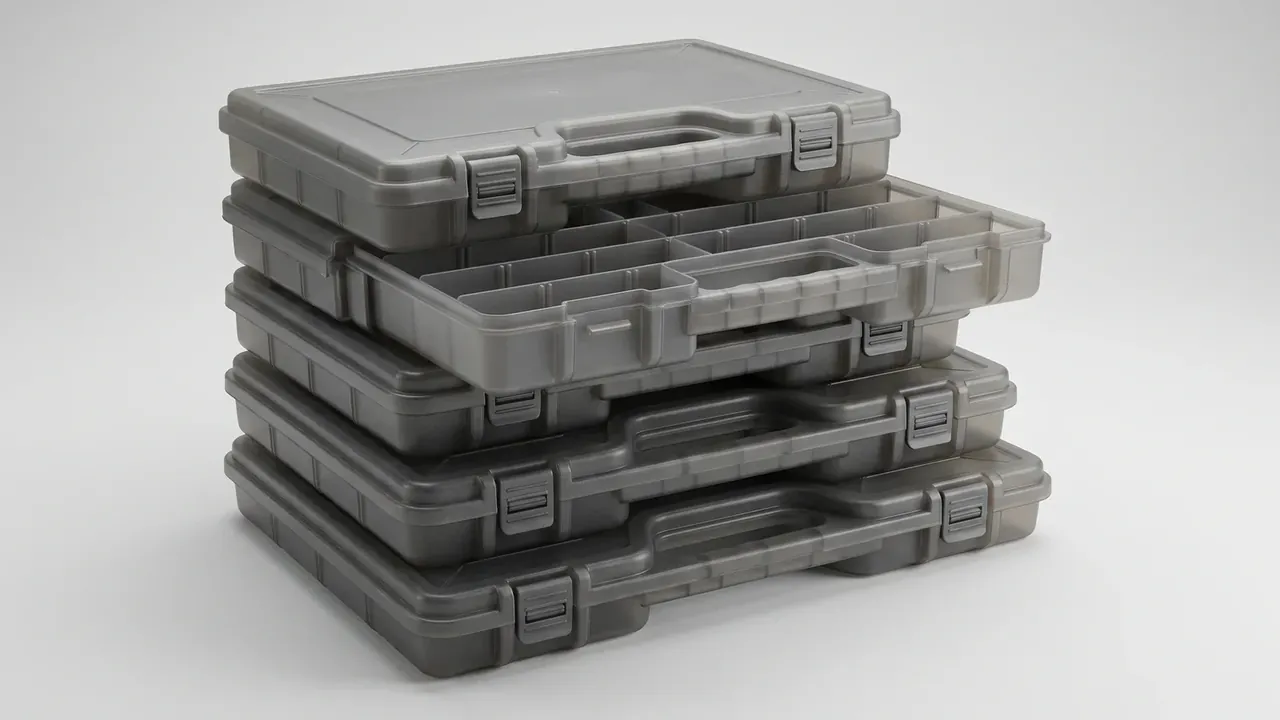
Press tonnage and cavity count expose a real date. A 380-tonne machine with two cavities yields about 900 cases a day, so 30,000 a month on one such machine means orders are squeezed in. September to November is export peak; lock volume before mid-August.
5. Inspection and Payment Terms in the Contract
Inspection terms must be executable: AQL 2.5, colour within ΔE 1.5, latch force 30 to 50 N, no cracking after a 1.2 m drop, no red rust after 48 hours of salt spray.
Tie payment to the report: 30 percent deposit, 60 percent against the bill of lading copy, 10 percent after acceptance.
| Milestone | Share | Document |
|---|---|---|
| Contract signed | 30% | Mould approval and colour chip |
| Before shipment | 60% | Inspection report and bill of lading |
| On receipt | 10% | Incoming sheet and closed NCR |
Batch colour deviation is the supplier's cost; crush damage turns on whether packing followed the five-ply spec.
Conclusion
Buying a tool carrier is mostly a sequencing problem. Close the three lists, force the quotation open, then price tooling, MOQ and delivery separately — most of the 30 percent spread disappears on its own. A well-built RFQ decides the real cost of a tool carrier more than ten rounds of haggling.
This article discusses only the container (case body) side of specifications and design intent, and does not cover any handling, loading or use of the contents.
Related Reading
- How a tool carrier is put together
- Selection points for tool carriers
- How a tool box cover is built
- Portable cases against alternative formats
Related Products
- 8 Series — Gun Cases; Military Equipment Cases; Camera Equipment Cases; Drone Cases; Watch Cases; Knife Cases; First Aid Cases; Electronics Equipment Cases
- WL8-2812 PP Gun Case — model WL8-2812
- All protective cases and toolboxes: 7 series, 158 models