

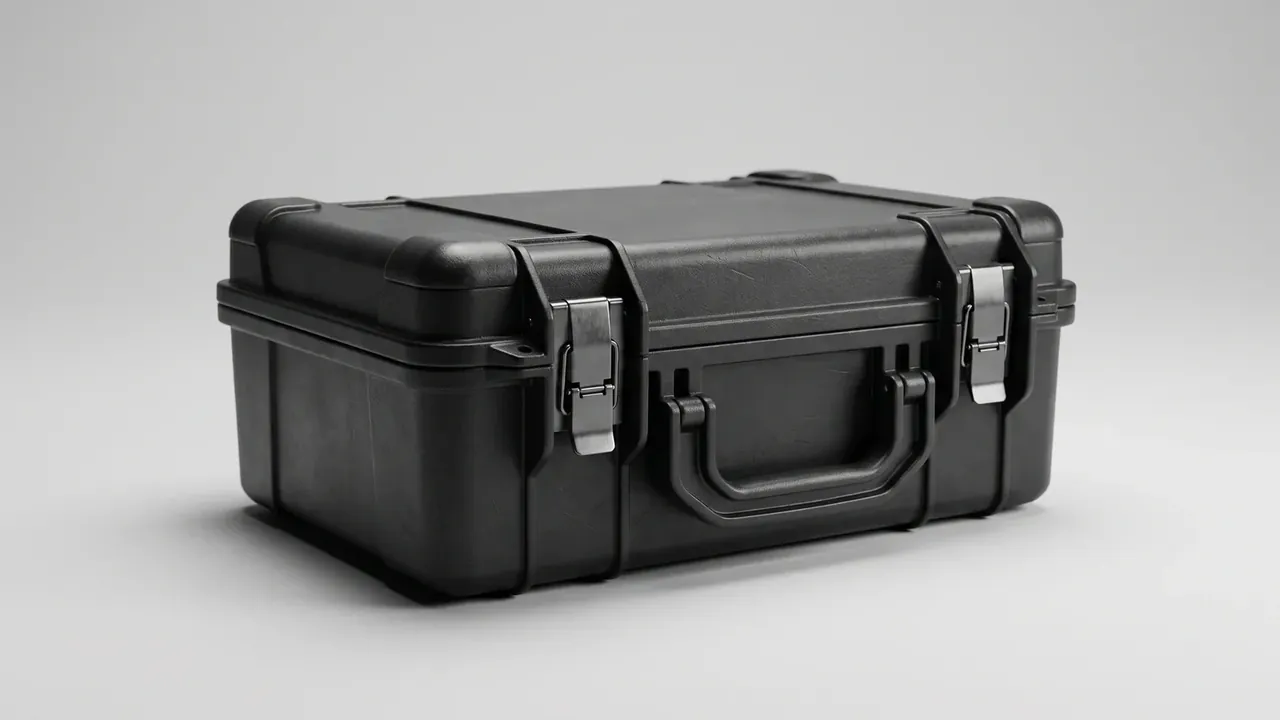
Quick answer: Work in one order: usable internal volume, slots per 10 litres, handle load at full weight, latches and ingress rating, then wall thickness and stacking. Clearing all five before the mould opens costs less than re-cutting foam.
Table of contents
- Five Tests That Decide a Tool Case
- Test One and Two: Usable Volume and Slot Density
- Test Three: Loaded Weight and Handle Load
- Test Four: Latches and Ingress Rating
- Test Five: Resin, Wall and Stacking
- FAQ
1. Five Tests That Decide a Tool Case
A tool case spec sheet runs to a dozen lines, but five decide the outcome: usable volume, slot count, handle load, latch and seal, and wall against stacking. They are ordered: nothing downstream settles until volume and slots fix the shell.
Cost rises along that order: re-cutting foam takes an afternoon, a 600 mm mould four to six weeks. Fix the outside first and corrections stay cheap.
| Test | Pass value | Failure looks like |
|---|---|---|
| Usable volume | 72%–80% of nominal | Lid forced down on the gasket |
| Slot density | 6–9 per 10 litres | Tools strike each other |
| Handle load | 2.5× loaded weight | Cracks at the handle root |
| Latch and seal | Two latches, IP65 | Water entry, latches popping |
| Wall and stacking | 2.8–3.2 mm, three tiers | Sidewalls bow, base collapses |
2. Test One and Two: Usable Volume and Slot Density
Nominal volume is measured outside, usable volume inside, with walls, ribs and the lid recess in between. A 45 litre shell returns 33 to 36 litres once 3 mm walls and a 12 mm recess are subtracted, so tools sized on the nominal figure overfill by a fifth.
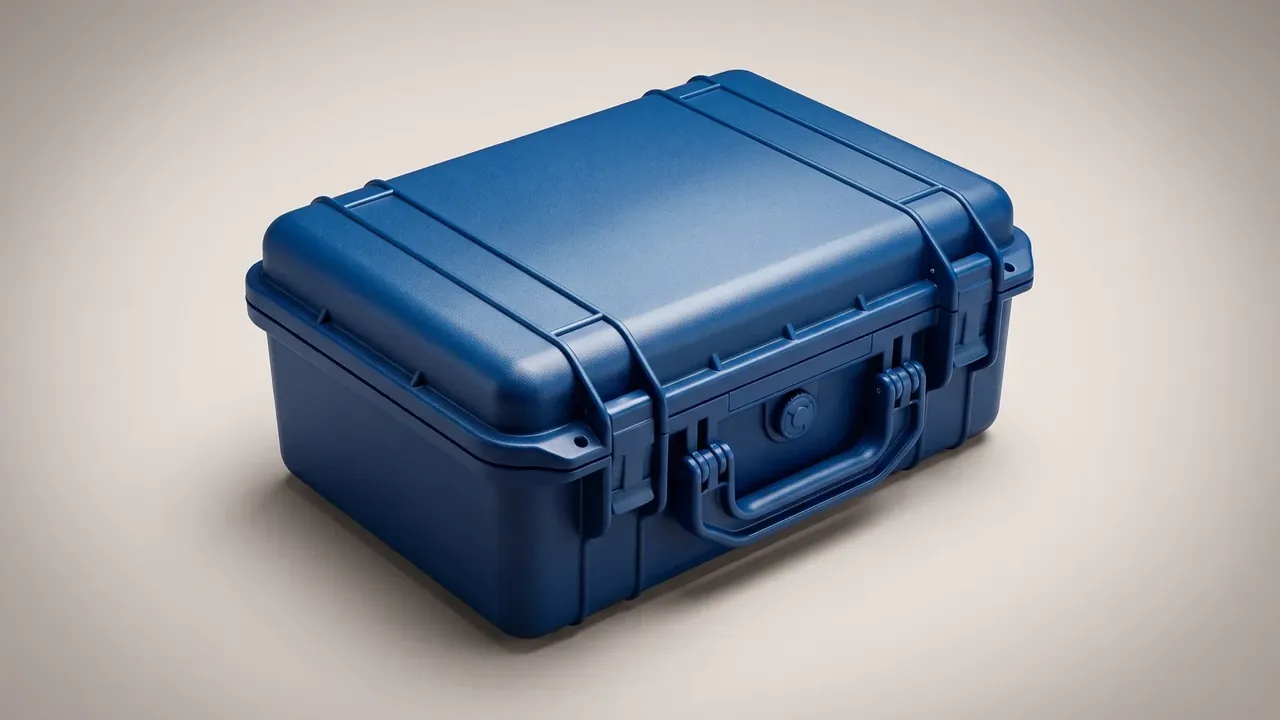
Slots run 6 to 9 per 10 litres: long tools across one position, sockets in blocks of 8 to 12, measuring tools in their own bay with 5 mm clearance. Keep fill at 75 percent for finger room. Doubling slots from 12 to 24 in the same 35 litre shell cuts clear width from 60 mm to 32 mm.
| Volume | Usable cavity | Slots | Suits |
|---|---|---|---|
| 18 L | 13–15 L | 10–14 | Route inspection |
| 35 L | 26–29 L | 18–24 | Machine repair |
| 60 L | 44–48 L | 26–32 | Bench stock |
| 90 L wheeled | 66–72 L | 32–40 | Field support |
3. Test Three: Loaded Weight and Handle Load
The handle fails first: it carries everything plus the dynamic peak. Design to 2.5 times loaded weight, so 18 kg loaded needs a 45 kg static rating, and a 1.2 m drop on six faces must not pull the handle out.
Keep one-person carry under 18 kg. With a 3.5 kg shell that leaves 14.5 kg of tools; beyond it, use a wheeled tool case or a two-person lift with grips at least 300 mm apart. The grip wants 28 mm of section and 25 mm clearance for a gloved hand.
4. Test Four: Latches and Ingress Rating
Two latches serve a 500 mm case, spans under 250 mm; three above 600 mm. One metal draw latch holds about 30 kg, so a pair covers 60 kg against a 45 kg load.
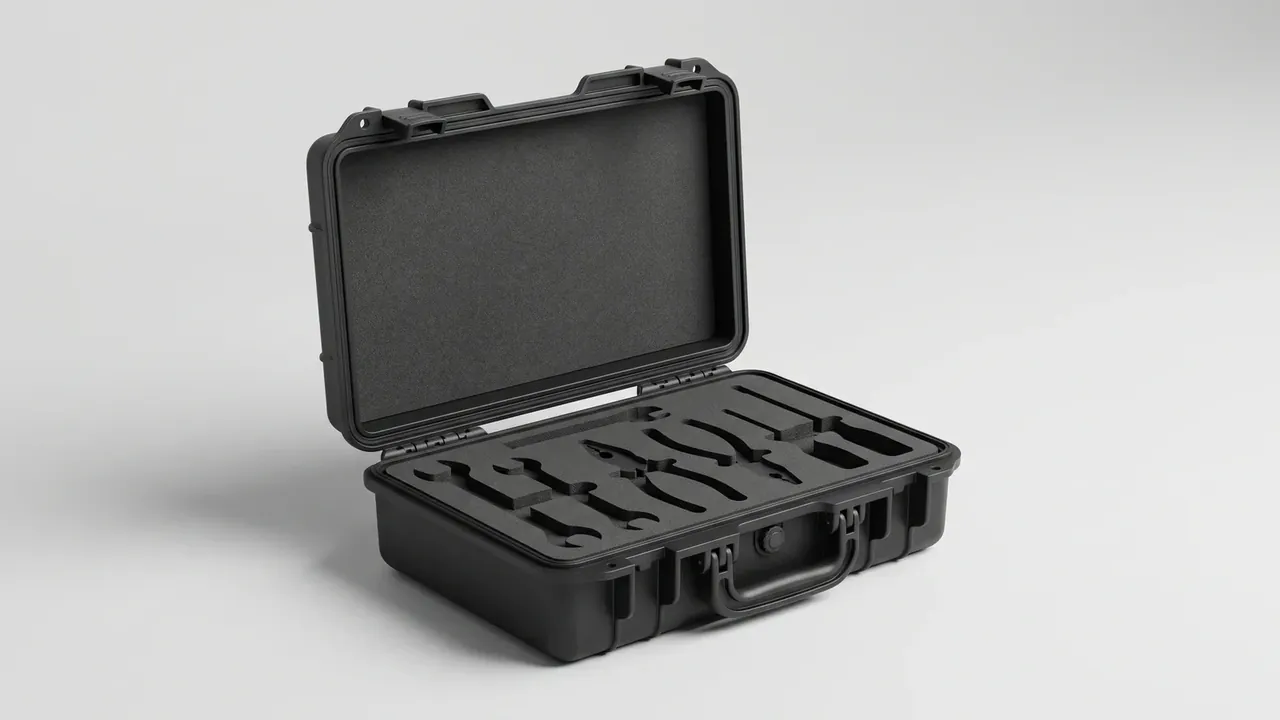
IP65 stops jets and suits most workshops. IP67 means 30 minutes at 1 m and stiffens the opening, so past 80 N fit a relief valve. Hardware should show no red rust after 48 hours of salt spray; a flat gasket lifts out without the hinge.
5. Test Five: Resin, Wall and Stacking
Injection shells run 2.8 to 3.2 mm with ribs every 80 to 120 mm; rotomoulded shells run 4 to 6 mm and weigh a third more. Cold work needs a −20 °C drop test: 5 kg from 1 m without a split corner.
Stack three tiers at 120 kg on the bottom case, never on the handle. At four tiers sidewalls bow 2 to 3 mm and lids stop closing.
| Conflict | Hold | Trade |
|---|---|---|
| Field repair, constant moves | Seal and handle | Slot density |
| Fixed bench, frequent access | Slots, opening force | Ingress rating |
| Warehouse cycling | Stacking and wall | Handle load |
Conclusion
The five tests form one line: volume and slots fix the shell, handle load decides how it travels, latches and seals answer water and dust, resin and stacking decide how long it lasts in a store. A tool case taken through all five still closes cleanly after three years.
This article discusses only the container (case body) side of specifications and design intent, and does not cover any handling, loading or use of the contents.
Related Reading
- Tool box forms, from hand case to chest
- Hardware tool box sizing in three measures
- How to lay out slots inside a tool case
- Tool carriers versus hard cases
Related Products
- 8 Series — Gun Cases; Military Equipment Cases; Camera Equipment Cases; Drone Cases; Watch Cases; Knife Cases; First Aid Cases; Electronics Equipment Cases
- WL8-2812 PP Gun Case — model WL8-2812
- All protective cases and toolboxes: 7 series, 158 models