

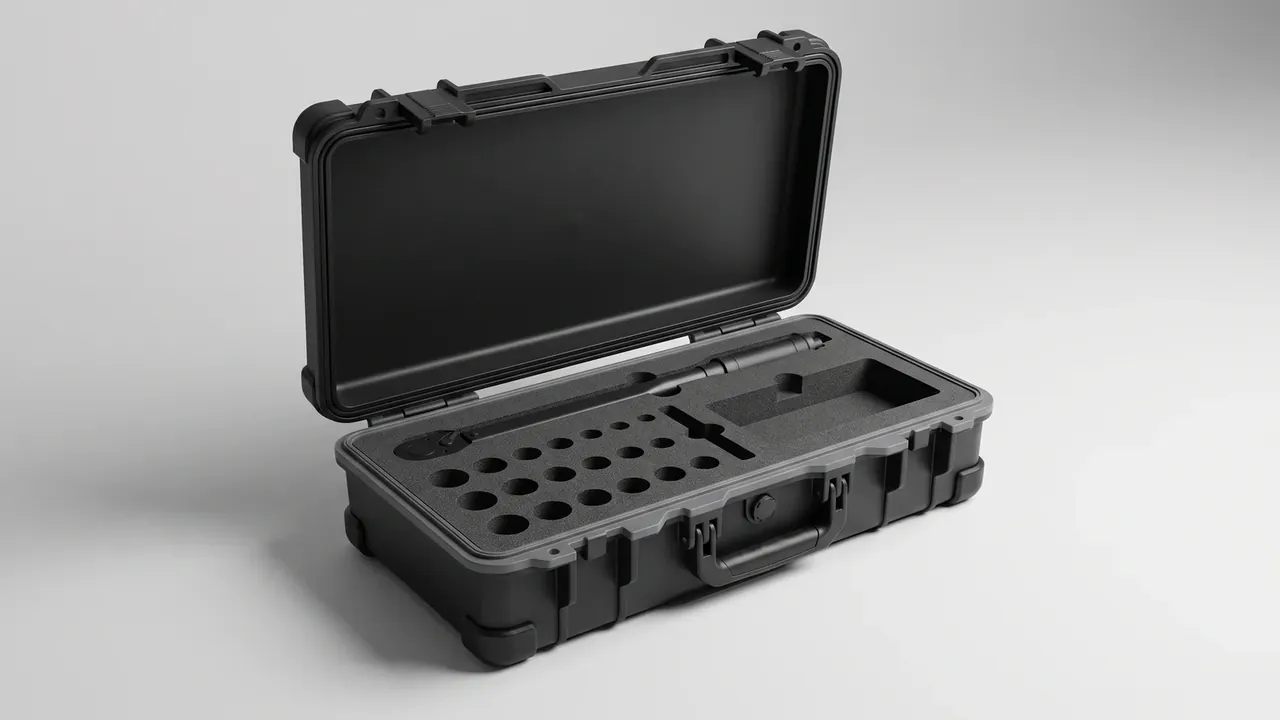
Quick answer: The three ways to build a tool chest differ less in price tier than in failure mode: steel rusts at bare edges, injection splits at clips, rotomolding hides uneven walls. Per-year cost lands within twenty percent; repair separates them.
Table of contents
- Three Tool Chest Building Methods
- Cost and Life: The Per-Year Difference
- Corrosion and Weight: Salt Spray and Kilograms
- Repairability and the Scrap Line
- Where Each Method Fits
- FAQ
1. Three Tool Chest Building Methods
Every number follows from wall thickness. Steel folds 0.8 to 1.2 mm cold-rolled sheet, then spot welds and powder coats it. Injection shoots polypropylene into a steel mold at 220 C, leaving 2.5 to 3.5 mm walls. Rotomolding spins LLDPE powder in an aluminum mold near 260 C until it fuses into a seamless 4 to 8 mm shell.
A steel mold starts in the tens of thousands, an aluminum rotomold an order of magnitude less, and folding needs only a brake. Injection therefore carries the highest minimum order.
| Item | Steel | Injection | Rotomolded |
|---|---|---|---|
| Typical wall | 0.8 to 1.2 mm | 2.5 to 3.5 mm | 4 to 8 mm |
| Forming heat | Cold folding | 200 to 240 C | 250 to 280 C |
| Structure | Welded seams | One piece, clips | One piece, seamless |
| Main failure | Bare-edge rust | Split clips and bosses | Uneven walls, warping |
2. Cost and Life: The Per-Year Difference
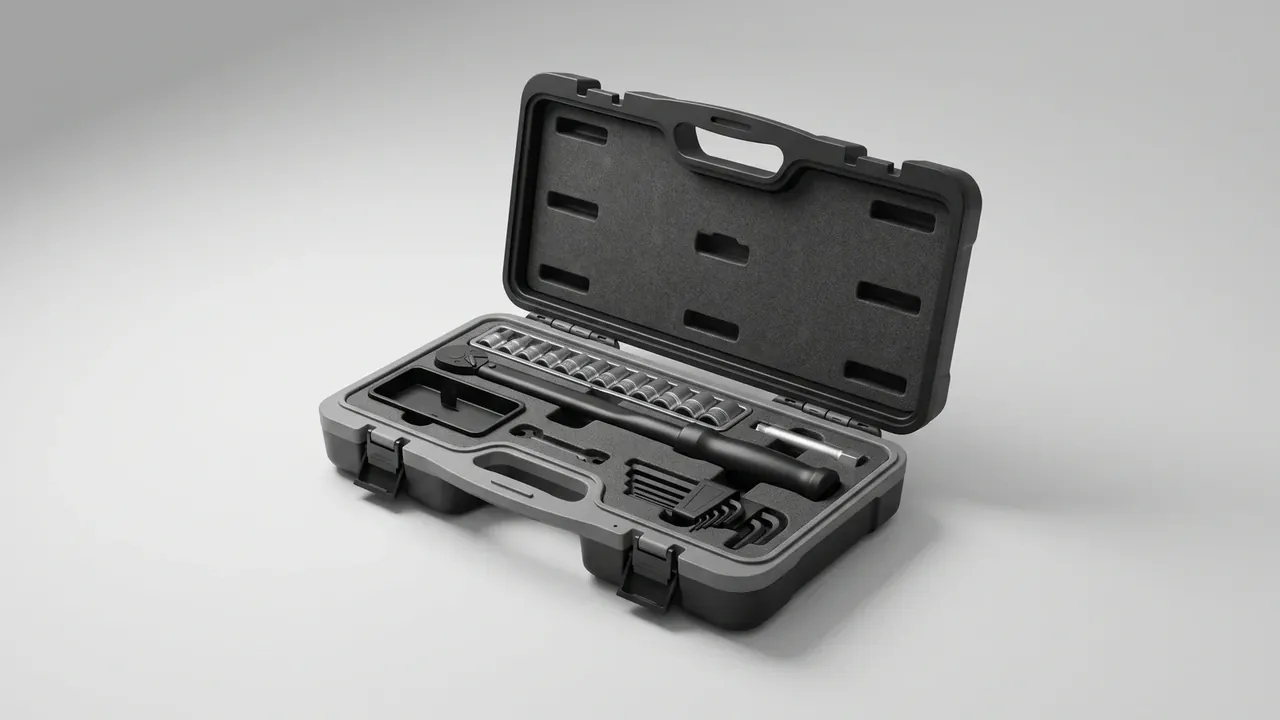
Price means nothing until spread across years. Yardstick: a 600 by 400 by 220 mm interior, twenty cycles a day indoors, price plus repairs over years served.
| Metric | Steel | Injection | Rotomolded |
|---|---|---|---|
| Price index | 100 | 70 | 160 |
| Typical life | 8 years | 6 years | 12 years |
| Cost per year index | 12.5 | 11.7 | 13.3 |
A longer life does not guarantee a lower total: a rotomolded tool chest costs far more up front and only pulls level through twelve years, while injection is cheapest per year and pays with one extra repair. The real split is in-house repair, because downtime costs more than the chest did.
3. Corrosion and Weight: Salt Spray and Kilograms
Corrosion is decided at exposed faces, not by coating thickness. Steel shows white rust at 48 hours of salt spray and fails first at sheared edges and punched holes. Rotomolded LLDPE looks unchanged after 500 hours but chalks under two years of sun. Injection sits between: no rust, same UV and cold-impact weakness.
| Metric | Steel | Injection | Rotomolded |
|---|---|---|---|
| Neutral salt spray | White rust at 48 h | No rust, UV sensitive | Beyond 500 h |
| Weight, same size | 9.5 kg | 4.2 kg | 7.8 kg |
Weight lands on handling: a 9.5 kg steel tool chest forces a regrip on the second tier, a 7.8 kg rotomolded unit lifts one-handed, and the 4.2 kg injection lid sags about 2 mm stacked three high.
4. Repairability and the Scrap Line
Repairability is the column most comparisons skip. A dented steel panel is flattened with a mallet and backing block, bare spots recoated, a loose hinge given new rivets, a stripped lock boss a backing plate. Strength returns close to original.
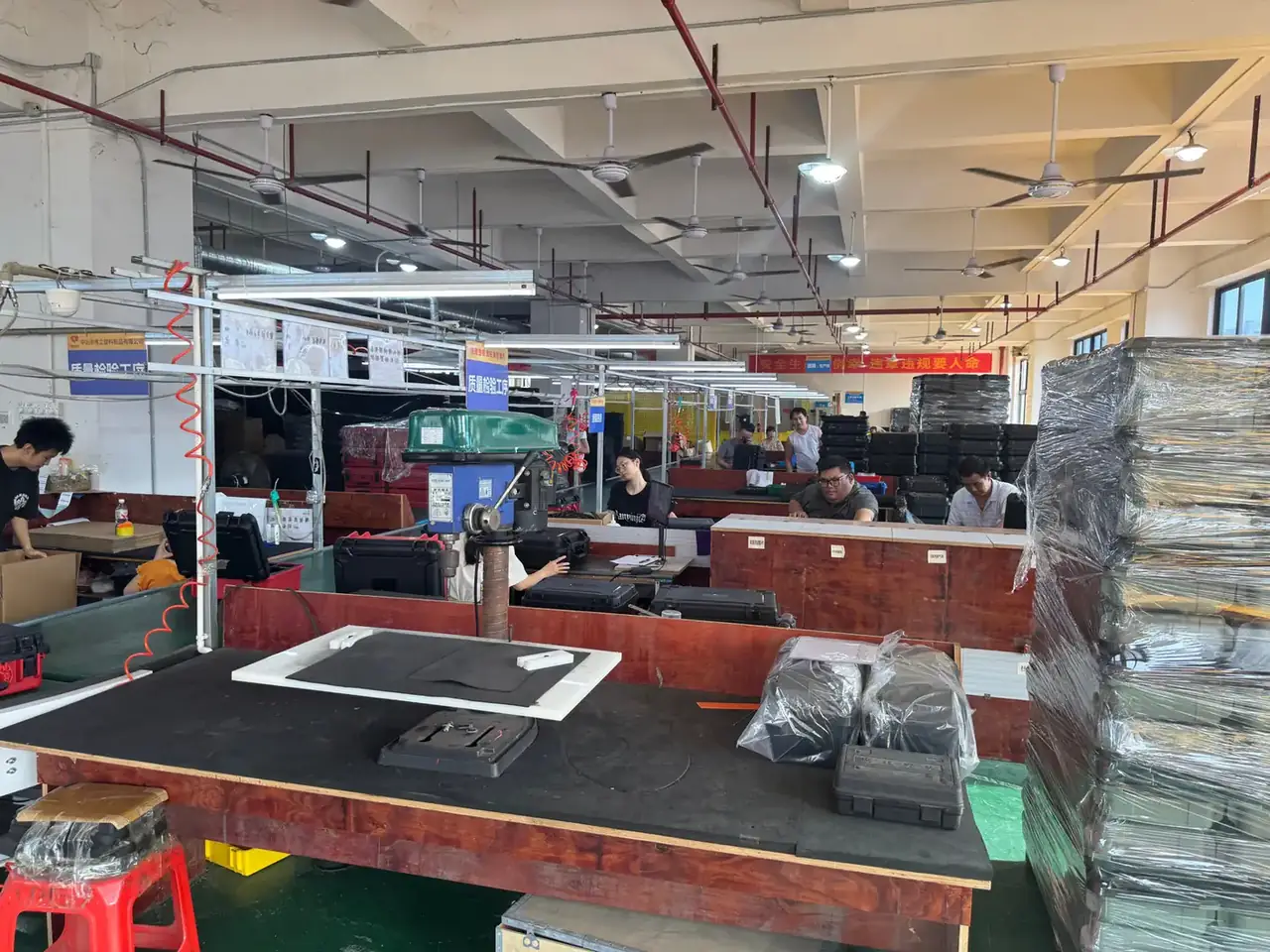
Injection fails here: a hot-melted polypropylene crack reaches half the base strength and splits again, and broken clips have no replacement part, so the unit goes. Rotomolding takes hot-air welding with an LLDPE rod, keeps about seventy percent of strength, and re-taps above 5 mm.
Write the limit down: scrap at a crack past 30 mm, a crack crossing a hinge or lock seat, or a second weld in one spot.
5. Where Each Method Fits
Fixed benches and drawers favour steel; its stiffness keeps a drawer steady at two-thirds extension, paid for in weight and edge maintenance.
Mobile work and cold rooms point to rotomolded: 4 to 8 mm walls absorb impact and stay elastic at minus 20 C, at the price of cost and thin spots near 3.5 mm. Injection suits large batches and mild rooms; humid shops see stress cracking within six months.
Conclusion
No method wins outright; only the match to site conditions does. Wall thickness, salt spray hours, weight and repair path, read together, avoid the second purchase price-only shopping invites. A tool chest stops being a price ranking.
This article discusses only the container (case body) side of specifications and design intent, and does not cover any handling, loading or use of the contents.
Related Reading
- Tool chest configurations for workshop and vehicle use
- Tool chest dimensions and wall thickness
- Metal tool chest versus alternatives
- Rust control and daily care for metal chests
Related Products
- 8 Series — Gun Cases; Military Equipment Cases; Camera Equipment Cases; Drone Cases; Watch Cases; Knife Cases; First Aid Cases; Electronics Equipment Cases
- WL8-2812 PP Gun Case — model WL8-2812
- All protective cases and toolboxes: 7 series, 158 models