

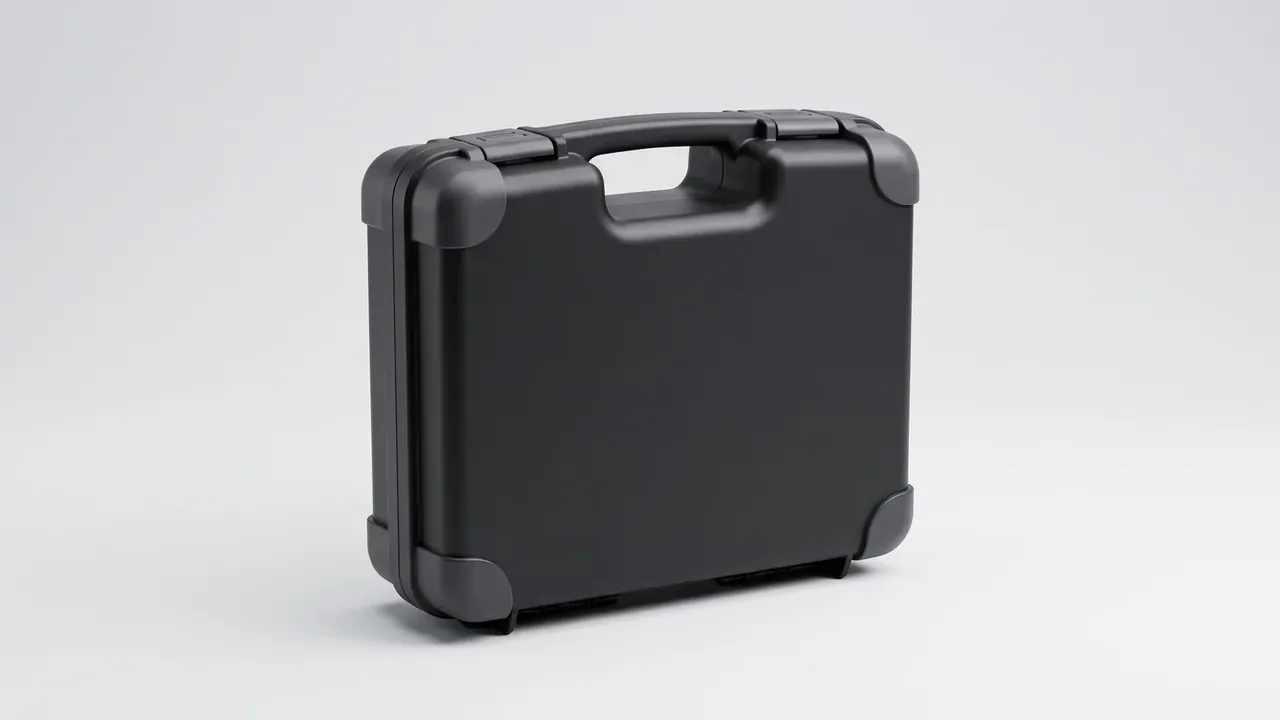
Quick answer: On a volume tool chest order most of the price spread is not machining cost. It sits in how tooling is amortised, where the minimum order quantity lands, and how lead time is scheduled.
Table of contents
- Six parameters a tool chest enquiry must carry
- Reading a quote: tooling, piece price, tiers
- MOQ and how tooling amortisation works
- Lead time from tool build to shipment
- Incoming inspection and batch traceability
- FAQ
1. Six parameters a tool chest enquiry must carry
An enquiry reading only "we need 1000 units" returns quotes you cannot compare. Six parameters go out together: dimensions and tolerance, rated load, material and wall thickness, drawer count and partitioning, lock type, packaging and marks.
| Parameter | What to specify | If you leave it out |
|---|---|---|
| Dimensions | plus or minus 1.5 mm, height over castors | quoted on a near-enough tool |
| Rated load | cabinet and per drawer, separately | wall thinned, disputes at inspection |
| Wall thickness | grade, nominal and lower deviation | regrind blended in, colour shift |
Specified to that level, quotes become comparable: a thirty percent spread on one sheet is wall thickness or lock type, not generosity.
2. Reading a quote: tooling, piece price, tiers
A usable quote splits into four blocks: tooling, material, machining, freight. A single total price reopens the negotiation at every change.
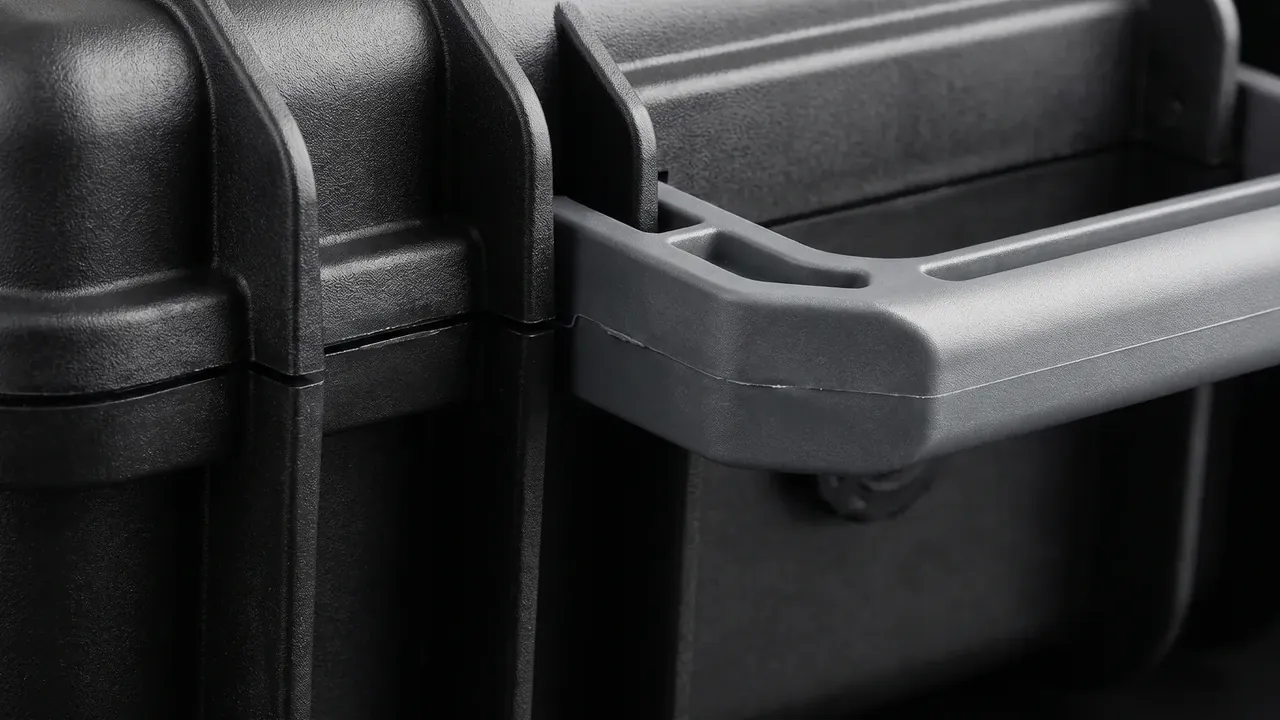
Tooling must be a separate line with ownership stated: buyer-owned and held by the supplier, or transferred once amortised. Otherwise the tool cannot move and you are locked to one price level.
| Lot size | Piece index | Tooling share |
|---|---|---|
| 500 units | 94 | 170 CNY |
| 1000 units | 88 | 85 CNY |
| 3000 units | 83 | 28 CNY |
The negotiation point is the knee: from 500 to 1000 units the piece price drops six points and the tooling share halves; beyond that payment terms matter more.
3. MOQ and how tooling amortisation works
A minimum order quantity is the economic floor of a tool. Injection tooling for a chest body runs 80,000 to 150,000 CNY, so below 500 units amortisation alone sinks the piece price.
The arithmetic: tooling divided by lifetime volume, plus piece cost, set against a tool-free process. Under 300 units rotomoulding or folded sheet often wins — forty percent more per piece, no sunk tooling.
Keep the first order and replenishment in separate clauses: open the tool on 500 units, then call off 200 a batch each quarter. Trial shots belong in the first order, since three trials consume 30 to 50 units, billed inside it or separately.
4. Lead time from tool build to shipment
Lead-time disputes come from treating production time as delivery time. Drawing to goods-in is six milestones; the quote usually covers production alone.
| Milestone | Days | What gets confirmed |
|---|---|---|
| Drawing release and DFM | 7 | wall thickness, draft, partitioning |
| Tool build | 45 | tool steel, cooling circuit |
| Trial and tool change | 15 | three first-off samples |
| Production | 25 | 120 units a day |
| Inspection | 3 | 80 units sampled |
| Sea freight | 28 | booking, stack layers |
Two items decide whether the schedule holds: tool steel and press tonnage. Grade 718 against P20 doubles tool life; an undersized machine forces lower pressure and widens wall tolerance.
Peak season needs a buffer: March and September push schedules back 10 to 15 days. Payment follows the same logic — thirty percent to open the tool, forty after first-off approval, thirty against the bill of lading.
5. Incoming inspection and batch traceability
Nobody unpacks a volume delivery unit by unit. At level II, AQL 2.5, a thousand-unit lot samples eighty pieces for appearance, dimensions, lock function and drawer travel.
Traceability lives on the packaging: a batch number per carton, resolvable to moulding date and resin batch, so colour shift quarantines one batch rather than a warehouse.
The commonest non-conformities are wall thickness below deviation, short drawer travel and shallow bolt engagement; the first two fall to a caliper and tape. Hold five percent retention until three months after delivery.
Conclusion
A volume tool chest order is half decided when the enquiry goes out: vague parameters make quotes incomparable, unclear tooling ownership locks you in, and an unscheduled lead time leaves delay as the only option.
Put the six parameters, the amortisation sum, the six milestones and the sampling rule into one document, and a tool chest quote becomes comparable while a delivery date becomes enforceable.
This article discusses only the container (case body) side of specifications and design intent, and does not cover any handling, loading or use of the contents.
Related Reading
- Reading tool chest specifications
- Tool chests in workshops and repair bays
- Metal and plastic tool chests compared
- Portable plastic tool box materials compared
Related Products
- 8 Series — Gun Cases; Military Equipment Cases; Camera Equipment Cases; Drone Cases; Watch Cases; Knife Cases; First Aid Cases; Electronics Equipment Cases
- WL8-2812 PP Gun Case — model WL8-2812
- All protective cases and toolboxes: 7 series, 158 models