

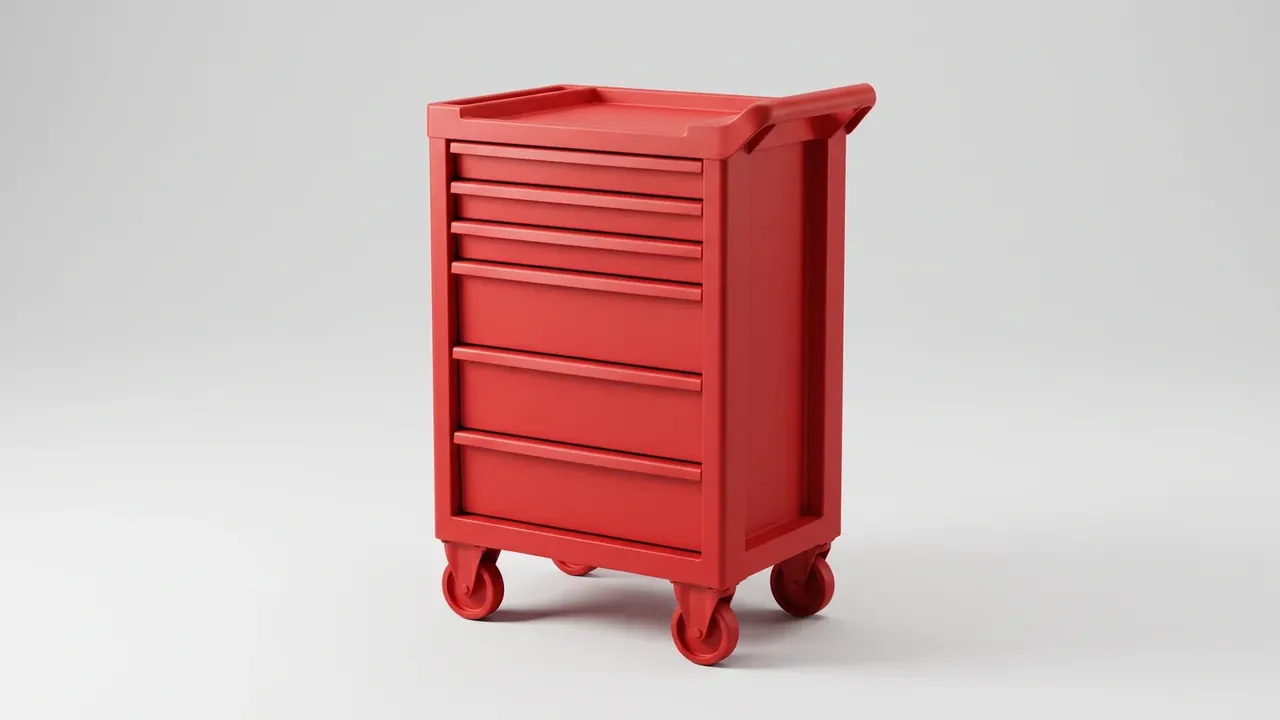
Quick answer: A tool chest is rarely rejected over appearance. It is rejected over three invisible numbers: the proof multiplier and residual set in a load test, the static pull and bolt engagement of the lock, and the salt-spray hours behind a coating claim.
Table of contents
- Where tool chest acceptance criteria come from
- Load testing: static, cyclic and offset
- Lock grades: from tamper evidence to pry resistance
- Salt spray: where the coating line is drawn
- Drop and vibration: judging a unit after transport
- FAQ
1. Where tool chest acceptance criteria come from
There is no global mandatory standard for a tool chest. Acceptance rests on three sources: the buyer's incoming rule, the methods a supplier cites, and the carrier's packaging requirement. When they disagree, the argument narrows to two sentences — which multiplier to load at, and how many salt-spray hours pass.
Write every clause as a decision sentence: specimen, loading method, hold time, measuring point, pass threshold.
| Check | Method and hold | Pass line |
|---|---|---|
| Static drawer load | 1.5x rating, 24 hours | set under 2 mm, read 1 hour after unload |
| Cyclic drawer load | 5000 cycles, 18 per minute | travel loss under 3 mm |
Sample at level II, AQL 1.5: fifty units per five-hundred lot; destructive items draw three.
2. Load testing: static, cyclic and offset
Static testing is usually ruined by timing. Read straight after unloading and elastic recovery inflates the number; read a day later and creep has set in. Fix the reading one hour after unload and suppliers become comparable.
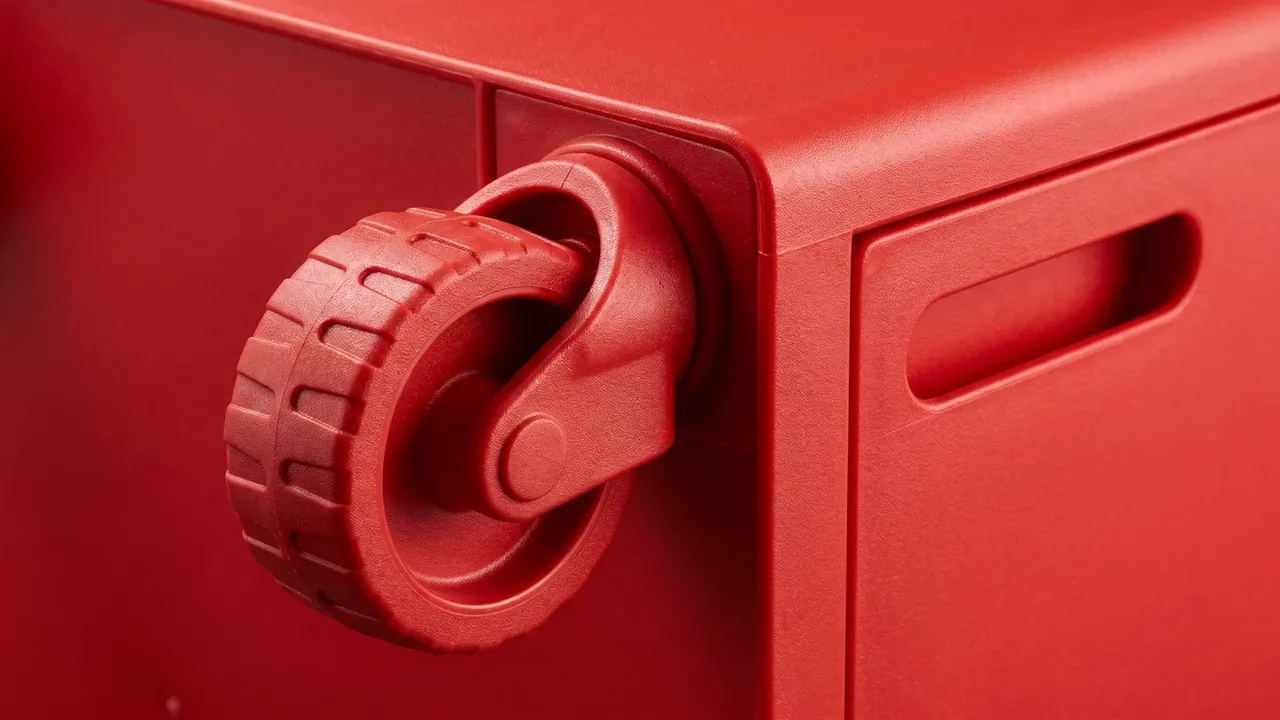
Five thousand cycles equal twenty pulls a day for eight months. The verdict is travel loss: past 3 mm of retreat the ball race is worn and wear accelerates.
Offset loading is skipped most often: centre of gravity two-thirds into the depth, 1.25 times the rating. Plastic bases deflect past 5 mm and rub the drawer below.
3. Lock grades: from tamper evidence to pry resistance
Grade a lock by lock-point count, bolt engagement depth and failure mode under prying. The first two can be measured; the third needs a test.
| Grade | Structure | Static pull | Engagement |
|---|---|---|---|
| L1 tamper-evident | single cam lock | 200 N minimum | 6 mm minimum |
| L2 general | two-point linkage | 300 N minimum | 8 mm minimum |
| L3 pry resistant | three-point plus bar | 500 N minimum | 10 mm minimum |
Below 8 mm of engagement the panel flexes and the bolt slips out; the lock reads locked while the door is open. A depth gauge settles it.
Interchange and pry tests belong together: fifty keys, no more than one in five hundred interchanging, then 150 N·m through a 300 mm bar for 60 seconds with no bolt release. The first judges the cylinder, the second the tie between lock point and body.
4. Salt spray: where the coating line is drawn
Hours are the figure usually quoted; what matters is hours plus creep width.
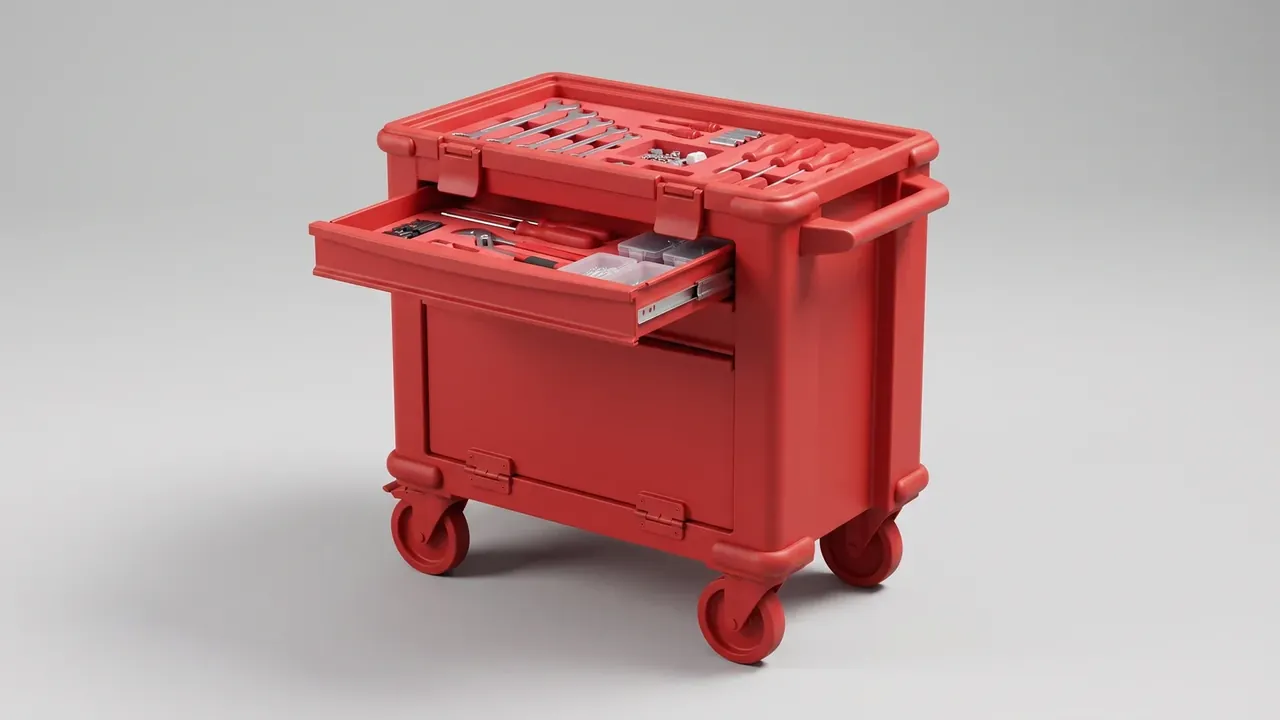
Neutral salt spray runs at 35 degrees Celsius, five percent sodium chloride, pH 6.5 to 7.2: 48 hours for zinc plating, 96 hours for stainless fasteners, 240 hours for powder coating. Pass is creep under 2 mm to one side of the scribe with no edge blistering, not zero rust.
Scribing is mandatory; an intact coupon only proves the surface was clean. Mixed finishes still differ by a factor of two, so record each part rather than an average.
5. Drop and vibration: judging a unit after transport
Passing final inspection is not arriving intact. Drop or vibration damage on a bulky, top-heavy tool chest surfaces at unpacking, when responsibility is hard to place.
| Transport check | Condition | Pass line |
|---|---|---|
| Drop | 60 kg, 600 mm, three attitudes | no crack, no run-out, latched |
| Vibration | 10 to 55 Hz, 1.5 g, 30 min per axis | torque loss under 20 percent |
Drop 60 kg from 600 mm once each on base, corner and edge: no cracking, no drawer running out, latches still closed. Inertia throws an unlatched drawer out.
Vibration sweeps 10 to 55 Hz at 1.5 g for thirty minutes per axis; retorque afterwards, and over twenty percent loss means locking washers at the factory.
Conclusion
Write acceptance as sentences an inspector can act on: load by residual set and travel loss, locks by engagement depth, coatings by scribe creep, transport by latches that stayed closed.
A standard earns its keep through comparability, not severity. A tool chest standard with explicit pass lines is one you can both reject against and release against.
This article discusses only the container (case body) side of specifications and design intent, and does not cover any handling, loading or use of the contents.
Related Reading
- Reading tool chest specifications
- Tool chests in workshops and repair bays
- Rust protection for metal tool chests
- Metal and plastic tool chests compared
Related Products
- 8 Series — Gun Cases; Military Equipment Cases; Camera Equipment Cases; Drone Cases; Watch Cases; Knife Cases; First Aid Cases; Electronics Equipment Cases
- WL8-2812 PP Gun Case — model WL8-2812
- All protective cases and toolboxes: 7 series, 158 models