

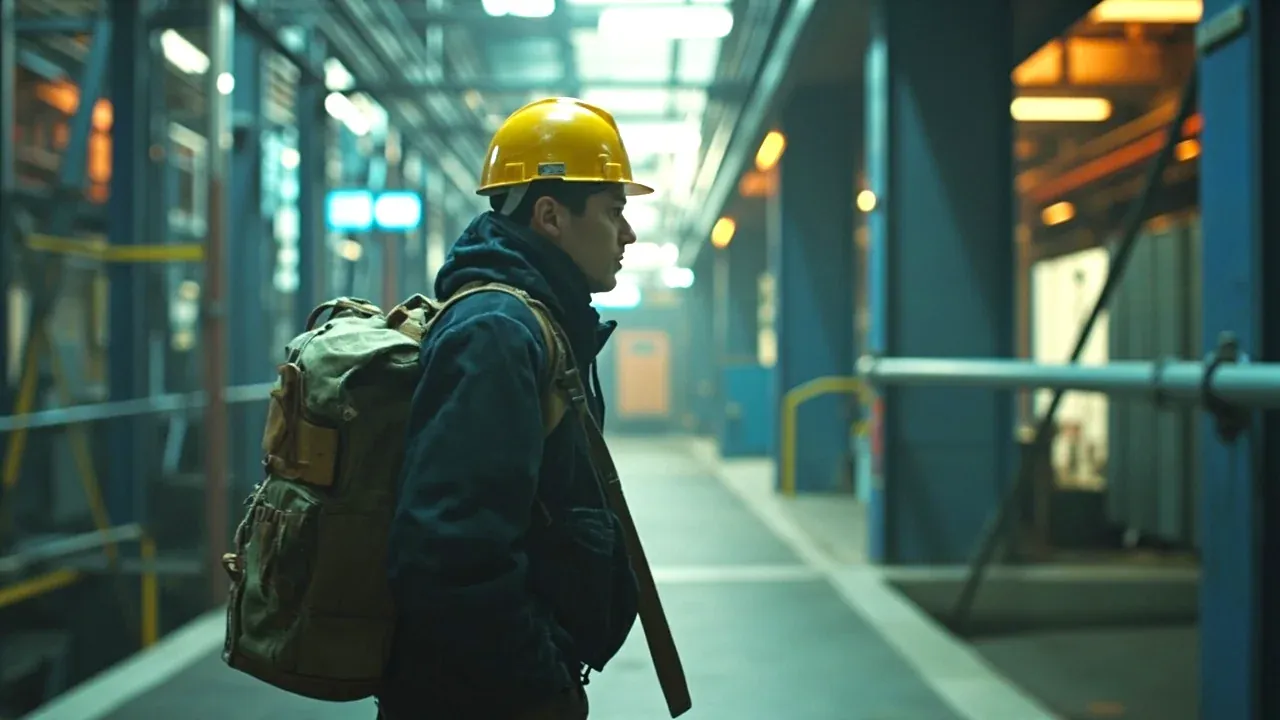
Quick answer: How a tool satchel is configured depends on access frequency, fall risk and hand occupation. Inspection runs on few openings over hours, so the tool satchel carries a full kit and rides secured in the vehicle. Work at height tolerates no falling objects, so the tool satchel sits tight and opens little. Daily maintenance is high-frequency with both hands busy, so the tool satchel feeds tools from the outer pocket.
Table of contents
- Tool satchel uses: three work patterns
- Inspection: loading for few openings
- Work at height: no falling tools first
- Daily maintenance: both hands free
- Configuration across the three patterns
- FAQ
1. Tool satchel uses: three work patterns
The same tool satchel configures almost in opposite directions for inspection, height work and maintenance. The difference comes from three conditions:
- Access frequency: hours between openings on inspection, seconds on maintenance;
- Fall risk: a dropped tool at height is an accident; on the ground it is a nuisance;
- Hand occupation: maintenance keeps both hands on equipment.
Access frequency sets the pockets, fall risk the fixing, hand occupation the outer pocket. Every part of a tool satchel maps back to one condition; parts that map to none are spare weight.
2. Inspection: loading for few openings
Inspection walks for hours with single-digit openings, so a tool satchel earns its place by carrying a full kit. The logic reverses bench work: load once, reach little.
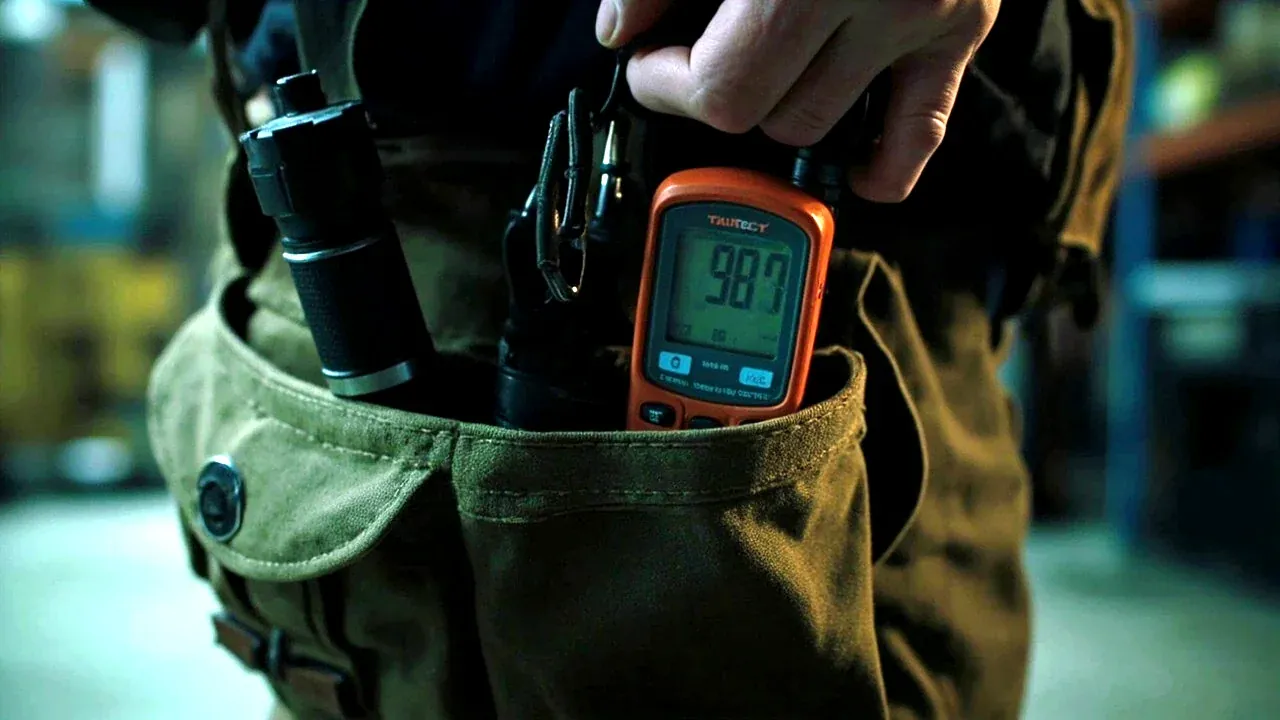
- Main pocket as a set: inspection tools in route order;
- Side pocket for reach items: torch, meter and pen, no bag removal;
- Inner pocket for spares: fuses, bolts and consumables, zipped against loss.
Vehicle legs add a fixing rule: a tool satchel tossed on a seat slides off under hard braking.
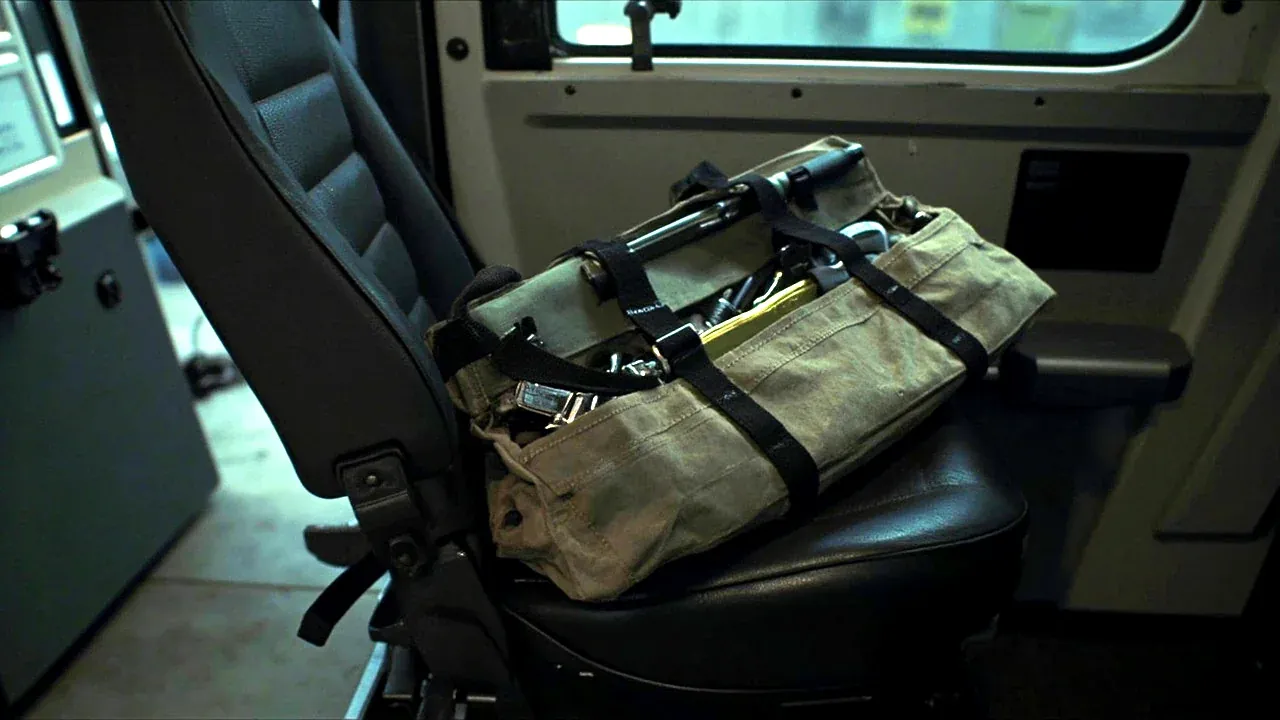
Fit a seat strap buckled across the bag, or hang it on the seat-back hook. One rule: the bag leaves the seat only when the vehicle stops.
3. Work at height: no falling tools first
At height, a falling tool is not a lost tool but an injury below. Constraints shift from loading to fixing, and everything else gives way.
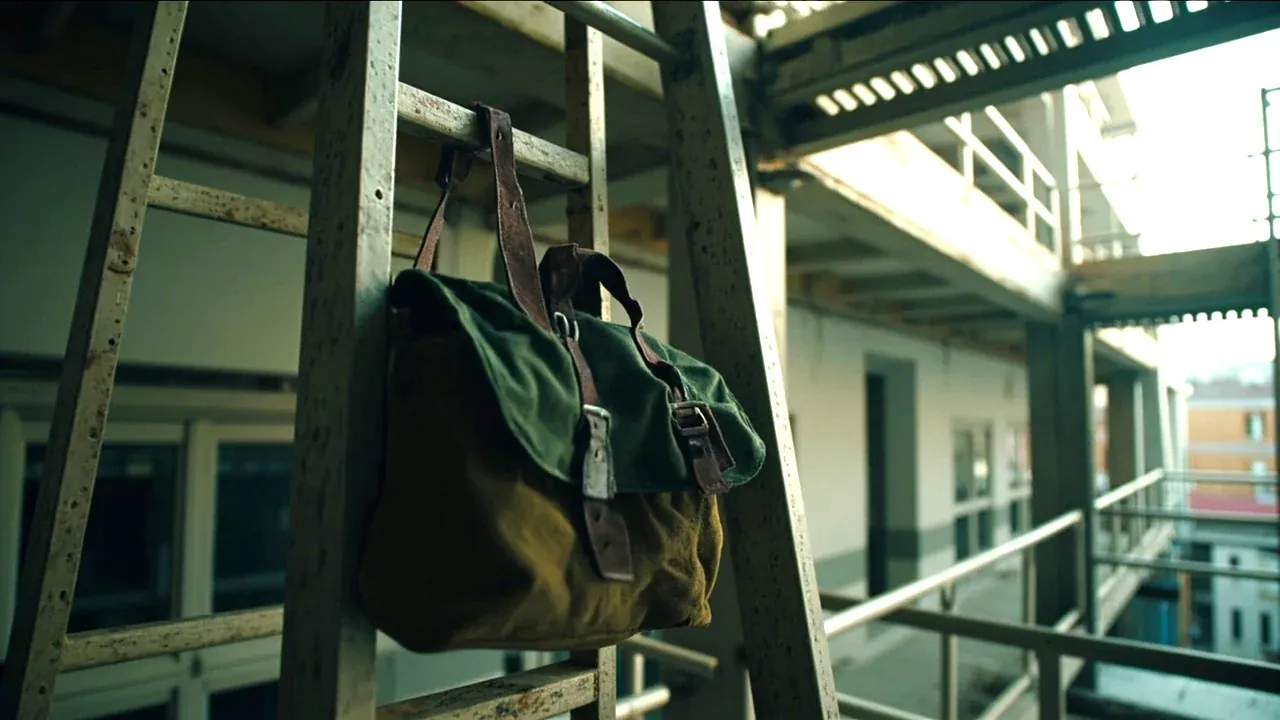
- Keep it on you or hooked solid: on the shoulder, or hung on a rung or rated rail, never an edge;
- Open only when stable: reach the outer pocket after standing firm, never mid-climb;
- Belt it to the torso: a waist belt stops the tool satchel swinging, and less swing means fewer knocks and drops.
Carry less rather than leave one more opening. When sharing a bag with ground work, drop the items that never get used up there.
4. Daily maintenance: both hands free
Maintenance keeps both hands occupied, so a tool satchel must feed tools without letting go. Access speed is the first metric.
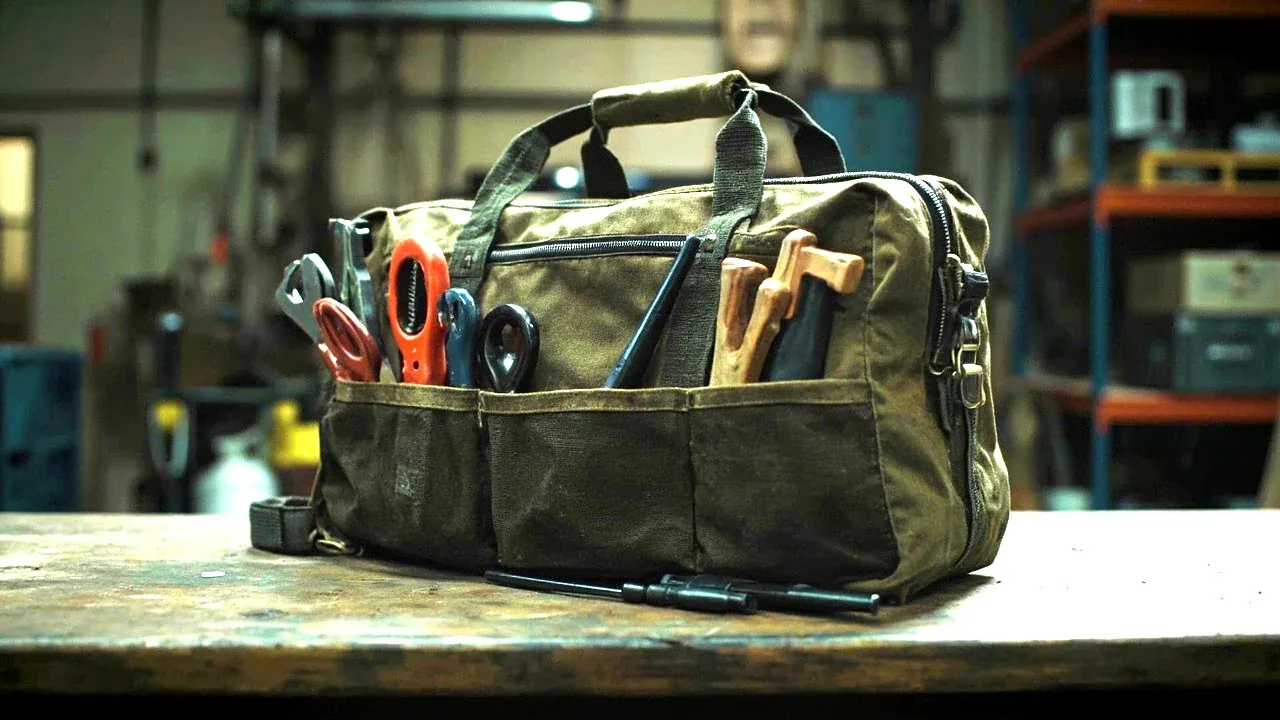
- Outer pocket for high-frequency items: screwdrivers, pliers and knives, one-handed;
- Main pocket in work-order sequence: fewer searches and wrong picks;
- A hook at the station: the bag hangs instead of hitting the floor.
Cleaning matters too: oily webbing slips, so choose detachable or soil-resistant straps.
5. Configuration across the three patterns
| Dimension | Inspection | Work at height | Maintenance |
|---|---|---|---|
| Access frequency | Low, a few per shift | Medium, at the work point | High, continuous |
| First constraint | Full kit, low fatigue | No falling tools | Hands stay on the job |
| Pocket focus | Main set, inner spares | Few openings | Outer high-frequency |
| Fixing | Crossbody, seat strap | Waist belt to torso | Station hook |
| Dedicated bag | Shares well | Must be dedicated | Partly shared |
Mixing patterns is the main source of misfit. Height work needs a dedicated belted version; inspection and maintenance can compromise on pockets, but access frequency cannot be cheated.
Conclusion
Tool satchel application design turns on three conditions: pockets by access frequency, fixing by fall risk, outer pockets by hand occupation. Inspection, height work and maintenance configure in almost opposite directions; what separates them is identifying the pattern first. Match the three conditions and a tool satchel stays where the work needs it.
The scope here is the container (bag body) alone: its geometry, structure and configuration. Nothing about how items inside are handled, loaded or used falls within it.
Related Reading
- Toolboxes for industrial maintenance
- Equipment Cases: General Instrument & Gear Transport Prote…
- Railway maintenance tool case guide
- Portable tool box buying basics
Related Products
- 8 Series — Gun Cases; Military Equipment Cases; Camera Equipment Cases; Drone Cases; Watch Cases; Knife Cases; First Aid Cases; Electronics Equipment Cases
- WL8-2812 PP Gun Case — model WL8-2812
- All protective cases and toolboxes: 7 series, 158 models