

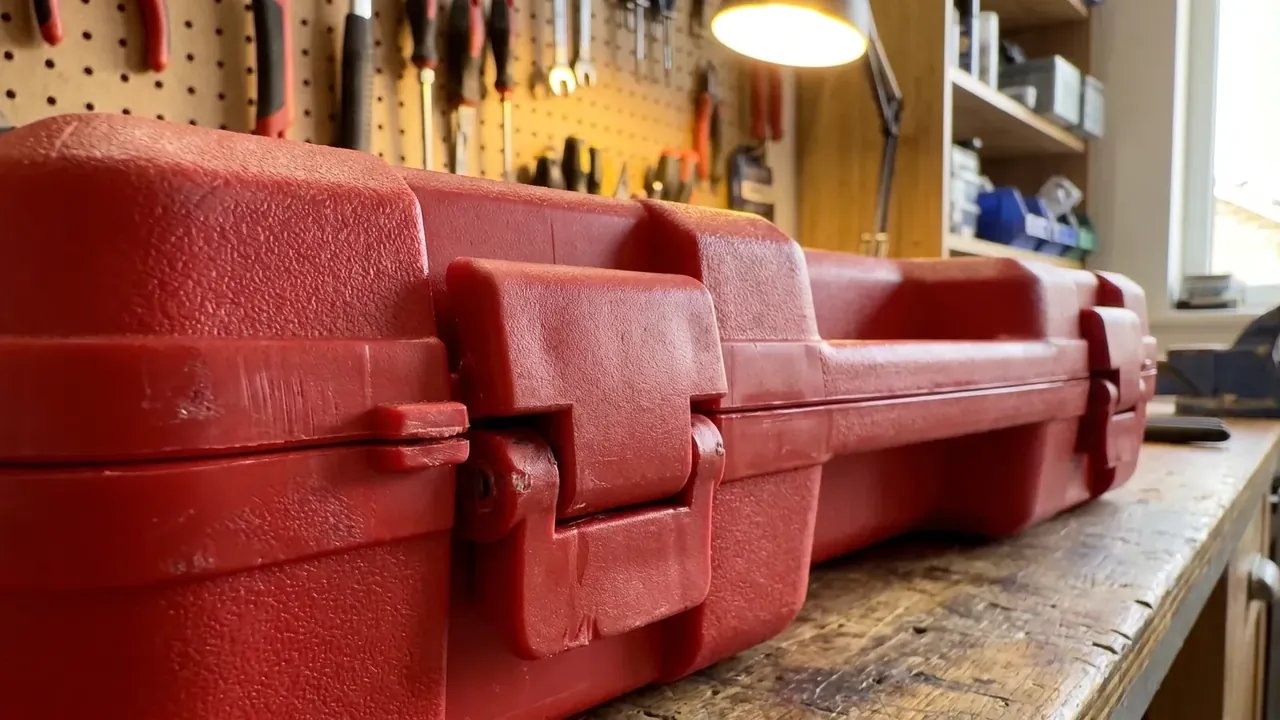
Quick answer: The alternatives to a tool satchel are a tool bag, a backpack and a hard case. Each wins one line and gives up another: access, volume, weight path, protection, cost per kilogram.
Table of contents
- Where the Tool Satchel Sits Among Three Options
- Carry Mode and One-Hand Access
- Load Volume and Where the Weight Lands
- Protection Class and the Rain Limit
- Cost per Kilogram Carried
- FAQ
1. Where the Tool Satchel Sits Among Three Options
Three substitutes answer three questions: a tool bag answers an open top, a backpack distance and mass, a hard case impact, water and crush. The satchel answers a narrower one, staying on the body so one hand reaches in without setting it down.
| Option | Carry mode | Volume | Pick time |
|---|---|---|---|
| Tool satchel | sling, body at hip | 12 L | 2.5 s |
| Tool bag | short handles | 20 L | 4 s |
| Tool backpack | two shoulders | 25 L | 18 s |
| Hard case | handle or wheels | 22 L | 6 s |
A tool bag costs a bend per pick, and 200 picks a day is 200 bends. A backpack costs a strap each time, a hard case two latches and a dry place to stand it. The satchel's only claim is never being put down, and it stops at 12 L and 8 kg of fabric.
2. Carry Mode and One-Hand Access
Slung across the body, the strap crosses the opposite shoulder, the bag settles at the hip. A 38 mm strap folds at collarbone and hip, setting the swing; under 60 mm, a walking pick needs no steadying hand.
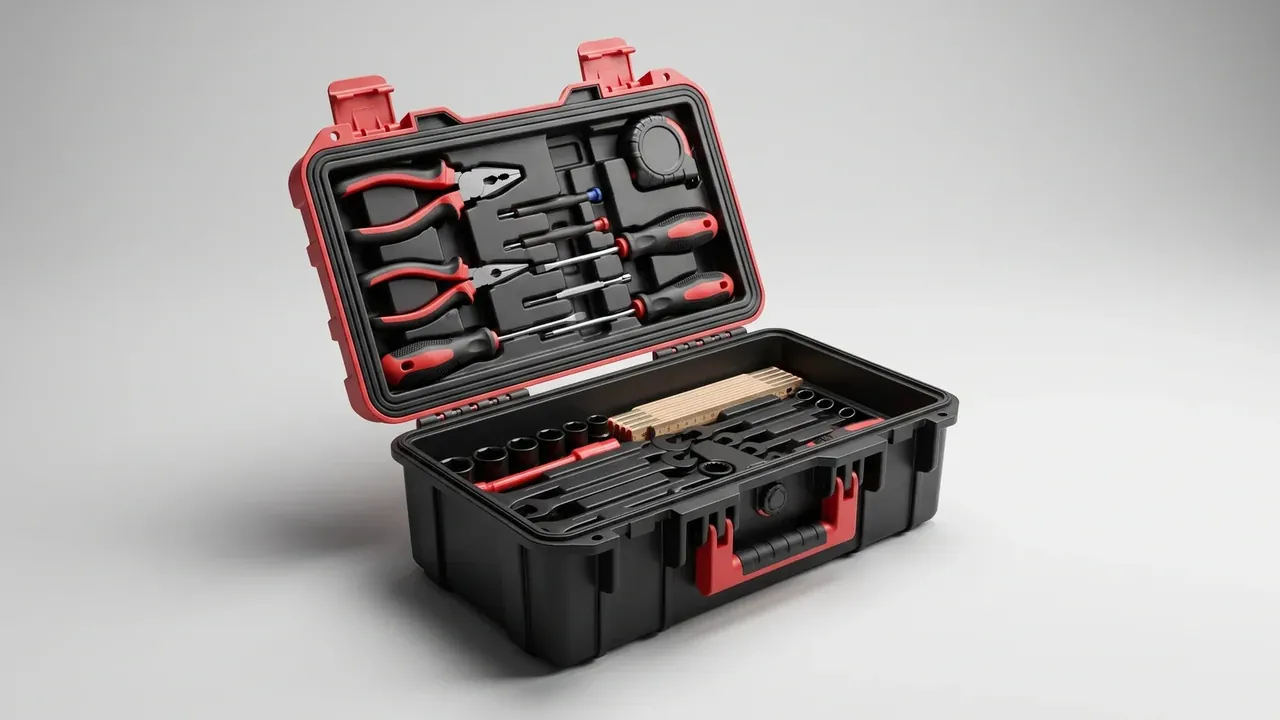
Access is measurable: in 1.2 mm gloves, a 200 mm adjustable wrench takes 2.5 s from a satchel, 4 s from a bag set down first, 18 s from a backpack off one shoulder, 6 s from a latched case. Three conditions hold the 2.5 s: mouth angle inside 15 degrees, a 120 mm outer pocket, zipper drag under 15 N.
3. Load Volume and Where the Weight Lands
Nominal volume and working load differ: a 12 L satchel carries 8 kg, or 0.67 kg/L, the ceiling for fabric.
| Option | Rated load | Load path | Peak pressure |
|---|---|---|---|
| Tool satchel | 8 kg | one trapezius | 21 kPa |
| Tool bag | 12 kg | handles, palm | about 45 kPa |
| Tool backpack | 15 kg | two shoulders, panel | 8 kPa |
| Hard case | 20 kg | one hand | over 250 N |
A sling puts 8 kg on one trapezius, 21 kPa under a 38 mm strap; swapping sides is the only relief. A backpack spreads 15 kg over two shoulders at near 8 kPa each. A hard case puts 20 kg into one hand, over 250 N of grip against a 200 N comfort ceiling.
4. Protection Class and the Rain Limit
Fabric without a seal is IPX0. A backpack with a cover edges toward IPX1, stopping vertical drips. A hard case reaches IP67, sealed against 1 m of water for 30 minutes.
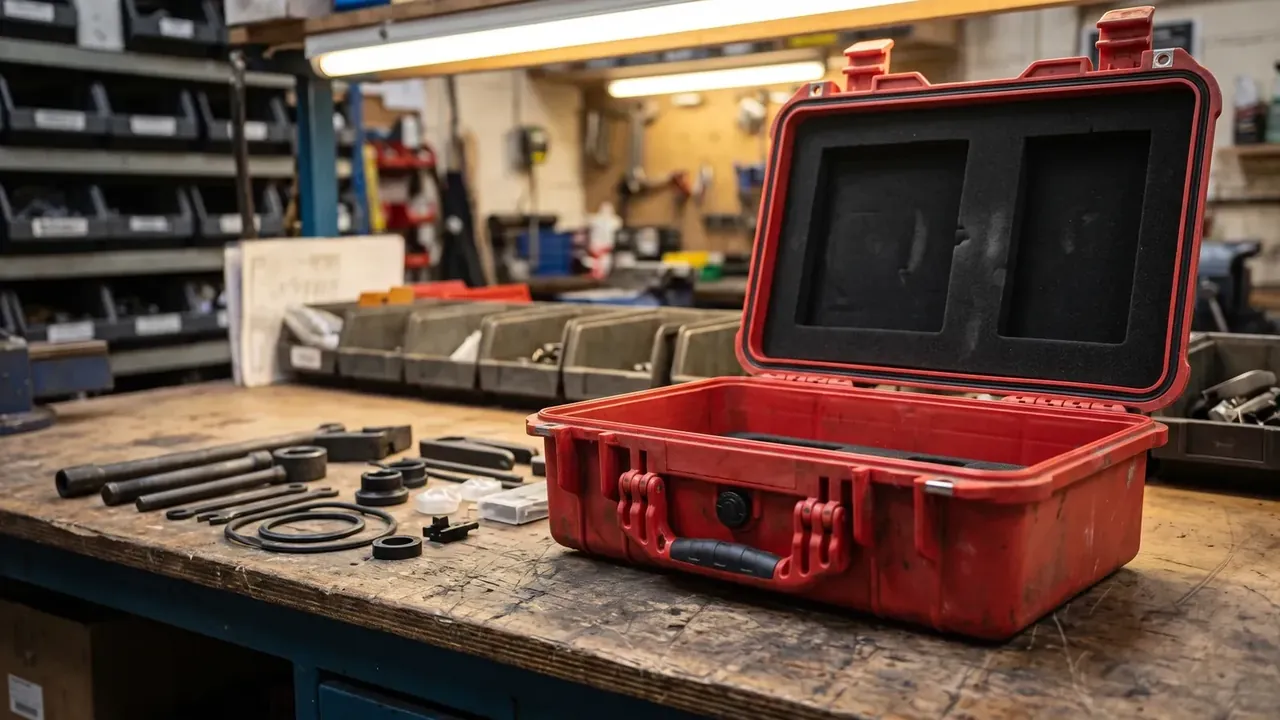
Fabric takes water at 5 minutes of moderate rain, soaks through by 15, and the coating buys 20 more. A gasket takes a set after 2 years or 300 closures, after which IP67 is a label. Under 30 minutes outdoors a covered satchel is enough; past 2 hours only the case pays.
5. Cost per Kilogram Carried
The honest measure is cost per kilogram carried: price over rated load, then over service years, which leaves access speed outside the sum.
| Option | Price | Rated load | Years | Cost per kg-year |
|---|---|---|---|---|
| Tool satchel | 180 | 8 kg | 3 | 7.5 |
| Tool bag | 120 | 12 kg | 2 | 5.0 |
| Tool backpack | 320 | 15 kg | 4 | 5.3 |
| Hard case | 460 | 20 kg | 8 | 2.9 |
The hard case is cheapest at 2.9, the satchel dearest at 7.5. At 120 picks a day, 2.5 s against 6 s is 7 minutes daily, 2.5 hours a month.
A mixed set: a case for heavy wet-sensitive items, a satchel for light frequent ones; split 20 kg and 8 kg and the blend lands near 4.1 per kg-year, access under 3 s.
Conclusion
Each pays for a different line: the bag an open top, the backpack weight distribution, the case protection, the satchel access speed. Once cost per kilogram and access time share a page, the Tool Satchel has a place.
This article discusses only the container (case body) side of specifications and design intent, and does not cover any handling, loading or use of the contents.
Related Reading
- How to choose a tool satchel
- Tool bag versus the alternatives
- Tool roll versus the alternatives
- Mobile tool cabinet versus the alternatives
Related Products
- 8 Series — Gun Cases; Military Equipment Cases; Camera Equipment Cases; Drone Cases; Watch Cases; Knife Cases; First Aid Cases; Electronics Equipment Cases
- WL8-2812 PP Gun Case — model WL8-2812
- All protective cases and toolboxes: 7 series, 158 models