

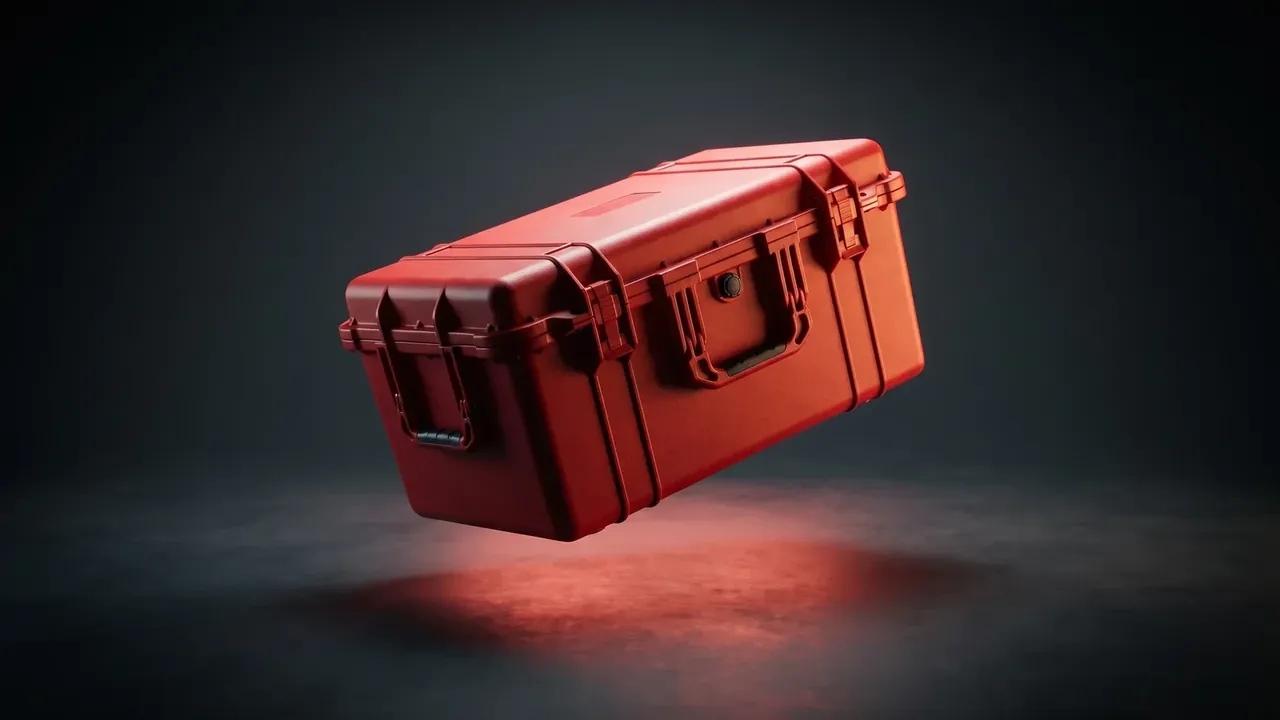
Quick answer: A Tool Satchel rests on five measurable choices: a 7 panel body, a 38 mm strap on 3 load points, pockets at 180, 120 and 70 mm, hardware picked by load, and a 60 mm corner wrap. Fix those and stiffness and service life follow.
Table of contents
- How the Tool Satchel Body Is Cut
- Strap Routing and Load Points
- How the Pockets Are Layered
- Choosing Buckles and Zips
- Corner Wear Reinforcement
- FAQ
1. How the Tool Satchel Body Is Cut
The body is 7 panels sewn into a box: front, back, 2 sides, bottom, flap and divider. Every panel is flat, so the table stacks them without creasing and no pleat is needed at a corner.
Finished size is 420 by 300 by 230 mm with a 10 mm seam and R20 corners. Cut on the warp: warp shrinks 2 percent, weft 3.5 percent, and mixed directions leave front and back out of register.
| Panel | Qty | Size | Detail |
|---|---|---|---|
| Front | 1 | 420x300 | 1050D, 0.8 mm PP board |
| Back | 1 | 420x300 | Same, 10 mm seam |
| Sides | 2 | 300x230 | 15 mm taper |
| Bottom | 1 | 420x300 | Joined to sides |
| Flap | 1 | 430x180 | 20 mm overhang |
| Divider | 1 | 400x280 | Removable |
The 0.8 mm PP board behind the front panel supplies stiffness; without it the bag will not stand and the mouth folds shut. Cut the board 6 mm undersize and notch the corners.
2. Strap Routing and Load Points
The strap runs up the side panel, never across the front, where it would cross the outer pocket mouth; along the side it feeds load into the full seam, which then acts as a structural member.
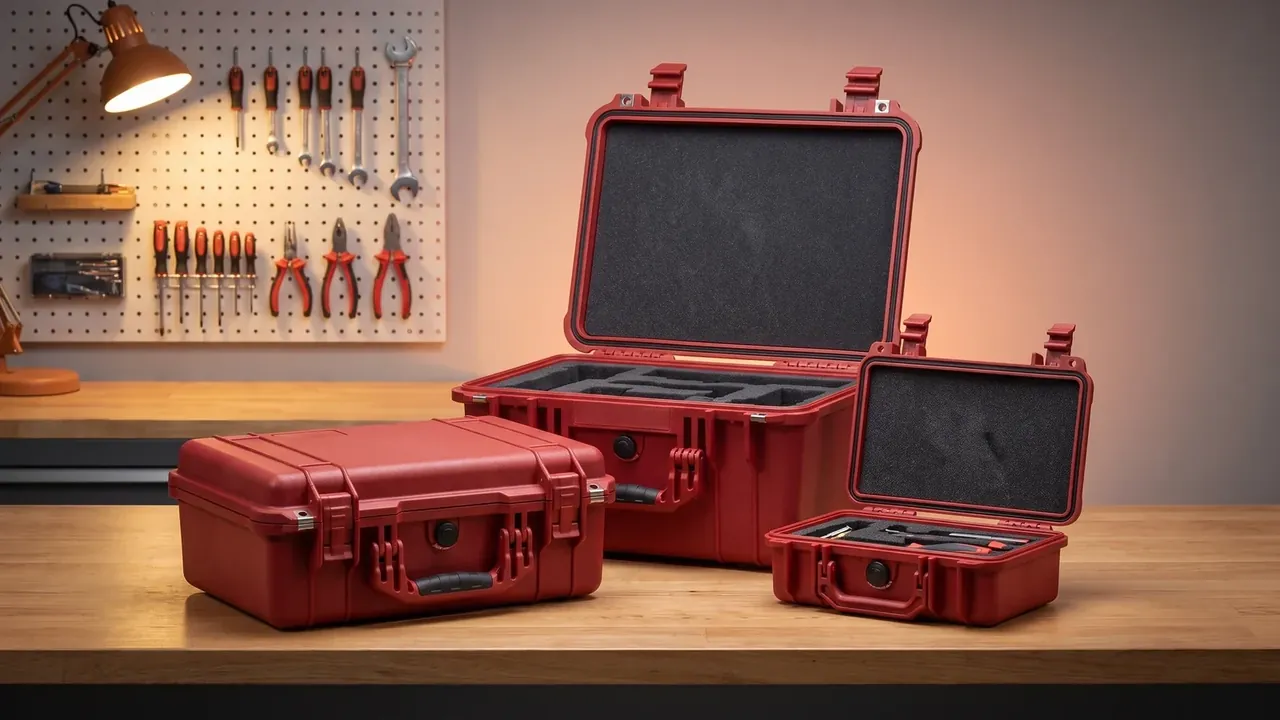
The webbing is 38 mm polyester, ends folded back 40 mm and stitched, with 3 load points: 2 bottom corners and 1 at the top of the side. Each takes a box-X, a 25 by 25 mm square with a cross, holding 400 N for one minute.
Thread is 420D/3 at 9 stitches per 3 cm, denser than the usual 8, so a same-colour patch sits under each load point. Keep the strap within 15 degrees of the body.
3. How the Pockets Are Layered
Three layers run outside in at 180, 120 and 70 mm: long tools outside, small items in elastic cells, flat items in the inner slip pocket.
| Layer | Position | Depth | Mouth |
|---|---|---|---|
| Outer pocket | Front panel | 180 mm | Size 5 zip, bar tacks |
| Tool cells | Inside pocket | 120 mm | 25 mm elastic, 6 cells |
| Slip pocket | Back panel | 70 mm | 45 degree bias, bound |
The outer pocket base sits 30 mm above the bottom panel, because that gap belongs to the corner wrap; overlapping them stacks three layers of stitching in one place.
4. Choosing Buckles and Zips
A Tool Satchel uses a size 5 nylon zip, not a size 8. Size 8 is stronger but arches around a 420 mm mouth corner, while size 5 lies flat on the same radius.
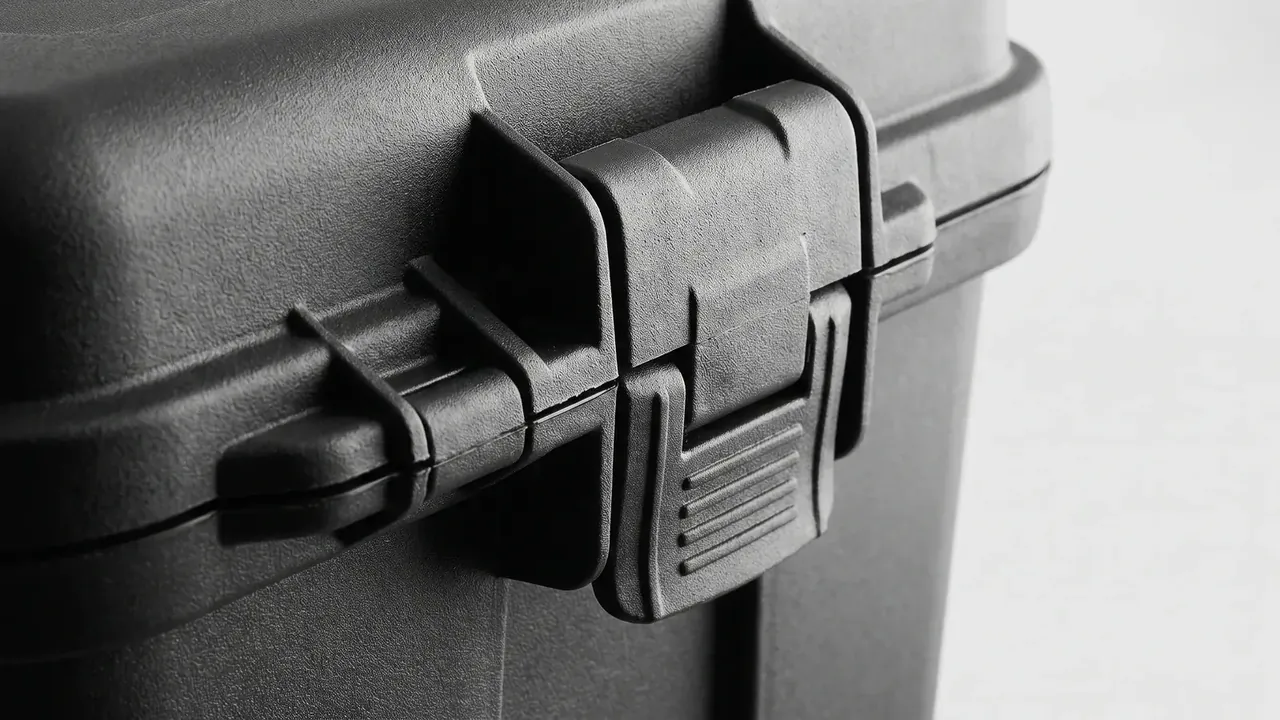
Buckles are 20 mm POM rated 45 kg on 20 mm webbing; a 25 mm strap in a 20 mm buckle frays within three months. Metal goes at load points, plastic at openings.
5. Corner Wear Reinforcement
Corners fail first: setting down, dragging and leaning all work on the two bottom corners, and without a wrap the cloth goes first, the seam last.
The wrap is 60 mm high, 1.2 mm PVC bonded to 1050D, covering three faces under two rows of stitching. Below 40 mm it misses the wear zone; above 80 mm it stiffens the lower body.
| Option | Material | Thickness | Use |
|---|---|---|---|
| Single patch | 1050D | 0.6 mm | Light, indoors |
| Double wrap | 1050D plus PVC | 1.2 mm | Mixed use |
| Hard corner | PP shell | 2.0 mm | Dragging |
Reinforce first, close the sides second, fit the bottom last; reverse that and both seams cross in one place. The 3.2 mm stack needs a size 18 needle, not a size 14.
Conclusion
The structure of a Tool Satchel comes down to five numbers: 7 panels, a 38 mm strap on 3 load points, three pocket depths, hardware chosen by load, and a 60 mm corner wrap. Those decide whether the body stands, whether it bows when full, and which seam fails in year two. Put the panel count, stitch density and reinforcement order into the process card, and the same Tool Satchel leaves every run.
This article discusses only the container (case body) side of specifications and design intent, and does not cover any handling, loading or use of the contents.
Related Reading
- How to choose a Tool Satchel
- Where a Tool Satchel earns its place
- How a tool roll is built
- Setting up a mechanic tool pouch
Related Products
- 8 Series — Gun Cases; Military Equipment Cases; Camera Equipment Cases; Drone Cases; Watch Cases; Knife Cases; First Aid Cases; Electronics Equipment Cases
- WL8-2812 PP Gun Case — model WL8-2812
- All protective cases and toolboxes: 7 series, 158 models