

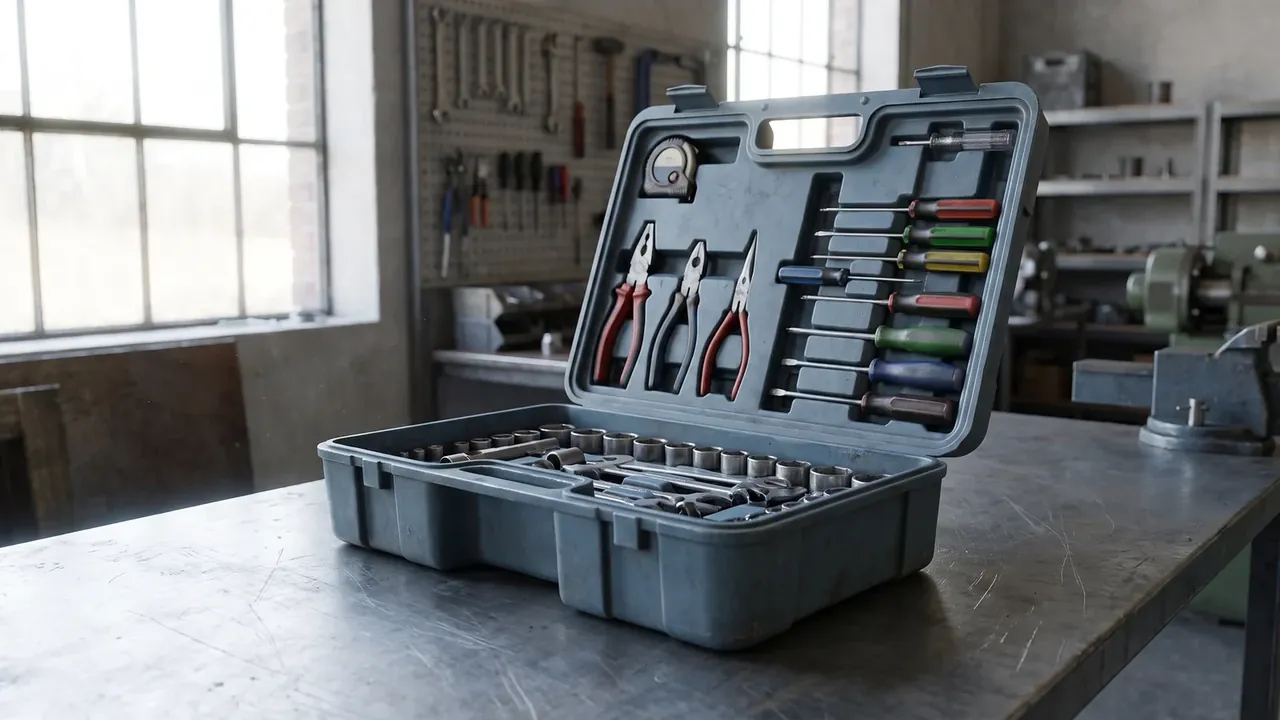
Quick answer: Four lines fix a tool satchel specification: a size chain with datums, pocket tiers for volume, a laminate for wall thickness, and a load rating back-calculated to one attachment point.
Table of contents
- How the Tool Satchel Size Chain Is Built
- Pocket Tiers and Volume Allocation
- Fabric and Liner Stack Thickness
- Back-Calculating Load and Strap Pull
- Tolerances and Measuring Tools
- FAQ
1. How the Tool Satchel Size Chain Is Built
A size chain is more than three numbers. The body is soft, so its outline moves: measure the empty bag flat, then again 30 minutes after the rated load goes in. A depth difference above 8 mm means the mouth tape and side panels are out of proportion.
Four links carry it: mouth tape, body depth, base panel and corner guard, each with a datum and a tolerance. A 16-inch tool satchel runs 380 by 260 by 300 mm, with a 1,280 mm tape perimeter and a 60 mm guard.
| Size chain link | Datum size | Tolerance | Measurement datum |
|---|---|---|---|
| Mouth tape perimeter | 1,280 mm | ±3 mm | Tape centre line |
| Body length | 380 mm | ±1.5 mm | 50 mm below mouth |
| Body width | 260 mm | ±1.5 mm | Base fold ends |
| Body depth | 300 mm | ±2 mm | Mouth edge to base |
| Corner guard height | 60 mm | ±1 mm | Base to guard top |
Volume is quoted twice. A 370 x 250 x 290 mm cavity gives 26.8 L geometric, but radii, seams and the folded mouth cut the usable figure to 85 percent, or 22.8 L.
2. Pocket Tiers and Volume Allocation
Pockets are a hierarchy, not a count. Six positions work: one main compartment, two internal flat pockets, one external flap pocket and a slot at each end, each with its own opening size and depth.
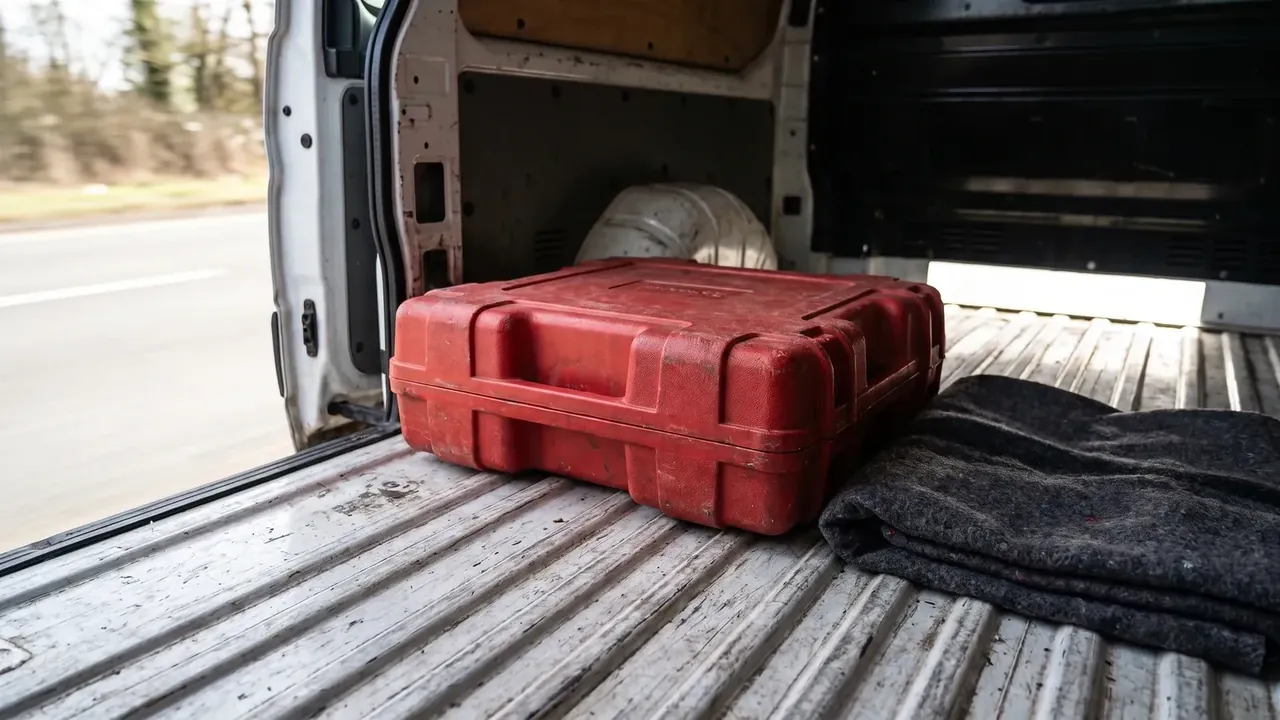
The internal pocket is 180 x 120 mm and 130 mm deep, the flap pocket 240 x 160 mm and 60 mm, each end slot 60 mm across. Clear every opening by 15 mm so a gloved hand can reach in.
Six positions total about 4.2 L, or 18.4 percent of usable volume.
3. Fabric and Liner Stack Thickness
Wall thickness means the whole laminate: 1680D polyester at 1.0 mm, 0.15 mm PU coating, 3 mm EVA foam, 0.3 mm 210D lining, giving 4.45 mm at the side wall; the base adds a 1.5 mm PP sheet for 5.95 mm.
Thicker foam is not better. At -10 C, 3 mm EVA takes five 180-degree folds without cracking; 5 mm shows a white line at the third. Coating sets water resistance: 0.15 mm holds 1,500 mm of hydrostatic head, 0.25 mm holds 2,500 mm.
4. Back-Calculating Load and Strap Pull
A rating starts at payload and ends at a proof force. At 20 kg: 196 N of weight, a 2.5 dynamic factor, a 490 N peak, split across two points at 245 N and rounded to 250 N.
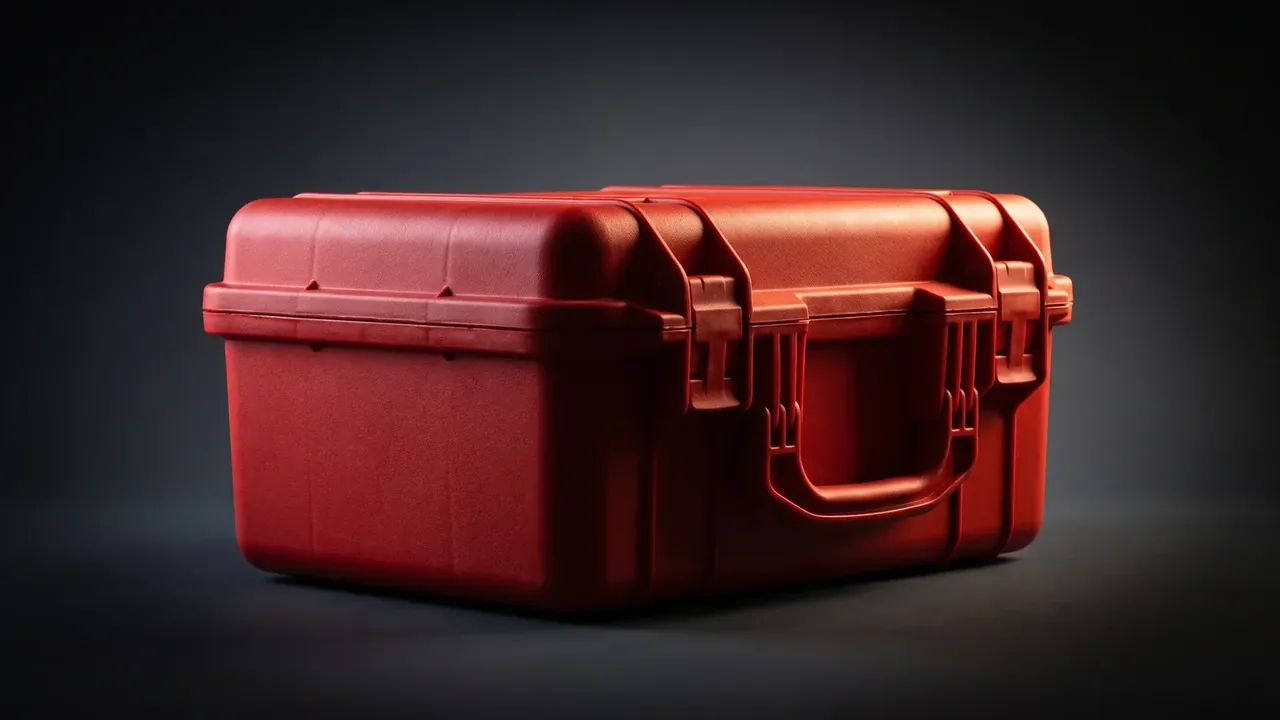
A 25 mm polyester strap breaks at 2,350 N; at 4:1 it works at 587 N, covering the 490 N peak with 20 percent spare. A 20 mm strap breaks at 1,880 N and works at 470 N, under the peak.
Stitching is weaker: a double back-stitched seam at 3.5 stitches per centimetre reaches 80 percent of cloth break strength, a plain seam 55 percent.
5. Tolerances and Measuring Tools
Grade tolerances by function. Class A, touching assembly and load: ±2 mm. Class B, look and feel: 2 mm per 300 mm. Class C, free sizing: ±5 mm.
Match the gauge to the band: a 0-150 mm caliper at 0.01 mm for the 4.45 mm stack, a class I tape for the outline, a 0.02-1.00 mm feeler for mouth misalignment.
Ten repeats give a 0.03 mm standard deviation, 15 percent of a ±0.2 mm band, inside the one-third rule.
| Item | Band | Gauge | Sampling point |
|---|---|---|---|
| Outline length and width | ±1.5 mm | Class I tape | 50 mm below mouth |
| Laminate thickness | ±0.2 mm | Digital caliper | Side panel midpoint |
| Attachment spacing | ±2 mm | Tape | Centre of D-rings |
| Mouth misalignment | ≤0.5 mm | Feeler gauge | Either side of seam |
| Finished weight | ±3% | 0.1 g scale | Whole unit |
Conclusion
A specification stands on three foundations: a size chain with real datums, a laminate drawn layer by layer, and a rating carried to a single-point force. Fill those in and the tool satchel specification is complete.
This article discusses only the container (case body) side of specifications and design intent, and does not cover any handling, loading or use of the contents.
Related Reading
- Tool satchel applications and layout choices
- Tool satchel selection criteria
- Tool bag fabric options compared
- Mechanic pouch pocket layouts
Related Products
- 8 Series — Gun Cases; Military Equipment Cases; Camera Equipment Cases; Drone Cases; Watch Cases; Knife Cases; First Aid Cases; Electronics Equipment Cases
- WL8-2812 PP Gun Case — model WL8-2812
- All protective cases and toolboxes: 7 series, 158 models