

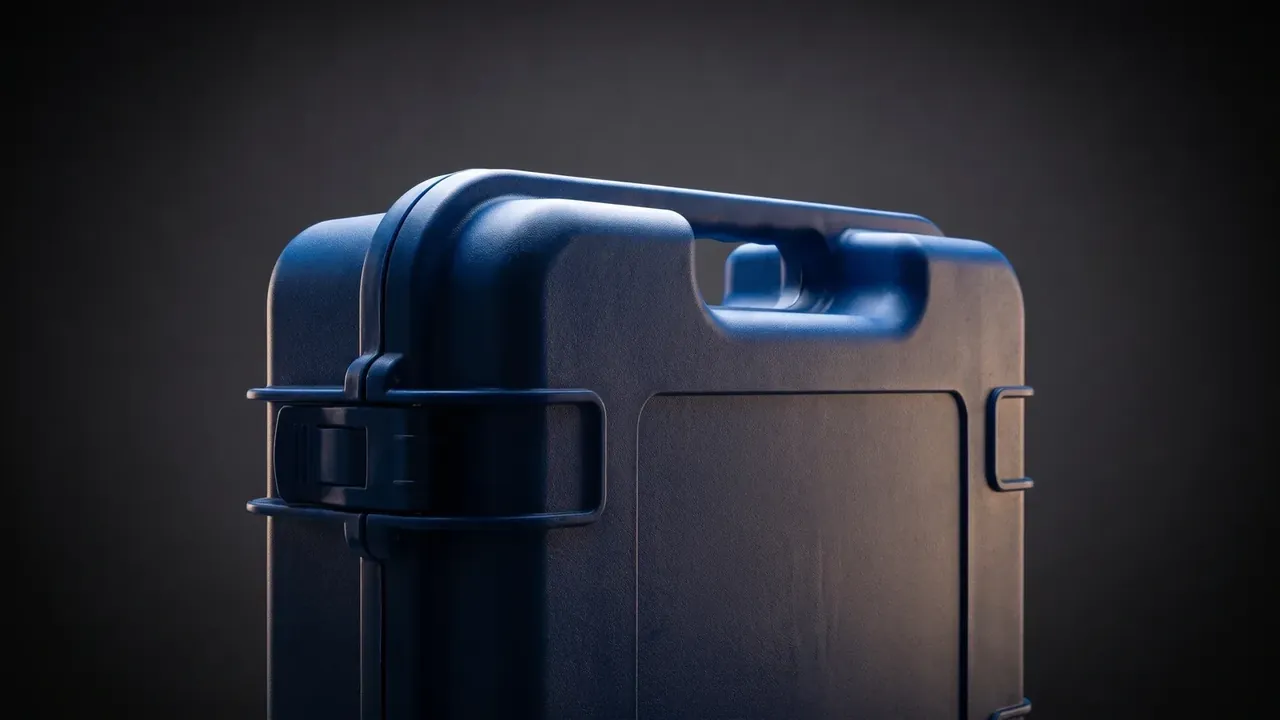
Quick answer: A Total Station Protective Case limits socket drift to 0.47 mm after 2 h at 1.5x load, using an 118 mm insert pitch and a 5.8 mm boss wall.
Table of contents
- Tripod-Socket Insert Pitch on a Total Station Protective Case
- Wall Thickness at the Handle Boss
- Socket Drift Under a 1.5x Load Held Two Hours
- Boss Recovery After the Load Comes Off
- Setting the Pitch for Survey Batches
- FAQ
1. Tripod-Socket Insert Pitch on a Total Station Protective Case
Two hours at 1.5x rated load separates a socket that holds position from one that keeps creeping. The tripod socket of a Total Station Protective Case is bolted to the floor through two inserts, and their pitch sets the free span under the seat: widen it and the seat sinks along the load, narrow it and the load arm shortens.
The 118 mm pitch starts from a 690×475×295 mm outer shell, a 620×410×220 mm cavity and a 5.0 mm wall. Insert holes and boss wall sit on two datums of the floor view, so changing either means recalculating the load arm and recording net distance rather than centre-to-centre.
| Insert grade | Pitch value | Two-hour hold |
|---|---|---|
| Narrower | Under 118 mm | Almost no sink, thin stock |
| Set | 118 mm | Drift inside 0.47 mm |
| Wider | Over 118 mm | Seat slides under load |
Only the 118 mm row keeps inserts off thin stock and still stops the seat after the full hold; the other two cost material or drift, so a Total Station Protective Case stays on that cell.
2. Wall Thickness at the Handle Boss
Solid stock at the handle boss of a Total Station Protective Case measures 5.8 mm where it meets the shell wall, and that band takes the reaction. Too thin and the seat whitens and keeps a permanent set; too thick and it eats cavity clearance.
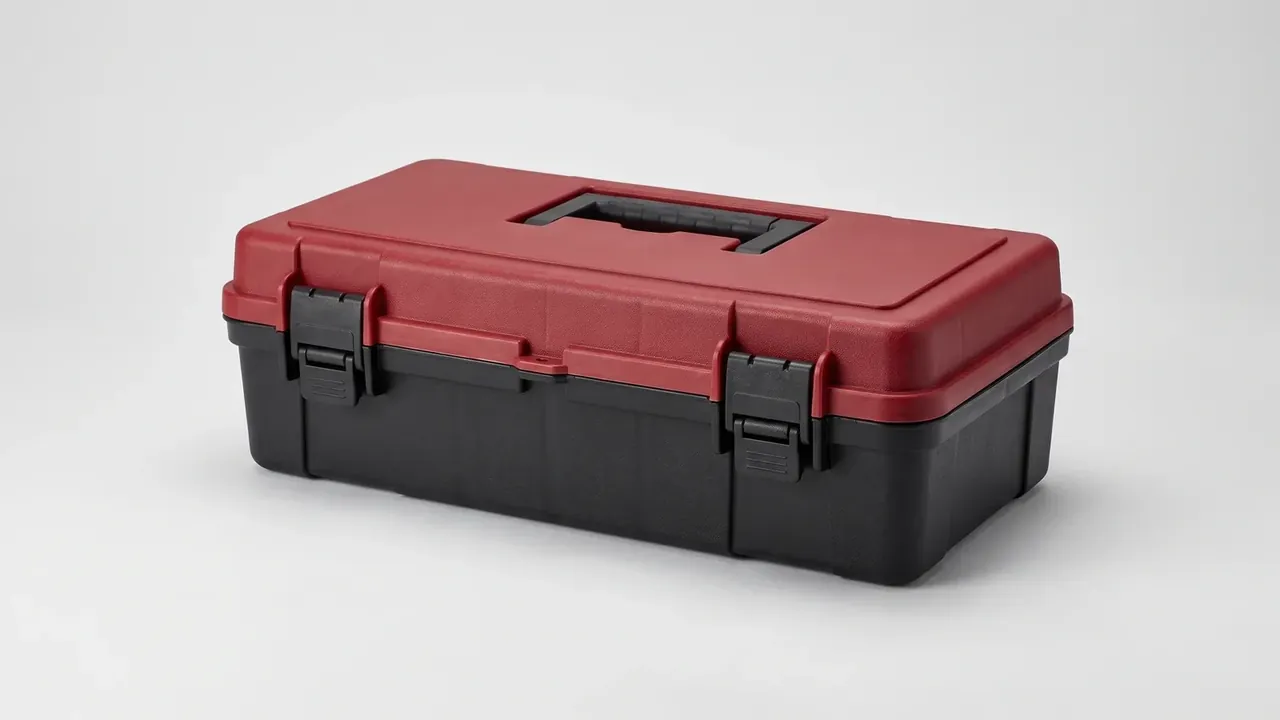
Each wider pitch loads the boss harder, so 5.8 mm is the floor worked out for 118 mm. Two gaskets at 22% compression close the rim, and 4 latches at 435 N each spread the clamp; releasing them before the hang keeps the reading on socket and inserts alone.
3. Socket Drift Under a 1.5x Load Held Two Hours
Hang 1.5x rated load and a dial gauge logs the socket underside in half-hour steps across 2 h, stopping when the curve flattens. Final height minus pre-lift height gives socket drift, and 0.47 mm is the ceiling a Total Station Protective Case accepts; crossing it sends pitch and boss wall back together.
| Hold stage | Elapsed time | Socket drift |
|---|---|---|
| Lift | 0.5 h | 0.12 mm |
| Middle | 1 h | 0.31 mm |
| Full | 2 h | 0.45 mm |
0.12, 0.31 and 0.45 mm climb as one line with no step, which is slow creep rather than an insert letting go. An empty Total Station Protective Case is 8.5 kg and 21 kg loaded, while an 85 kg stack load bends the floor further, so the grade is picked on the full-stage cell.
4. Boss Recovery After the Load Comes Off
Let the shell rest until rebound finishes, then return the dial gauge to the socket underside. Pre-lift height minus residual sink gives the 93% recovery floor; press a 5.8 mm boss wall past yield and the recovered share drops, however small the drift looked.
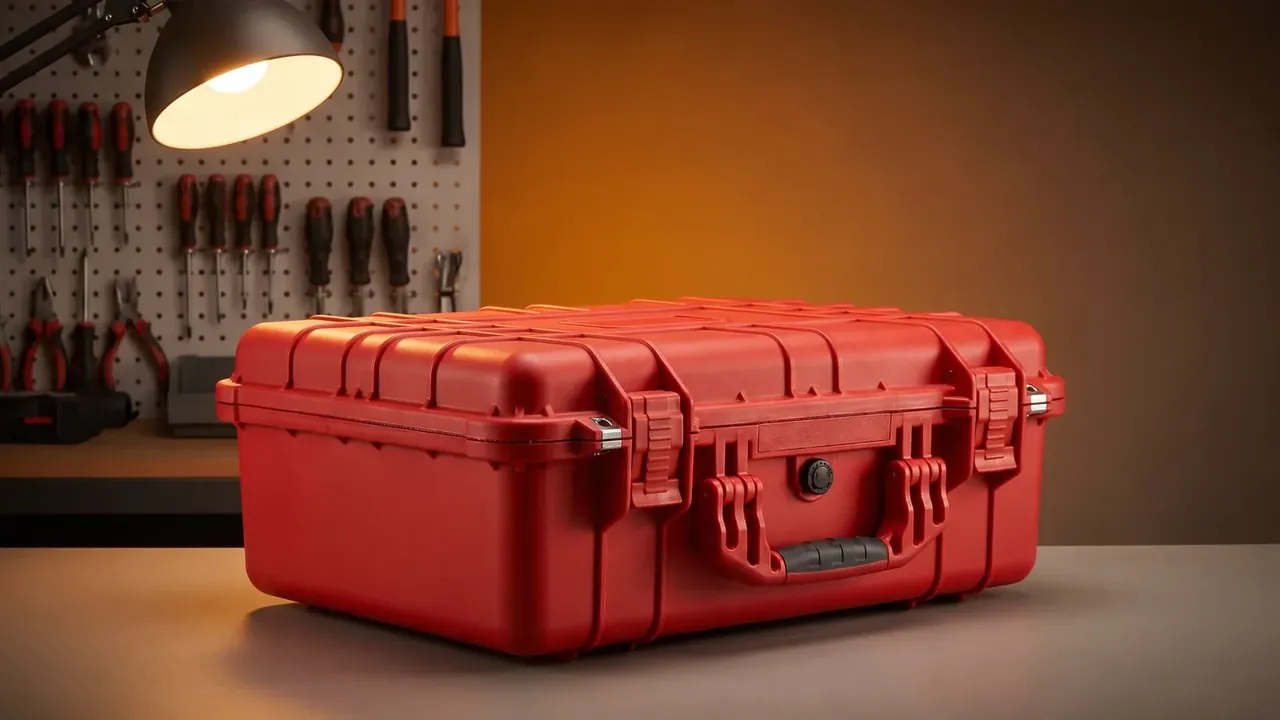
Run three rounds, zeroing after each unload, and write the least recovered onto the card. 0.47 mm governs sink under load and 93% governs recovery after unloading, taken at different moments, so folding them into one criterion would pass a boss already pressed to yield; a Total Station Protective Case signs the two separately.
5. Setting the Pitch for Survey Batches
The pitch is set at the narrowest grade whose drift after a full two-hour hold stays below 0.47 mm; wider insert layouts are filed as non-load-bearing samples.
Survey batches are split by insert-hole position, each pile sharing one floor mould. Three shells from a pile hang at 1.5x load for 2 h, with full-stage drift logged and a recovery curve added after unloading. A pile earns its place on the drawing only when the narrowest grade clears both 0.47 mm drift and 93% recovery; a layout losing recovery is filed as samples for the whole pile. With 118 mm set, the 5.8 mm boss wall and 22% gasket compression are frozen, and later batches check just these three. The stand keeps each pile's trace so a material swap can be compared against the old arm length, and JUNZHIJIA signs insert position and boss wall as one linked pair.
| Drift reading | Insert layout | Full two-hour hold |
|---|---|---|
| Narrow pile | Short pitch | 0.30 mm, recovery fine, stock short |
| Set pile | 118 mm | 0.45 mm, recovery over 93%, accepted |
| Wide pile | Long pitch | 0.58 mm, past 0.47 mm, filed |
Sink stops at 0.45 mm and lift-back clears ninety-three percent, while each other pile misses one end. The drawing takes only the 118 mm grade of a Total Station Protective Case, with IP67 as a typical target, the 690×475×295 mm outer size and the 5.0 mm wall in the shell spec column.
Conclusion
The 118 mm insert pitch and the 5.8 mm boss wall of a Total Station Protective Case hold each other in check, and the 0.47 mm drift plus 93% recovery after 2 h at 1.5x load rest on that pair. What counts is the flat end of the full-stage curve, not the lift figure. Writing pitch, boss wall, 22% gasket compression and the 5.0 mm wall into one drawing lets later survey batches check dimensions by pile.
Related Reading
- What Are the Requirements for a Surveying Instrument Case: Transport Protection for Total Stations and RTK Systems
- Surveying and Mapping Equipment Cases: Protecting Instruments That Hold Their Calibration
- How Do Protective Cases Achieve Stable Stacking? Stacking Ribs, Locator Bosses, and Interlocking Principles
Related Products
- 8 Series — Gun Cases; Military Equipment Cases; Camera Equipment Cases; Drone Cases; Watch Cases; Knife Cases; First Aid Cases; Electronics Equipment Cases
- WL8-2812 PP Gun Case — model WL8-2812
- All protective cases and toolboxes: 7 series, 158 models