

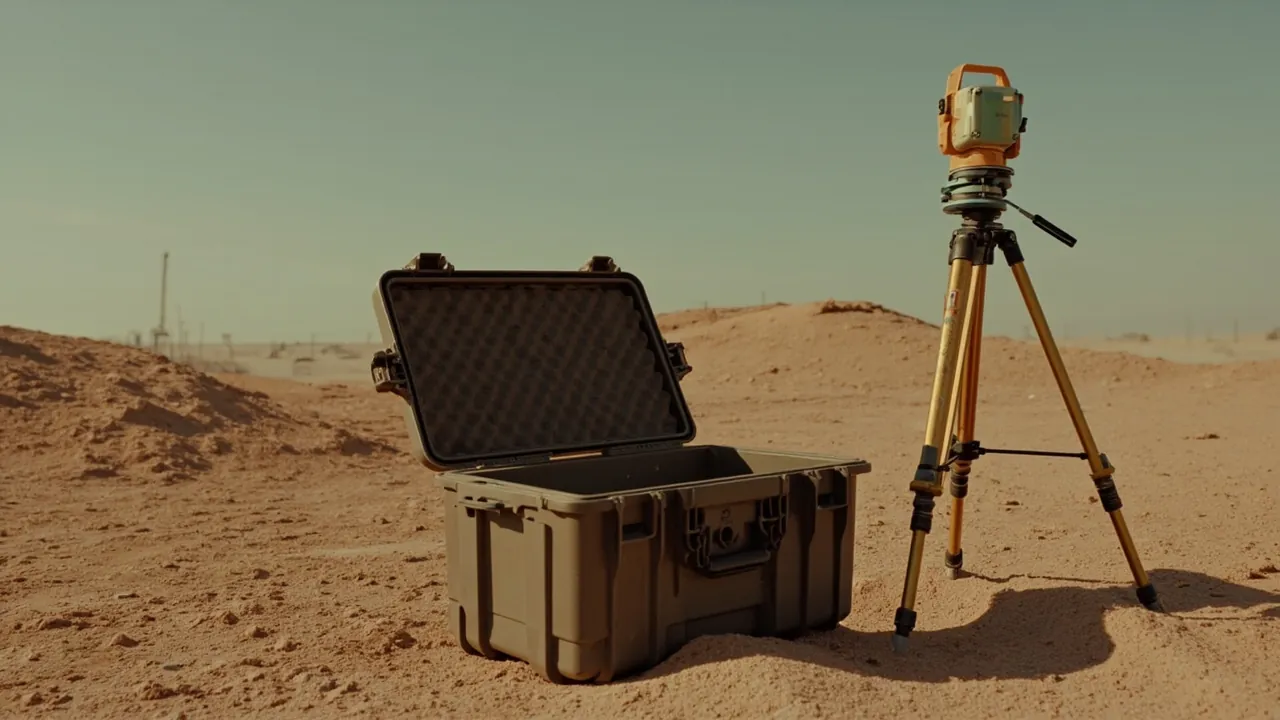
The requirements for a surveying instrument case reduce to five points. First, sufficient rigidity, full-perimeter sealing and IP67 capability, so the case handles wet roads after rain, dusty stations, wading at riverbanks and long rides in a pickup bed. Second, an insert shaped to the actual equipment, whether total station, GNSS receiver, field controller, prism or batteries, holding everything so that once it is in, it does not move, while applying no continuous pressure to the instrument. Third, the capacity to survive the real conditions of transport handling, including drops, vibration, tipping over and long-term load on the bottom panel, keeping those forces away from the instrument. Fourth, a carrying method matched to the working radius: backpack frames or hand carry for mountains and forest tracks, wheeled trolley carrying only for city and airport transfers. Fifth, the small details such as desiccant, hygrometer, screen protection and vibration pads, so the instrument is ready to observe the moment it comes out. One point that often leads to buying the wrong case has to be made clear first: when a survey team packs a case, what is really at stake is an entire set of axis relationships. To deliver accurate angles and distances, a total station must satisfy strict geometric relationships between its line of sight, its horizontal axis and its vertical axis, maintained by precision mechanical assembly and by the compensator. One severe impact or long-term transport vibration can shift those relationships slightly, showing up as a change in the 2C value, the index error or the compensator zero position. The instrument raises no alarm, but its readings have already begun to drift. What a surveying case genuinely protects is not an unbroken shell but the stability of axis relationships and the compensator zero point. The sections below follow the order of what transport does, what the shell must provide, what the insert must provide, how to carry the case, mistakes and practice, and then field verification together with incoming inspection.
Table of Contents
- What Transport and Site Changes Actually Do to Surveying Instruments
- Structural Requirements for the Shell: Rigidity, Sealing and Stacking
- Insert Requirements: Shaped to the Instrument, Immobilized but Not Compressed
- Choosing the Carrying Method: Backpack, Hand or Wheeled
- Common Mistakes and Practical Advice
- Field Verification and Incoming Inspection: From 2C and Index Error to the Instrument Constant
- Frequently Asked Questions (FAQ)
- Conclusion
- Further Reading
What Transport and Site Changes Actually Do to Surveying Instruments
The intensity of movement in survey work exceeds most people's imagination: gravel roads from county towns to villages, hours of jolting in a pickup bed, walking carries through mountain and forest tracks, wading across rivers, and temporary stations in wind and rain. Understanding precisely what those conditions do is the way to decide what the case must achieve.
Four Main Forms of Disturbance
| Disturbance | Typical situation | Possible effect on the instrument | Protection priority |
|---|---|---|---|
| --- | --- | --- | --- |
| Drops and impact | Falling from a truck bed, tripod or table; cases being thrown | Changed axis geometry, displaced optics, deformed housing that jams rotation | Cushion thickness, impact resistance, hardware structure |
| Continuous vibration | Long hauls on gravel roads, pickup beds, forest tracks | Compensator zero drift, loosened screws, connector fatigue | Closed-cell foam damping, fatigue resistance |
| Rain, mud and vapor | Working after rain, wading riverbanks, cases set on wet ground | Fogged and moldy optics, damp circuit boards, unstable readings | IP67 sealing, desiccant, hygrometer |
| Dust and silt | Construction sites, sandy regions, dry riverbeds | Grit entering rotation joints, wear that degrades sighting | Full-perimeter sealing, easy-clean surfaces, tools packed separately |
Why the Damage From Vibration Is Widely Underestimated
In a typical cross-regional survey task, instruments may travel hundreds of kilometers on low-grade roads. No single jolt produces high acceleration, but what matters is that the input is repeated and randomly directed. The compensator suspension, the clamping screws, the thread clearances of the tangent screws and connector contact surfaces all accumulate change under sustained micro-displacement. The result is usually not a failure but an out-of-tolerance index, discovered only when someone checks the 2C value and the index error, by which time the points already surveyed may need re-observation.
That leads to a hard rule: the first task after a long haul is not to begin observing but to run a known-point check and a basic index check. Schedule pressure often squeezes this step out of survey work, and it is exactly the cheapest line of defence available.
Temperature Change and Condensation: The Step Telescopes Fear Most
Beyond rain and silt, condensation from temperature differences is the factor least often counted in the field, and its damage is the most direct. Two situations are typical: carrying a cold case out of an air-conditioned vehicle into warm humid morning air, and bringing a still-warm case back into an air-conditioned base at the end of the day. In both, as soon as humid air meets the colder inner surface of the telescope optics, water condenses immediately. Fogged optics disrupt observation in the short term and leave water marks that invite mold over time, which is frequently irreversible once established.
The widely validated response has three steps: let the closed case stand until its internal temperature approaches ambient; then open it and take the instrument out; and if slight fogging persists, let it disperse naturally in a dry ventilated place, never wiping optical surfaces with a cloth. Pair that with long-term provisions: hold relative humidity below 60 percent, ideally between 40 and 55 percent, using enough desiccant plus a small hygrometer, drying or replacing the desiccant once it changes color.
Structural Requirements for the Shell: Rigidity, Sealing and Stacking
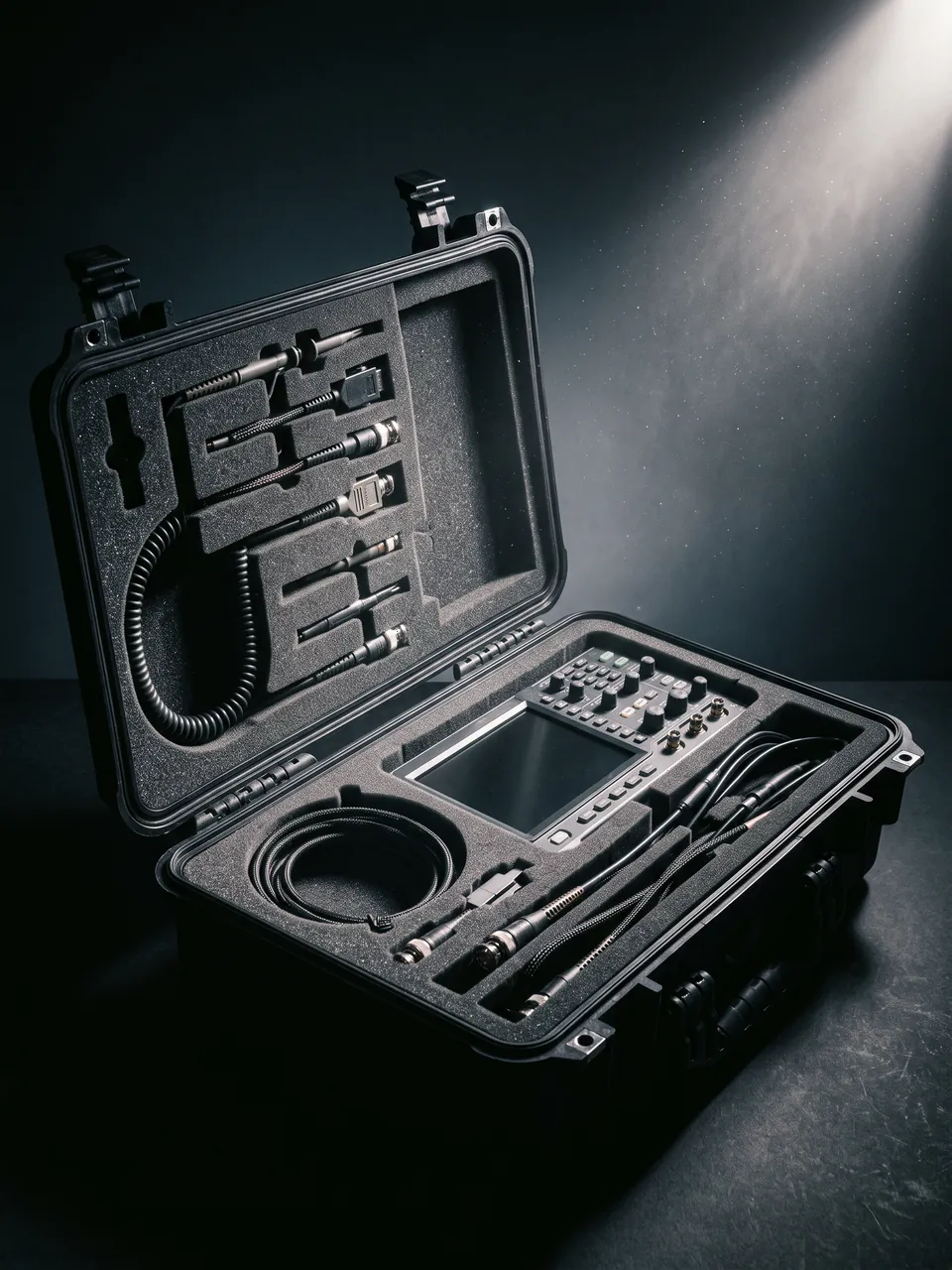
With the threats identified, what the shell must deliver becomes clear.
Rigidity Is the Precondition for Sealing
The link between shell rigidity and sealing is often overlooked. Sealing comes from compression rather than from covering, and compression only works if the sealing surface at the case mouth does not deform under load, vibration or temperature change. What keeps that mouth true is not thicker walls, which carry a severe weight penalty, but reinforcement ribs. The rib network on side walls and lid raises bending stiffness substantially without adding much material. Judging it is straightforward: press the long side wall with both hands and watch how much it deflects, then twist the case gently along its diagonal and see whether the mouth stays consistent.
The other frequently missed detail is the radius. The eight corners are what lands first in a drop, and a sharp corner concentrates stress and cracks most easily, while a radius spreads impact energy along an arc and reduces scratches to vehicle interiors and other gear. For cases constantly maneuvered through tight vehicles and work areas, radiused corners also simply avoid snagging.
Sealing and Protection Rating
In the IP code (IEC 60529, GB/T 4208 domestically), the first digit is dust protection and the second is water protection. For surveying cases:
| Rating | Meaning | Judgement for surveying work |
|---|---|---|
| --- | --- | --- |
| IP65 | Dust protected, low-pressure water jets | Usable baseline for urban work and low-rainfall regions |
| IP66 | Dust protected, powerful water jets | Handles torrential rain and high-pressure washing |
| IP67 | Dust protected, temporary immersion (30 minutes under specified conditions) | Baseline safety for wading at riverbanks, accidental immersion, and setting a case down during heavy rain |
Given how unpredictable field work is, IP67 capability is recommended as the baseline for surveying cases. At the same time, remember that an IP rating is a test result on a new case under standard laboratory conditions; long-term effectiveness depends on gasket care and latch compression, and once silt or grit becomes embedded in the sealing face, protection degrades noticeably.
Stacking, Locking and Accidental Opening
When several cases move together they need stacking locators, the mating bosses and recesses on the top and bottom shells, or they slide and tip over in a moving vehicle. Keep stack height within what the case is designed for, and never leave the case holding the total station at the bottom of the stack.
One practical rule on latches: cases going on long hauls should prefer recessed latches, because protruding latches are easily knocked open or damaged during stacking and handling. Where a project requires it, choose a structure with a lock hasp and pair it with a seal or padlock, which both deters theft and lets you tell on arrival whether a case has been opened.
Insert Requirements: Shaped to the Instrument, Immobilized but Not Compressed
The shell protects against the external environment; the insert protects relative positions inside. For surveying instruments there are three concrete requirements.
Choosing Between Three Insert Formats
| Format | How it is made | Advantages | Limitations | When to use it for surveying gear |
|---|---|---|---|---|
| --- | --- | --- | --- | --- |
| Pick and pluck foam | Pre-cut grid pulled out on site | No tooling, adjustable, low cost | Edges tear, loosens over time | Mixed models and temporary circulation |
| Pre-cut foam | Die-cut or CNC-cut to the inventory | High conformity, easy access | Redo it whenever the inventory changes | Teams with a fixed equipment list |
| Custom molded insert | Thermoformed or CNC-carved | Cavities match exactly, tiers and finger access possible | Tooling needed, suits batches | Standardized loads and centrally managed fleets |
For core equipment with high value and a fixed shape, such as a total station or a GNSS receiver, pre-cut or custom molded inserts are recommended. The value lies not in whether it fits but in whether position is held precisely over time: let a pocket loosen even slightly and every long haul becomes a series of small impacts.
Immobilized but Not Compressed
This principle carries two extra meanings in surveying work:
- Nothing may press on the telescope or the clamp screws. Pressure on those parts once the lid is closed affects rotation feel and can raise mechanical resistance over time.
- Removal must be straightforward. The ideal pocket allows vertical removal with no need to rotate or pull at an angle, because angled removal makes users grip parts of the instrument that are not handles.
A repeatable on-site check: with the lid closed, lift the case level and shake it gently; there should be no sensation of internal movement. Then set the case on its side for half an hour, take the instrument out, and on models with compensator diagnostics check whether the zero position looks abnormal.
Zoning Suggestion: How to Lay Out a Full Kit
| Content | Suggested position | Key point |
|---|---|---|
| --- | --- | --- |
| Total station or GNSS receiver | Main bay, central, easy removal | No pressure on the handle or telescope; adequate foam all around |
| Batteries and chargers | Separate bay on the lower level | Isolated from metal objects, quick to swap and count |
| Field controller and controller units | Shallow bay on the upper level | Screen facing a soft surface, no crushing |
| Prism and pole accessories | Side bay or dedicated pocket | Never touches the main unit's optical surfaces |
| Cables and data leads | Mesh pocket or zip bag | Not left loose at the bottom where they tangle and abrade |
| Desiccant | Dedicated corner pocket | Not free to slide around and strike the instrument |
Two Recommendations on Cushion Thickness and Material
- Cushion thickness. Leave more than 20 to 30 millimeters all around and above and below; the instrument must not touch a wall. That figure is a general lower bound for commonly used case sizes, and heavy total stations deserve more on top of it.
- Material. Prefer closed-cell systems (EVA, EPE, PE, EPP). They do not absorb water, so in rainy muddy field conditions they cannot turn into a damp source held permanently against the instrument. Among them EPP stands out for resistance to repeated impact and shape recovery, which suits long-term field transfers.
Choosing the Carrying Method: Backpack, Hand or Wheeled
This step is often left until last, yet it directly determines how much load the instrument actually sees and how likely it is to be dropped.
Of the same total station, carried on a backpack frame along a mountain path versus carried by hand over gravel, the acceleration spectrum differs completely: hand carrying swings, so the case strikes legs and roadside objects, while backpack carrying is relatively stable but places higher demands on anchor reliability. Choose the carrying method together with the case rather than buying first and working out transport afterwards.
Three details are easy to check. First, anchors must grip into a sufficiently rigid area: the quality approach is to mold metal inserts into the case wall during injection and screw the anchor or strap ring onto the insert, so repeated removal never strips threads. Second, the case needs anti-slip feet so it does not slide when set down on a sloping roadside at a temporary station. Third, the handle should be soft-overmolded with a sensible grip diameter, because when moving a case of fifteen kilograms or more, feel decides whether it slips out of your hand.
| Carrying method | Applicable scenario | Advantages | What to check |
|---|---|---|---|
| --- | --- | --- | --- |
| Hand carry | Urban stations, short moves, vehicle access right to the point | Flexible, quick to load and unload | Handle ergonomics, soft-touch overmolding |
| Backpack or frame carry | Mountains, forest, trackless sections | Hands free, suits long walks | Whether strap anchors use metal inserts, anti-slip feet present |
| Wheeled trolley | Airports, urban transfers, moving several cases | Less effort on flat ground | Quiet wear-resistant wheels, recessed handle, stackability |
| Secured in a vehicle | Pickup bed, long-distance transport van | Efficient loading of many cases | Stacking locators required, plus strapping |
One practical judgement: under about 15 kilograms with mainly walking and mountain work, choose backpack or hand carry; above 15 kilograms, or mainly airport and hard urban surfaces, choose wheeled. Worth noting is that wheels are almost useless on mud and gravel, where the added weight and bulk make carrying harder rather than easier. For wheeled cases also pay attention to the two moving assemblies, wheels and handle, since they are usually the first components to fail.
Common Mistakes and Practical Advice
These are the problems that appear most often in survey work and are solved more by discipline than by spending.
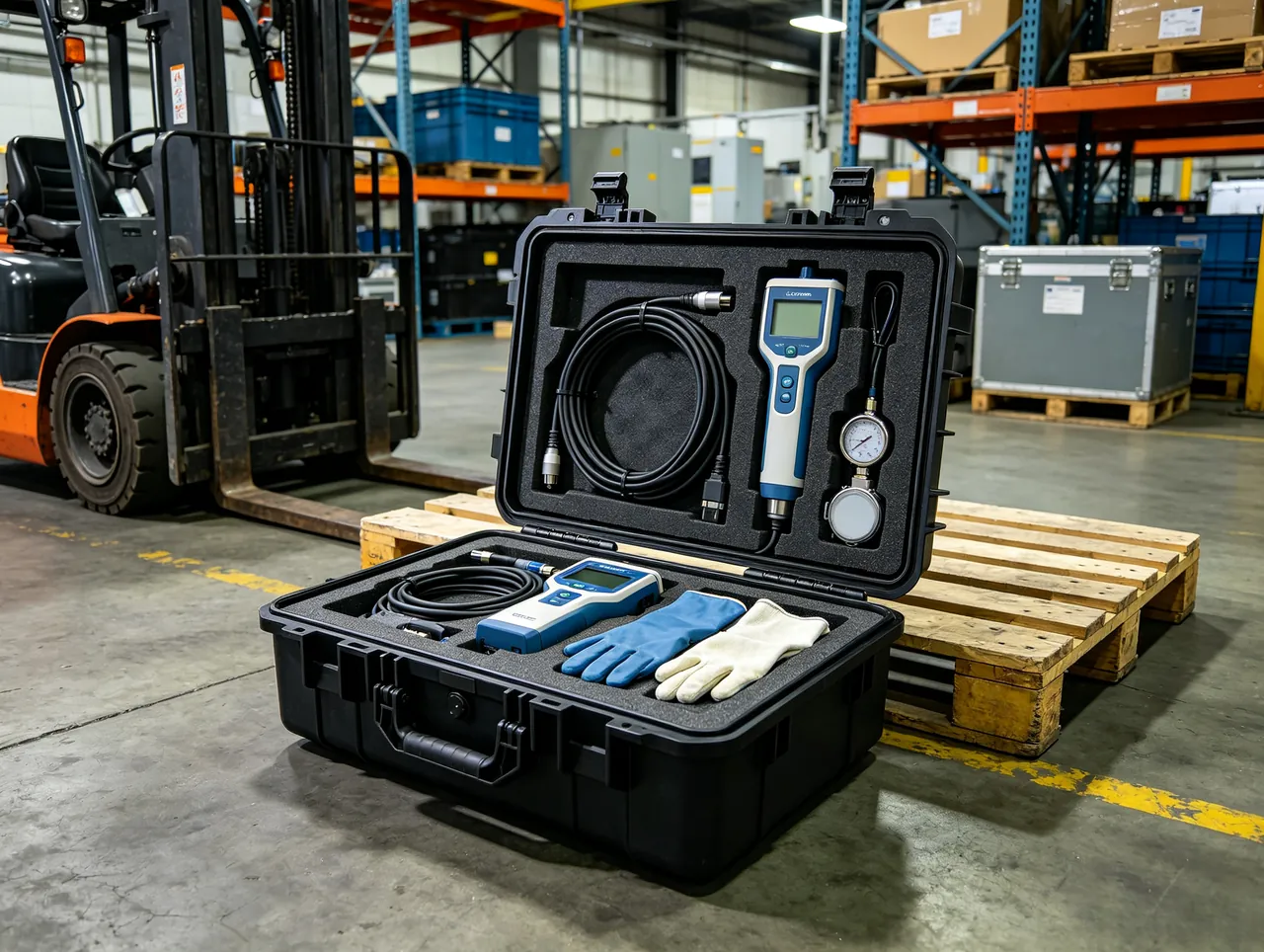
- Mistake one: substituting an ordinary plastic storage box. Ordinary boxes have no full-perimeter seal, no cushioning insert and insufficient rigidity. They stop coarse dust and nothing else, let alone rain, crushing and drops, and they certainly do not immobilize anything.
- Mistake two: starting to measure on arrival, skipping the known-point check. This is exactly the pattern of doing the protection work up front and economizing on verification. After a long haul, the first step should be a known-point observation comparison and an index check; that costs far less than re-observing an entire survey area.
- Mistake three: closing the case and leaving after working in rain. Closing a case for storage with mud and water on the surfaces and in the seal groove keeps the interior permanently humid, which is the main driver of fogged and moldy optics.
- Mistake four: letting heavy accessories bear on the main unit. Prisms, battery packs and cable reels sitting above the main instrument bay transmit pressure into the rotation mechanism and telescope area; use separate zones and bays.
- Mistake five: reading the IP rating and ignoring maintenance condition. Grit embedded in the sealing face, loose latches and a flattened gasket that has lost elasticity all nullify the nominal rating. Cleaning the seal groove and drying it after every wet day is the cheapest maintenance there is.
- Mistake six: taking a wheeled case into mountain terrain. Wheels offer no advantage on mud and gravel, and the extra weight makes carrying harder. Use hand carry or a frame pack on mountain and trackless sections.
Three operational items deserve a place in the written procedure: keep a configuration card in every case and check against it on loan and return; classify drops, immersion and severe impacts as reportable events that enter the three-step verification flow; and review desiccant and hygrometer by season, shortening replacement intervals in humid months. None requires budget, and all three are what convert spending on case and insert into genuinely reliable results.
Field Verification and Incoming Inspection: From 2C and Index Error to the Instrument Constant
Every configuration above finally lands on one question: is it accurate in use. That is what verification answers.
What Belongs on the Case Configuration Card
The card may be simple, but it carries most of the practical value of a well-built case layout. List every item with its pocket location, the quantity issued and, for instruments with calibration dates, the date itself. Add three prompts at the foot of the card: check desiccant color before closing; report any drop, immersion or severe impact rather than assuming a colleague noticed; and confirm every latch has self-locked before lifting. Laminate it or keep it in a writable sleeve so the card ages with the kit. Crews that adopt this habit generally see missing accessories and unlogged incidents disappear within weeks, and those two items account for most of the trouble attributed to transport rather than to the case itself.
Three Verification Steps That Must Follow Transport
- Known-point check. On arrival in the survey area, run a full observation on a known control point and compare coordinate differences. This is the fastest and most direct judgement available.
- Basic index check. Following the instrument manual, check the 2C value (collimation error) and the index error, and perform a compensator zero correction if needed.
- Instrument constant recheck. For high-accuracy projects, or after rough transport, recheck the distance measurement constants by the prescribed method.
The purpose is not to look professional but to detect an anomaly before formal data collection begins. Compared with reworking an entire survey area afterwards, these three steps cost almost nothing.
Incoming Inspection Checklist
- Shell. No cracks at the eight corners, ribs intact, no deformation at the mouth.
- Sealing. With the lid closed, inspect along the lid edge to confirm even gasket compression with no local gaps.
- Latches and hinges. Crisp seating with a clear self-lock, and recessed designs that do not interfere with other objects.
- Insert. Density and thickness consistent with the specification; recovers after pressing with no crumbling.
- Insertion and removal feel. Smooth with no binding, and no force needed to close the lid.
- Shake test. No internal movement when the closed case is held level and shaken gently.
- Desiccant and hygrometer. Fitted correctly and reading normally.
- Wheels and handle, if fitted. No rattles when pushed, handle extends smoothly and locks reliably.
- Stacking locators. Bosses and recesses mate properly and stacks do not slide.
Routine Maintenance Points
- After every rainy or muddy day, clean mud off the case exterior, focusing on the seal groove and case rim, and let it dry before closing it for storage.
- Wipe the gasket with clean water periodically and avoid strong solvents; replace it when visibly flattened, hardened or cracked.
- Event logging: after any drop, immersion or obvious impact, follow the three verification steps rather than judging by appearance and continuing to observe.
- Check the case inventory card regularly and replace missing accessories promptly, so a missing adapter or battery is not discovered on site.
Frequently Asked Questions (FAQ)
Q: Does a total station really need a case with a custom insert for transport? A: It is strongly recommended. The line of sight, horizontal axis and vertical axis of a total station have to satisfy strict geometric relationships maintained by precision assembly and by the compensator, and a severe impact or sustained transport vibration can shift them slightly. An ordinary square storage box can only hold the instrument, not immobilize it, so micro-displacement and impact occur throughout the journey. Pre-cut or molded custom inserts locate the instrument precisely to its outline, keeping adequate cushioning all around without applying continuous pressure, which is the most effective way to protect those axis relationships. For high-value equipment that travels repeatedly, insert cost is far below one re-survey or one calibration visit.
Q: Do surveying cases need wheels? A: It depends on working radius and ground conditions. Above roughly 15 kilograms, and where work is mainly airports, hard urban surfaces and moving several cases at once, wheeled carrying noticeably reduces physical strain and drop risk. Where work is mainly mountain, forest or trackless terrain, wheels are almost useless and the added weight and bulk make carrying worse, so choose a frame pack or hand carry. If you face both, consider one wheeled case for the airport and urban leg and a separate hand or frame case for the field leg.
Q: Can I close the case for storage right after bringing it back from rain? A: It is not advisable. First clean mud off the exterior, especially around the seal groove, wipe it with clean water and dry it, then leave the lid open in a ventilated place until completely dry before closing. Closing a damp case for long-term storage creates a stable high-humidity microclimate inside, which is the main cause of fogged and moldy telescope optics. Keep desiccant and a hygrometer permanently in the case, hold relative humidity below 60 percent, and dry or replace the desiccant once it changes color.
Q: Can several devices share one case, such as a total station, RTK, controller and prism? A: Yes, provided zoning is strict and nothing is crushed. Put the main unit centrally in its own bay with easy removal; keep batteries and chargers in a separate lower bay isolated from metal objects; put controllers in a shallow upper bay with screens facing a soft surface; put prisms and pole accessories in a side bay or dedicated pocket away from optical surfaces; and put cables in mesh pockets or zip bags. The keys are never letting heavy accessories bear on the main unit and never letting anything hard move freely inside and strike it.
Q: How do I judge whether a delivered insert is acceptable? A: Three checks can be done on site. First, shake it: with the lid closed, lift the case level and shake gently; there should be no internal movement or impact sound. Second, insertion and removal: the instrument should come straight out vertically without rotating, pulling at an angle or forcing, and the lid should latch without being pressed hard. Third, press and rebound: press the foam with a finger; it should spring back fairly quickly without shedding fragments, and foam that stays compressed indicates the wrong density or material. Where possible, also run one short road trip in a vehicle and then check whether instrument indices changed.
Q: Does surveying work require a pressure equalization valve? A: Whenever air shipment or transfer between high and low altitude is involved, it is recommended. It automatically balances internal and external pressure so the lid is not forced shut, cannot be opened, or left with the gasket under abnormal load. Note that flow through the valve is very small and only balances slow pressure change: it is neither a drying device nor a cooling path, so humidity still relies on desiccant. Keep the membrane away from strong solvents and oils.
Q: If an instrument has been dropped, must it be sent for calibration immediately? A: Treat it as suspect. Step one: stop using it, log what happened, and inspect the exterior and optical surfaces. Step two: run the three verifications described above, namely the known-point check, the 2C and index error check, and where needed a recheck of the distance constant. Step three: decide from those results whether to keep using it or send it to a qualified body for checking and adjustment. Never conclude from an undamaged exterior that it is fine to continue observing, because changes in axis relationships and compensator zero do not show as visible damage and are not caught by self-test, while the resulting error flows straight into the deliverable data.
Conclusion
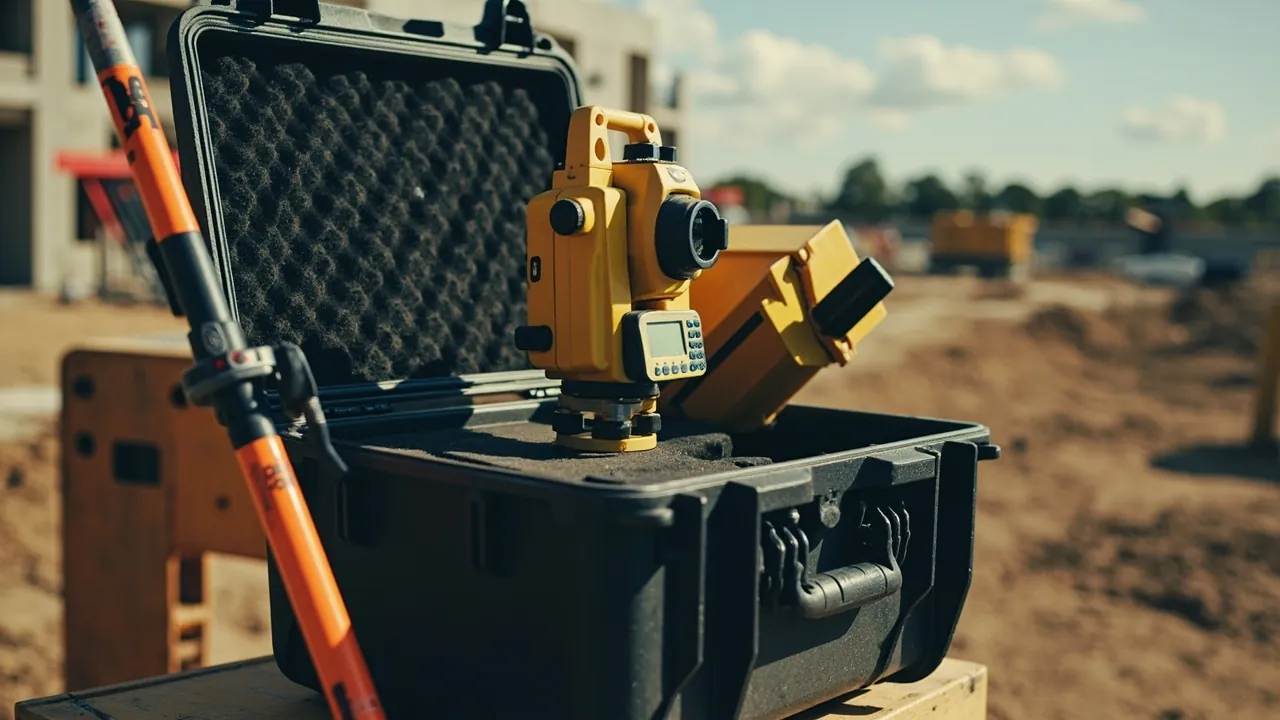
The requirements for a surveying instrument case finally resolve into five words: rigidity, sealing, shaping, carrying and verification. Rigidity comes from shell structure and ribs, and it ensures that the sealing surface at the case mouth stays true after drop impacts and sustained load. For sealing, take IP67 capability as the field baseline and sustain it through regular cleaning and inspection of the gasket. Shaping comes from pre-cut or custom molded inserts achieving in-and-it-stays-put without continuous pressure, which is what protects the total station's axis relationships and compensator zero. Carrying has to be chosen correctly by weight and ground conditions between backpack, hand and wheeled, with wheels warranted only above roughly 15 kilograms or over hard surfaces. Verification is the last step and the one most easily skipped: run a known-point check plus the 2C and index error check on arrival, and recheck the instrument constant where necessary, so anomalies appear before formal collection. Add routine cleaning of the rim and sealing faces, desiccant replacement, and the three-step response to any suspected event, and the whole scheme closes the loop. KeXin New Materials (Guangdong) Co., Ltd. was founded in 2014 and is located in Zhongshan City, Guangdong Province, with a factory of about 18,000 square meters, more than 80 machines and over 100 staff. Its protective-case line is marketed globally under the brand kexinMaterials and domestically under the JUNZHJIA product-line brand, covering more than 150 specifications, offering IP67 capability and environmental suitability validation against MIL-STD-810H. The company operates under ISO9001 and meets REACH, California Prop 65 and RoHS requirements, holds more than 20 utility model and design patents, and provides one-stop OEM and ODM customization from product design, mold manufacturing and injection molding to logo printing and tray and liner production. For bulk quotations, specification sheets or customization projects, please schedule through the contact page or inquiry form on this site.
Further Reading
- Why Is a Shockproof Tool Box Suited to Transporting Precision Tools?
- Which Industries Benefit From a Wheeled Tool Box?
- How Do Outdoor Protective Cases Handle Rain and Humid Environments?
- What Factors Matter When Customizing Protective-Case Foam?
- Why Do Protective Cases Often Use Pre-Cut Foam?
- What Kind of Tool Box Suits Outdoor Work?
- What Is the Difference Between a Waterproof Tool Box and a Normal One?
- How Does an Outdoor Protective Case Improve Equipment Transport Safety?
- Why Does a Protective Case Need a Stacking Structure?
- What Does IP67 Mean for a Protective Case and Where Does It Apply?