

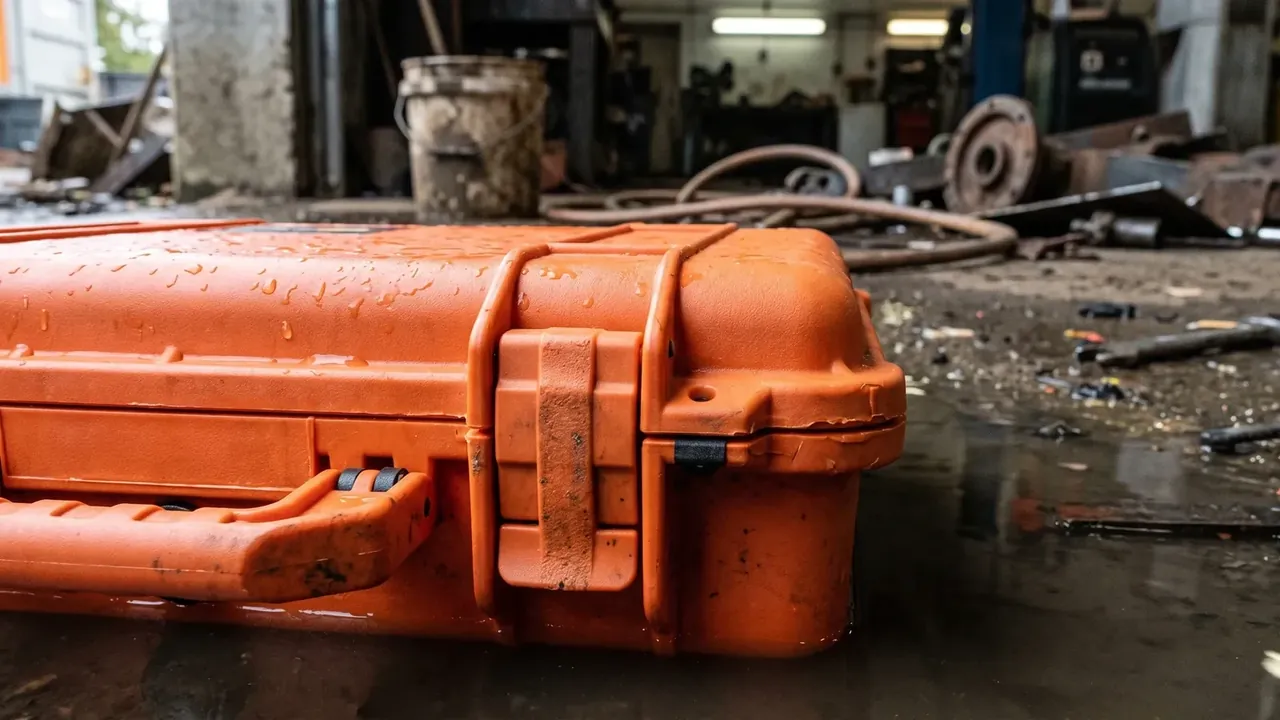
Quick answer: Put a Transit Case beside plastic totes, wooden pallet boxes, steel transfer racks and single-use packaging, and unit price tells you almost nothing. Cycle counts differ more than tenfold, so the comparison only works per turn.
Table of contents
- Comparing a Transit Case With Four Alternatives
- Turnaround Speed: Loading and Handover Time
- Sealing and Stacking: Weather Limits and Layer Height
- Repair and Retirement: What Fails First
- Cost per Turn: Spreading the Price Over Cycles
- FAQ
1. Comparing a Transit Case With Four Alternatives
Ranking five options by price is the first mistake: price covers the first trip, and these units live for years.
| Option | Price | Cycles | Per turn |
|---|---|---|---|
| Transit Case | 820 | 900 | 0.91 |
| Plastic tote | 90 | 260 | 0.35 |
| Wooden pallet box | 460 | 90 | 5.10 |
| Steel rack | 2,100 | 1,500 | 1.40 |
| Single-use pack | 35 | 1 | 35.00 |
The cycle column is the one people skip, and structure sets it. A tote goes brittle after two summers outdoors; a wooden box needs re-nailing after a few impacts.
2. Turnaround Speed: Loading and Handover Time
Speed splits into loading, handover and opening; the slowest tells you what to fix.
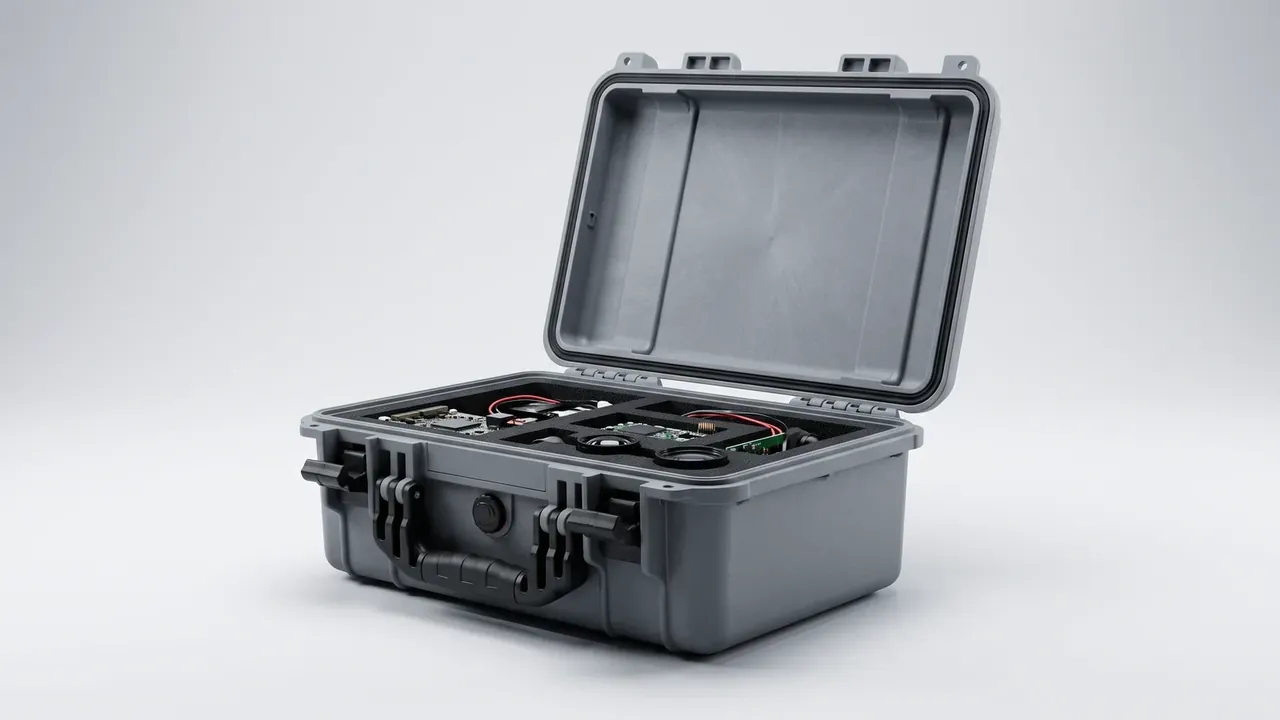
Loading is per pallet. Twelve units take 6 minutes by forklift, or 14.4 carried one at a time. A Transit Case and a wooden pallet box both make a full pallet; totes stack three high, adding 4 minutes.
Handover: forty units scanned as one code take 4 minutes; the same forty in wooden boxes, whose stencils wear off, take 9 with lids open. At 60 batches a month that is 60 hours a year.
Opening reverses the ranking: a tote lid lifts in 2 seconds, a steel rack takes 15, a latched case about 6, a wooden box 40, shrink wrap 90.
3. Sealing and Stacking: Weather Limits and Layer Height
Sealing decides where an option can stand: a tote is open, a wooden box has joints near 3 mm, a steel rack is open on four sides, single-use film fails once torn, and a case with a parting-line gasket reaches IP65.
Six hours outdoors separates them: the sealed case stays dry with legible labels, totes collect water, wooden boxes pulp their labels.
Stacking is geometry, not strength. Totes hold 3 layers at 60 kg per pallet, wooden boxes 4 at 500 kg, racks 6 at 800 kg, single-use packs 2 at 120 kg, and the case 5 at 180 kg. Six rack layers put the top tier at 1.9 m; anything under 8 kg empty goes over in a force 6 gust.
4. Repair and Retirement: What Fails First
Each option fails somewhere else, and repair method moves cycle count more than the datasheet.
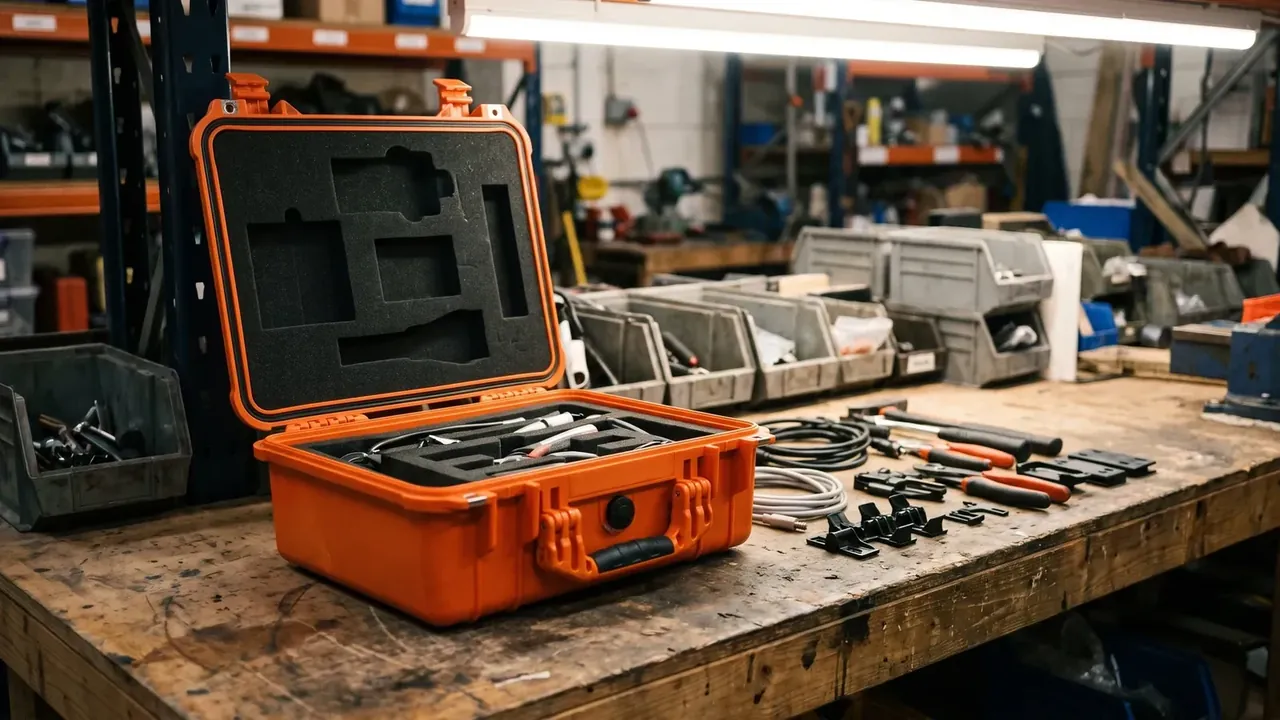
A Transit Case fails at the latch: one set per 150 openings, 35 each, swapped on site in five minutes. Wooden boxes fail at the boards, re-nailed every 20 trips for 15. A cracked tote is scrapped whole, and at 3% monthly breakage a third of the fleet turns over in a year. Racks fail at welds, 120 to repair with two days out.
Downtime is the invisible item: a 12-unit pallet idle two days loses two turns, which for the rack is 240 in hidden cost. Plastic scrap returns 2.4 per kg, so a 7.8 kg case gives back 18.
5. Cost per Turn: Spreading the Price Over Cycles
Add purchase, repair and downtime, then divide by real cycles.
| Option | Price | Repair | Per turn |
|---|---|---|---|
| Plastic tote | 90 | 0 | 0.35 |
| Transit Case | 820 | 210 | 1.14 |
| Steel rack | 2,100 | 120 | 1.48 |
| Wooden pallet box | 460 | 60 | 5.80 |
| Single-use pack | 35 | 0 | 35.00 |
The tote wins on paper, with limits: dry, short distance, no sealing, no stacking above three. One wet season removes the 0.79 gap, because a single 3,000 yuan pallet load ruined pays for three cases.
Wooden boxes cost most per turn and still own the half-tonne load. Racks repay their price over 1,500 indoor cycles.
Conclusion
None of the five is simply better; each maps to a duty cycle. Totes win on price and speed, wooden boxes on payload, racks on life, single-use on having no return leg. A Transit Case sits above the middle: only where sealing, stacking and frequent opening coincide does its cost per turn flatten out.
Spread the price over every turn: on that basis a Transit Case is rarely the cheapest, and usually the one that fails least.
This article discusses only the container (case body) side of specifications and design intent, and does not cover any handling, loading or use of the contents.
Related Reading
- What a Transit Case is: its role in the chain
- Common problems with ammunition transfer cases
- Portable plastic tool boxes against alternatives
- War reserve case structure and design intent
Related Products
- 8 Series — Gun Cases; Military Equipment Cases; Camera Equipment Cases; Drone Cases; Watch Cases; Knife Cases; First Aid Cases; Electronics Equipment Cases
- WL8-2812 PP Gun Case — model WL8-2812
- All protective cases and toolboxes: 7 series, 158 models