

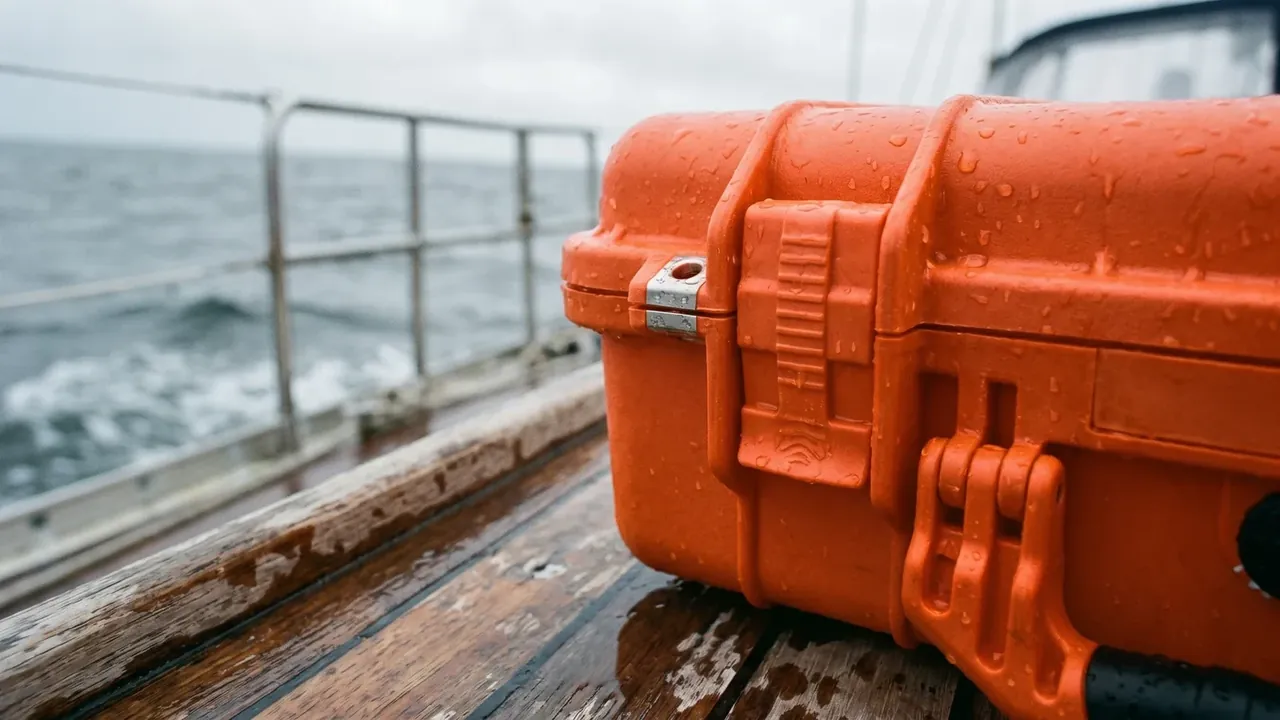
Quick answer: A transit case rarely fails at the shell. It fails at the gasket, the latches and hinge pins, and the label. Split inspection into three grades with a measurable limit for each item and the decision stops depending on feel.
Table of contents
- Inspection Grades and Intervals for a Transit Case
- Seal Compression and the Replacement Line
- Latch and Hinge Pin Wear Limits
- Label Loss and Re-Marking Procedure
- Cleaning, Disinfection and Spare Parts
- FAQ
1. Inspection Grades and Intervals for a Transit Case
Intervals follow open-close cycles, not the calendar. A transit case turned three times a day opens about nine hundred times a year, so quarterly service alone misses the hardest-working units.
| Grade | Interval | Checks | Limit |
|---|---|---|---|
| Pre-shift | Each shift | Latch, gasket, label | No binding |
| Weekly | 40 hours | Compression, hinge play | 0.8 mm |
| Quarterly | 500 hours | Cracks, pin diameter | 4.5 mm |
After any drop, rain or over-stacked pallet, run the quarterly items the same day.
2. Seal Compression and the Replacement Line
The gasket goes first: it absorbs compression, temperature and repeated closing at once. Judge it by compressed height. A new gasket is designed for 30 to 40 percent compression; under 20 percent it is due.
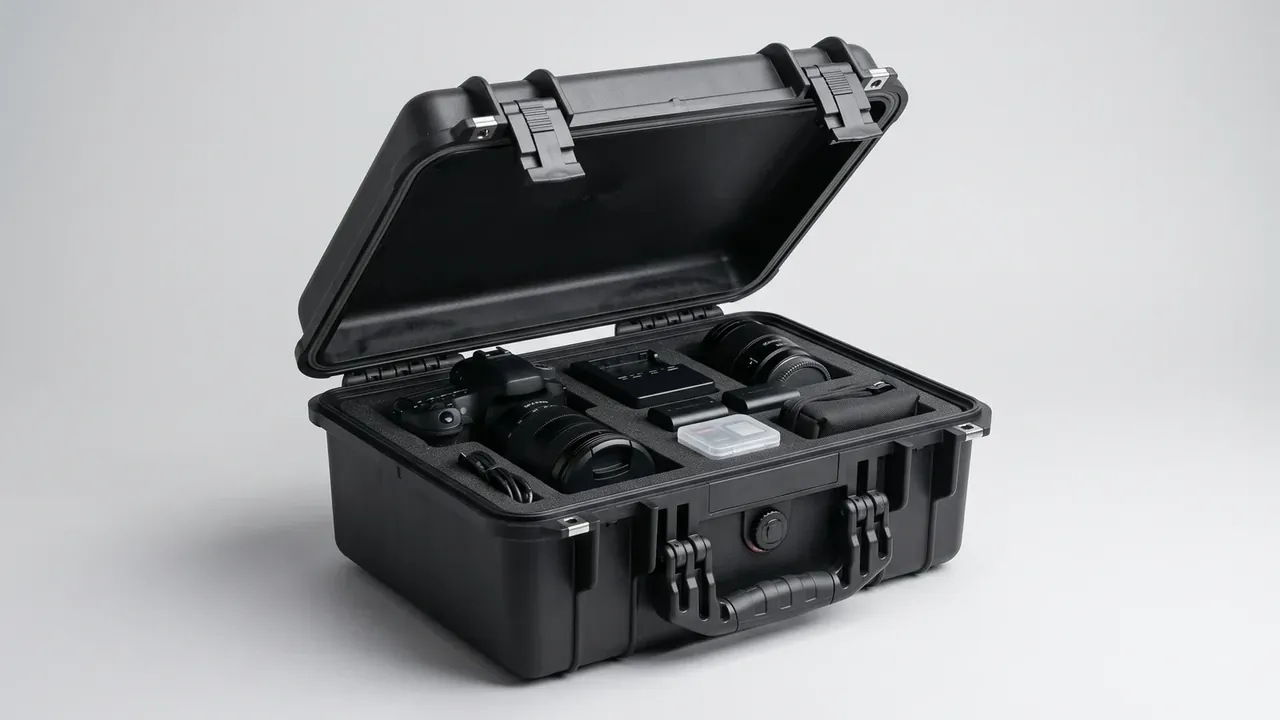
Mark eight points, side midpoints plus corners, latch the lid and read the gap with a feeler gauge. Groove depth minus gap gives compression. Three points below 20 percent means the whole loop goes.
Hardness is the second signal: a new gasket sits near Shore A 55, and stiff means aged. A loop with more than 25 percent set after 70 degrees Celsius for 24 hours stays off. Clean the groove, mitre the joint at 45 degrees, latch the empty case and let it settle two hours.
3. Latch and Hinge Pin Wear Limits
A draw latch does not snap off; its clamp drains away. A new latch pulls at about 120 N; below 80 N the closed lid rocks by hand and the gasket stops being compressed.
Check three places. On the latch body, replace the pin bore once it grows from 5 mm to 5.6 mm. On the pin, 0.5 mm of diameter loss is the line. On the keeper, a crack over 3 mm from the fixing hole ends service. Hinges are subtler: past 0.8 mm of end play the lid shifts and the gasket is sheared, not compressed. Half open and pushed sideways, a light knock means play is out of spec. Tighten a new pin to 1.2 Nm, since over-torque distorts the ear plate.
4. Label Loss and Re-Marking Procedure
Labels carry traceability through a transfer point, yet they get the least inspection. Loss is usually mould release or oil, not the adhesive.
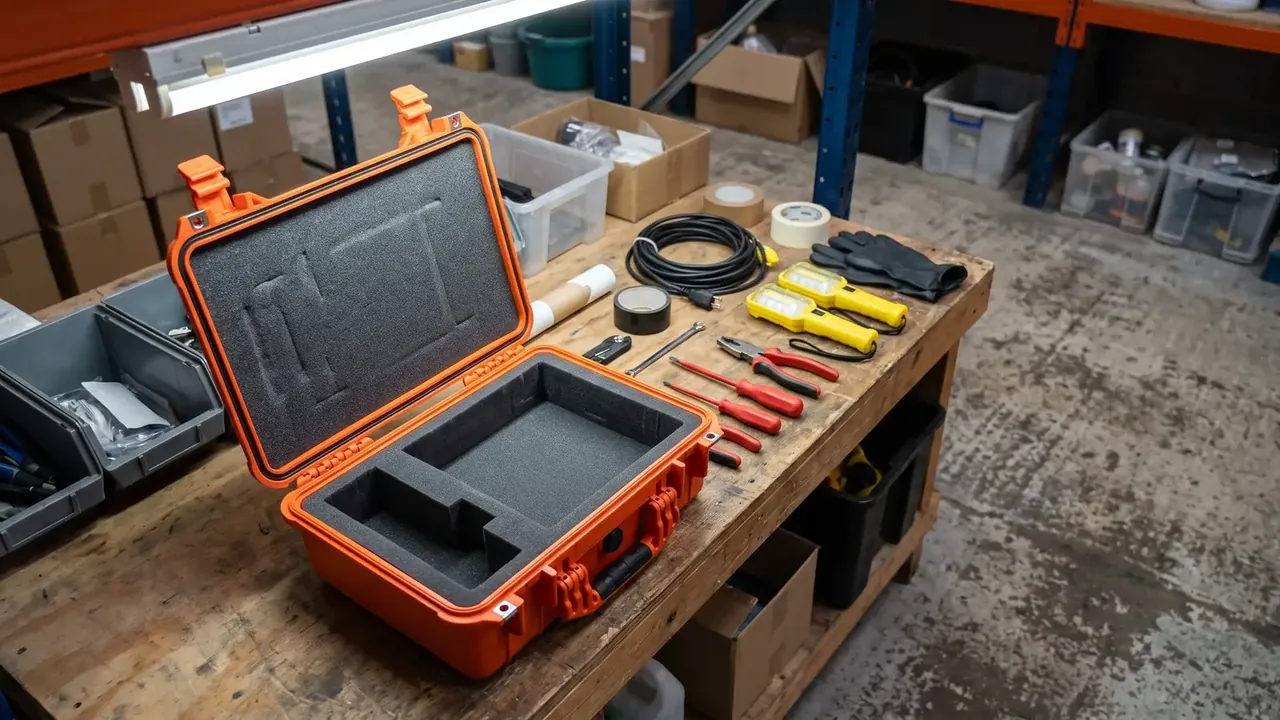
Pull 50 cases a month: if more than 5 percent have lost or blurred labels, audit the labelling step instead of labelling faster. Three re-marks in a quarter means the marking zone is wrong. Clear old adhesive with isopropanol, scuff the gloss off, apply a 0.8 mm PET label while pushing air out, then roll three passes at 2 kg. Specify -20 to 60 degrees Celsius.
5. Cleaning, Disinfection and Spare Parts
Cleaning frequency follows what the case carried, not appearance. Routine circulation gets a monthly wash; dusty goods mean cleaning after each emptying.
Use neutral detergent at pH 6 to 8 and water under 40 degrees Celsius. Keep a pressure washer under 4 bar with the nozzle 300 mm away, since a jet into the gasket groove lifts the seal. For disinfection, wipe with 75 percent ethanol for one minute, or use 500 mg per litre chlorine for five minutes and rinse. Solvents craze polypropylene.
| Spare | Per case | Stock ratio | Trigger |
|---|---|---|---|
| Gasket loop | 1 | 1 set per 10 | Under 20 percent |
| Draw latch | 2 | 2 per 10 | Bore over 5.6 mm |
| Hinge pin set | 1 | 1 per 20 | Under 4.5 mm |
| PET label | 2 | 50 per 100 | Peeled |
For a hundred transit cases, ten gasket sets, twenty latches and five pin sets cover a year; keeping them on site holds downtime under ten minutes.
Conclusion
Maintenance becomes manageable once vague words turn into numbers: 20 percent compression, 4.5 mm pin, 5.6 mm bore, 3 mm crack.
Graded inspection finds the fault, the limit decides it, and the spare list sets repair speed. Put all three in place and transit case availability rises with turnover rate.
This article discusses only the container (case body) side of specifications and design intent, and does not cover any handling, loading or use of the contents.
Related Reading
- Transit case role in a logistics chain
- Transit case configurations by site
- Rotomolded case repair methods
- Preventing stacking damage to cases
Related Products
- 8 Series — Gun Cases; Military Equipment Cases; Camera Equipment Cases; Drone Cases; Watch Cases; Knife Cases; First Aid Cases; Electronics Equipment Cases
- WL8-2812 PP Gun Case — model WL8-2812
- All protective cases and toolboxes: 7 series, 158 models