

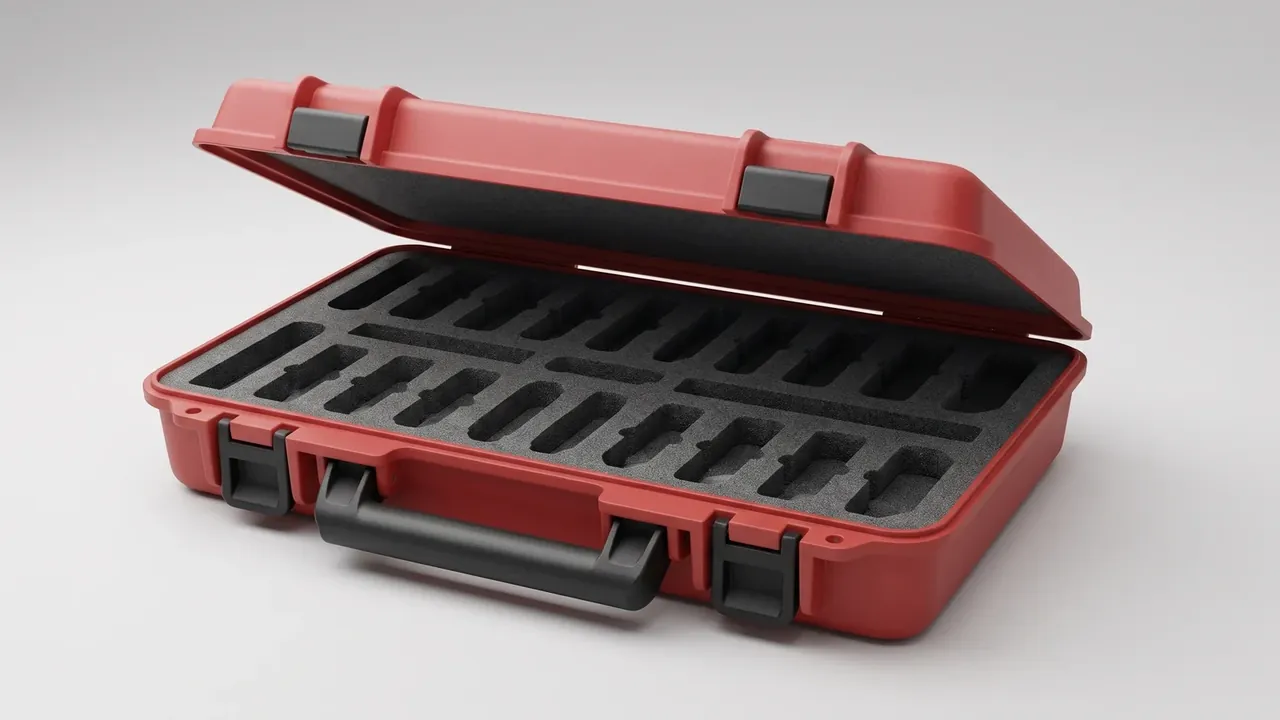
Quick answer: A transport and storage container differs from crates, cartons, steel bins and moulded totes in four places: how life is counted, how repair works, the structural ceiling on stacking and sealing, and the denominator under cost per cycle. High-frequency closed loops favour the rotomolded case; one-way lanes favour the carton.
Table of contents
- Transport and Storage Container against Four Alternatives
- Service Life and Repairability
- Stacking and Sealing Limits
- Cost per Cycle without Distortion
- Choosing by Turnover Intensity
- FAQ
1. Transport and Storage Container against Four Alternatives
Five box types share one sheet, where unit price tells you almost nothing. A crate is nailed from 12 mm panels and suits one trip; a carton is lightest, strength in the flutes; a steel bin is stiff but needs repainting; a moulded tote turns brittle in cold. A transport and storage container is rotomolded at 6 mm, between steel and carton in weight.
| Type | Forming | Weight | Fit |
|---|---|---|---|
| Plywood crate | Nailed 12 mm panels | 18 kg | One-way export |
| Corrugated box | Five-ply board | Under 2 kg | One-way, light |
| Steel bin | Welded 1.2 mm sheet | 22 kg | Heavy in-plant loop |
| Plastic tote | PP moulded, 2.5 mm | 4 kg | Short light loop |
| Transport and storage container | Rotomolded PE, 6 mm | 9 kg | Medium to long loop |
The steel bin weighs more than twice as much, and that mass is lifted every time.
2. Service Life and Repairability
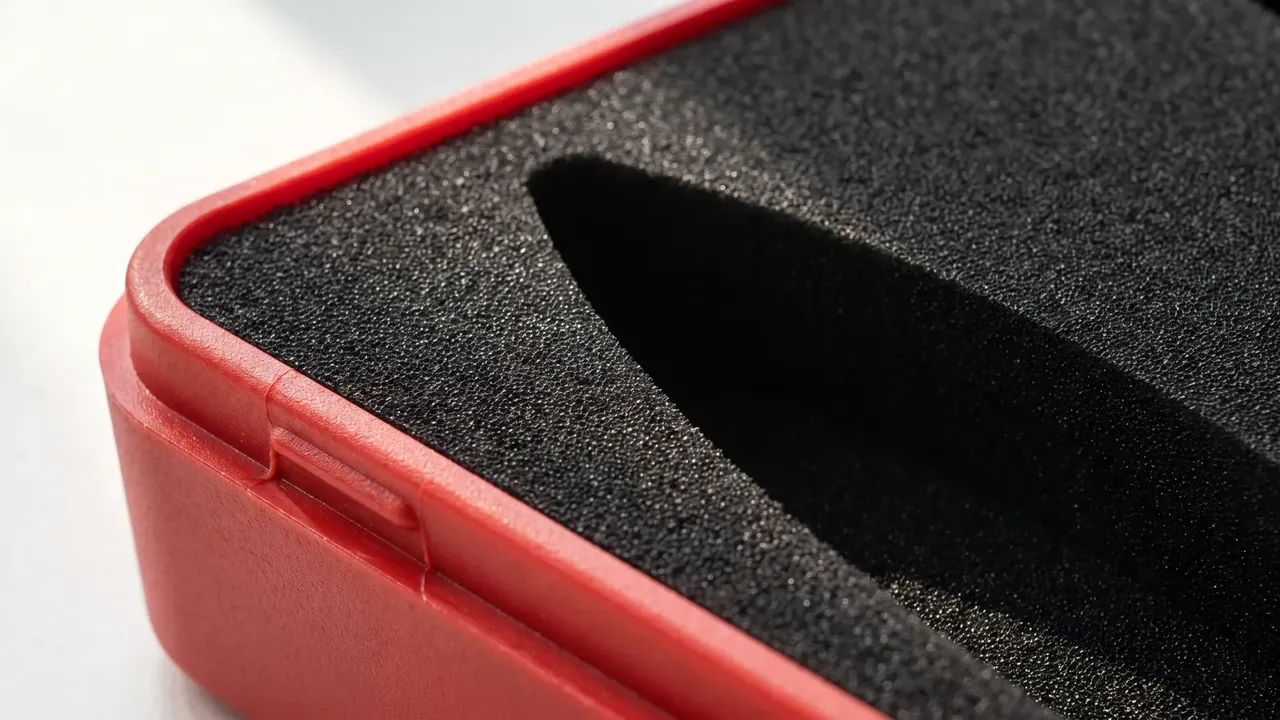
Life cannot be compared in calendar years. A crate lasts a few handlings; a carton loses about 40 percent of its compression strength after 48 hours of water uptake; a steel bin rusts within 240 hours of a scratch and needs drying time after repainting; a tote has no serviceable parts. On a transport and storage container the wear parts are gasket and latches, and a swap takes 8 minutes.
| Type | Design life | Replaceable | Downtime |
|---|---|---|---|
| Plywood crate | 1 to 3 trips | None | Whole unit |
| Corrugated box | 1 trip | None | Whole unit |
| Steel bin | Over 5 years | Hinges, latches | Paint drying |
| Plastic tote | 2 to 3 years | None | Scrapped |
| Transport and storage container | Over 8 years | Gasket, latches | One part swap |
Repairability decides how life is counted: parts per year, or the first crack.
3. Stacking and Sealing Limits
Stacking depends on wall stiffness and bearing area; sealing depends on how the lid closes. Both are structural; foam changes neither. A carton bows at three tiers; a tote stacks five high empty and half that loaded; a steel bin holds six static. A transport and storage container has ribs under the floor and holds four tiers at 600 kg.
| Type | Tiers | Sealing | Water risk |
|---|---|---|---|
| Plywood crate | 4 | Inner poly bag | Medium, bag tears |
| Corrugated box | 3 | None | High, strength drops |
| Steel bin | 6 | Welds plus strip | Medium, welds pool |
| Plastic tote | 5 empty | Flat overlap | Medium, no gasket |
| Transport and storage container | 4 | EPDM, 25 percent | Low, hoseable |
A flat overlap keeps dust out and water in; a gasket works by compression, and below 20 percent it fails.
4. Cost per Cycle without Distortion
Divide price by trips. A crate at 160 costs 160 per trip, a carton at 40 costs 40, and the rotomolded case at 780, with 35 a year in upkeep over 140 cycles, lands near 8.
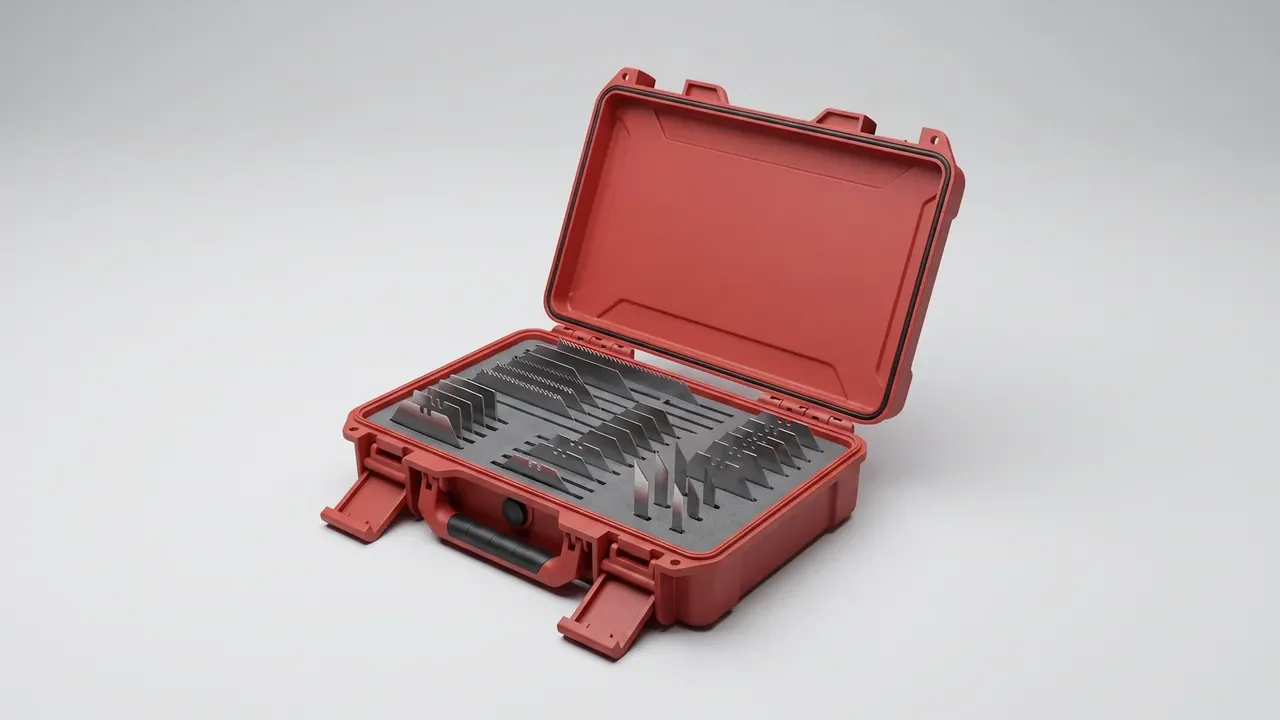
The denominator breaks first: real counts lose cases to retention, and the numerator leaks gaskets, latches and washing.
5. Choosing by Turnover Intensity
Read together, the four dimensions sort by turnover. Under five trips a year, crates and cartons win: the denominator is too small. Between twenty and sixty trips indoors, totes and steel bins both work. Above sixty trips on a damp lane, the case finally falls below disposable packaging.
Conclusion
The gap comes down to how life is counted, how repair works, the ceiling on stacking and sealing, and the denominator. It wins on busy loops because replaceable parts buy a long life. On sparse one-way lanes the crate and carton still cost less, so run the four checks before switching to a transport and storage container.
This article discusses only the container (case body) side of specifications and design intent, and does not cover any handling, loading or use of the contents.
Related Reading
- The cost ledger of reusable cases against one-way packaging
- How industries differ in what they ask of a case
- Preventing damage during stacking and storage
- Pallet marking and label positions on cases
Related Products
- 8 Series — Gun Cases; Military Equipment Cases; Camera Equipment Cases; Drone Cases; Watch Cases; Knife Cases; First Aid Cases; Electronics Equipment Cases
- WL8-2812 PP Gun Case — model WL8-2812
- All protective cases and toolboxes: 7 series, 158 models