

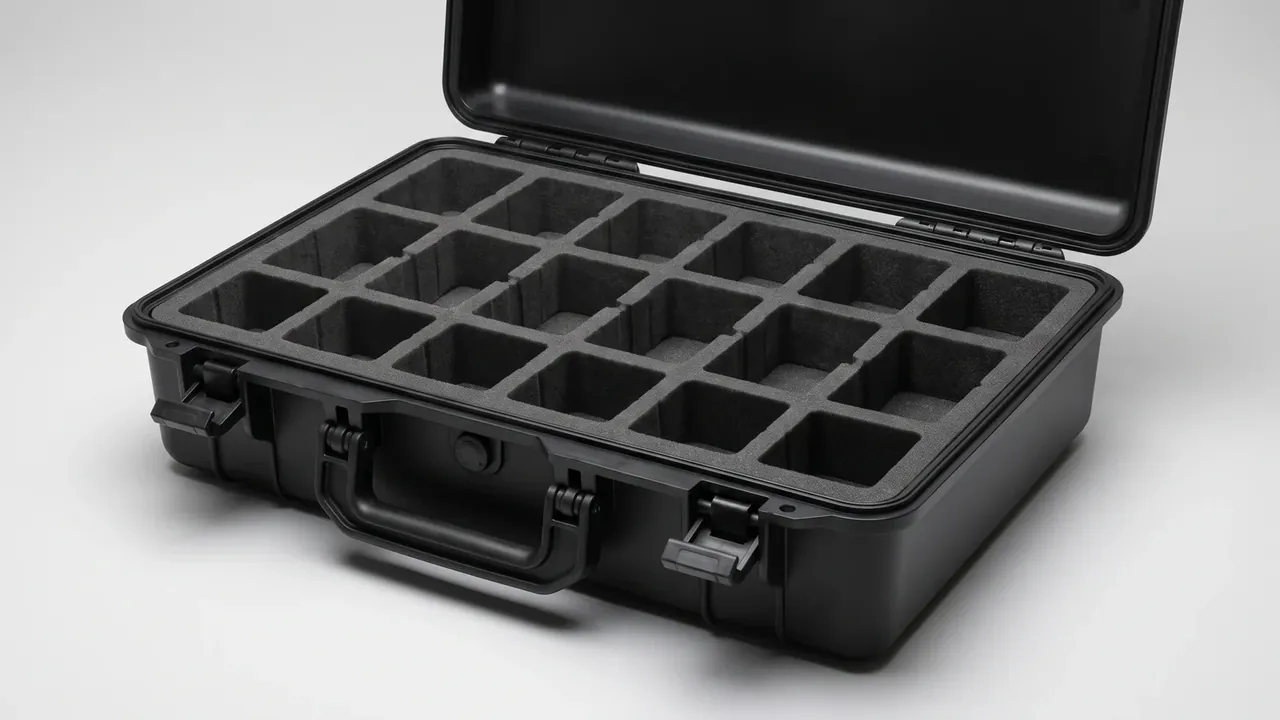
Quick answer: Maintenance on a transport and storage container comes down to three limits: gasket set above 1.5 mm, latch holding force below 350 N, and hinge pin wear past 0.3 mm. Tie inspection to opening cycles rather than the calendar, and stock spares by ratio.
Table of contents
- Inspection Items for a Transport and Storage Container
- Seal and Latch Replacement Limits
- Hinge Pin Wear and Lid Misalignment
- Cleaning Agents That Work and Agents That Damage
- Repair Cost and Spare Parts Stock
- FAQ
1. Inspection Items for a Transport and Storage Container
Inspection answers one question: can this case keep working? Three readings decide it, a continuous sealing face, latches that pull fully down, and no new stress whitening.
Tie the interval to cycles, not the calendar. A case opening a dozen times a day passes a thousand cycles in three months; one in storage may not reach fifty a year. Check fully every 250 openings.
| Check | Tool | Interval | Pass limit |
|---|---|---|---|
| Gasket compression | Feeler gauge | Quarterly | 25% to 35% |
| Latch holding force | Spring scale | 500 cycles | 350 N minimum |
| Lid corner misalignment | Straight edge | Monthly | 1.2 mm maximum |
2. Seal and Latch Replacement Limits
The gasket ages first. A typical build runs a 7 mm cord in an 8 mm groove, pressed by the lid to 25% to 35% compression. Once the cord takes a set it stops springing back and the sealing line opens gaps too small to see. Replace the loop when the set passes 1.5 mm, a crack runs beyond 10 mm, or compression falls under 20%.
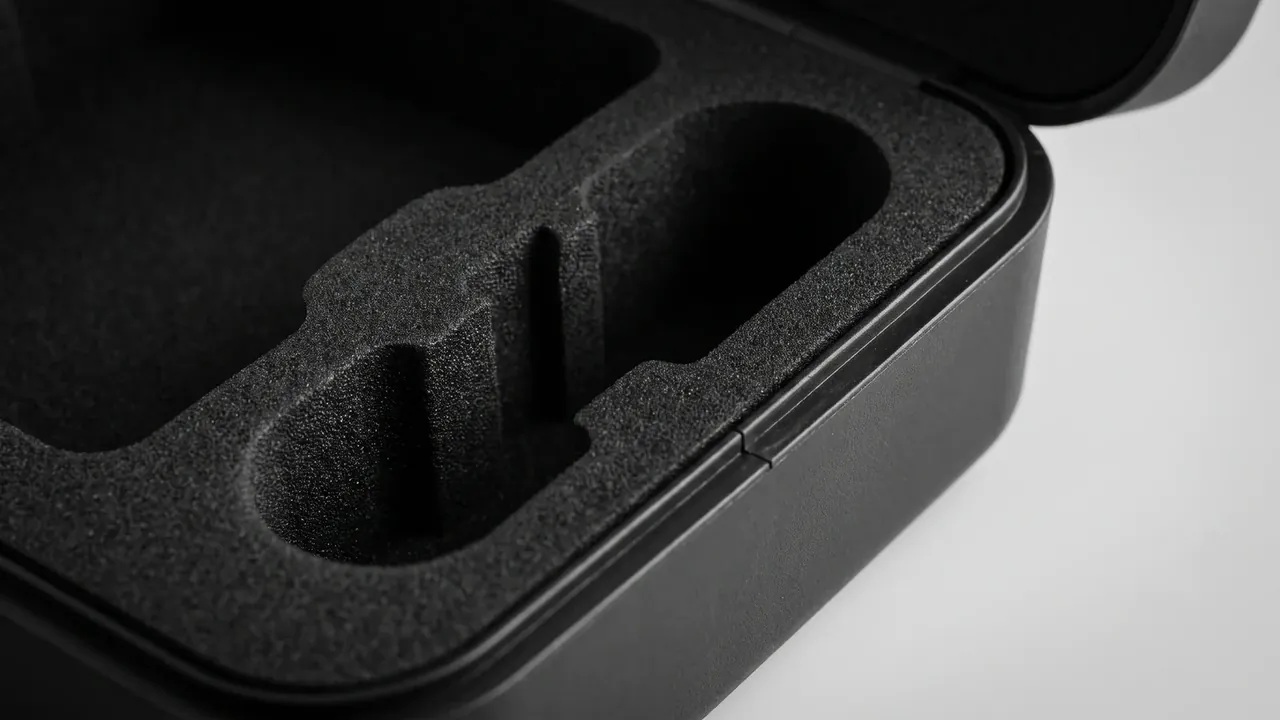
Latches fail at the cam and the spring. After 0.8 mm of cam wear the handle still closes but holding force has dropped below the limit; a 32 mm spring stretched by 4 mm can let a drop pop the lid. Re-torque the M4 base screws to 2.5 N·m.
Fit latches in pairs, or the lid tilts and over-compresses one side of the gasket.
| Part | Failure sign | Replacement limit |
|---|---|---|
| Gasket | Stays flat | Set above 1.5 mm |
| Latch assembly | Feels loose | Below 350 N |
| Hinge pin | Stiff opening | 0.3 mm wear |
3. Hinge Pin Wear and Lid Misalignment
A 6 mm pin in a bore with 0.15 to 0.25 mm clearance is normal. Wear opens that gap; past 0.4 mm the lid shifts as it closes, riding up at one corner and binding at the other.
A bluing test settles it: grease the pin, refit, open and close three times, then draw it out; a contact band on one side only means the bore has gone oval. Past 1.2 mm of misalignment, renew pin and bushing together. On refitting, snug the M5 screws diagonally, then bring each to 4.5 N·m.
4. Cleaning Agents That Work and Agents That Damage
Choose the agent by shell material, not by the stain. Rotomoulded polyethylene shrugs off alkalis and most alcohols but reacts to strong oxidisers and chlorinated solvents. Washing calls for a neutral agent at pH 6 to 8, diluted to 1% to 2%, below 40 °C.
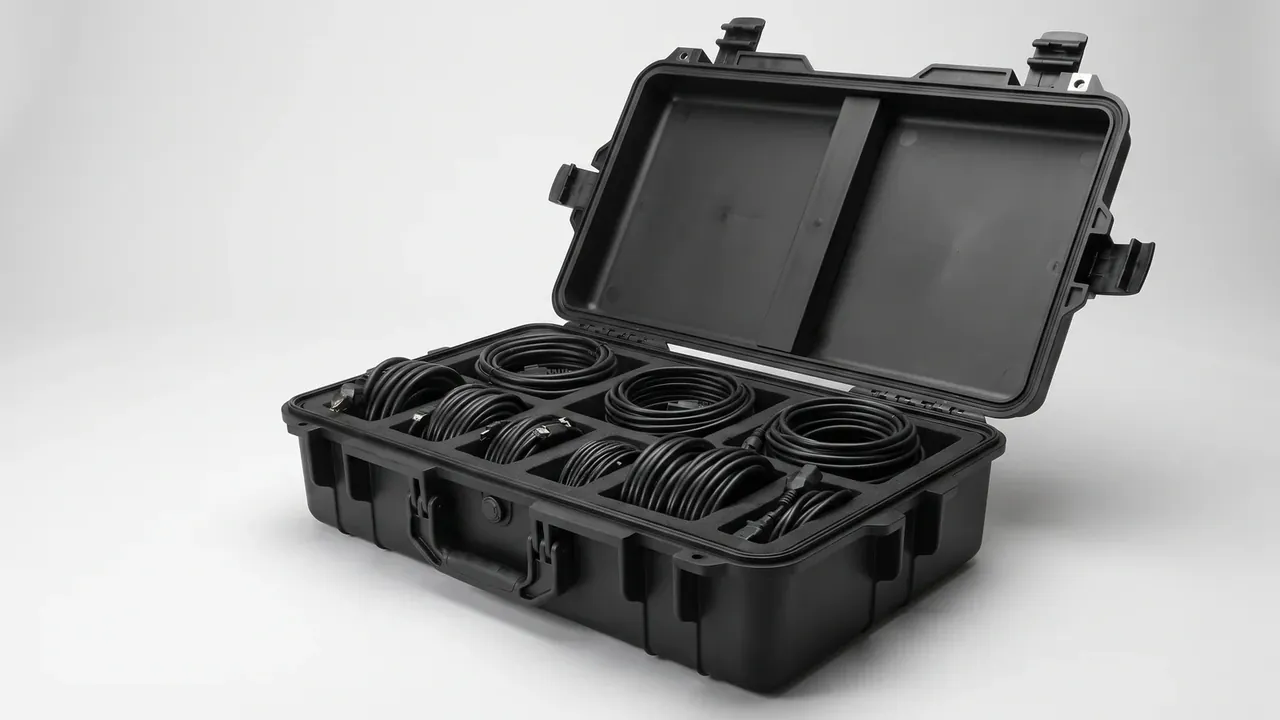
Four agents cause most damage. Acetone and dichloromethane swell the surface into a white bloom; chlorinated disinfectants trigger stress cracking at ribs; a pressure washer above 80 bar closer than 300 mm blows the gasket out of its groove; steam above 90 °C sets the cord flat. Dry the case within 30 minutes, or water left overnight reads as low compression.
5. Repair Cost and Spare Parts Stock
Repair cost splits into parts and labour. Across a fleet of 100 units, annual spares run at roughly 8% of the installed base, and upkeep sits between 6% and 9% of a new unit's price.
Stock by ratio: gaskets at 15% of the fleet, latches at 8%, pins at 5%, springs at 10%. Gaskets keep best dark, below 25 °C and flat, losing elasticity after 24 months. Retire a unit once parts and labour pass 40% of a new case.
Conclusion
Maintenance on a transport and storage container is a set of measurable limits, not a matter of feel. Attach inspection to cycles, write the thresholds for gasket, latch and hinge pin, then control cost with stock ratios and a retirement line. The hinge pin is the quiet culprit, touching no sealing face yet eroding the seal through misalignment. Run the routine well and a transport and storage container serves a third longer.
This article discusses only the container (case body) side of specifications and design intent, and does not cover any handling, loading or use of the contents.
Related Reading
- How a transport and storage container is built
- Maintenance points for reusable shipping boxes
- Servicing rotomoulded cases
- Where a transport and storage container stops and alternatives start
Related Products
- 8 Series — Gun Cases; Military Equipment Cases; Camera Equipment Cases; Drone Cases; Watch Cases; Knife Cases; First Aid Cases; Electronics Equipment Cases
- WL8-2812 PP Gun Case — model WL8-2812
- All protective cases and toolboxes: 7 series, 158 models