

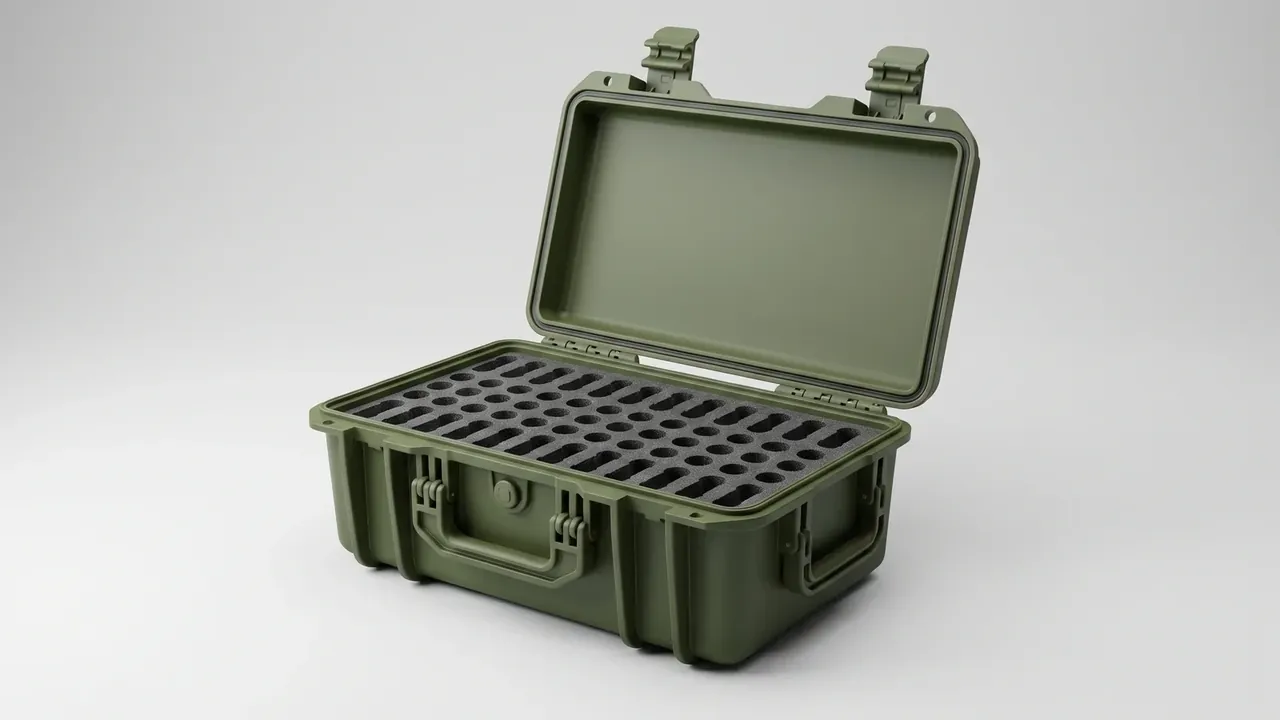
Quick answer: Start with five criteria, not with material. Internal size and volume efficiency set capacity, wall thickness and self weight set whether it can be lifted, stacking and handling set rack height, sealing class sets storage life, and latches set daily usability.
Table of contents
- Five Criteria for a Transport and Storage Container, in Order
- Criterion One: Internal Dimensions and Volume Efficiency
- Criterion Two: Wall Thickness and Self Weight
- Criterion Three: Stacking and Handling
- Criteria Four and Five: Sealing Class, Latches and Fittings
- FAQ
1. Five Criteria for a Transport and Storage Container, in Order
A spec sheet for a transport and storage container can run to dozens of lines. Five decide the outcome; the rest follow.
| Criterion | Test | Usual mistake |
|---|---|---|
| Internal size | usable volume against envelope | outside size only |
| Wall and weight | grams per litre | thicker is stronger |
| Stacking, handling | base compression, interfaces | static load read as dynamic |
| Sealing class | water condition for the IP number | gasket equals waterproof |
| Latches, fittings | spacing, replaceability | more latches is safer |
Order matters: volume and wall thickness fix the structure, and changing either means a new mold. Sealing and latches can be revised later for far less. The reverse order is common: pick a high sealing class, fill the wrong shape with foam, then find the loaded weight beyond a two-person lift.
2. Criterion One: Internal Dimensions and Volume Efficiency
Internal dimensions decide what fits. A case measuring 1200 x 600 x 540 mm outside gives about 1080 x 500 x 460 mm usable once walls, radii and ribs are taken out.
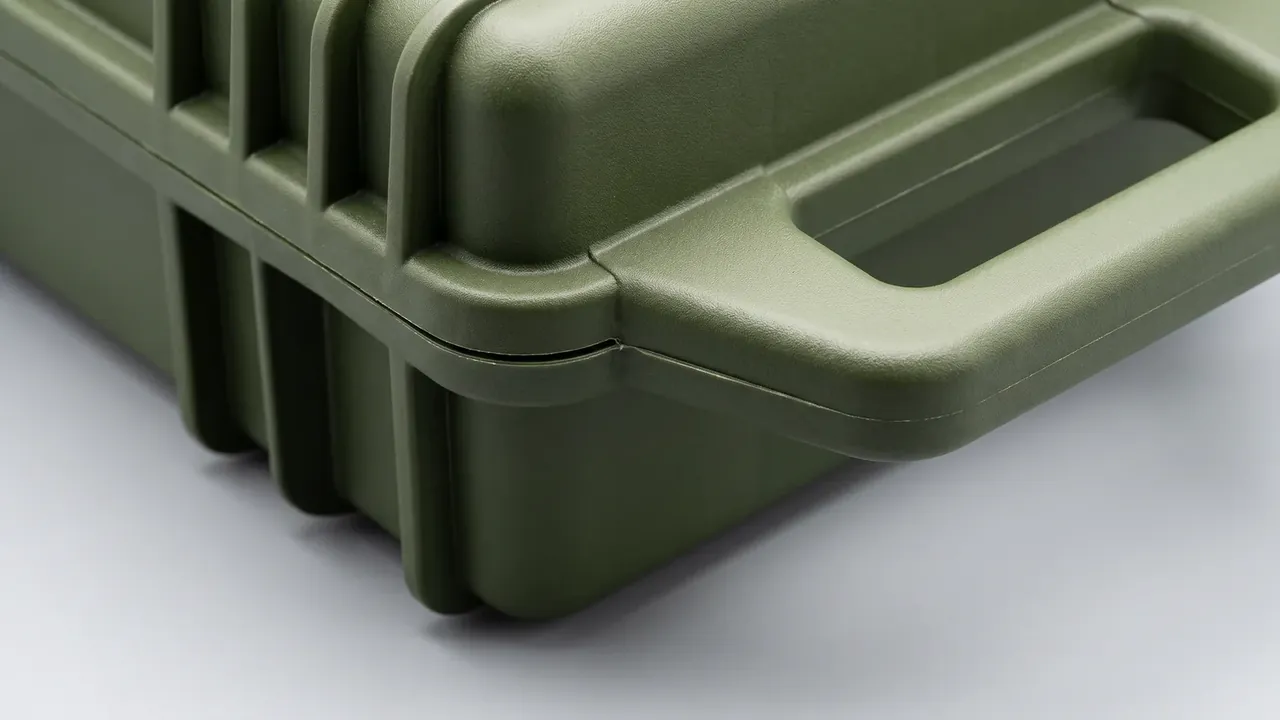
That is 248 litres inside a 389 litre envelope, 64 per cent efficiency. Below 58 per cent, ribs are too dense, radii too large or the plinth too tall. Measure the narrowest internal length, the clear height under the lid and the height above the plinth.
An R30 corner removes about 1.5 litres, near 6 litres over four corners. For box-shaped loads that volume is lost; for equipment with corner guards, the radius protects.
3. Criterion Two: Wall Thickness and Self Weight
Thickness alone is not a criterion; thickness against volume is. At 248 litres a 4.5 mm wall gives 11.2 kg, 45 g per litre; at 6 mm, 14.8 kg and 60 g.
| Wall | Empty | Loaded | Handling that fits |
|---|---|---|---|
| 4.5 mm | 11.2 kg | 55 kg | carry, short lift |
| 6 mm | 14.8 kg | 60 kg | two-person, castors |
| 8 mm | 19.5 kg | 70 kg | forklift, hoisting |
Self weight decides handling before strength does. With 55 kg inside, an 11.2 kg transport and storage container is a two-person lift; at 19.5 kg the same load needs a pallet truck.
Thicker walls buy drop resistance and cost weight, price and stack height. Set the loaded limit from contents, subtract the empty weight a crew can handle, then see which wall fits.
4. Criterion Three: Stacking and Handling
Stacking depends on compression at the bottom layer; handling depends on interfaces. Merged into one rating, errors start.
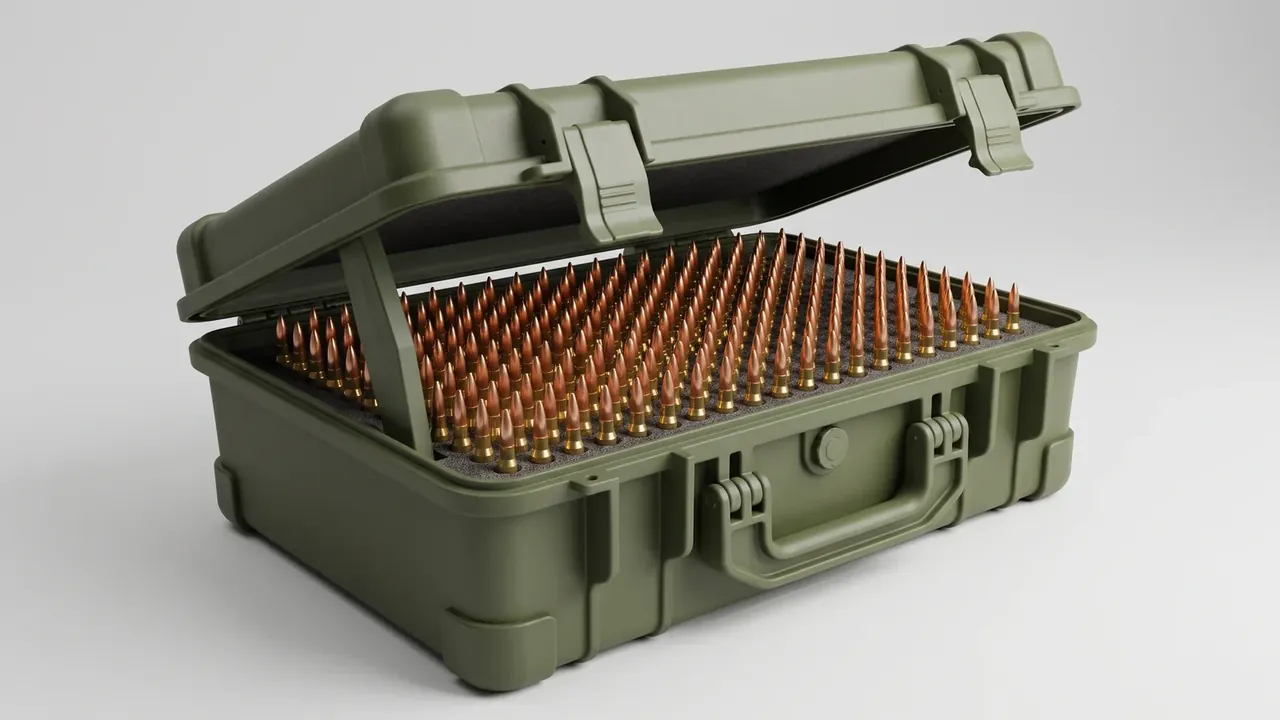
Divide 300 kg static capacity by 55 kg loaded: 5.4, so five layers. Clear height cuts it again, since 2.4 m over a 540 mm case allows four. Take the lower figure.
Fork pockets need 100 mm clear height and 1200 mm through depth so forks carry the base. Hoisting needs four points or a sling channel. A wrong base needs a pallet later, which costs another 120 mm of stack height.
5. Criteria Four and Five: Sealing Class, Latches and Fittings
Match the sealing class to where the case sits. IP54 covers dust and splashing indoors, IP65 takes wash-down, IP67 means 30 minutes at one metre outdoors.
The class depends on gasket compression. An 8 mm silicone gasket should compress 25 to 30 per cent; below 20 per cent it leaks, above 35 per cent it fatigues. Two latches on a 1200 mm case leave the middle barely touched.
Latches follow length: one every 400 mm, so three on a 1200 mm transport and storage container, each holding 180 N. An 8 mm shackle hole takes a common padlock and a 6 mm stainless hinge pin survives daily opening.
Conclusion
Choosing a transport and storage container comes down to a chain: volume for capacity, grams per litre for handling, the lower of compression and clear height for stacking, then sealing class and latch spacing. A tape measure, a scale and a height sheet fill all five in, so the transport and storage container you order will not need replacing.
This article discusses only the container (case body) side of specifications and design intent, and does not cover any handling, loading or use of the contents.
Related Reading
- Structure and process explained
- Compared with alternatives
- Setting specifications for a stackable case
- Maintenance points for reusable cases
Related Products
- 8 Series — Gun Cases; Military Equipment Cases; Camera Equipment Cases; Drone Cases; Watch Cases; Knife Cases; First Aid Cases; Electronics Equipment Cases
- WL8-2812 PP Gun Case — model WL8-2812
- All protective cases and toolboxes: 7 series, 158 models