

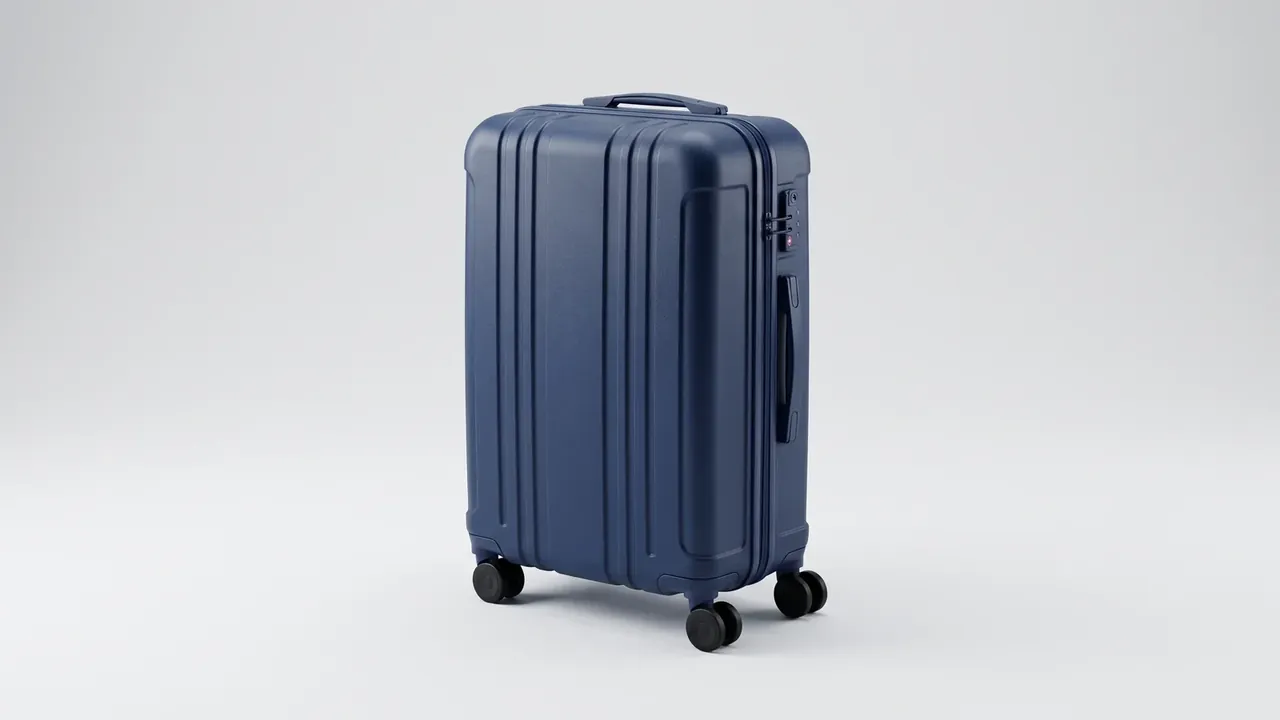
Quick answer: The gap is not margin but how the quote is written: whether tooling sits in the unit price, whether regrind is blended in, who pays packing and inspection, and what an open account costs.
Table of contents
- Where 110,000 yuan goes in travel case production
- Unpacking the quote line by line
- Volume: what separates 300 units from 3000
- Tooling ownership: who pays and who holds
- Six milestones inside a 45-day lead time
- Payment terms, samples and audits
- FAQ
1. Where 110,000 yuan goes in travel case production
One drawing, one quantity of 3000, and six factories quoted between 132 and 169 yuan a unit. Across 3000 units that is 111,000 yuan. Four things account for the 37 yuan: tooling charged inside the price or billed apart, regrind blended into the shell, packing and inspection billed to whom, and the discount rate on an open account.
Travel case production is negotiated the other way round: settle definitions first, because only about 5 yuan of the spread is real processing profit, and a mismatch leaves the comparison sheet as decoration.
2. Unpacking the quote line by line
A quote has to break into cost lines before anyone can judge it. The table splits a 169 yuan offer.
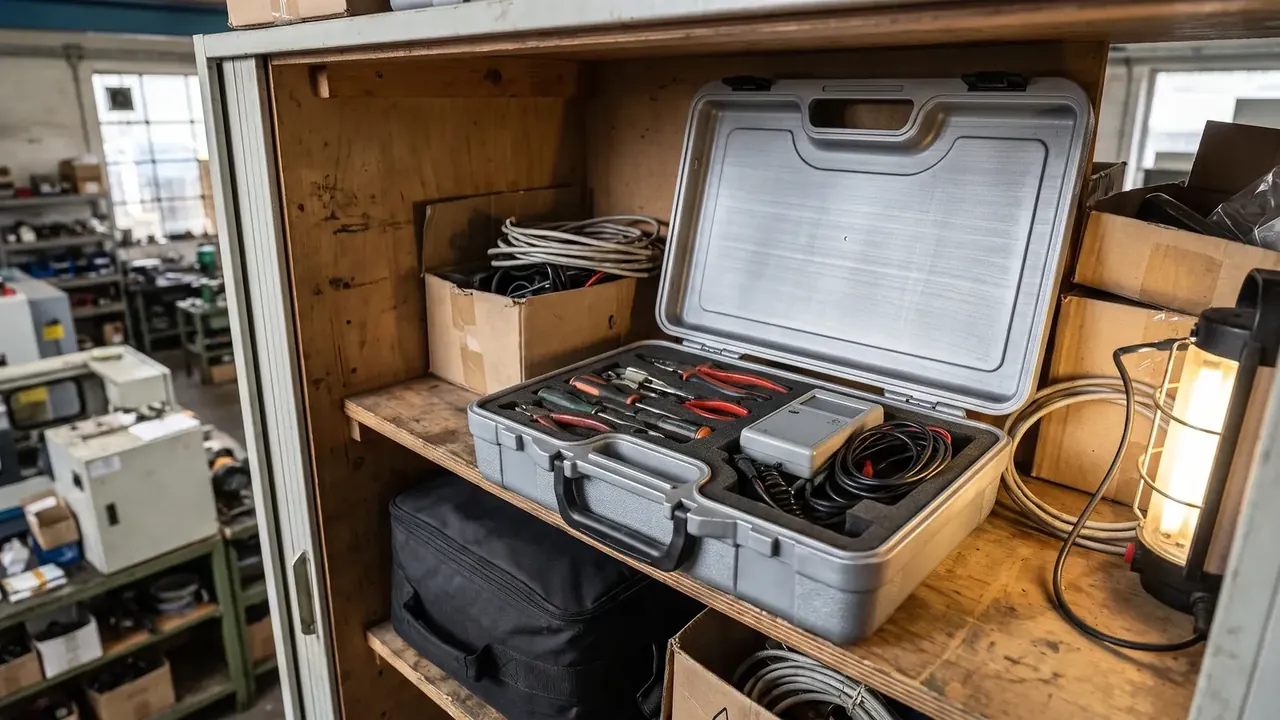
| Cost line | Per unit | Share | Where it gets moved |
|---|---|---|---|
| Shell material | 59.3 yuan | 35% | 30% regrind saves 8.4 yuan |
| Assembly labour | 17.6 yuan | 10% | Quoted 9 minutes, run at 11 |
| Hardware | 44.2 yuan | 26% | Trolley tube 1.2 to 0.9 mm |
| Tooling | 6.0 yuan | 4% | Charged again next batch |
| Margin | 13.5 yuan | 8% | Thin margin, extras billed apart |
Material is easiest to check: a shell weighs 2.6 kg net, PC granulate runs 21.5 yuan a kilogram and sprue loss adds 6%, so 59.3 yuan. Blending 30% regrind drops it to 50.9 yuan and doubles corner cracking in a -20℃ drop.
Hardware carries 28 yuan of trolley, 12.8 yuan of wheels and 3.4 yuan of latches; a 10 yuan saving there usually means a thinner tube or a zinc axle.
3. Volume: what separates 300 units from 3000
Minimum quantities are the cost of a changeover that cannot be spread: on one tool set, 300 units and 3000 units differ by 54 yuan a unit, almost all of it fixed.
| Batch | Unit price | Tooling | Setup and first-off | Gap against 3000 |
|---|---|---|---|---|
| 300 | 186 yuan | 50 yuan | 12 yuan | 54 yuan higher |
| 1000 | 152 yuan | 15 yuan | 5 yuan | 20 yuan higher |
| 3000 | 132 yuan | 6 yuan | 2.1 yuan | baseline |
Tooling totals 180,000 yuan across six moulds, so a single pass-through is 60 yuan a unit; a quote showing 50, 15 or 6 spreads the rest over three instalments. When that line shrinks, the money has moved.
A changeover costs 6 hours, a colour purge 2 hours and 3 rounds of first-off inspection: 12 yuan at 300 units against 2.1 at 3000, which is why small orders in travel case production are expensive.
The deal worth arguing for is a first batch of 300 with a rebate once volume reaches 3000 inside six months.
4. Tooling ownership: who pays and who holds
Tooling is the only asset that cannot walk out with the goods: six moulds at 180,000 yuan, about 80,000 shots, or 26 batches.
| Model | Who pays | Title | On a supplier change |
|---|---|---|---|
| Buyer-funded | 180,000 yuan | Buyer | Movable, 30,000 yuan to strip and reset |
| Factory-funded | Spread into price | Factory | Balance settled at about 60% |
| Shared | Half each | Joint, in writing | Disposal clause in the annex |
Buyer-funded is cleanest but ties up cash and leaves the moulds elsewhere. Factory-funded lowers the price but locks the account for three years.
Shared ownership fails most often: joint title is written, disposal rights are not. Stamp a mould number on the frame, hand over a trial report per mould, and set a 30-day transfer window. Travel case production also hides modification, 4000 to 9000 yuan a change, so put two free changes in year one into the contract.
5. Six milestones inside a 45-day lead time
Travel case production quotes 45 days, and that has to become six checkable dates: sample approval 7 days, tool trial 12, material arrival 7, moulding 9, assembly 6, inspection and despatch 4.
In travel case production, moulding assumes a single-cavity tool on a 78-second cycle and two machines at 22 hours a day, about 5.5 days of net running for 3000 units. Four out of five delays sit in the 12-day tool trial: a failed first shot means a 5-day correction, a second failure another 5, and 45 days becomes 55.
6. Payment terms, samples and audits
| Stage | Share | Trigger | Common trap |
|---|---|---|---|
| Deposit | 30% | 7 days after signing | Written as a token sum, not refundable |
| Tooling | 20% | First-off approval | Folded into deposit, title unclear |
| Before shipment | 40% | Signed inspection report | Inspection at 800 yuan per person-day |
| Retention | 10% | 60 days after arrival | No deduction clause, so it is a free loan |
An open account is not free money: at an annualised 6.5%, 60 days adds about 1.1% to the unit price and 120 days adds 2.2%. Two quotes 2 yuan apart at 30 and 90 days are not 2 yuan apart.
Samples cost 1200 yuan a design, refundable against volume. Audits come in three passes, and the third, three days before despatch, is the one to attend on any travel case production order.
Conclusion
Of the 111,000 yuan spread, only about 5 yuan a unit is processing profit worth arguing over; the rest sits in definitions, volume, tooling and terms. Fix the quote sheet structure, then the price, then the tooling title and delivery windows in the annex. Reading a cost table saves more than bargaining, which is the part of travel case production worth learning.
This article discusses only the container (case body) side of specifications and design intent, and does not cover any handling, loading or use of the contents.
Related Reading
- Order reviews from drawing to volume
- What three days before despatch will show
- Tooling and batch clauses in bulk buying
- Line-by-line comparison of gun case quotes
Related Products
- 8 Series — Gun Cases; Military Equipment Cases; Camera Equipment Cases; Drone Cases; Watch Cases; Knife Cases; First Aid Cases; Electronics Equipment Cases
- WL8-2812 PP Gun Case — model WL8-2812
- All protective cases and toolboxes: 7 series, 158 models