

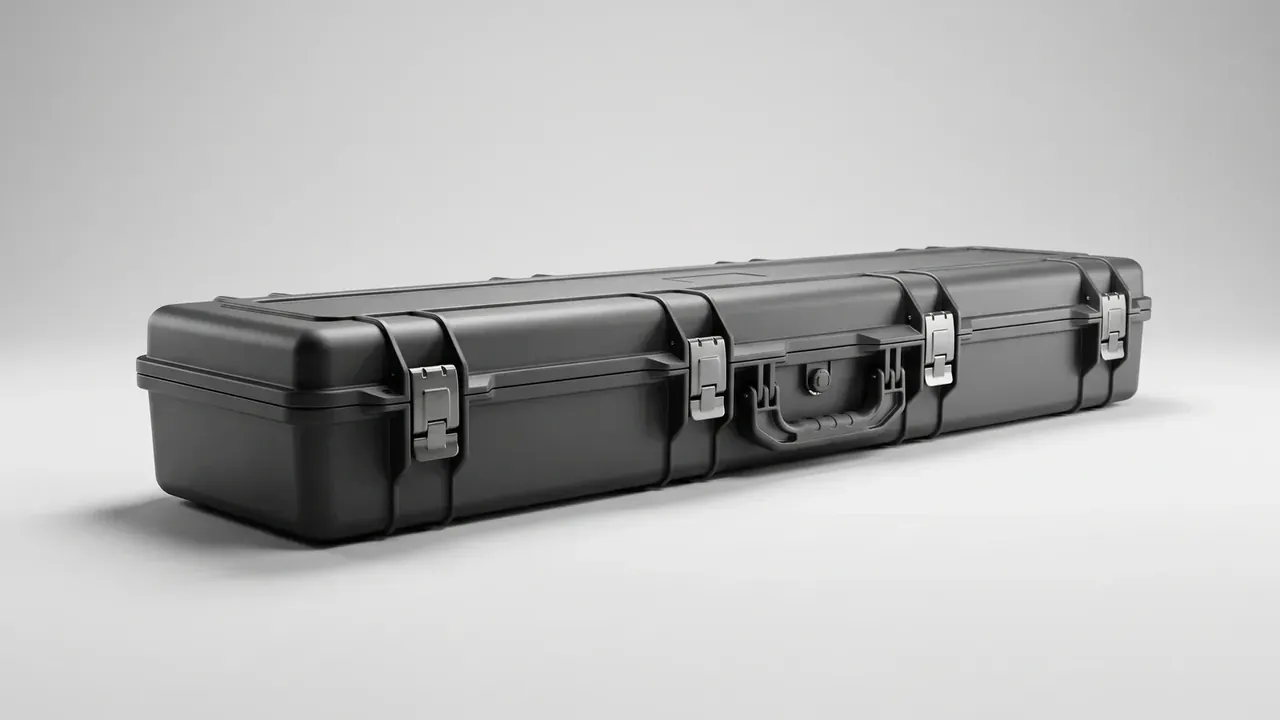
Quick answer: In Gun Case Production sourcing, unit price is the last thing to compare. Fix minimum order, mould ownership and the day lead time starts first.
Table of contents
- Gun Case Production RFQ: three lines first
- The four numbers on a quote
- Mould ownership and exit clauses
- Three weeks of sampling: four checks
- Splitting the 35-day lead time
- Terms, deposit and retention
- FAQ
1. Gun Case Production RFQ: three lines first
Ask five suppliers for one spec and quotes run from 128 to 236. The three lines sit in different places: volume tier, tooling, and the day lead time counts from.
Volume tiers are real: the gap between 200, 500 and 1,000 units reaches 15 percent.
| Line | What to ask | Usual answer | How to write it |
|---|---|---|---|
| Minimum order | Price at 200, 500, 1,000 units | From 500, extra below | Three tiers, with the premium |
| Tooling | Existing mould or new, who pays | Old free, new 12,000 CNY | Separate line, refunded past 2,000 |
| Lead time | Counted from which day | 35 days | From deposit clearing, 0.3 percent daily |
2. The four numbers on a quote
Unit price compares easily. The other three hide in the notes; any vague one shifts landed cost by 10 percent.
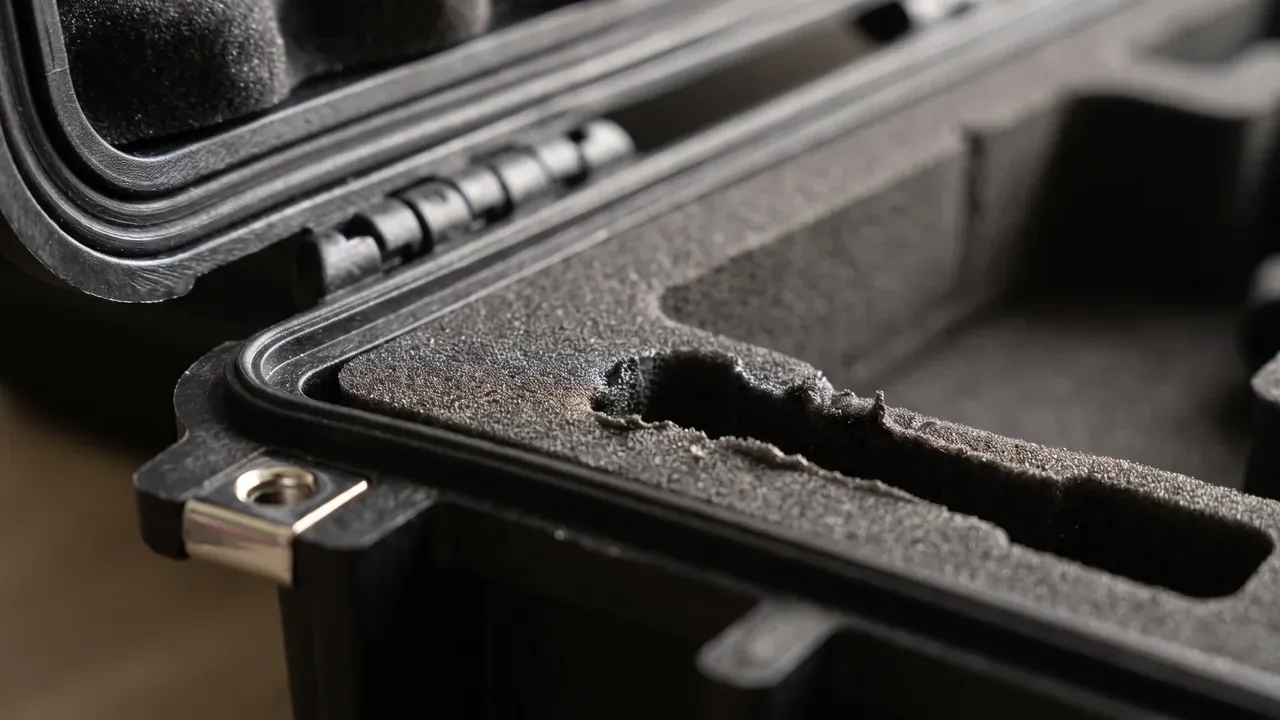
Mould amortisation depends on the denominator: 12,000 CNY over 1,000 units is 12 each, over 3,000 it is 4.
Packing and freight run on volumetric weight: a 1,200 mm case weighs 9 kg but may bill at 14, so name who absorbs the gap.
Hardware takes 8 to 12 percent of cost and foam 12 to 18; those shares predict where a price cut lands.
3. Mould ownership and exit clauses
In Gun Case Production, paying for a mould does not make it yours. Three arrangements coexist: prepayment with title to the buyer, amortisation with title to the factory, and factory tooling granted against exclusivity. The first is cleanest, the second needs a stated total and exit, the third leaves nothing to collect when you switch.
Gun Case Production tooling is rated near 30,000 cycles. Past that, cavity wear pulls walls from 6 mm toward 5.6 mm and drop results drift.
Add a transfer clause: on termination the mould ships within 30 days, freight settled in writing. Without it the mould is a hostage.
4. Three weeks of sampling: four checks
Colour sign-off is not a sample approval. Three weeks break into four checks:
- Week one, drawing and foam layout: cavity size, slot positions, latch bolt spacing aligned to plus or minus 0.5 mm.
- Week two, first article: eight wall readings, thinnest at 5.5 mm, weight within 3 percent, latch force 45 to 70 N.
- Week three, tightness and trial fit: 3 kPa held 60 seconds, drop of 0.2 kPa or less, then 24 hours in a two-high stack.
- Throughout, keep the gold sample: first article, modified-mould part, signed reference, labelled by date and cycle.
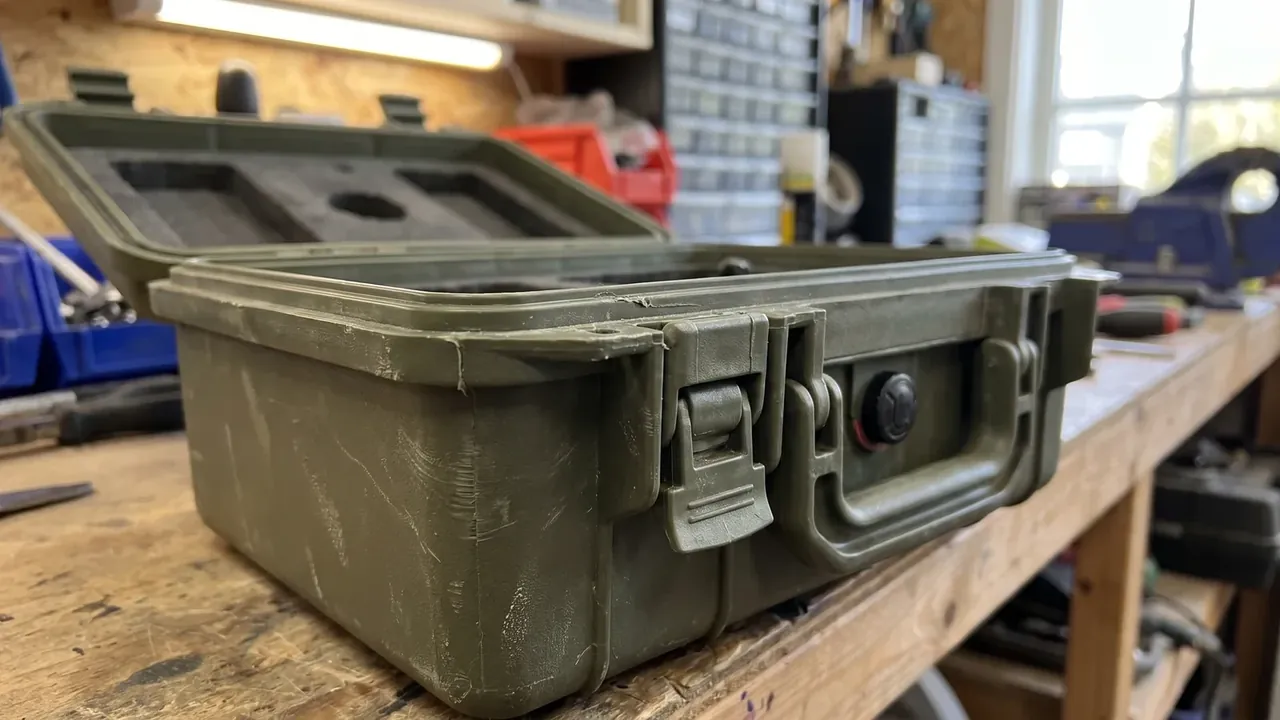
The gold sample is the step most often skipped; skip it and batch two arrives a shade darker.
5. Splitting the 35-day lead time
Thirty-five days split into 5 of material, 7 of moulding, 6 of foam, 5 of assembly, 5 of packing, and 7 of buffer.
The buffer is not waste; bought-in latches often outlast the moulding stage.
| Stage | Days | Constraint | Late trigger |
|---|---|---|---|
| Material | 5 | Resin grade confirmed | Grade change without approval |
| Moulding | 7 | Mould and oven temperature | Output below 80 percent |
| Foam | 6 | Layout drawing signed | Drawing delay excluded |
| Assembly | 5 | Latches arrive | Missing parts stop the line |
| Packing | 5 | Cartons and pallets | Packing rejected by lot |
Liquidated damages: 0.3 percent of contract value per late day from the agreed date, capped at 10 percent.
6. Terms, deposit and retention
Payment structure says more than unit price. The usual split is 30 percent deposit, 60 before dispatch, 10 after acceptance. A 60-day term usually adds 2 to 3 percent back into the price. Fix three points: lead time starts when the deposit clears, dispatch follows an inspection report, and the 5 percent retention releases at six months with failures under 1 percent. Without all three, terms are a verbal discount. Longer terms also tempt thinner stock, so tie them to a safety stock commitment of 15 days.
Gun Case Production also meets the low-price hook: 128 first, 168 second once tooling is locked, blamed on resin. The counter is a validity clause, 90 days with a 3 percent ceiling on renewal.
Conclusion
Gun Case Production purchasing rewards whoever turns vague promises into triggerable clauses: three lines set the boundary, four numbers the cost, ownership the exit, five stages the liability. Put them on one RFQ page and the low-price hook stops working, which is how Gun Case Production stays inside budget.
This article discusses only the container (case body) side of specifications and design intent, and does not cover any handling, loading or use of the contents.
Related Reading
- Auditing a gun case factory: equipment, process and records
- Mould, liner and latch: three process steps
- How to weight a supplier scorecard
- Choosing a gun case for a given load
- What rotomoulded construction actually buys you
Related Products
- 8 Series — Gun Cases; Military Equipment Cases; Camera Equipment Cases; Drone Cases; Watch Cases; Knife Cases; First Aid Cases; Electronics Equipment Cases
- WL8-2812 PP Gun Case — model WL8-2812
- All protective cases and toolboxes: 7 series, 158 models