

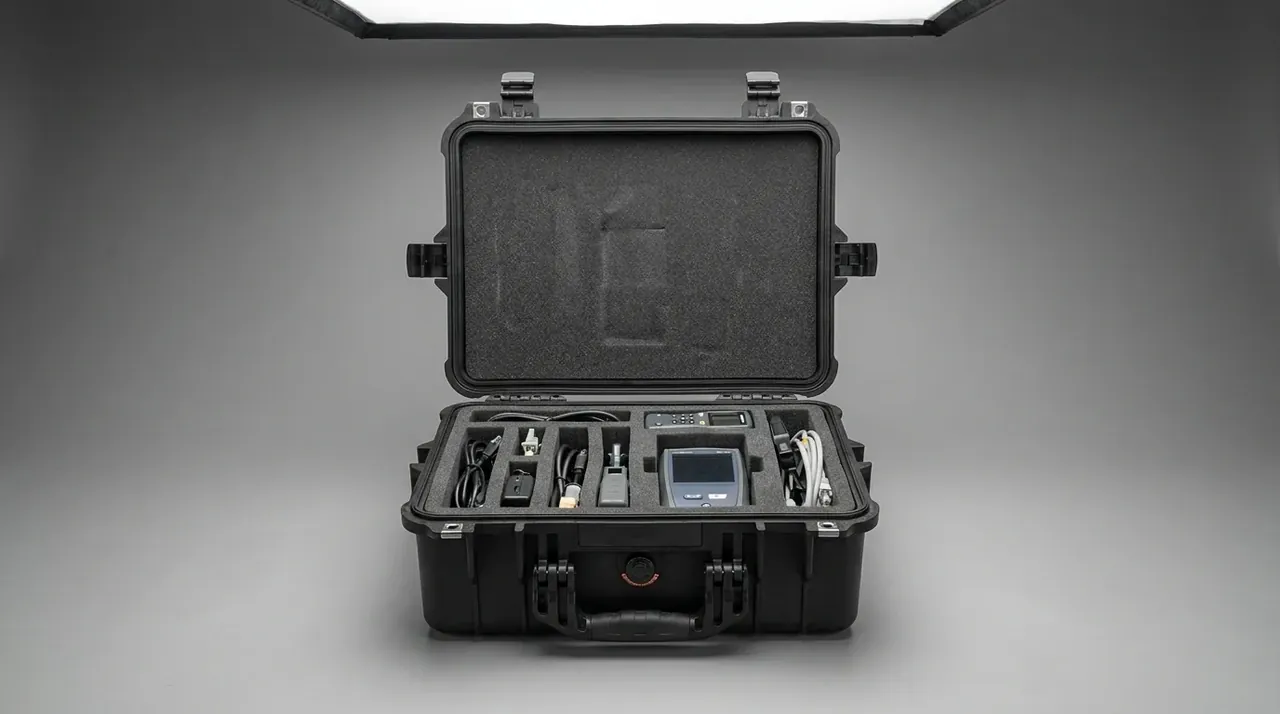
Quick answer: The used case market rewards 5 checks — shell, gasket, hardware, wheels, liner — in 20 min, with 2.0 mm wall and 0.4 mm hinge play as stop lines.
Table of contents
- The Price Gap: Where 45–60% Comes From
- Gasket: Measuring Compression Set
- Hardware: Hinge Play and Latch Return
- Wheels and Liner: The Two Quiet Items
- The 20-Minute Order and the 35% Cap
- FAQ
1. The Price Gap: Where 45–60% Comes From
One 520 mm × 420 mm × 210 mm case lists at 1,180 RMB new; a reseller asks 649 RMB, 55% of new. The 531 RMB gap looks like depreciation, but the shell carries little of it: an injection-moulded shell is rated past 10 years, and a 7-year-old shell kept out of sunlight still holds about 80% of its strength. The money sits in four items that wear and can be swapped.
| Item | Look at | Measure | Line |
|---|---|---|---|
| Shell | Rim lip, corner ribs | 5-point thickness, chalk depth | Under 2.0 mm, scrap |
| Gasket | Section height, lip | 6 points, 180° bend | Set over 18%, replace |
| Hardware | Pin, bore, striker | Feeler, force gauge | Play over 0.4 mm, replace |
| Wheels | Tread, bearing, housing | Spin, push, measure | End play over 0.8 mm |
| Liner | Foam face, cut edges | 10 s rub on paper | Chalk over 30%, replace |
That is what the used case market check is for: 531 RMB split into five lives. Parts cost 152 RMB; 40 min of labour at 60 RMB/h adds 40, so 192 RMB in total. Pay 649 and spend 192, and the landed cost is 841 RMB, 71% of new — past the line where 55% stops being cheap.
The band: buy-in 20–25% of new, refurbishment 8–12%, storage and capital 10%, the rest margin. Under 45%, refurbishment was skipped. Over 60%, buy new.
2. Gasket: Measuring Compression Set
A gasket fails in height. A new strip stands 9.0 mm free in a 3.0 mm groove; the lid squeezes it to 6.75 mm, a 25% compression carrying about 80% of the sealing force. A 7-year-old strip usually measures 7.4 mm, or 8.8%, and the lip stops touching the rim.
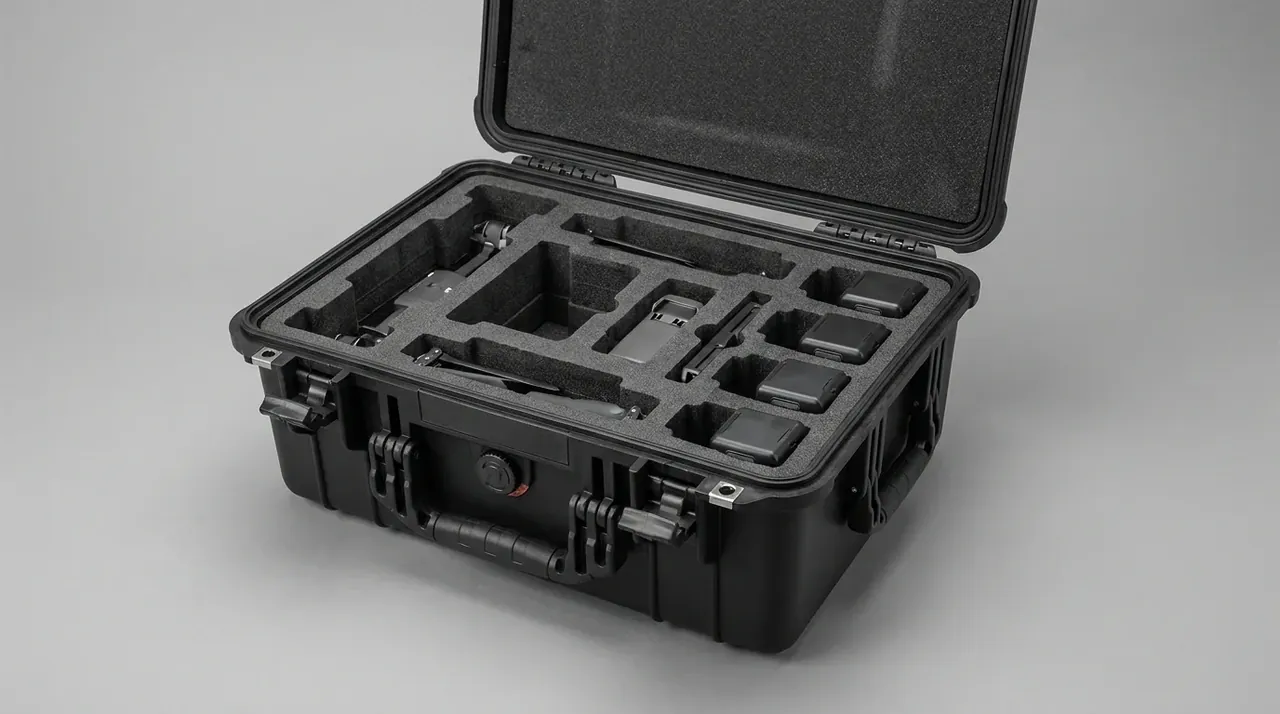
Six caliper points along the strip show a spread: past 0.3 mm, part of it has collapsed. Fold it 180° and look for 0.1 mm cracks — a hardened compound. Free height under 7.6 mm, or a crack at the fold, means replacement — 18 RMB and 15 min.
The groove hides a trap: a strip glued in place tears the 0.3 mm groove lip as it comes out, and the new strip will not seat. Lift one corner — glue residue and a frayed back mean non-factory repair, worth 100 RMB off. Gasket life is 3 to 4 years, so at 7 years it is due.
3. Hardware: Hinge Play and Latch Return
The pin is φ6 mm in a φ6.2 mm bore, a 0.1 mm fit when new. After 10,000 cycles a 7-year-old case measures 0.45 mm and the lid rocks 1.2 mm at 45°. Past 0.4 mm, replace the pin: 9 RMB each, both together.
Open the lid to 45°, push 30 N each way with a dial gauge on the corner, and divide by the lever ratio; without a gauge, a 0.4 mm feeler between pin and lug settles it.
Latch return comes next. A new latch opens at 55 N and snaps back within 2 s; a tired spring drops under 30 N and the striker still moves 0.5 mm after closing. A stepped striker costs 8% of compression and wastes the new gasket. Close both latches and listen for one sound.
An oval bore is the hard call: pull the pin 3 mm, read at right angles; over 0.4 mm difference means a new pin lasts six months and the lug goes.
4. Wheels and Liner: The Two Quiet Items
On a 100 mm wheel, end play is what gets missed. Push sideways: past 0.8 mm the race is pitted, and a sandy hiss means grit has reached the grease. At 1.5 mm of tread loss a 35 kg case pulls to one side. Wheels are 26 RMB each, so four come to 104 RMB.
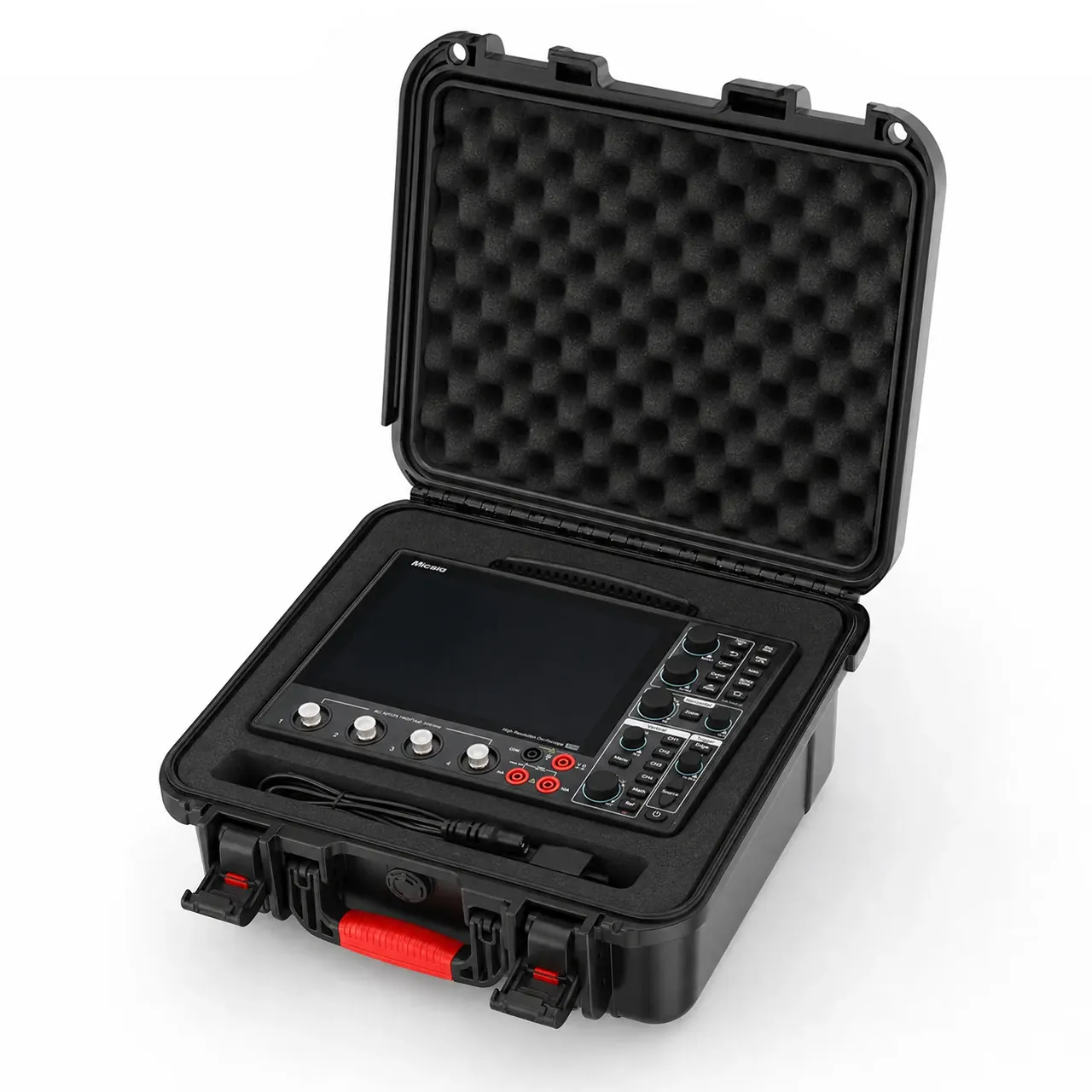
The liner is waved through most often. PE foam at 30 kg/m³ that chalks more than 30% of white paper in 10 s is breaking down, and a 1 mm burr on cut edges sheds crumbs. A set costs 60 RMB and 10 min.
5. The 20-Minute Order and the 35% Cap
Work from the most expensive item down: shell 4 min with five thickness points, gasket 3, hardware 5, wheels 3, liner 5 — 20 min. The shell goes first because a scrap shell makes the other four checks pointless.
| Item | Life | At 7 years | Cost |
|---|---|---|---|
| Gasket | 3–4 years | Due | 18 RMB |
| Wheels | 4–5 years | Due, bearing audible | 26 RMB each |
| Liner | 5–6 years | Due, shedding | 60 RMB |
| Latch spring | 6 years | Borderline, 30 N | 22 RMB per pair |
| Hinge pin | 8 years | 0.3–0.5 mm play | 9 RMB each |
| Valve diaphragm | 6 years | Due, 4 s return | 12 RMB |
| Shell | Over 10 years | Read the chalk | Not replaced |
Refurbishment is capped at 35% of new: 1,180 × 35% = 413 RMB. Parts of 152 plus 40 of labour are 192 RMB, 16.3%, leaving 221 RMB for teardown risk. So 649 plus 192 is 841 RMB, 71%: walk away. At 531 RMB the landed cost is 723 RMB, 61%: worth talking about.
Sample 3 units per batch: a 0.15 mm thickness spread or a 0.1 mm pin spread means mixed cavities, and the lot prices at the worst unit.
| Item | Limit | Spread across 3 | Meaning |
|---|---|---|---|
| Wall thickness | 2.0 mm or more | 0.15 mm | Mixed cavities |
| Hinge play | 0.4 mm or less | 0.10 mm | Uneven service |
| Gasket height | 7.6 mm or more | 0.30 mm | Different storage |
| Liner chalk | 30% or less | 15% | Water exposure |
Conclusion
Run the five checks in one fixed order and the price question answers itself. Shell first, 4 min, five thickness points, and a lowest reading under 2.0 mm ends the inspection. Gasket next, 3 min, 7.6 mm free height and 0.1 mm fold crack. Hardware, 5 min, with 0.4 mm pin play and 35 N force written down. Wheels, 3 min, end play over 0.8 mm. Liner, 5 min, chalk on more than 30% of the paper. Add the 192 RMB of parts and labour to the asking price, divide by the new price, then act: under 70% is negotiable, over 70% is a pass. Hold refurbishment to 413 RMB, the 35% cap, because a case that needs more has a shell problem the other four checks cannot fix.
This article discusses container-side specifications and design implications only, and does not cover any handling, loading or use of the contents.
Related Reading
- Five checks before buying a used protective case
- Case repair and spare parts combinations
- Stocking the five common case spare parts
- How AQL 2.5 sampling decides a lot
Related Products
- 8 Series — Gun Cases; Military Equipment Cases; Camera Equipment Cases; Drone Cases; Watch Cases; Knife Cases; First Aid Cases; Electronics Equipment Cases
- WL8-2812 PP Gun Case — model WL8-2812
- All protective cases and toolboxes: 7 series, 158 models