

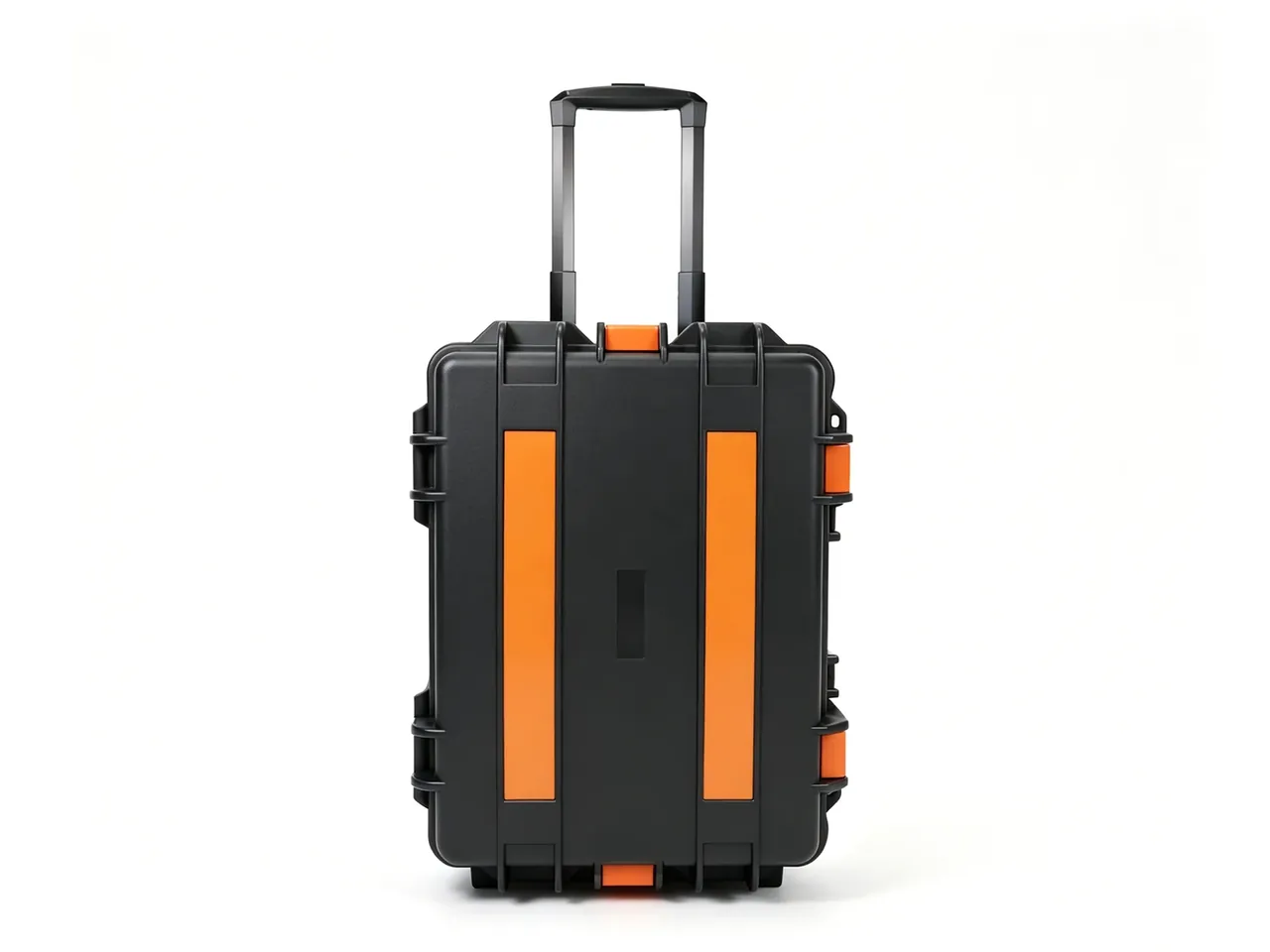
Quick answer: Three things decide a vehicle tool case: how the shell is restrained in the car, whether a hand fits inside once the lid is open, and whether the envelope passes the trunk opening.
Table of contents
- Vehicle tool case selection: three physical conditions
- Mounting: straps, latches and feet
- Access opening: lid angle and one-sided reach
- Size and trunk fit: envelope, wheels and handle
- Three configurations and four common mismatches
- FAQ
1. Vehicle tool case selection: three physical conditions
A vehicle tool case is two products in one. On a shelf it is judged by volume and latches; in a car by three things: what restrains the shell against the floor, how far the lid opens in a confined space, and whether the envelope clears the opening.
Each condition is measurable: feet and strap holes, hinge-to-latch geometry, envelope plus wheels and handle. If one fails the others cannot compensate, so the order runs backwards: opening and floor, mounting, then volume and foam.
2. Mounting: straps, latches and feet
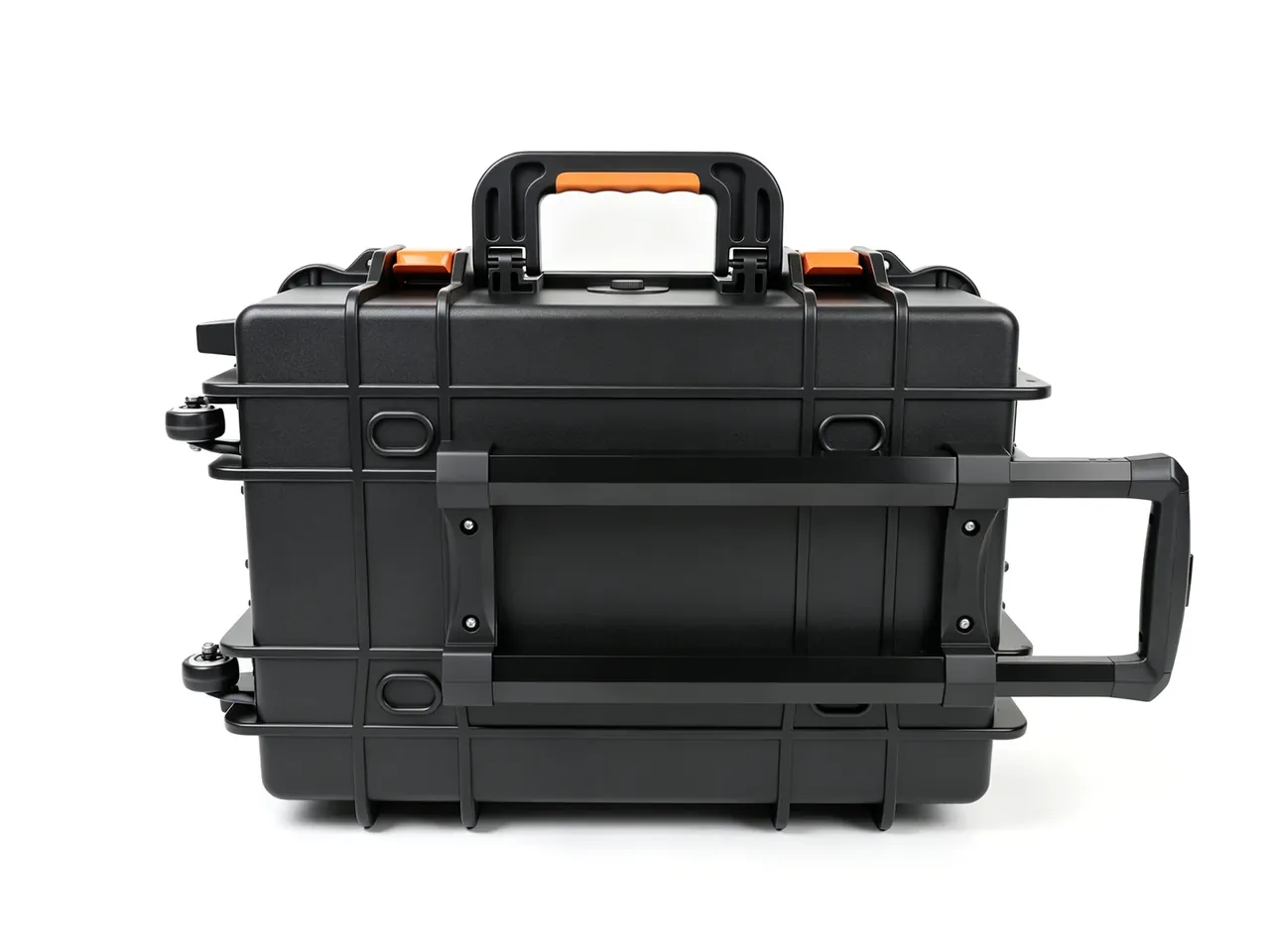
The most overlooked part of a vehicle tool case is the base. A rotomolded bottom is moulded with feet or ribs whose job is reducing floor contact, not resisting wear.
Straps through moulded holes are the most reliable method; clamp latches suit a bulkhead but depend on panel thickness; a mat under self-weight only holds on short trips, because past fifteen kilograms inertia eats the friction. Weight times 0.3 gives the restraint needed under moderate braking, so twenty kilograms need about sixty newtons.
| Method | Fits | Cost |
|---|---|---|
| Strap through moulded holes | Permanent fit, rough roads | Needs holes, slow to remove |
| Clamp latch | Bulkhead or rail mounting | Depends on panel thickness |
| Self-weight and mat | Short trips, under ten kilograms | Fails when wet or aged |
3. Access opening: lid angle and one-sided reach
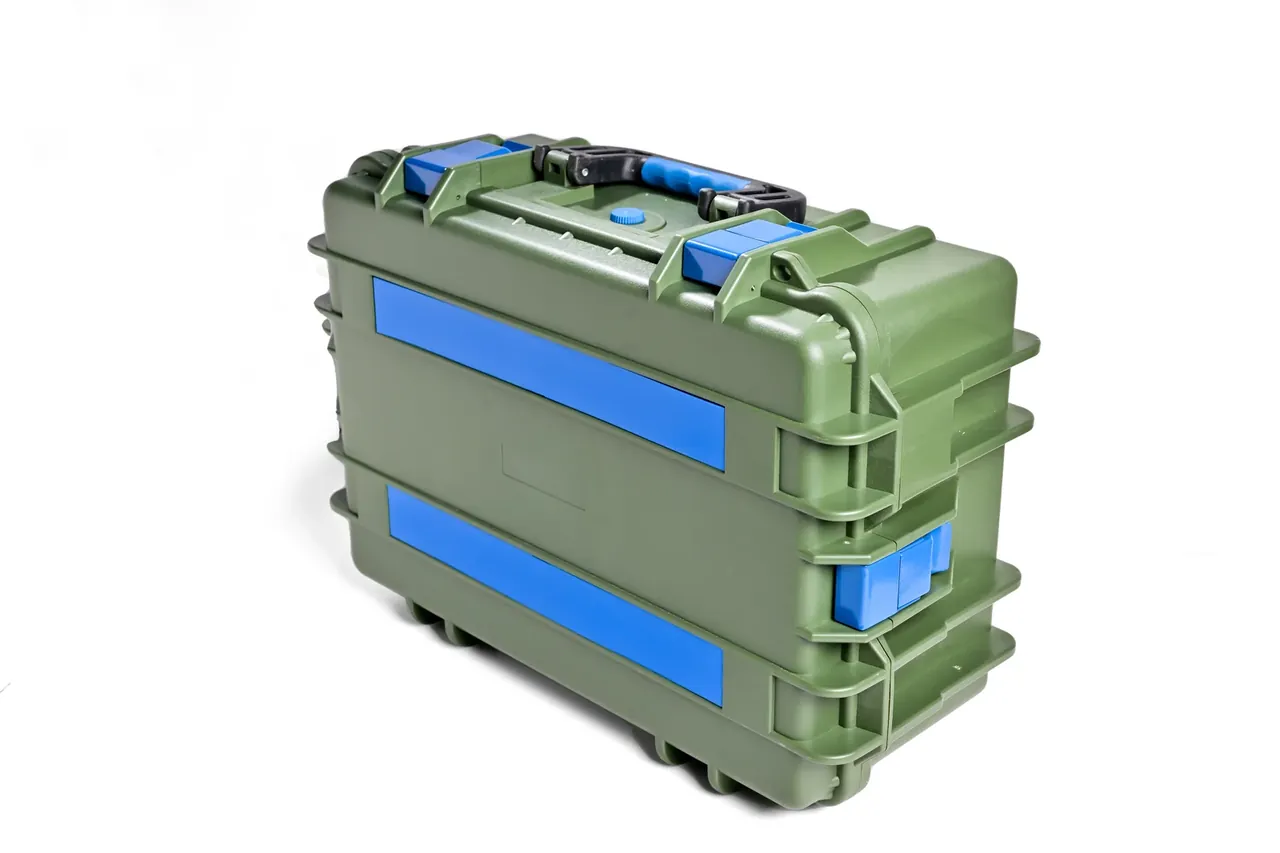
Access depends on the lid, not the latch count. The trunk lip sits just above the case, so a ninety-degree lid yields sixty to seventy usable degrees and the hand enters at an angle.
Hinges on one side and latches on the other mean reaching around the edge. Turning the case ninety degrees costs a dozen centimetres of width and shortens every reach. A split lid adds a seam to the seal, so where dust matters, keep the single lid.
| Lid angle | Depth the hand reaches | Situation |
|---|---|---|
| Above ninety degrees | Full depth | Low case, nothing above |
| Sixty to ninety | Front two thirds | Most trunks |
| Under sixty | Front row only | Pull the case out first |
4. Size and trunk fit: envelope, wheels and handle
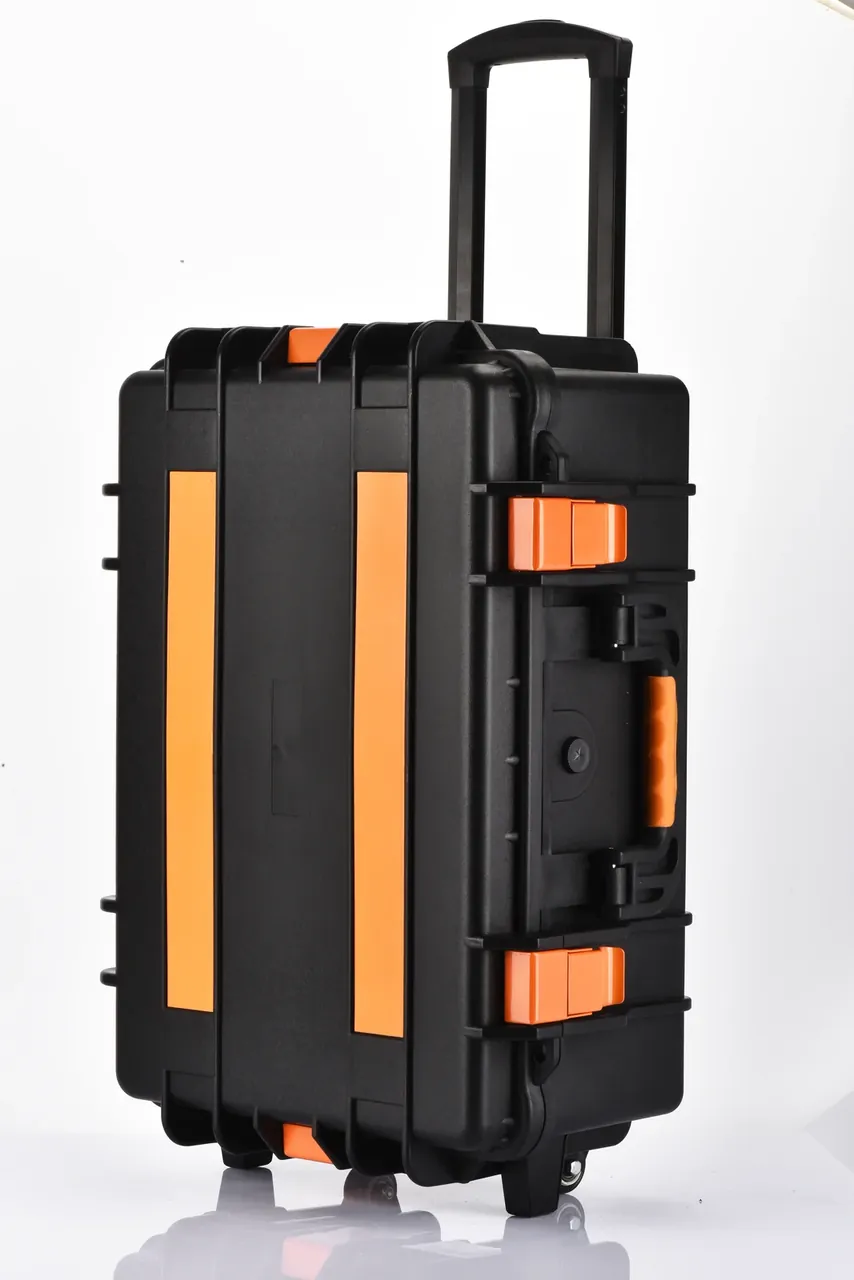
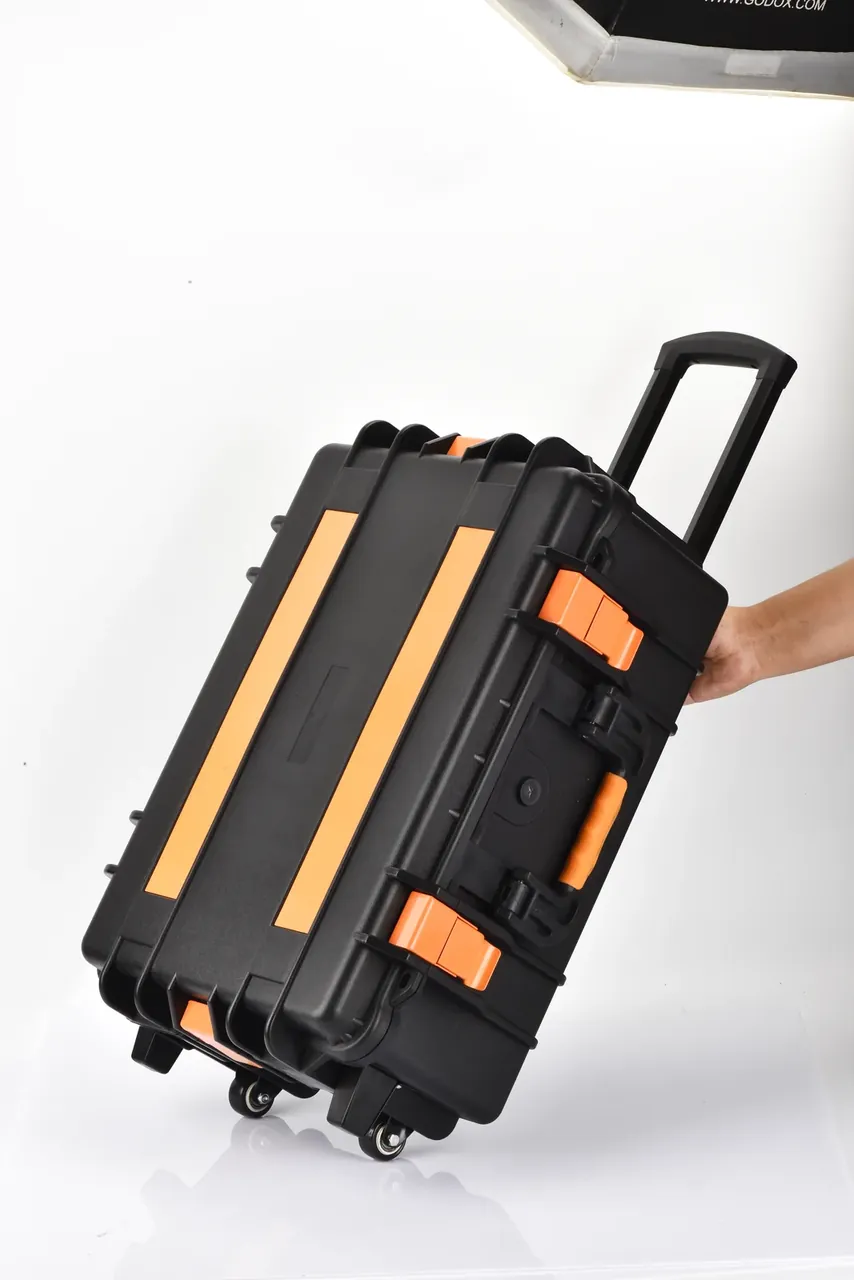
Size has three lines: envelope, wheels and handle. Catalogue figures describe the shell alone, while wheels take twenty to thirty millimetres and an extended handle adds thirty to forty centimetres upward, the height that meets the lip.
Measure the opening first: width, height and drop to the floor. Then the flat floor run, since wheel arches and seat backs cut the corners away, leaving two of four feet loaded. Leave clearance: fifty millimetres at the long side, a hundred above the lid.
5. Three configurations and four common mismatches
By frequency, vehicle tool cases fall into three groups: a permanent unit fixed to one side, a carry unit with handles and wheels, and a task unit sized to specific tooling and strapped down.
Four mismatches recur. Permanent dimensions on a carry unit give a case that goes in but not out; a thin shell used permanently loosens its latches first; stacked cases without a tie send the upper one forward; ignoring handle height leaves a trunk that will not close.
Conclusion
There is no single right vehicle tool case, only a sequence: measure the opening and the floor, settle the mounting, then match volume and foam. In that order it is equipment reached for daily; in reverse, a box in the way.
This article covers container-side specifications and design implications only, not the handling, loading or use of the contents.
Related Reading
- Three ways a vehicle tool case is used on the road
- Hand Tools Case: Liner Design and Access Efficiency
- Choosing foam lining for a tool case
- Reading the protection rating of an instrument case
Related Products
- 8 Series — Gun Cases; Military Equipment Cases; Camera Equipment Cases; Drone Cases; Watch Cases; Knife Cases; First Aid Cases; Electronics Equipment Cases
- WL8-2812 PP Gun Case — model WL8-2812
- All protective cases and toolboxes: 7 series, 158 models