

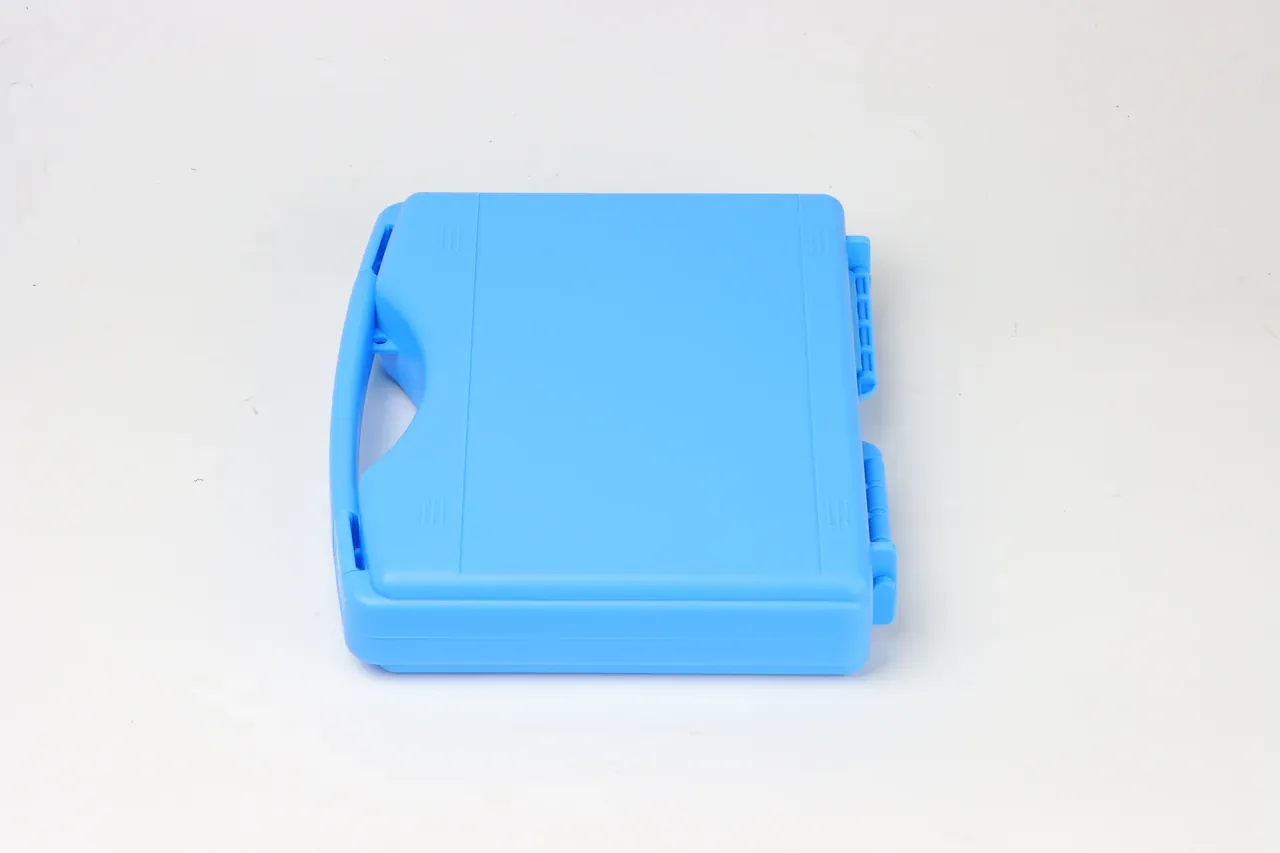
Quick answer: Cold Chain control and instrument separation share one 12 L case on an equine round: four 400 g packs hold 2–8 °C for six hours, and a 1.2 mm sharps liner keeps needles out of the soft goods zone.
Table of contents
- Why Cold Chain Comes First on an Equine Round
- Cold Chain Segment: Ice Pack Slots and Six Hours of Hold
- Instrument Separation: Sharps Zone and Soft Goods Zone
- Temperature Records and Handover
- FAQ
1. Why Cold Chain Comes First on an Equine Round
A round covers six yards and fourteen horses over 30 km, and a van parked in the sun reaches 35 °C by mid-morning. The first two hours need drug temperatures held near 4 °C; the next four need instruments dry. Both jobs fit in one case only if the interior is built in two halves, split by a 5 mm divider rather than one open tub.
The outer shell follows the gap behind the van seat: 520 mm long, 380 mm wide, 230 mm high. Internal height is 190 mm, enough for a standing vial rack and still leaving 40 mm of lid depth for ice packs. The wall is three layers — 3 mm polypropylene, 25 mm polyurethane, 1.5 mm liner — for 2.8 kg empty and 9.5 kg loaded, a load one hand carries for the 15 minutes between van and stable.
Cold Chain thinking starts with that split, not with wall thickness. A case that keeps drugs cold while condensate reaches the gauze has failed the round just as surely as one that warms up.
2. Cold Chain Segment: Ice Pack Slots and Six Hours of Hold
The limiting factor is the air layer between pack and product, not the foam. Four lid recesses hold 400 g eutectic packs pre-chilled to −21 °C for 24 hours, and a 10 mm board with three rows of 8 mm holes sits between packs and drug zone, so cold moves down slowly instead of freezing the nearest corner.
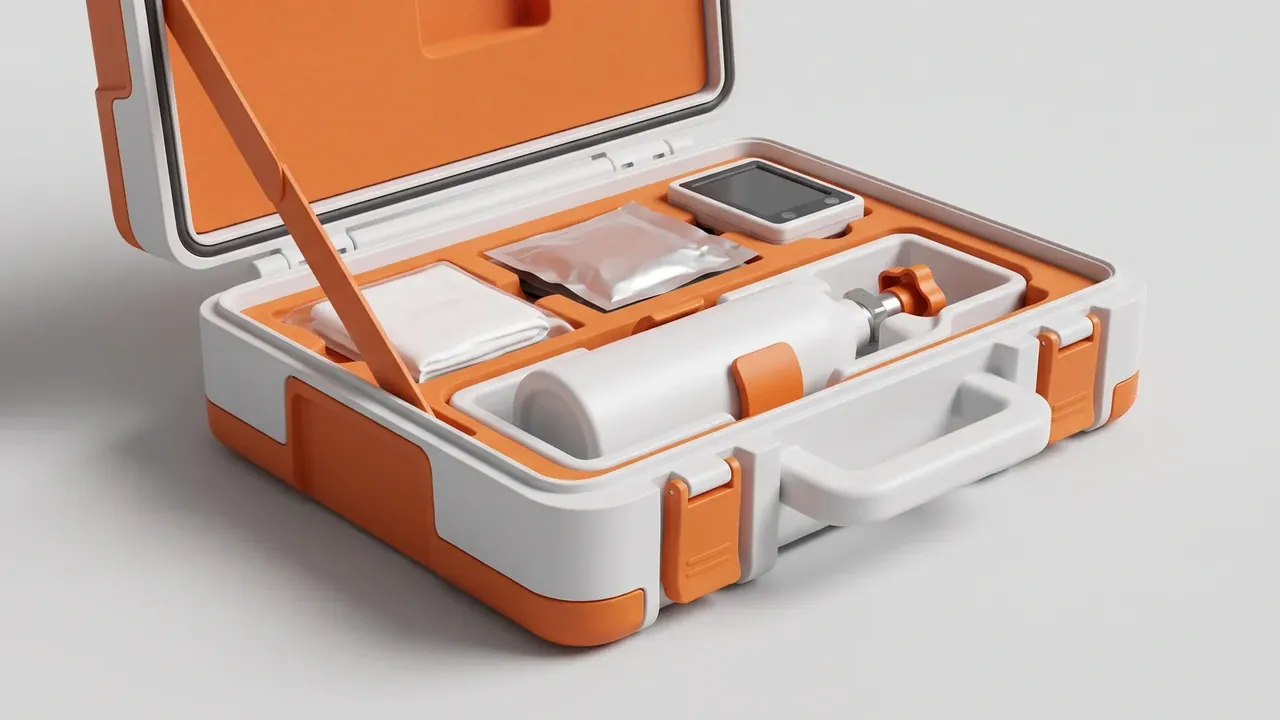
The six-hour curve is worth logging stage by stage. The case leaves at 4.2 °C, reaches 5.1 °C after 2.5 hours, 6.4 °C at 4.2 hours, 7.3 °C at hour six, close to the 8 °C ceiling. Once all four packs melt, 20 ml of condensate drains through a 6 mm port at the lower edge.
Openings hurt more than ambient heat. One 40-second opening adds 0.4 °C at 35 °C ambient; six openings in a day add 2.4 °C. Pre-sorting the six yards into front-row pockets removes three of those openings without changing anything else about the round.
| Time | Internal (°C) | Pack state |
|---|---|---|
| Departure | 4.2 | Four frozen, −21 |
| 2.5 hours | 5.1 | Two half melted |
| 4.2 hours | 6.4 | Three melted, water at base |
| 6 hours | 7.3 | Near the ceiling |
Thicker walls are not automatically better. At 25 mm the polyurethane passes about 1.3 W per square metre per hour; 40 mm saves 0.4 W and adds 0.9 kg, a poor trade for a case carried 15 minutes at a time.
3. Instrument Separation: Sharps Zone and Soft Goods Zone
Separation solves two problems: a needle must not reach the soft goods, and gauze must not sit in condensate. The case interior is cut into four blocks, with the sharps zone at the rear in a 1.2 mm hard liner and a 12 mm cavity behind it, so a needle that pierces the liner stops short of the next zone.
Soft goods sit at the front in three mesh pockets raised 8 mm above the base on two ribs, so water runs to the drain instead of into the dressing pack. The 180 gsm polyester mesh passes water and sheds lint.
The middle two blocks hold drugs and instruments, divided by 5 mm polypropylene boards in three slots at 40 mm spacing, so the layout follows the day's box sizes. Boards stop 15 mm below the rim; the lid foam then presses only on foam, and a board cannot be levered out on a rough track.
Every zone corner carries a 30 mm colour strip — red for sharps, white for drugs, blue for soft goods, clear for records. The strips are a counting aid: four colours visible with the lid shut mean four zones. A 2 mm clear panel in the lid holds the zone map, so it can be changed without relabelling the case.
| Zone | Cavity (mm) | Divider | Marking |
|---|---|---|---|
| Sharps | 90×70×60 | 1.2 hard liner plus cavity | Red strip and number |
| Drugs | 240×160×120 | Two 5 mm boards | Black on white |
| Soft goods | 200×140×90 | Three mesh pockets, raised 8 | Blue edge |
| Records | 60×40×18 | Side recess | Clear window |
Board height matters. A board flush with the rim looks neater and bows at every close; at 15 mm low it survives 30 km of gravel and a season of use.
4. Temperature Records and Handover
The logger recess sits in the case side wall, 18 mm deep and 60 mm wide, holding a USB logger sampling once a minute at ±0.5 °C. Its probe runs through a 3 mm port into the cold chamber, sealed with a silicone plug, so the lid opens without disturbing the reading.
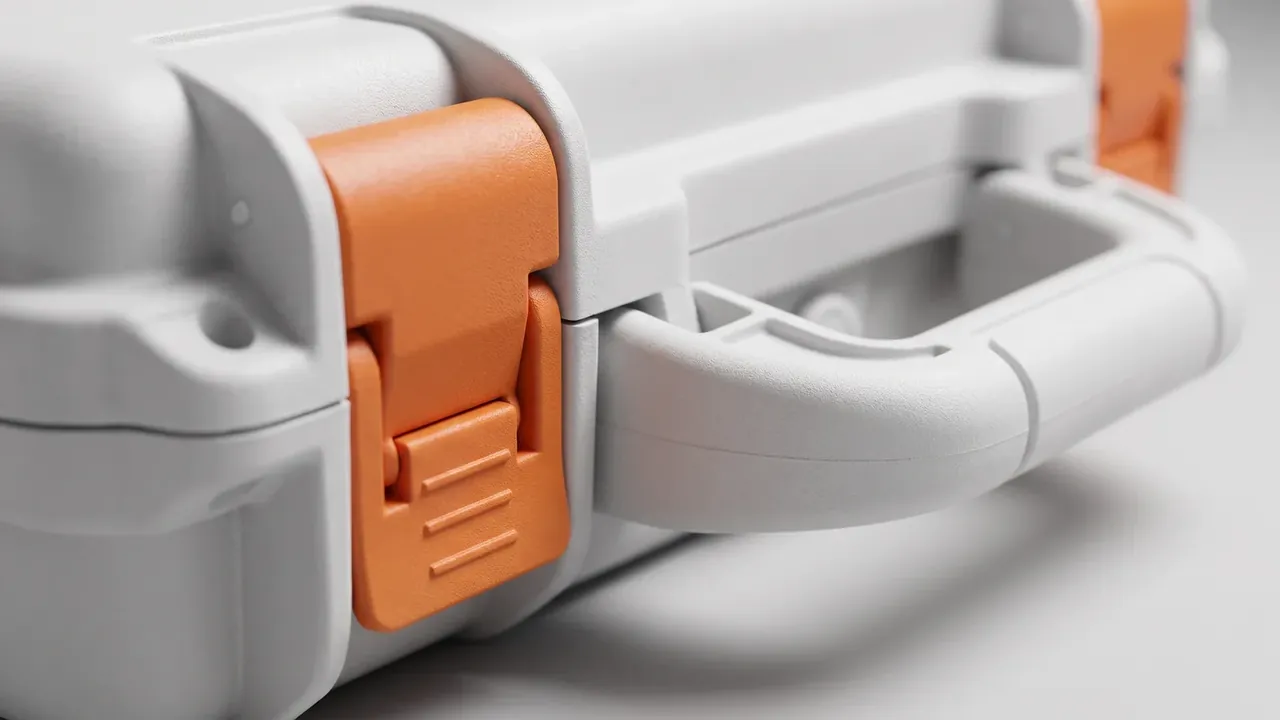
The logger must not sit against a pack. A probe touching a frozen pack reads 2–3 °C below the air around the drugs, which looks compliant while the product drifts. Mount it mid-chamber, 30 mm off the wall, and the number means something.
The handover sheet carries four columns: departure, arrival at each yard, internal temperature, openings. Six yards make six rows, and the exported curve shows which leg drifted. Two consecutive readings above 8 °C mean five packs instead of four on that route.
Cleaning is the other half of the record. The liner releases in five seconds, foam and mesh wash below 70 °C with neutral detergent, and parts dry four hours before reassembly. The hard liner is wiped, never soaked, since water trapped behind it will not dry overnight in a van.
Conclusion
The difficulty in a Cold Chain case is the border between its halves: the cold side must move slowly, the instrument side must stay hard. Four checks settle it — six hours below 8 °C, a liner and cavity that stop a needle, soft goods raised 8 mm, a probe 30 mm clear of packs. Meet all four and one case covers six yards.
Related Reading
- Cases for veterinary practice and animal care
- Cold chain case insulation and pack layout
- Logger placement in medical cold chain boxes
Related Products
- 8 Series — Gun Cases; Military Equipment Cases; Camera Equipment Cases; Drone Cases; Watch Cases; Knife Cases; First Aid Cases; Electronics Equipment Cases
- WL8-2812 PP Gun Case — model WL8-2812
- All protective cases and toolboxes: 7 series, 158 models