Home / Boxknow / Veterinary & Animal Care Cases: Move Clinic Gear Safely
Veterinary & Animal Care Cases: Move Clinic Gear Safely
Published 2026-09-05
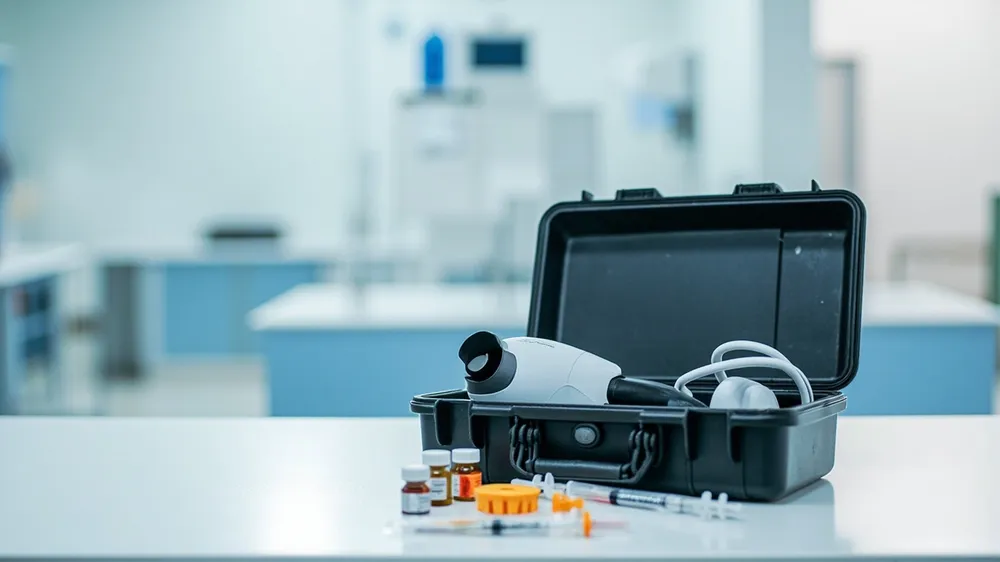
Veterinary and animal care gear is 'precise and contamination-sensitive' kit. An ultrasound probe fears crush, syringes fear bend, medicines fear mixing and damp, and instruments fear germs. A soft bag resists dust but not drops; bare gear is both damaged and cross-contaminated. A qualified care case fixes the scanner, isolates medicines, controls hygiene and stays safe through mobile clinic runs. This guide covers choice and use from a field view.
Three Kinds of Care Risk
Scanner loss: the probe fears crush and drops.
Medicine hazard: mixed packs cross-contaminate.
Germ harm: unclean instruments infect.
Priority: medicine isolation > scanner care > hygiene control.
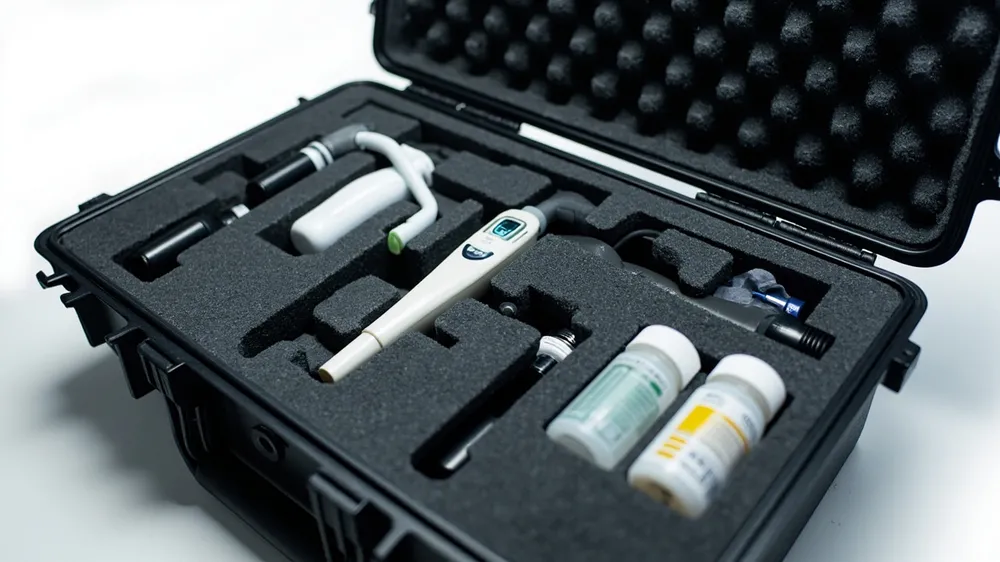
Cutouts fix the scanner and isolate medicines from contamination.
Medicines are the risk point and must sit in independent hard cavities, not mixing, not crossing odors, not germ-laden. The idea follows medical device case compartments; the cavity method is in custom foam. In transit vials are fixed separately and fragile ones get sleeves.
Scanner and Instrument Care
The scanner and instruments must float without shake. Methods:
First, mixed medicines cross-contaminate. Second, no floating cracks the probe. Third, not clean infects. Fourth, no metal pin loosens after thousands of cycles. Fifth, recycled resin, see virgin vs recycled. Sixth, no humidity control dams medicines.
Summary
The key to a veterinary and animal care case is 'isolate medicines, care for the scanner, control hygiene, stay clean': independent hard cavities keep vials from mixing or germing, floating cavities protect the ultrasound probe, easy-clean liners let instruments wipe down, and metal latches survive clinic bumps. At order time, write the kit list (with drug counts and specs) and travel mode as clauses, then ask the supplier to show material and test proof. With the habit of 'medicines isolated alone, scanner floating in place, wipe after visit, desiccant replaced regularly', clinic gear stays clean across many calls. For isolation and floating, cross-read medical device case and drone foam design.
Vet cases reuse the same clean discipline as medical boxes.
Q4: How to clean? A: Easy-clean liner, see cleaning.
Q5: How to size? A: Measure the longest item and drug count, see how to size.
How should medicines and vaccines be isolated in a visit case?
Medicines belong in their own rigid cavities, one slot per bottle or carton with a solid divider between them, so nothing tips, presses or cross-contaminates. Stand liquid bottles upright and fit sleeves, and for refrigerated items use a removable insulated insert with a temperature logger. Choose a washable EVA or closed-cell EPP liner that resists disinfectant wipe-down and does not hold odour. Controlled drugs should be locked and logged under a unique ID, with a count check at every handover. The more completely items are separated, the less chance of a wrong item during a visit.
Why must an ultrasound probe be held in a suspended cavity?
An ultrasound probe is a piezoelectric crystal stack behind an acoustic lens; compression can crack the element or delaminate the lens, producing image artefacts at high repair cost. Cut a suspended cavity to the probe profile so the head never touches the base and takes no side load, coil the cable in its own compartment to avoid repeated bending, and fit a protective cover or hard shell. Carry the probe in a separate cavity from the console so the unit weight cannot press on it. Confirm by inverted and drop testing that the probe does not move.
How do I secure the case against vehicle vibration and hard braking?
Place the case on the flat floor of the vehicle and secure it with straps through the handles or dedicated tie-down ears so it cannot lunge under braking. When stacking, follow the maker load rating and do not overload the bottom case over long periods. Vibration and drop validation can follow the GB/T 4857 series, or MIL-STD-810H methods 514 and 516. On rough ground a wheeled case must not rely on its castors alone. Heat build-up in a parked vehicle degrades medicines, so log temperature inside and review it after the visit.
How do I make the instruments cleanable and disinfectable?
The liner should lift out for cleaning; prefer closed-cell EPP or washable EVA and avoid open-cell foam that absorbs water and harbours bacteria. A modified PP body wipes clean with water and mild detergent, and where a disinfectant is needed choose one compatible with the materials and rinse off residue. Shape recesses to hold instruments so sharp edges stay covered and do not cut the liner, and place sharps in a rigid sharps container. Write the cleaning steps and cycle into the procedure, for example wipe down after each visit and deep clean weekly.
How do I set the protection rating and material?
Specify a modified PP shell, or an ABS and PC blend where more stiffness is required, at 3 to 5 mm wall thickness with reinforcing ribs to balance weight and impact resistance. A silicone or EPDM gasket with two or more evenly loaded latches brings the closed case to IP67 under IEC 60529, equivalent to GB/T 4208, so it can be hosed down after a wet or muddy visit. Liners in long contact with medicines must be chemically compatible to avoid leaching residue. Exports to the EU must also satisfy RoHS and REACH limits.
What about cold-chain or low-temperature medicines?
For small quantities use phase-change coolant plates with an insulated insert to hold 2 to 8 degrees Celsius and fit a data logger inside, exporting its record at each handover to confirm no excursion. Never let a coolant plate touch the vials directly, or local freezing can damage the product. Biological or blood samples need three-layer leak-proof packaging to the carrier rules and may fall under dangerous-goods regulations. Samples below minus 20 degrees Celsius require dry ice or liquid nitrogen plus aviation and quarantine compliance. A case only buffers the route.
Can a veterinary case fly for cross-region visits?
Yes, provided the locks and paperwork are right. For checked baggage use a hard case with a TSA-recognised lock so it can be inspected and relocked, and carry prescriptions, instructions or an employer letter for medicines and instruments; controlled and psychotropic drugs follow separate pharmaceutical rules. Packaging liquids, lithium batteries or samples is also subject to dangerous-goods rules, so confirm with the carrier in advance. A sealed case should have a pressure-equalisation valve for the cold, low-pressure hold. Insure the shipment and keep items in fixed cavities.
What clauses must a custom or volume order specify?
State the equipment list with ultrasound model, medicine count and specification and instrument quantities, the travel mode of self-drive or checked freight, whether humidity control is required, whether the liner must be removable for washing, the lock type and whether a padlock is needed, plus the protection rating and test method. Ask suppliers for material declarations covering RoHS and REACH and for citable test reports, and verify with a sample case. The contract should fix first-article acceptance on dimensions, sealing, load and appearance, spare-part supply years, mould ownership and the change process.