

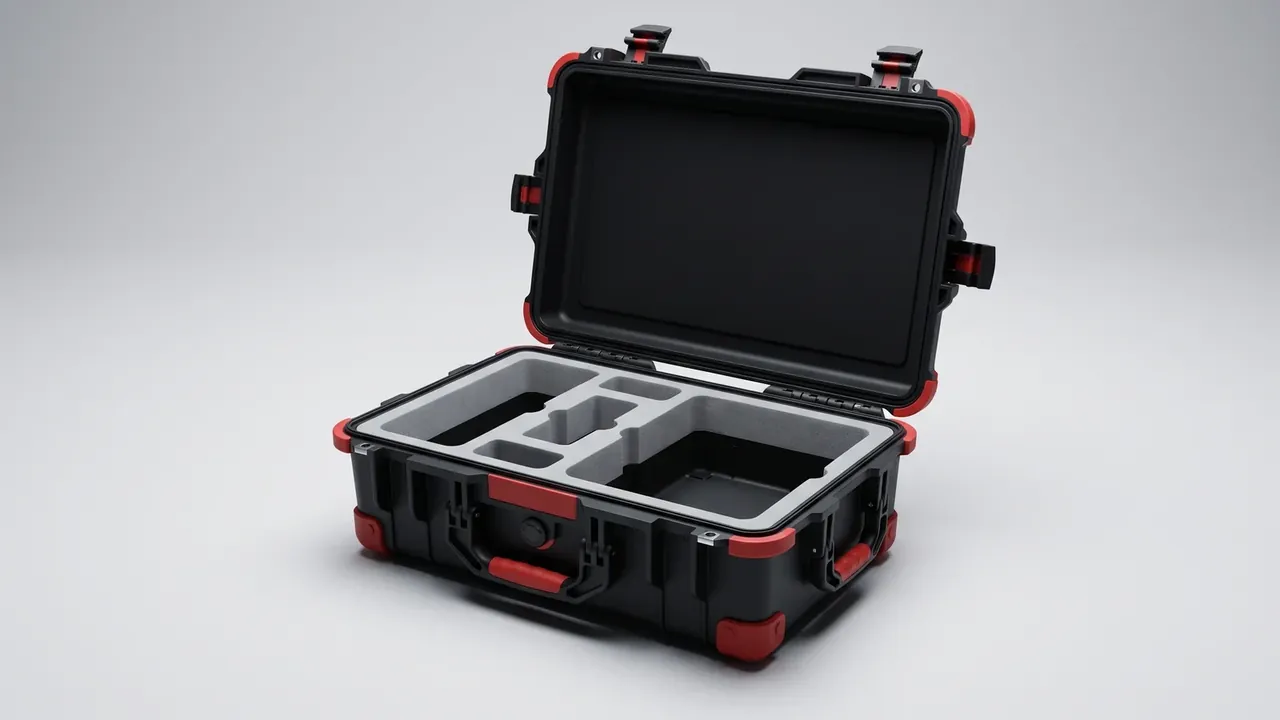
Quick answer: Set the band before the thickness: 30 mm of polyurethane for 2 to 8 °C, 45 to 50 mm for −20 °C, phase change packs 2 to 3 K below target, a logger on the return-air side sampling every 5 minutes, and a 30 °C full-load and half-load test to fix real hold time.
Table of contents
- Two Bands, Two Insulation Thicknesses
- Cold Pack Placement and Phase Change
- Logger Position and Sampling Interval
- Turning Lid Openings into Hold Time
- Validation: Full Load, Half Load, 30 °C
- FAQ
1. Two Bands, Two Insulation Thicknesses
A cold chain box takes its wall thickness from the band, not the volume. At 2 to 8 °C the gradient against a 30 °C room is 22 to 28 K; at −20 °C it reaches 50 K, doubling the heat crossing the same skin. Polyurethane runs 0.020 to 0.024 W/(m·K), so each extra 10 mm cuts heat flow about 30 percent.
| Band | Insulation | Interior | 30 °C hold | Full vs half |
|---|---|---|---|---|
| 2–8 °C | 30 mm | 8 L | 24 h | 4 h |
| 2–8 °C | 40 mm | 12 L | 36 h | 6 h |
| −20 °C | 50 mm | 12 L | 32 h | 8 h |
Thickness is paid for in volume: 30 to 40 mm removes 20 mm of interior each way, dropping an 8 L cold chain box to 6.2 L, some 60 fewer 5 mL tubes. At −20 °C moisture passing the gasket freezes on a wall near −18 °C, lifting conductivity from 0.022 to 0.035 W/(m·K).
2. Cold Pack Placement and Phase Change
Colder packs are not better packs; the phase point sits against the band. A 5 °C pack pins the interior at 4 to 6 °C as it melts, while a −18 °C pack drags nearby air below 1 °C and opens a 5 K spread. Only the −20 °C band uses −21 °C packs, and the two never mix inside one cold chain box.
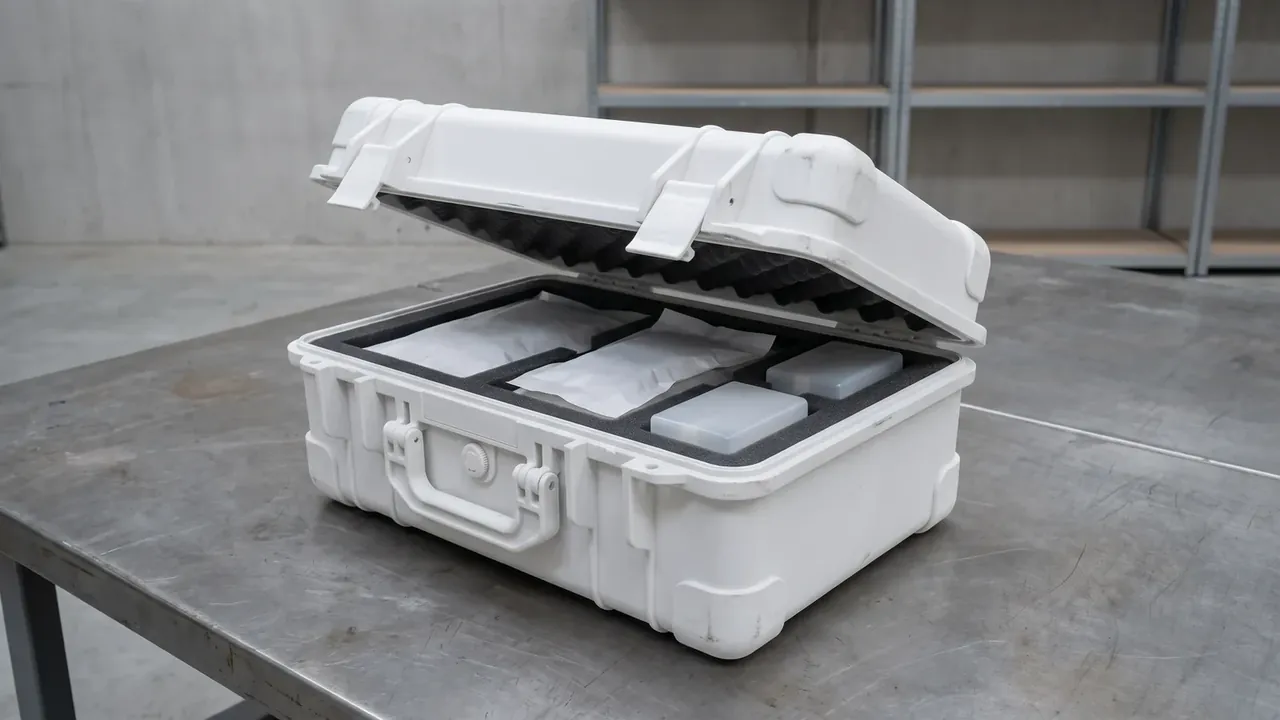
Packs sit against the walls, never flat on the floor: 10 mm of air beneath, a 3 mm foam sheet facing the cavity. Four 500 g packs in an 8 L box give 1.6 kg of cold mass, 1.5 K of spread and 24 hours, against 4.5 K and 12 hours with one pack in the lid. Packs want 24 hours at −25 °C; eight hours leaves a soft core that is spent in two.
3. Logger Position and Sampling Interval
Logger accuracy is half position. Mid-lid and 50 mm clear of any pack reads return air; taped beside a pack it runs 3 to 4 K low; at a cut-out floor it lags, so a 60 second opening takes 6 minutes.
| Position | Distance to pack | Deviation | Verdict |
|---|---|---|---|
| Mid-lid | 80 mm | 0.3 K | standard |
| Cut-out floor | 100 mm | 1.8 K lag | long trips |
| Return air | 60 mm | 0.5 K | multi-band |
Sample every 5 minutes: 288 points a day give three readings across a 60 second opening, where 30 minute intervals leave one. Accuracy is quoted at ±0.5 °C and checked at 0 and 20 °C; a coin cell in a cold chain box lasts 12 months at 5 minutes, 3 at one.
4. Turning Lid Openings into Hold Time
A 60 second opening lifts the cavity 1.5 K and needs 20 minutes to recover, costing 40 minutes of hold; six openings in 24 hours leave 20 usable hours, a loss to design in.
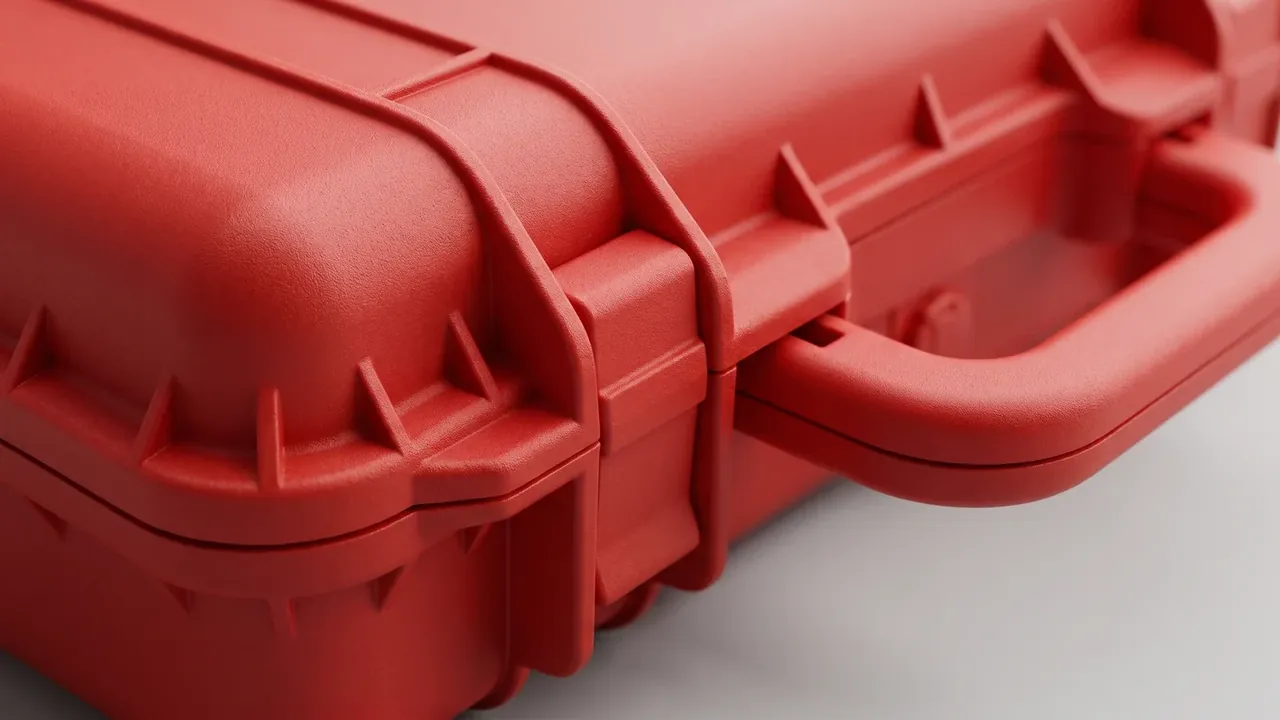
Two latches cycle in 8 seconds, four in 12, so ten openings a day cost 40 seconds of exposed cavity. A hinge stopping at 100 degrees saves another 3 seconds each time.
| Openings | Each | Cumulative rise | Usable in 24 h |
|---|---|---|---|
| 2 | 60 s | 3.0 K | 23 h |
| 6 | 60 s | 9.0 K | 20 h |
| 10 | 90 s | 22.5 K | 16 h |
| 15 | 90 s | 33.8 K | 12 h |
A thicker lid only partly compensates: 10 mm more foam drops the rise to 1.2 K, but adds 2 seconds per cycle. Fewer openings beats more foam.
5. Validation: Full Load, Half Load, 30 °C
Validate a cold chain box at the worst case: 30 °C for 24 hours with nine thermocouples, three each in the top, middle and bottom layers, one unit at full load and one at half. Half load carries less thermal mass and loses about 15 percent, and that run decides.
| Test | Condition | Pass | Repeat |
|---|---|---|---|
| Full load | 30 °C, 24 h | 2.0–8.0 °C throughout | 24 months |
| Half load | 30 °C, 24 h | 2.0–8.0 °C throughout | 24 months |
| Door cycle | 60 s every 4 h | peak ≤ 8.5 °C | 12 months |
Write criteria as numbers: peak no higher than 8.0 °C, minimum no lower than 2.0 °C, door-cycle peak under 8.5 °C recovering in 30 minutes. Repeat after any pack or gasket change, since a 1 K shift in phase point moves hold time by an hour.
Conclusion
Configuring a cold chain box runs thickness, packs, logger points and validation in that order. Too thin a wall and extra packs only stretch 16 hours to 18; the wrong phase point pushes the corners out of band; a badly placed logger draws a clean curve that misstates the cavity. Fix 30 and 50 mm, 5 and −21 °C, and a 5 minute interval first, then close with one full-load and one half-load run at 30 °C.
This article discusses only the container (case body) side of specifications and design intent, and does not cover any handling, loading or use of the contents.
Related Reading
- Case structure for medical sample transport
- Temperature bands and layout for vaccine cases
- Basic criteria for choosing a cold chain case
- Foam types and compression inside a case
Related Products
- 8 Series — Gun Cases; Military Equipment Cases; Camera Equipment Cases; Drone Cases; Watch Cases; Knife Cases; First Aid Cases; Electronics Equipment Cases
- WL8-2812 PP Gun Case — model WL8-2812
- All protective cases and toolboxes: 7 series, 158 models