

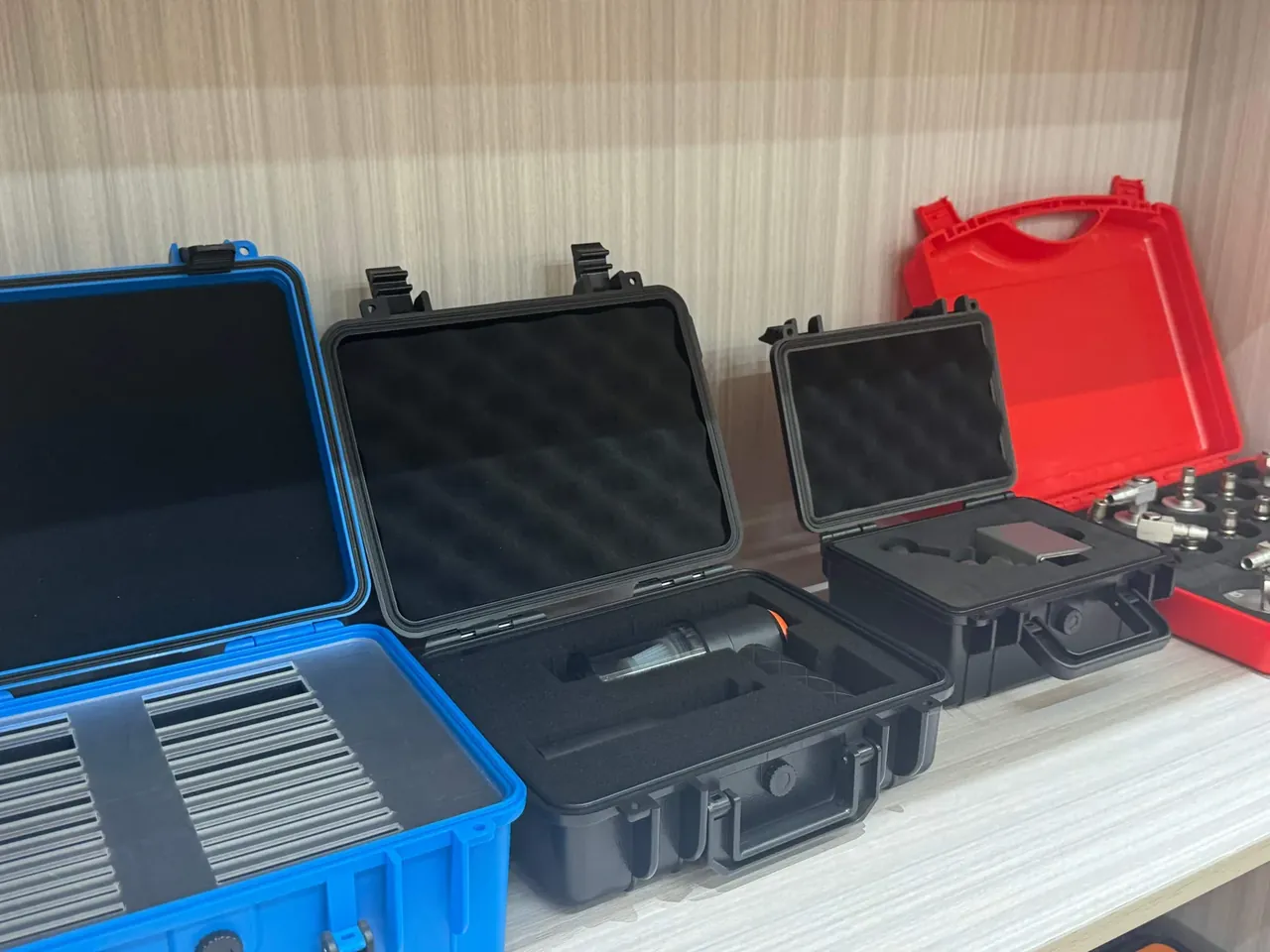
Quick answer: A water quality tester anti-corrosion plastic hard box keeps hinge torque decay within 9% after 480 h of salt spray at 30% glass fibre, on a 6 mm pin.
Table of contents
- Glass fibre ratio in the water quality tester anti-corrosion plastic hard box
- Hinge pin material and fit
- Torque readings across the salt-spray interval
- Surface reading after the wipe retest
- Pin-diameter reject line for corrosion batches
- FAQ
1. Glass fibre ratio in the water quality tester anti-corrosion plastic hard box
The shell of this water quality tester anti-corrosion plastic hard box measures 480×350×190 mm outside, 420×290×135 mm inside, with a 3.6 mm wall, and the resin carries 30% glass fibre. More fibre is not automatically better: a higher fraction stiffens the shell and slows hinge-seat creep in warm salt air, but embrittles weld lines so corners crack after moulding. The 30% grade is the measured compromise between corrosion life and moulding stability.
Too little fibre and the shell swells over 480 h of salt spray, the lid-to-mouth overlap shrinks and the single gasket falls below 19% compression; too much and a 1.0 m drop splits a corner. Both failures trace to the shell formulation, not the seal. At 3.9 kg empty and 8 kg loaded, stiffness returns to this grade rather than to a thicker wall.
| Glass-fibre grade | Hinge-seat drift at 480 h | Verdict |
|---|---|---|
| 20% | 0.35 mm | Reject |
| 30% | 0.12 mm | Threshold |
| 40% | 0.06 mm | Reject |
2. Hinge pin material and fit
The hinge pin is 6 mm, the baseline keeping the lid coaxial after 4800 cycles. In the water quality tester anti-corrosion plastic hard box the seat is moulded into the lid, so the pin carries opening shear and galvanic attack from salt deposit. Carbon steel rusts first in chloride air; the oxide expands and splits the bore, and torque drifts. A stainless pin with controlled clearance keeps the 2.4 N·m start from collapsing.
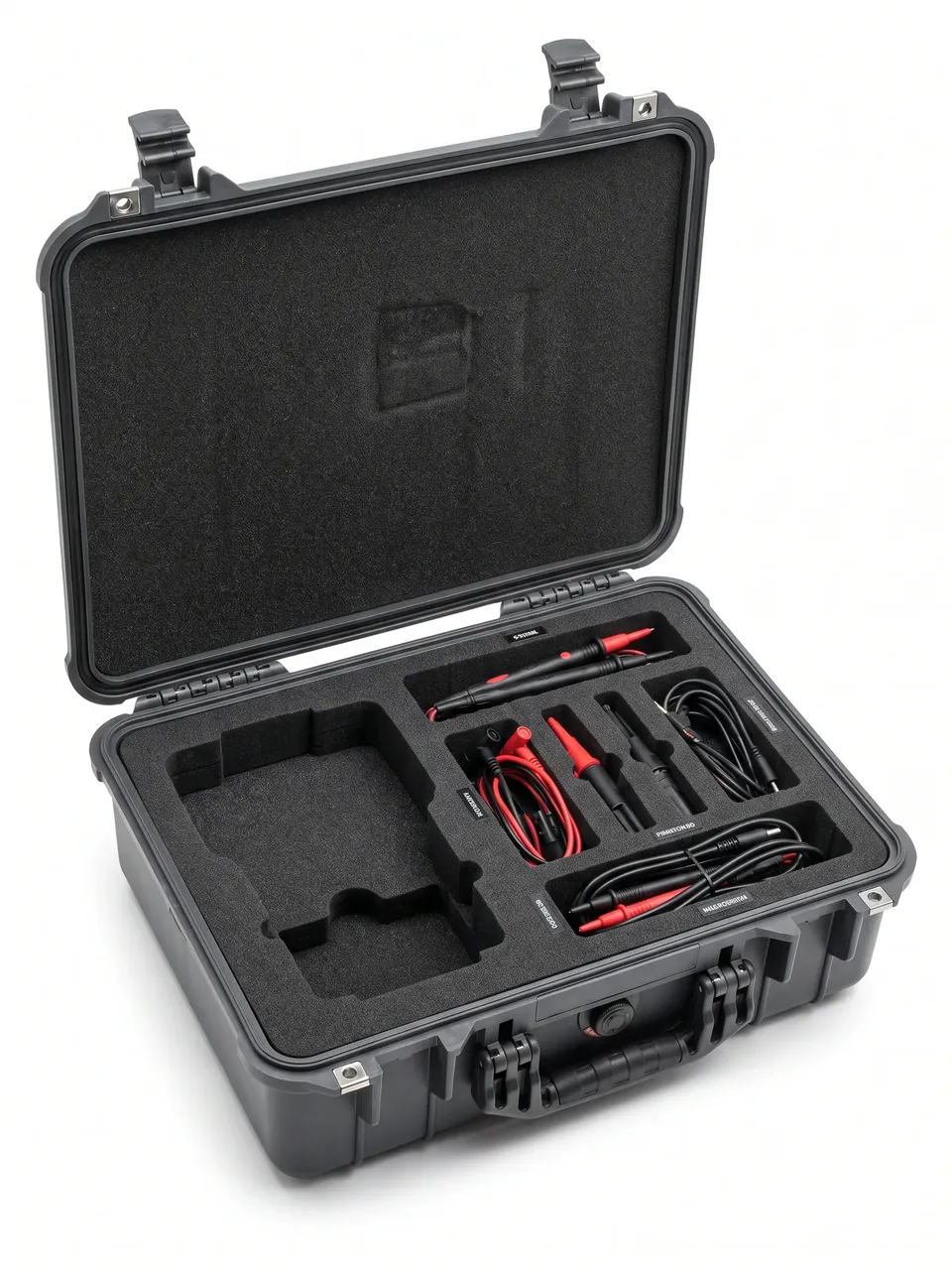
Fit is a clearance, never an interference: rust swelling locks an interference joint, while a loose bore lets the lid wobble and scatters readings. A 6 mm pin with a few hundredths of a millimetre per side avoids seizure and spreads 4800 cycles of wear. The seat is moulded as a blind, sloped hole so condensate leaves the pin instead of pooling in the gap; this detail and the fibre ratio together decide how the water quality tester anti-corrosion plastic hard box feels after salt ageing.
3. Torque readings across the salt-spray interval
Salt spray runs 480 h, with torque logged at 0, 120, 240 and 480 h rather than once at the end. The water quality tester anti-corrosion plastic hard box is cycled three times at each interval with a torque wrench and the steady third reading kept, so a salt-crystal jam is not scored as decay. The 0 h baseline is 2.4 N·m and the 480 h decay must stay within ≤9%.
| Salt-spray interval | Hinge torque (N·m) | Decay vs 0 h |
|---|---|---|
| 0 h | 2.4 | 0% |
| 120 h | 2.34 | 2.5% |
| 240 h | 2.28 | 5.0% |
| 480 h | 2.19 | 8.8% |
The 480 h row reads 2.19 N·m at 8.8%, only 0.2 points under the ≤9% line; 2.18 N·m or less is rejected without retest. Decay read as pin wear plus bore rust swelling beats watching the pin face alone. A spread above 0.06 N·m across three cases points to an unstable seat batch, and settling rate, half-open lid angle and spacing all go into the sheet or the 480 h number has no comparison.
4. Surface reading after the wipe retest
A 5% NaCl wipe of 200 strokes is a shell check beyond the chamber. The water quality tester anti-corrosion plastic hard box takes uniform attack in spray, while the wipe targets latch seats, hinge seats and the mouth overlap, working the salt film open to reveal blistering, staining or pinhole pits. Two hundred strokes bring friction and chloride to a level that exposes defects.
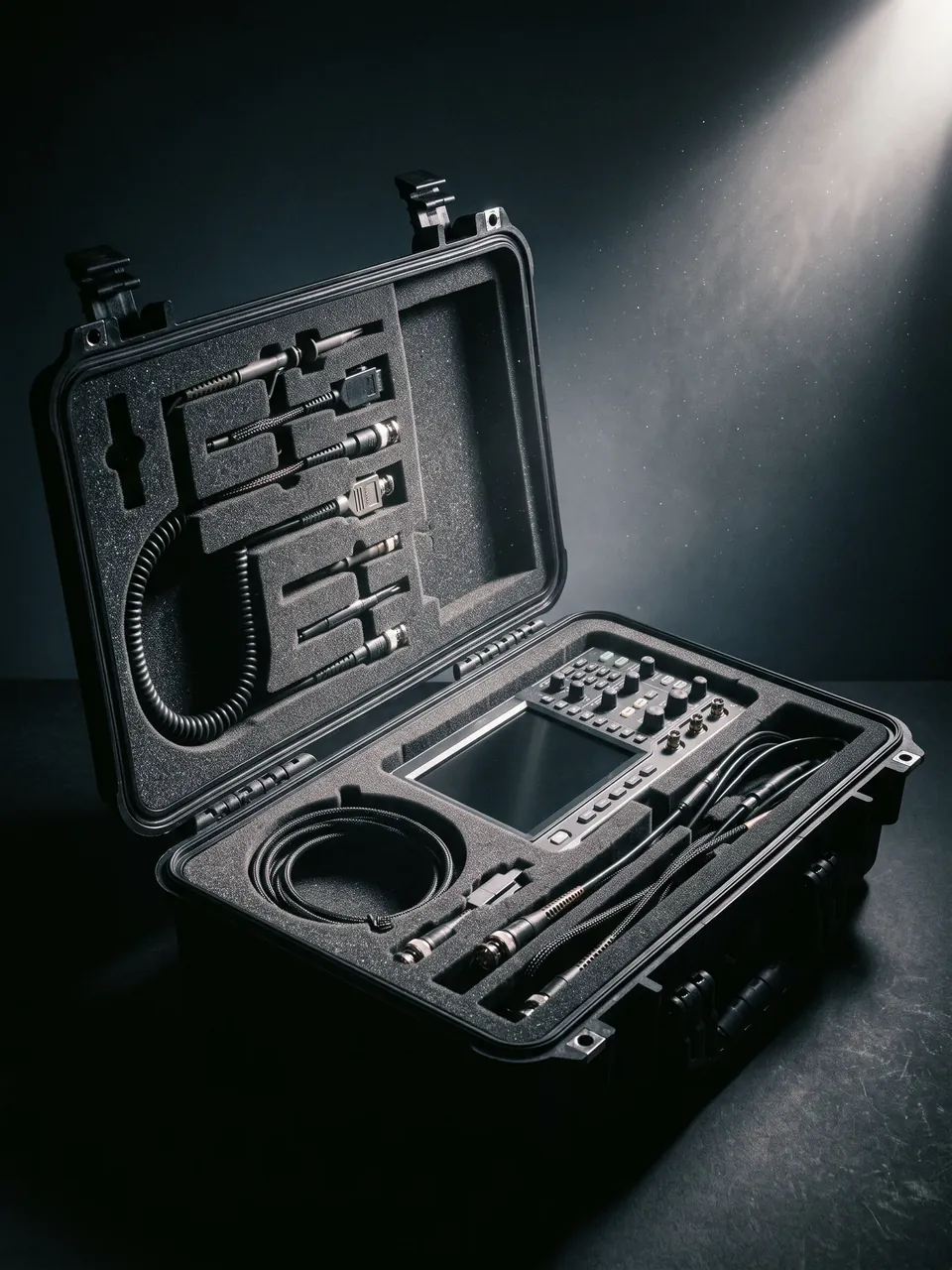
Reading starts with the whole face in daylight, then corners under a magnifier; no visible pits is a hard line. If the two latches at 330 N each rust first, the metal-to-shell potential was mismatched, not the stroke count. The single groove at 19% compression is cleared of salt crystals before reassembly. The 1.0 m drop reset and the IP66 benchmark sit in the same round, confirming the water quality tester anti-corrosion plastic hard box holds its structure after ageing; IP66 is a benchmark here, not a claimed rating.
5. Pin-diameter reject line for corrosion batches
The reject line lands on the 6 mm pin's measured lower deviation and the torque after 480 h. Every water quality tester anti-corrosion plastic hard box batch is sampled for pin diameter, then salt-spray torque backs out pin wear; both must clear before sign-off. Diameter is listed apart because it sets the 2.4 N·m start and decides the margin left after spray, exposing incoming drift earlier than an end reading.
| Torque reading | Pin diameter | Decay after 480 h |
|---|---|---|
| 2.0 N·m | 5.9 mm | 9.5% |
| 2.2 N·m | 6.0 mm | 8.6% |
| 2.4 N·m | 6.0 mm | 8.8% |
| 2.6 N·m | 6.1 mm | 8.5% |
The 2.0 N·m row with a 5.9 mm pin decays 9.5%, past ≤9%, and is rejected; 2.6 N·m with a 6.1 mm pin decays less but loads latches and mouth over time, so it is not taken. JUNZHIJIA centres corrosion batches on 2.4 N·m and a 6.0 mm pin, with diameter, initial torque and 480 h end torque on one line; a batch missing one figure leaves the pass count.
Conclusion
The verdict for the water quality tester anti-corrosion plastic hard box is whether fibre ratio and pin material still hold 2.4 N·m after salt ageing. 30% glass fibre, a 6 mm stainless pin, 480 h decay within ≤9% and no pits after a 5% NaCl 200-stroke wipe must be read on one batch; separating any one destroys comparison. Measure diameter and initial torque first, run staged spray readings, then wipe and drop retests, because reversing it scores crystal jams as decay.
Related Reading
- Stainless steel vs cast aluminium corrosion resistance
- Multimeter and clamp-meter protective cases
- Environmental monitoring meter shockproof plastic case
- Meter boxes for multimeters and oscilloscopes
Related Products
- 8 Series — Gun Cases; Military Equipment Cases; Camera Equipment Cases; Drone Cases; Watch Cases; Knife Cases; First Aid Cases; Electronics Equipment Cases
- WL8-2812 PP Gun Case — model WL8-2812
- All protective cases and toolboxes: 7 series, 158 models