

Quick answer: A Water-Resistant Military Transport Case ties 4 interlock corners to a 25% gasket reserve, capping lid diagonal at 1.6 mm after 3 layers for 48 h.
Table of contents
- Stacking interlock-corner shear of a Water-Resistant Military Transport Case
- Lid gasket strip and compression reserve
- Diagonal deviation after three-layer stacking
- Leak reading under water immersion
- Sealing face recheck after hardware replacement
- FAQ
1. Stacking interlock-corner shear of a Water-Resistant Military Transport Case
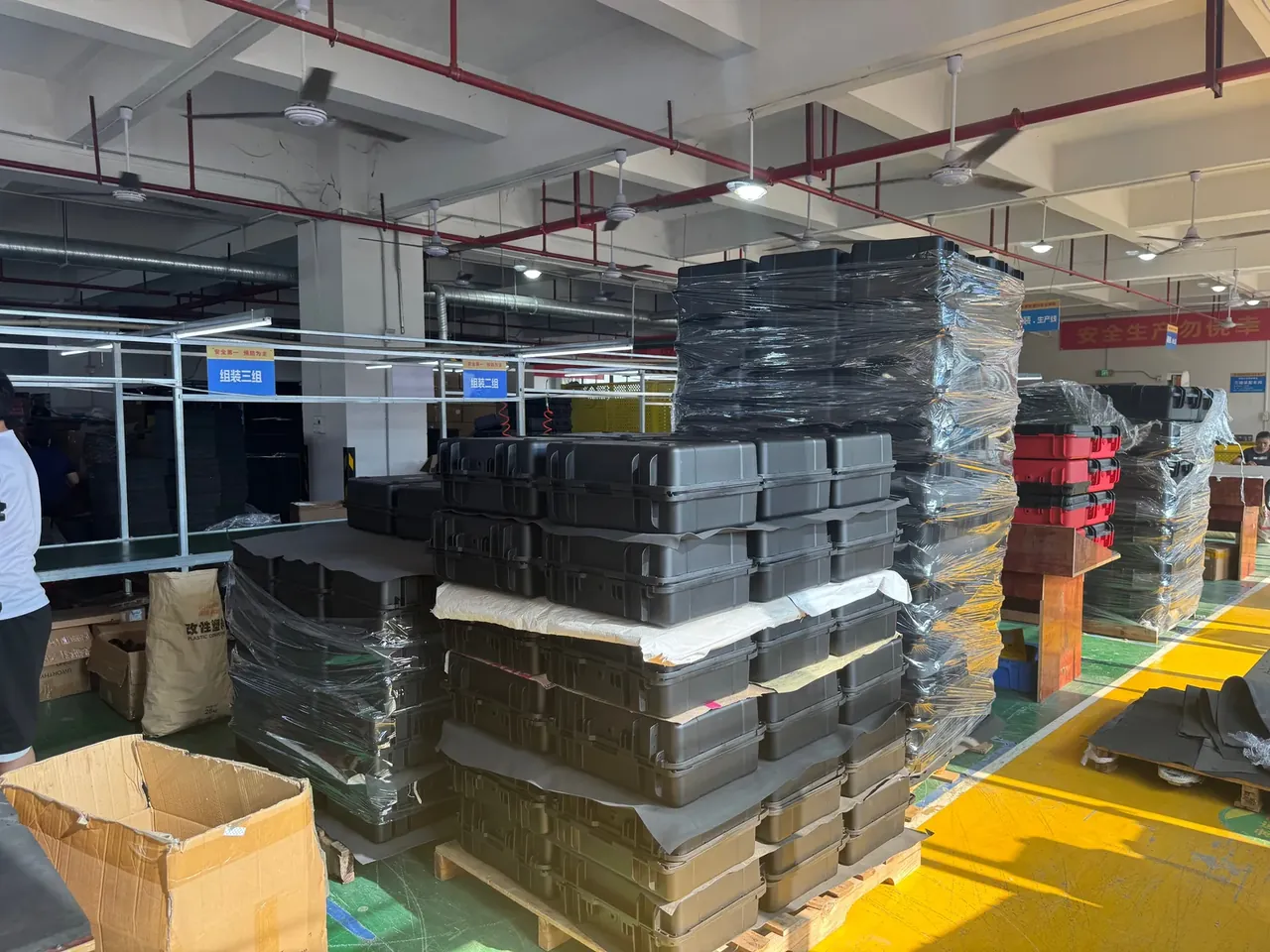
A Water-Resistant Military Transport Case starts its dimension chain at the 4 interlock corners of the lid. Outer 700×500×310 mm, inner cavity 630×435×240 mm, wall 4.8 mm, empty shell 9.0 kg and design load 19 kg: the corners form bosses and matching recesses between stacked shells, sending the upper load into corner shear planes rather than leaving the lid to bend alone.
The boss root joins the lid ribs as one piece, and the recess wall holds the 4.8 mm without local thinning. A Water-Resistant Military Transport Case sets the 4 corners symmetrically; stacking runs 3 layers for 48 h on a static rig, the diagonal read after unloading and rebound, not at the loaded peak.
| Stacking layers | Hold time | Corner shear recheck |
|---|---|---|
| 1 layer | 48 h | Datum reading |
| 2 layers | 48 h | No corner slip |
| 3 layers | 48 h | Diagonal ≤1.6 mm |
| 3 layers retest | 48 h | Four-corner split log |
2. Lid gasket strip and compression reserve
A 25% compression rate on the lid strip is the first dimension that keeps water out of a Water-Resistant Military Transport Case. When shut, 4 catches each give 460 N to press the lid onto the mouth step, squeezing the strip to three quarters of its free height; the reserve absorbs lid warp after stacking. Below 20% the mouth seeps, above 30% catch travel is used up.
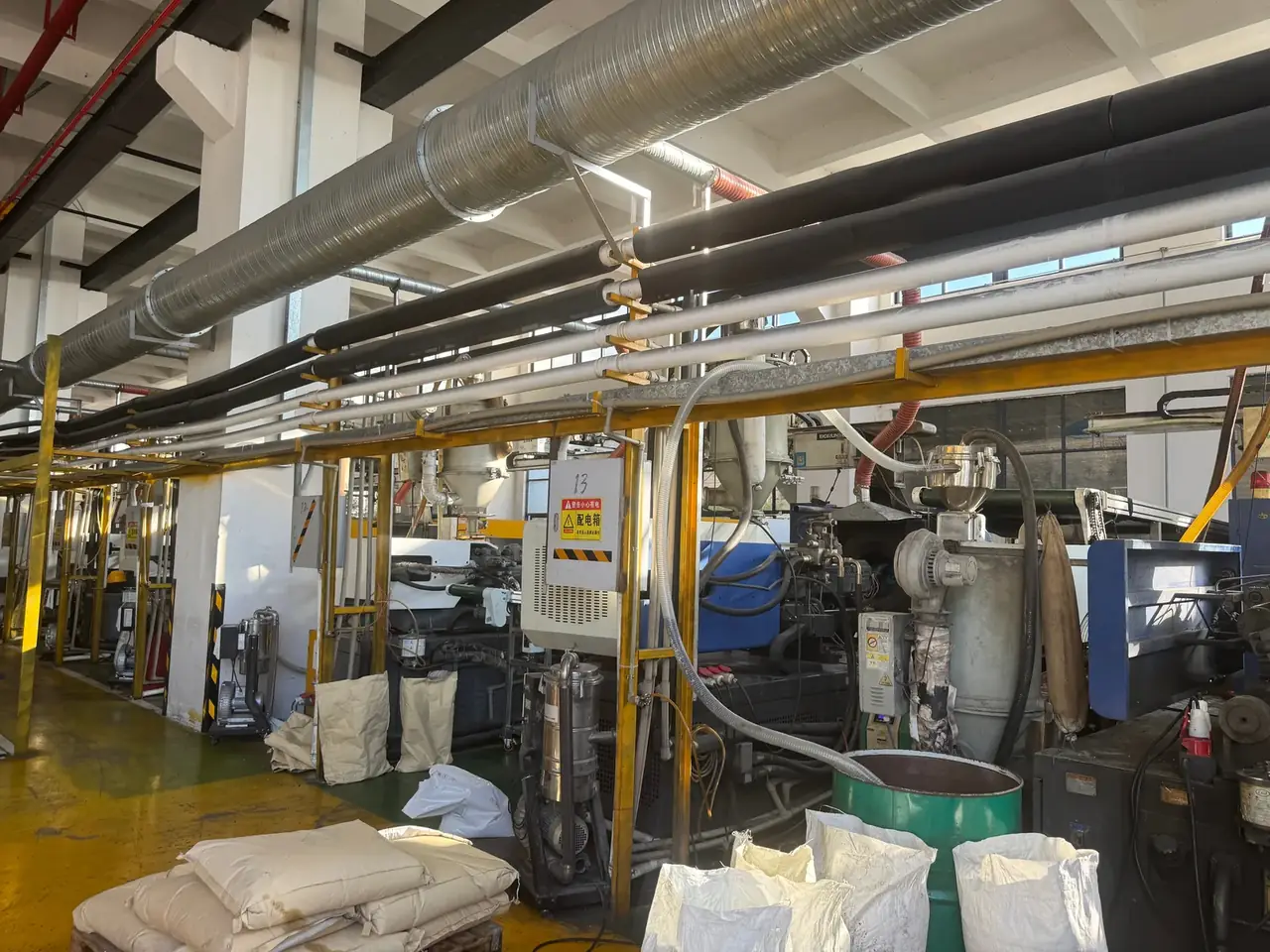
Strip section follows the step width, and the bonded joint must not lift at the corners. The rim and step face of a Water-Resistant Military Transport Case stay parallel under 4 evenly spaced catches; each 460 N decays across 3500 open-close cycles, and once low the 25% rate drops and immersion readings lose meaning.
| Interlock feature | Build method | Recheck item |
|---|---|---|
| Lid corner bosses | Seat into lower recesses | No whitening on shear face |
| Base corner recesses | 4.8 mm wall kept | Flatness of shear face |
| Corner blend radii | Moulded in one shot | No stress cracking |
| Mouth step face | Rim pressed parallel | 25% compression rate |
3. Diagonal deviation after three-layer stacking
A mouth diagonal deviation of ≤1.6 mm after 3 layers for 48 h is where a Water-Resistant Military Transport Case accepts corners and lid stiffness together. The length difference of the two diagonals is read on a scribed datum at room temperature after unloading; for a 630×435×240 mm cavity the datum comes from the long and short edges.
Drops at 1.2 m add a recheck: lid shut, 4 catches locked, six faces once each, then another 48 h on the rig. A Water-Resistant Military Transport Case bands the readings so an over-line part returns to boss and rib forming instead of passing by tighter catches.
| Deviation value | Stacking condition | Judgement |
|---|---|---|
| 0.8 mm | 3 layers / 48 h | Pass |
| 1.2 mm | 3 layers / 48 h | Pass |
| 1.6 mm | 3 layers / 48 h | Boundary |
| 1.8 mm | 3 layers / 48 h | Reject |
| 2.0 mm | 3 layers / 48 h | Lid rework |
4. Leak reading under water immersion
Immersion runs at 1.2 m for 30 min, with the seal checked against the IP67 method and no certificate number claimed. A Water-Resistant Military Transport Case is shut with 4 catches locked, mouth down; after the hold the lid is opened for water marks, beads or damp lines on the step and inner strip, shell side only.
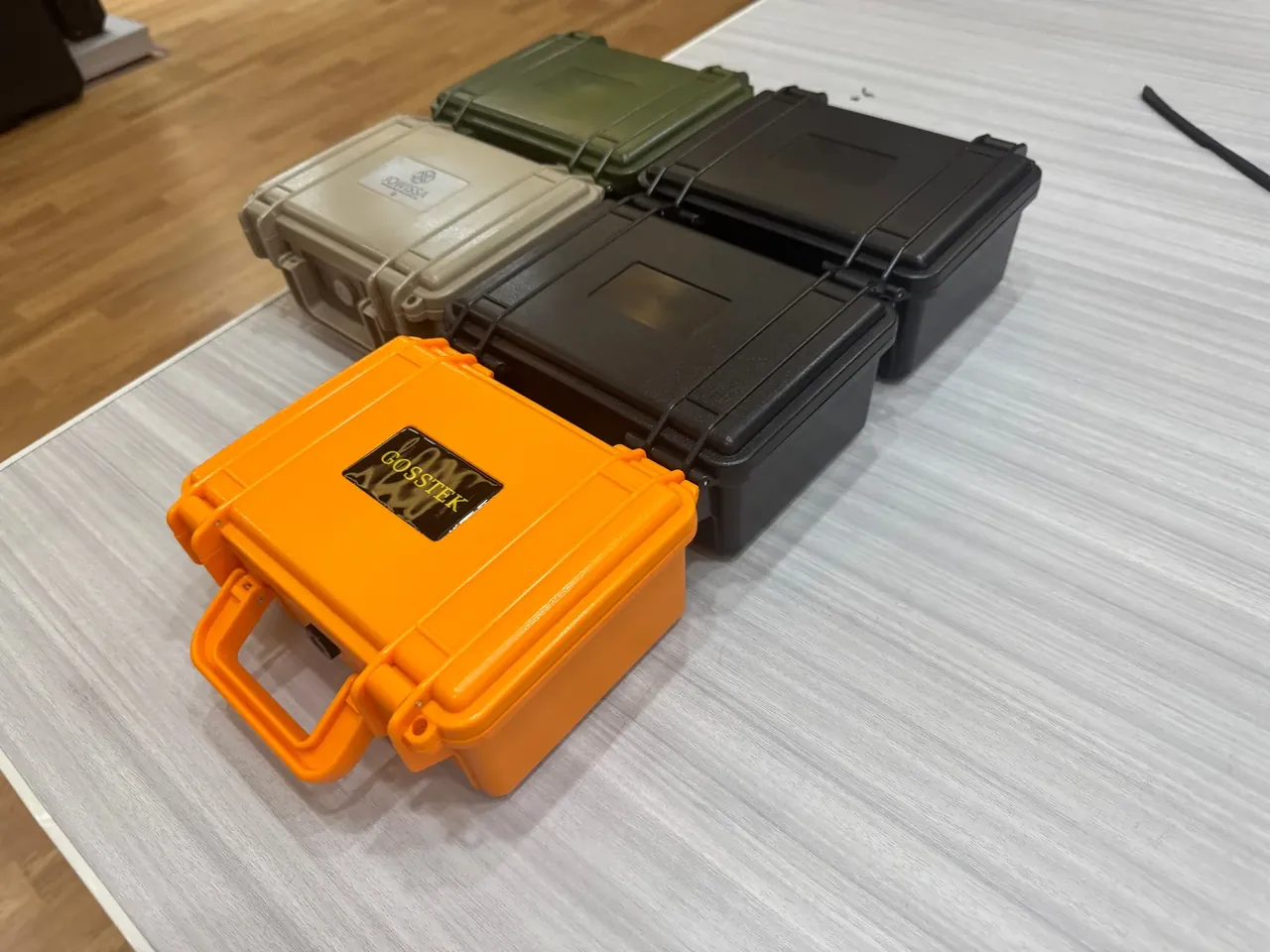
A second immersion follows the 1.2 m drop, since corner shear can push the diagonal past ≤1.6 mm and relieve the strip locally. A Water-Resistant Military Transport Case logs a room-temperature part and a dropped part at the same depth for the same 30 min; any seepage sends the batch back to a sealing-face recheck.
5. Sealing face recheck after hardware replacement
Four catches at 460 N each and a hinge torque of 3.2 N·m are fixed when hardware on a Water-Resistant Military Transport Case is refitted. After 96 h salt spray a new catch has a different lock travel, and torque set high or low lets one rim edge reach the step first, turning 25% into one side on target; 3500 empty open-close cycles run before the four-edge reserve is measured.
The recheck has three steps: rim-to-step parallelism, corner locking force, then one immersion at 1.2 m for 30 min. A Water-Resistant Military Transport Case states no model or clause number here; the four-edge reserve spread, post-drop diagonal and immersion result must all return to their lines. Surface condition after 96 h salt spray is appearance only. JUNZHIJIA keeps hinge torque and catch force in one table for such batches.
Conclusion
A Water-Resistant Military Transport Case closes 4 interlock-corner shear loads, a 25% gasket rate and a ≤1.6 mm mouth diagonal after 3 layers for 48 h into one acceptance chain, finished by immersion at 1.2 m for 30 min. Four catches at 460 N, a 3.2 N·m hinge torque and a 3500-cycle refit recheck bring the sealing face back to its line after hardware work; records checked against the IP67 method and 96 h salt spray cover shell, lid and insert alone.
Related Reading
- Dustproof and waterproof case standards
- Heavy duty waterproof plastic box specifications
- Waterproof test items in incoming inspection
- Air transport protective case selection guide
Related Products
- 8 Series — Gun Cases; Military Equipment Cases; Camera Equipment Cases; Drone Cases; Watch Cases; Knife Cases; First Aid Cases; Electronics Equipment Cases
- WL8-2812 PP Gun Case — model WL8-2812
- All protective cases and toolboxes: 7 series, 158 models