

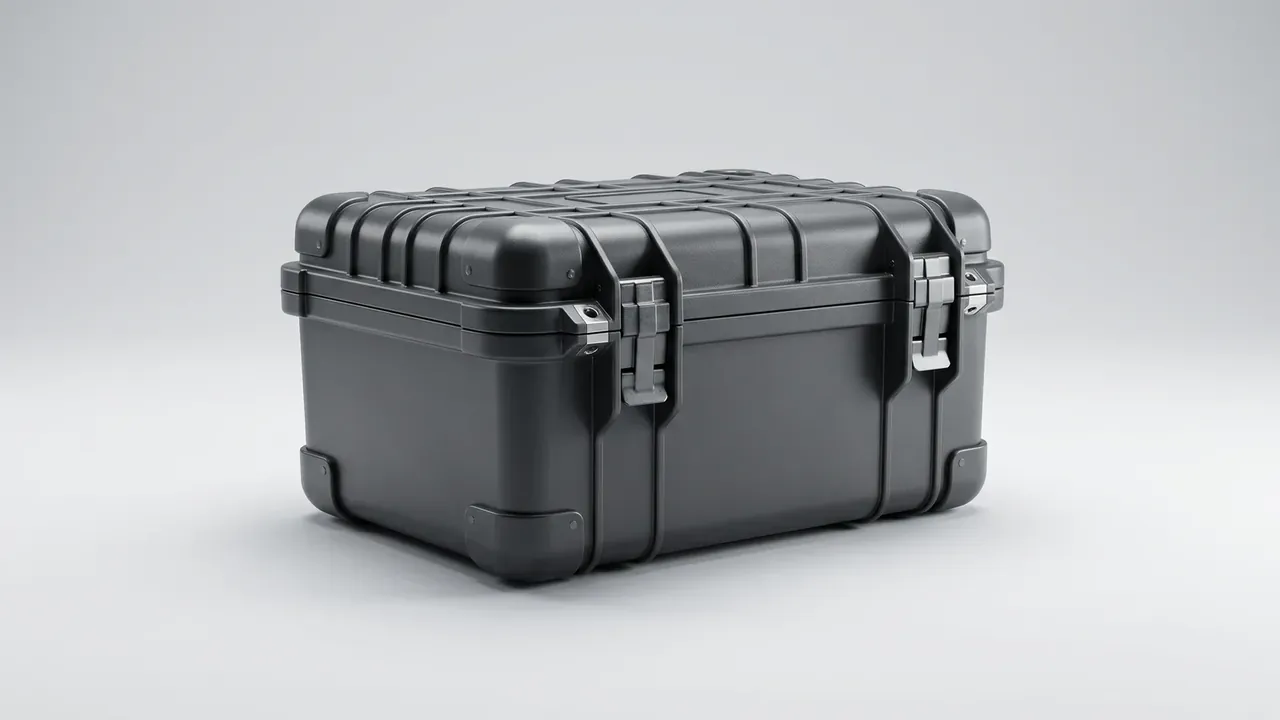
Quick answer: Acceptance of a waterproof box nearby runs in four layers: fit and appearance, sealing face and gasket, ingress testing at the rated level, hardware and batch sampling. Judge the conditions, not the claim.
Table of contents
- Four Layers of Acceptance for a Waterproof Box Nearby
- Sealing Faces Before Gasket Hardness
- Ingress Testing: Immersion and Spray
- Hardware: Latches, Hinges and the Valve
- Sampling Plans and Pass Rules
- FAQ
1. Four Layers of Acceptance for a Waterproof Box Nearby
The first layer is fit and appearance, the second the sealing face, the third ingress testing, the fourth hardware and batch sampling. The order is fixed: a warped lid in an immersion tank yields a meaningless verdict.
Layering separates causes: debris, low compression, uneven preload and a dead valve all show as water inside, yet each needs its own fix. In one step they collapse into a failed box.
Record conditions, not verdicts: 1 m, 30 minutes, water-to-air difference under 5 °C. A pass line cannot be reproduced when a batch is disputed.
| Layer | What is checked | Pass basis |
|---|---|---|
| Fit | Lid flatness, gap | Within 0.6 mm per metre |
| Seal | Feeler gauge, compression | 0.05 mm blade will not enter |
| Ingress | Immersion or spray | No water inside the seal |
| Hardware | Latches, hinges, valve | Latch force within 15% |
| Batch | Sampling and grading | AQL 1.0 |
2. Sealing Faces Before Gasket Hardness
Close the lid unlatched and run a 0.05 mm feeler gauge around the perimeter; where the blade enters, compression is short. Flatness should stay within 0.6 mm per metre on a 3.5 mm wall; no gasket recovers a lid that misses it.
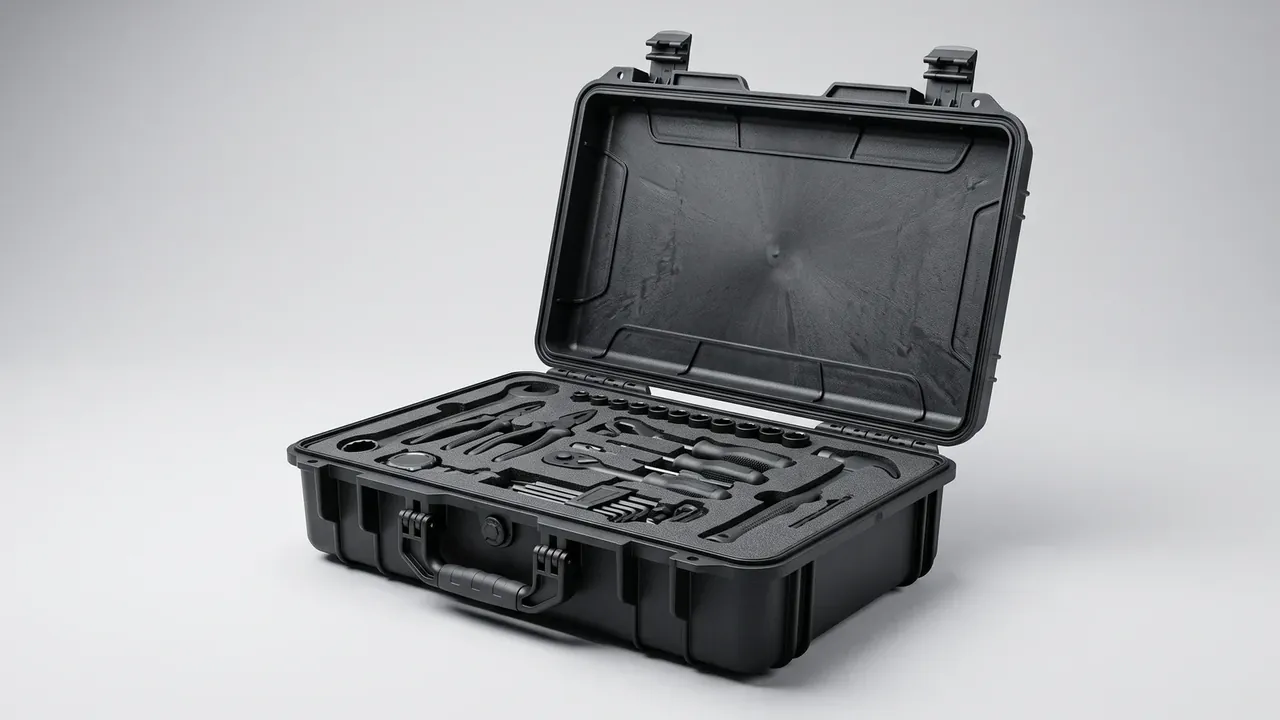
Shore A 55 to 65 is the working band: below 50 the cord flattens in cold, above 70 the latches cannot reach design compression. A D-profile seats at lower pressure than an O-profile.
Compression is held at 25 to 30 percent: original cord height minus assembled height, over original. Under 20 percent one scratch leaks; over 35 percent the cord takes a set.
3. Ingress Testing: Immersion and Spray
For a waterproof box nearby, IP67 is 1 m of immersion for 30 minutes with the weakest face down, usually the base or the valve side. IP66 is spray at 12.5 L/min and 100 kPa for 3 minutes. Neither substitutes for the other.
Keep an unmodified control from the same batch. If it leaks, the cause is design or process; if only the sample leaks, it is assembly.
Read the trace after opening: moisture outside the gasket is normal, anything inside the seal fails. Water at the valve seat usually means a disc with poor rebound, not a failed gasket.
4. Hardware: Latches, Hinges and the Valve
Latches carry three checks: feel, preload consistency, secondary lock. Force across four latches should sit within 15 percent, or compression is uneven. Pull the 4 mm 316 pins and check for burrs.
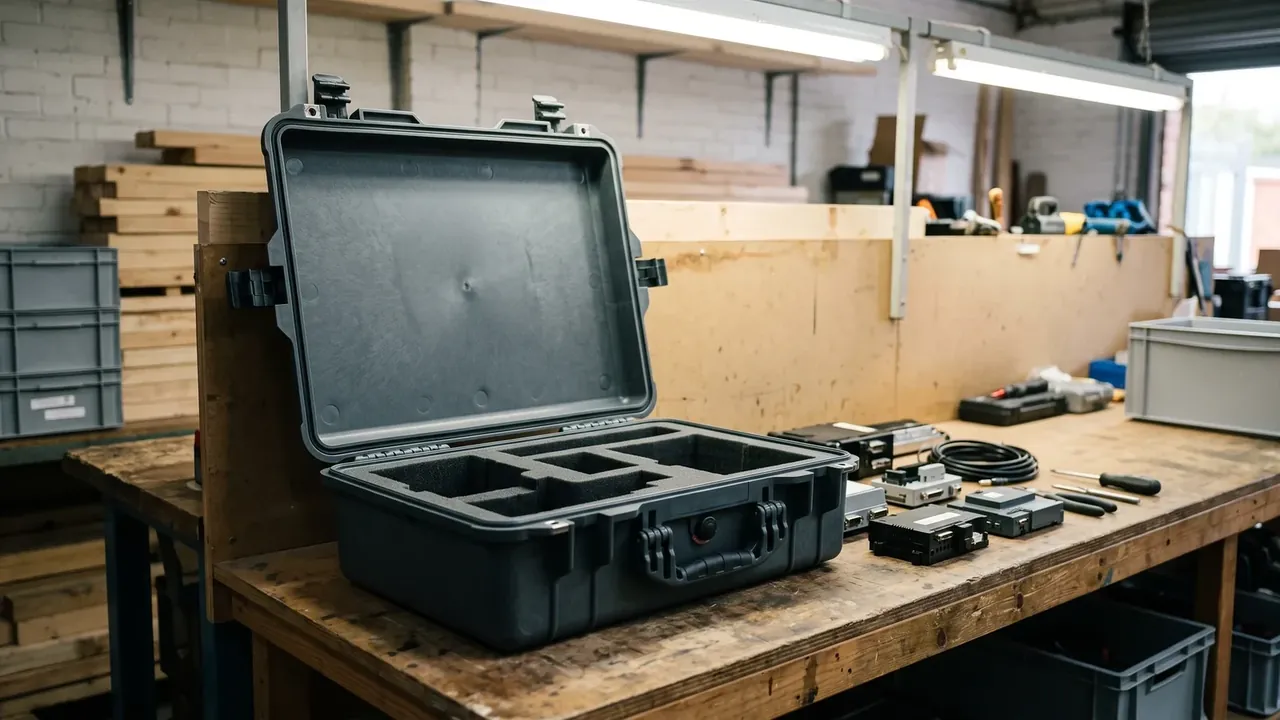
The valve is often skipped: it should vent at a 0.3 bar differential and hold closed, checked with soap solution, then retested after 4 hours at −20 °C and 60 °C.
Salt spray is 48 hours with no red rust; springs and rivets rust first, so tear one down.
5. Sampling Plans and Pass Rules
Sampling for a waterproof box nearby follows level II at AQL 1.0: for 501 to 1200 units, 80 are checked for fit and 13 for immersion; below 200, immerse every one.
Grade defects in three classes: water ingress and latch failure are critical, one unit rejects the batch; gasket misalignment and valve seepage are major at AQL 1.0; scratches are minor at AQL 2.5. In one table, the outcome is a full reject or release.
Re-inspect only the failed item; a batch that fails again goes back whole, since sorting voids the sampling ratio. Drop testing runs at 1.2 m on six faces, three edges and one corner, before immersion.
| Batch | Fit sample | Immersion sample | Rule |
|---|---|---|---|
| 151–280 | 32 | 8 | Zero critical defects |
| 281–500 | 50 | 13 | Major at AQL 1.0 |
| 501–1200 | 80 | 13 | Major at AQL 1.0 |
Conclusion
Four steps carry a waterproof box nearby through acceptance: a feeler gauge around the sealing face, compression at 25 to 30 percent, the rated immersion or spray reproduced exactly, and a graded AQL 1.0 rule. The two steps most often dropped are flatness and the valve retest, and those account for most leaks in service. Put conditions in the record and grading in the contract, and a waterproof box nearby stops depending on luck.
This article discusses only the container (case body) side of specifications and design intent, and does not cover any handling, loading or use of the contents.
Related Reading
- Waterproof hard case ratings and pass lines
- How a waterproof hard case is sealed
- Moisture-proof case selection criteria
- Dustproof case ratings and selection
Related Products
- 8 Series — Gun Cases; Military Equipment Cases; Camera Equipment Cases; Drone Cases; Watch Cases; Knife Cases; First Aid Cases; Electronics Equipment Cases
- WL8-2812 PP Gun Case — model WL8-2812
- All protective cases and toolboxes: 7 series, 158 models