

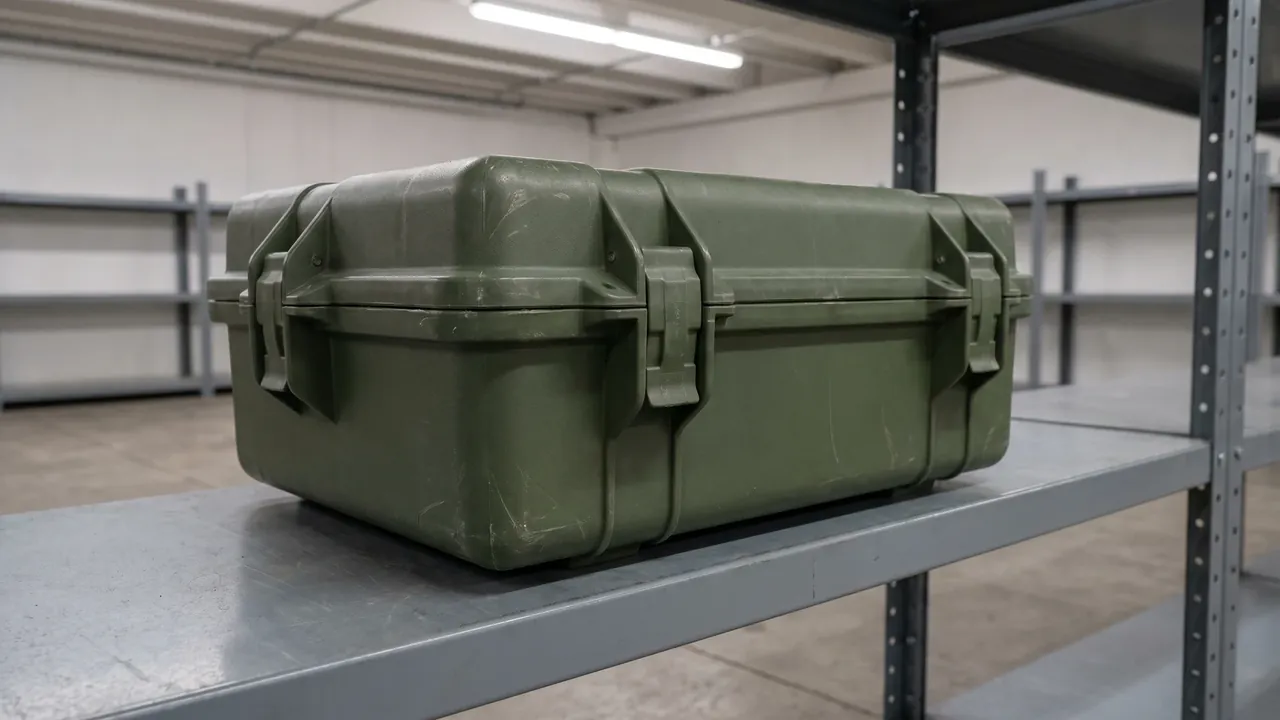
Quick answer: Acceptance of a waterproof box outdoor starts with exposure, not appearance: UV ageing, rain and condensation, drainage slope, inserts, stack load and latch life each need a method and a threshold. Ageing is gradual, so a factory visual check lets failures surface in the second rainy season.
Table of contents
- Waterproof Box Outdoor Acceptance Starts With Exposure Conditions
- Judging Material and UV Ageing
- Judging Rain, Condensation and Drainage
- Judging Mounting, Latches and Load
- Judging Marking, Sampling and Rejection
- FAQ
1. Waterproof Box Outdoor Acceptance Starts With Exposure Conditions
A waterproof box outdoor fails differently from an indoor unit: indoors the enemy is standing water, outdoors it is ageing. Sun chalks the polypropylene and halves impact strength; day-night cycles pull moisture through the weakest seal. Acceptance starts with latitude, rainfall, extremes and shading.
That sets the boundary: units under an eave stop at IPX5, bolted units with poor drainage must reach IPX7, and exposed ones need 1000 hours of UV ageing against 800 for shaded.
| Tier | Scope | Main items | Method |
|---|---|---|---|
| Full check | Every unit | Wall, gasket, inserts, drain | Gauge, plug gauge |
| Batch sample | 8 per batch | Rain, colour, outline | Spray room, colorimeter |
| Type test | Tooling change | Xenon 1000 h, salt fog 720 h | Third-party report |
2. Judging Material and UV Ageing
Material is judged on grade and additives: outdoor compounds need a UV absorber and a hindered amine stabiliser at 2 percent or more, or the compound is an indoor grade relabelled.
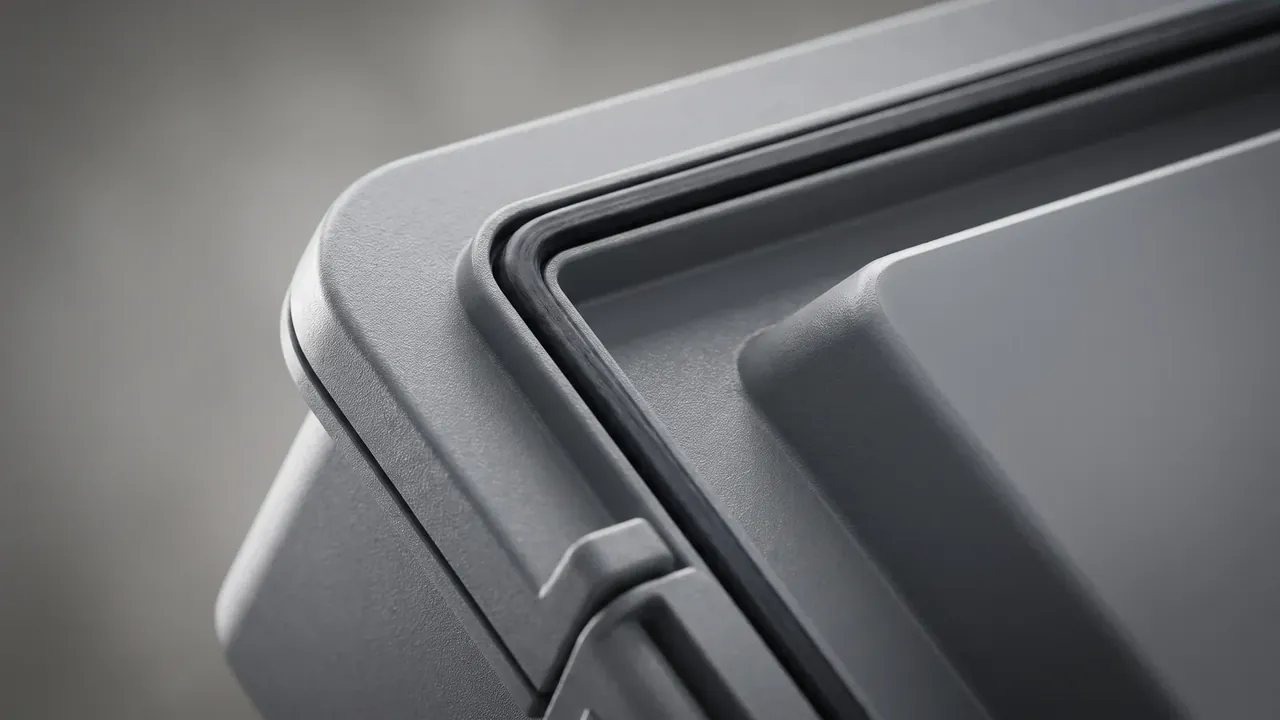
Walls read 3.2 mm ±0.2 on the sides, 4.0 mm on the base, 3.0 mm on the lid. UV attack stays within the outer 0.2 mm, so gauging takes six points and the minimum decides.
Ageing shows in three figures: 1000 hours of xenon at 0.55 W/m²/nm with colour shift under 3.0; 80 percent Charpy retention; no through-crack from a 1 joule drop at −25 °C.
Gaskets use EPDM or silicone at 70 Shore A and 25 percent compression, with set under 20 percent after 24 hours at 70 °C.
3. Judging Rain, Condensation and Drainage
For a waterproof box outdoor, rain follows the exposure class: 200 mm per hour for 24 hours at 1.5 m, the unit at its service angle, plus IPX7 at one metre for 30 minutes on ground-mounted types. No water inside, in the gasket groove or behind the vent passes.
Condensation is the skipped item: −10 °C for eight hours, then 30 °C at 85 percent humidity for eight hours, six cycles, film under 10 percent of inner area.
Drainage: an 8 mm port with a 2 degree fall empties two litres in under 120 seconds; the lid carries a 3 degree fall, since any hollow over 1 mm holds water.
4. Judging Mounting, Latches and Load
Stacking on a waterproof box outdoor follows warehouse practice: four empty units, 400 kg on the bottom, height loss under 3 mm after 24 hours; walls under 200 N/m² deflect less than 1.5 times wall thickness.
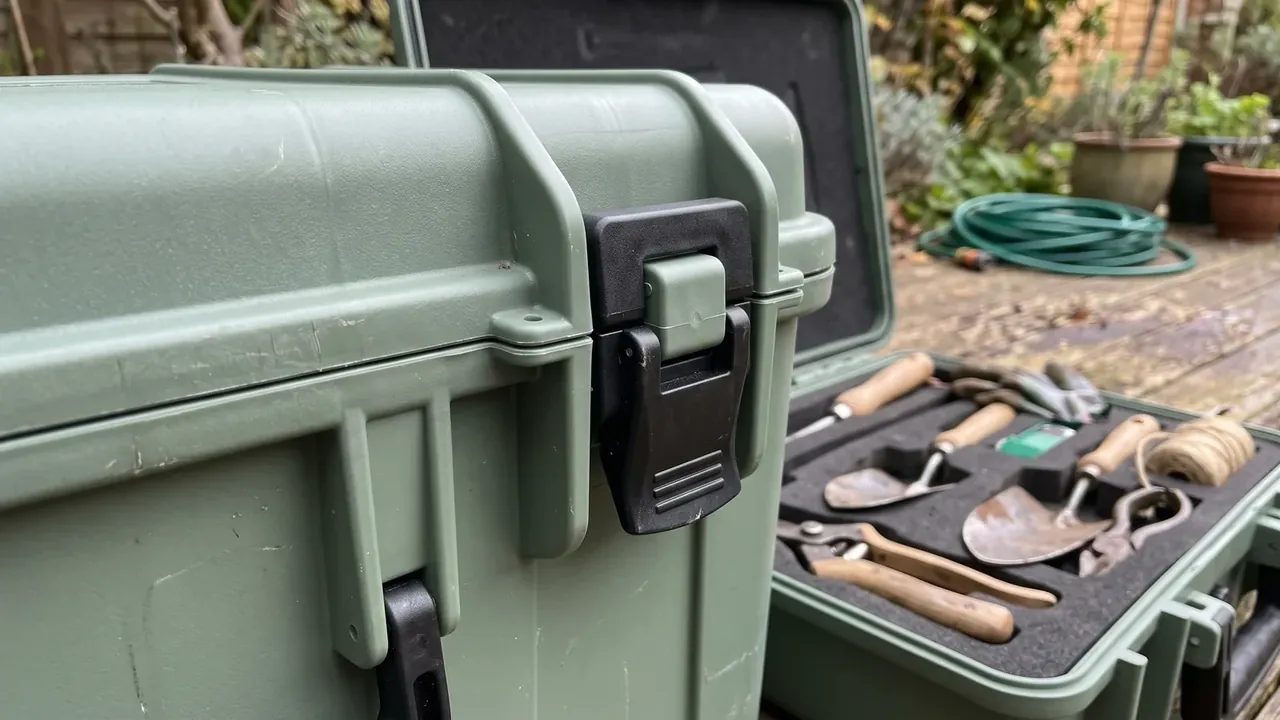
Latches and hinges go by cycles: 600 N retention for 10 seconds, an 8 mm shackle through the lock hole, 2 mm maximum sag after 15000 cycles.
Wind load: a 0.6 m² face at 45 m/s needs anchor pull-out three times the load, with 304 bolts and a five-minute water test per insert.
| Item | Condition | Threshold |
|---|---|---|
| Empty stack | 4 high, 400 kg, 24 h | Height loss ≤3 mm |
| Latch pull | 10 s hold | ≥600 N, no release |
| Hinge life | 15000 cycles | Sag ≤2 mm |
| Insert torque | M8 insert | 12 N·m, no seep |
5. Judging Marking, Sampling and Rejection
Marking carries material grade, ingress rating, month of manufacture, mould cavity and load class, plus a stabiliser note. Laser or in-mould marking holds; screen print fades within two years.
Sampling uses level II with AQL 0 for critical, 1.5 for major and 4.0 for minor defects. Critical means a through-crack, a missing gasket or a loose insert; major covers thin walls, rain ingress and colour shift. Critical defects return the batch, major ones allow screening and resubmission under tightened inspection.
Conclusion
Acceptance of a waterproof box outdoor is not one visual pass but three years of weather compressed into measurable cycles: UV, humidity, rain, stacking and lid cycles. Fix the exposure and give every item a threshold, so process differences show up as numbers. Run this list and a waterproof box outdoor can be judged on shared evidence.
This article discusses only the container (case body) side of specifications and design intent, and does not cover any handling, loading or use of the contents.
Related Reading
- Waterproof hard case acceptance criteria
- Moisture-proof case sealing and judging points
- Shockproof case specifications and cushioning data
- Inspection flow for military supply cases
Related Products
- 8 Series — Gun Cases; Military Equipment Cases; Camera Equipment Cases; Drone Cases; Watch Cases; Knife Cases; First Aid Cases; Electronics Equipment Cases
- WL8-2812 PP Gun Case — model WL8-2812
- All protective cases and toolboxes: 7 series, 158 models