

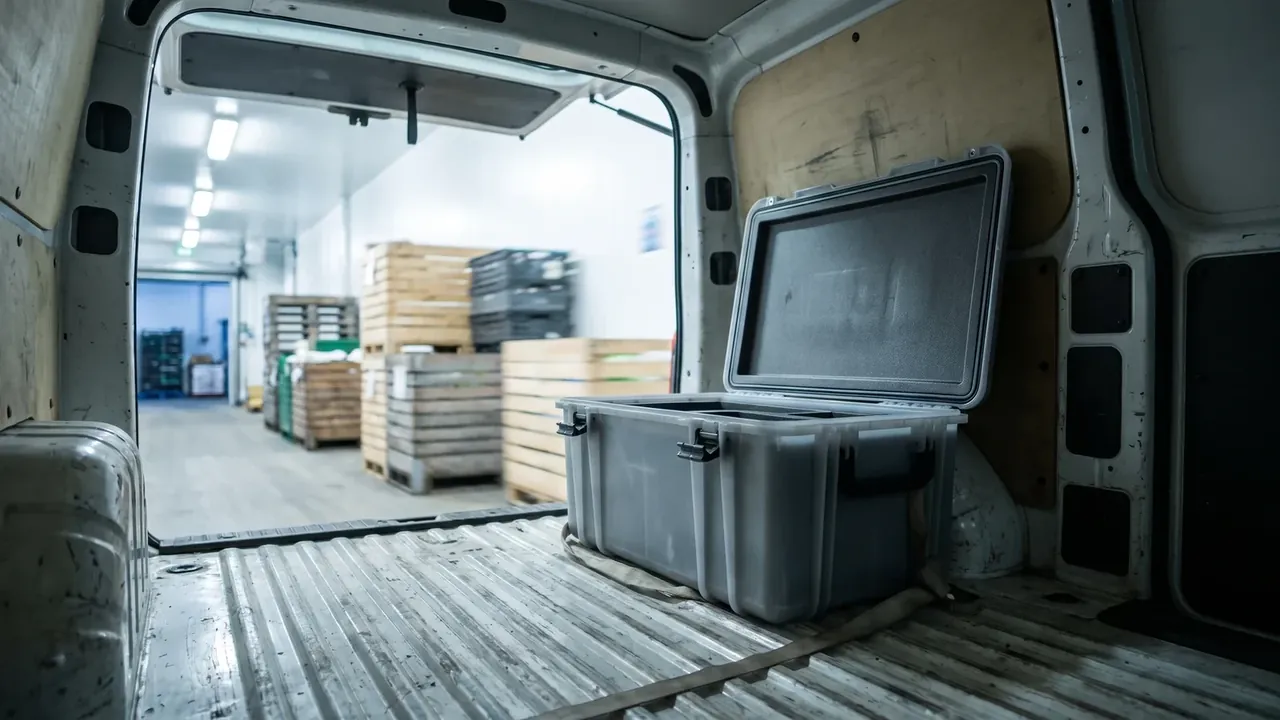
Quick answer: A waterproof hard plastic case carries an IP rating that fixes four things: how water is applied, at what depth or flow, for how long, and against which pass line. Convert depth at 10 kPa per metre, swap the visual check for a 0.1 percent weight gain, and two labs agree.
Table of contents
- What an IP Rating Fixes for a Waterproof Hard Plastic Case
- Why Two Labs Disagree on the Same IPX7
- Sampling, Hydrostatic Head and Pass Lines
- Handling Failures: Rework, Concession, Rejection
- FAQ
1. What an IP Rating Fixes for a Waterproof Hard Plastic Case
The two digits split the job: the first covers solids, the second water. A waterproof hard plastic case carries one of four levels, and no two test the same water.
| Level | Method | Key figures | Pass line |
|---|---|---|---|
| IPX5 | Jet spray | 6.3 litres a minute, 6.3 mm nozzle, 3 minutes | No harmful ingress |
| IPX6 | Strong jet | 12.5 litres a minute, 100 kPa, about 3 m, 3 minutes | No harmful ingress |
| IPX7 | Short immersion | Top 150 mm under water, base about 1,000 mm, 30 minutes | No harmful ingress |
| IPX8 | Continuous immersion | Set by the maker, often 3 m for 60 minutes | No ingress at the stated figures |
Only IPX8 leaves the figures open. One maker writes 1 m for 30 minutes, another 3 m for 60, and the gap is threefold in pressure rather than one grade on a chart.
No rating covers drop, stacking, salt spray or ageing, and a case on deck can stay dry while its latches seize.
2. Why Two Labs Disagree on the Same IPX7
One model passed at lab A and failed at lab B. Put the reports side by side and the gap sits in four settings nobody photographs.
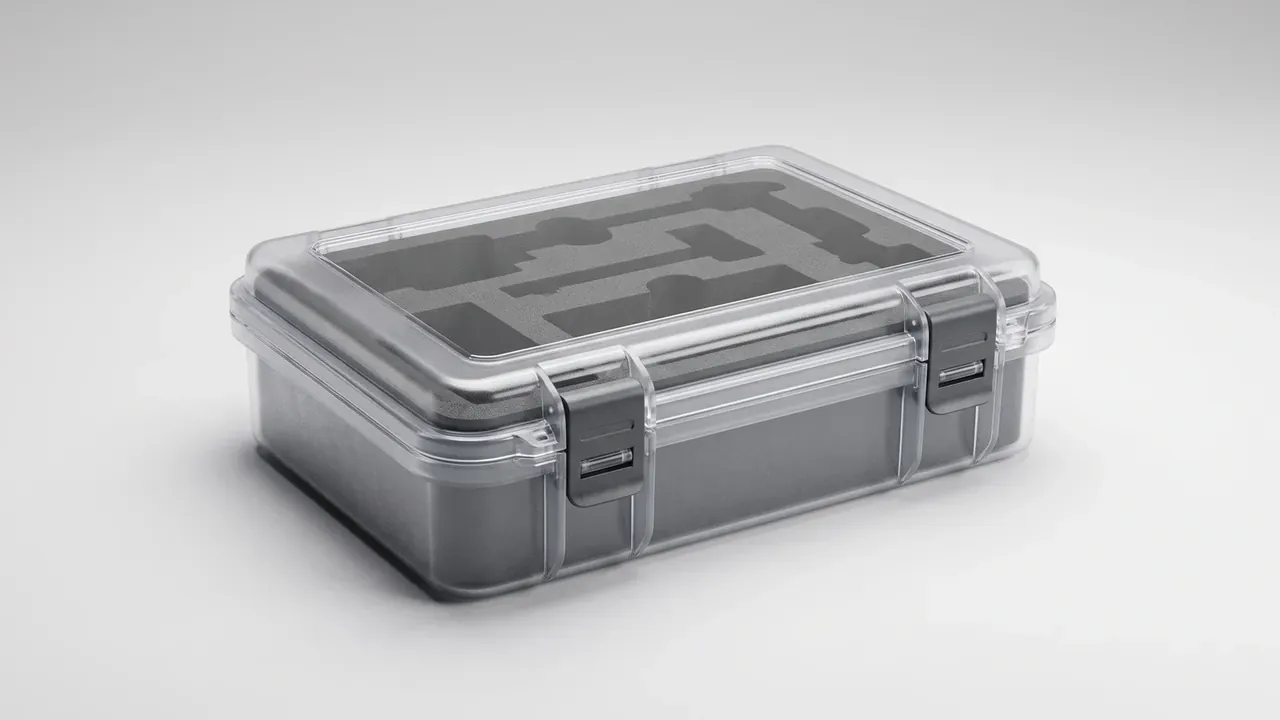
First, sample state: an empty case and one loaded with 15 kg deflect differently, the lid centre sinking about 1.2 mm and changing gasket compression. Second, water temperature: the standard keeps water within 5 K of the sample, yet one lab used 18 degree water and the other 32 degree, enough to shift gasket hardness by 5 points.
Third, the depth datum: 150 mm runs from the highest point of the case, not the lid centre, and a wrong datum can cost 40 mm of depth. Fourth, the verdict, since no water visible to the eye is not no water inside.
Depth is easier to argue as pressure. One metre of head is about 10 kPa, three metres about 30 kPa, so an IPX7 base sits under roughly 10 kPa, or 0.1 kg per square centimetre. A visual check means looking within 5 minutes, while weighing allows a 0.1 percent gain, 2 grams on a 2 kg case.
3. Sampling, Hydrostatic Head and Pass Lines
An acceptance sheet reading tested to IPX7 has said nothing. It needs a sample size, a rule and a record.
For a lot of 501 to 1,200 units, inspection level II gives 80 samples, and AQL 1.0 accepts at 2 and rejects at 3. That covers appearance and dimensions. Water testing cannot run at that size, since each unit must dry, so pull 8 of the 80 for air and 3 for immersion.
- Air pre-screen: 30 kPa, held 120 seconds, drop within 1 kPa
- Immersion: top 150 mm under water 30 minutes, dry, then open
- Weight rule: weigh before and after, allow a 0.1 percent gain
- Timing: finish within 2 hours, before the water spreads and hides the leak
- Record: water temperature, depth datum, hold time, gain, inspector
Hydrostatic head is no separate test. On a waterproof hard plastic case it is the stated depth in pressure form: 1 m is 10 kPa, 3 m is 30 kPa. Buying by depth beats buying by pressure, since depth answers to a tape measure.
4. Handling Failures: Rework, Concession, Rejection
Where a defect goes depends on whether it can be reversed, not how serious it sounds.
| Route | Defects | Action | Re-check |
|---|---|---|---|
| Rework | Flash in the groove, displaced gasket, latch not engaging | Trim, reseat, refit | 100 percent air test, 3 immersed 30 minutes |
| Concession | Colour shift, light flow marks, sealing unaffected | Written waiver with lot and quantity | None, retain samples 6 months |
| Rejection | Pressure drop over the line, latch failure, wall crack | Whole lot returned | Not offered |
Rejection gets no second chance: cracks and stress concentration come from one batch, and units that pass a sort carry the same weakness.
Then go back to the source. Two occurrences of one defect in a month means the tool and the process need review, not a stricter gate. Leaks come from the groove corners, the latch mounts and the area around the gate, all three sharing a fast change of wall thickness.
Conclusion
Accepting the water resistance of a waterproof hard plastic case means turning one rating into four measurable quantities: how water is applied, at what depth, for how long, and against which line. One metre is 10 kPa, 0.1 percent is 2 grams, and 8 air checks plus 3 immersions settle most lots. The supplier issues the rating; the pass line belongs to the buyer.
This article discusses only the container (case body) side of specifications and design intent, and does not cover any handling, loading or use of the contents.
Related Reading
- Ratings and test conditions for waterproof hard cases
- Sealing and acceptance rules for airdrop cases
- How to write pallet markings for cases
Related Products
- 8 Series — Gun Cases; Military Equipment Cases; Camera Equipment Cases; Drone Cases; Watch Cases; Knife Cases; First Aid Cases; Electronics Equipment Cases
- WL8-2812 PP Gun Case — model WL8-2812
- All protective cases and toolboxes: 7 series, 158 models