

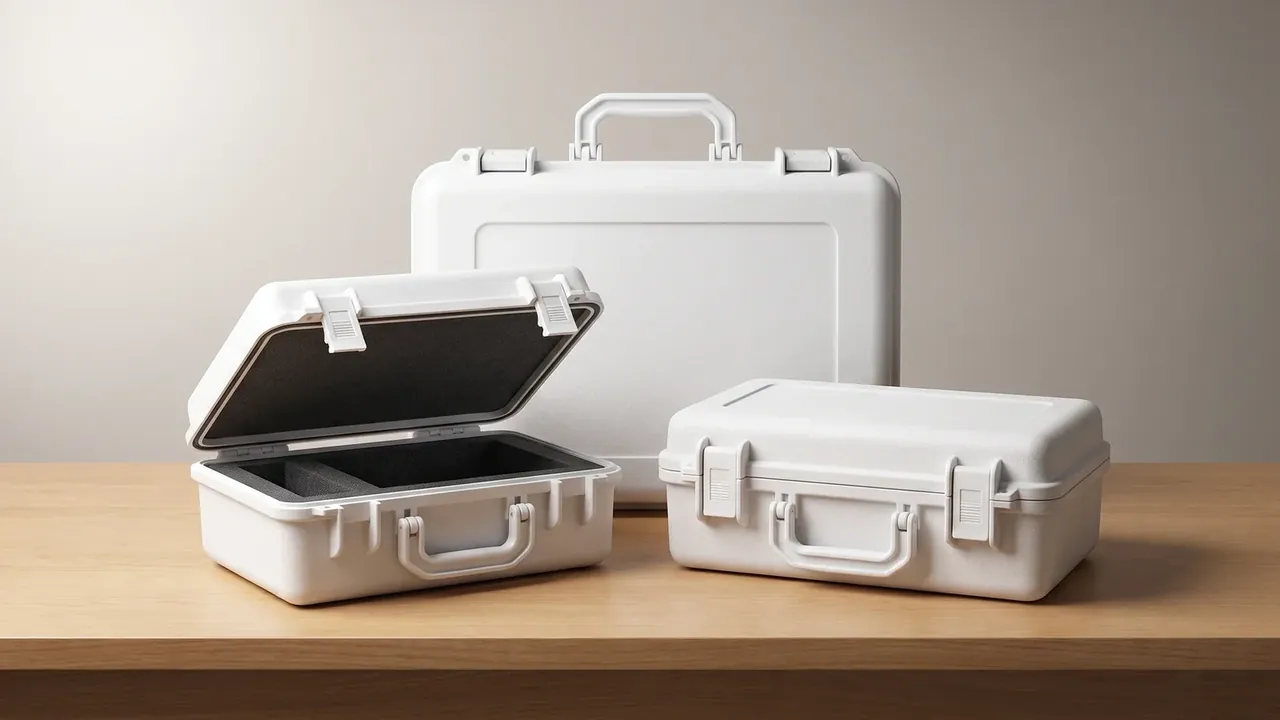
Quick answer: A waterproof plastic box for electronics is accepted in five groups: electrical, sealing, shielding and grounding, condensation control, mechanics and records. The pass point is insulation resistance, shielding attenuation and latch force after damp heat, not the IP number alone.
Table of contents
- What a Waterproof Plastic Box for Electronics Is Accepted On
- Insulation and Dielectric Strength
- Shielding, Grounding and Static Drain
- Condensation and the Pressure Equalisation Vent
- Drop, Vibration and Batch Records
- FAQ
1. What a Waterproof Plastic Box for Electronics Is Accepted On
Water is only half the problem. A trace of moisture drops insulation to single digits, so these boxes are checked electrically first, for sealing second.
| Group | Key condition | Verdict |
|---|---|---|
| A Electrical | 500 VDC; 1500 VAC for 60 s | Over 100 MΩ, no flashover |
| B Sealing | IPX7; gland pull 120 N | Dry inside, entry firm |
| C Shielding | 100 MHz to 1 GHz | Attenuation 40 dB or more |
| D Condensation | 40 degrees, 93% RH, 48 h | No droplets on walls |
| E Mechanical | 1.2 m six faces; 10–500 Hz | No cracks, latches hold |
Three samples per group is the floor, with one destructive sample cut open to show insert encapsulation and gasket contact. Electrical first, sealing second, environment last; a dry reading only proves there is no short.
2. Insulation and Dielectric Strength
Insulation on a waterproof plastic box for electronics is read on a 500 VDC megohmmeter, one probe on a metal insert and one inside the wall, and must reach 100 MΩ.
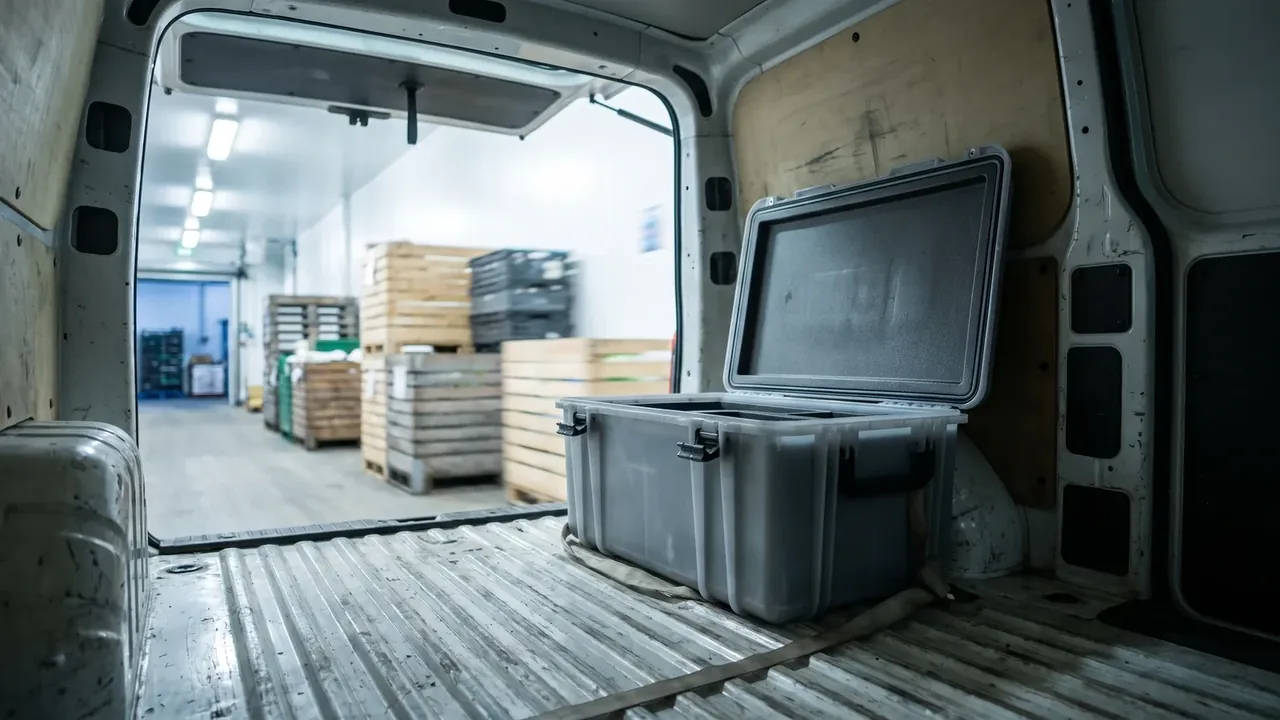
Dielectric strength runs 1500 VAC for 60 seconds with leakage under 5 mA. Two units go through it, one dry and one at 40 degrees and 93% relative humidity for 48 hours; the damp unit may fall to 50 MΩ but must survive in one pass.
Ground continuity runs from the internal stud to the bracket, 0.1 ohm at most, four-wire. The plastic shell does not conduct, so one oxidised contact face voids the result.
3. Shielding, Grounding and Static Drain
Shielding is swept from 100 MHz to 1 GHz and judged at 1 GHz, where 40 dB is the floor. A 1 GHz wave is about 300 mm long, so no slot may exceed 15 mm; the lid parting line, latch openings and cable entries are the leaks.
Gasket volume resistance on a waterproof plastic box for electronics stays under 0.1 ohm centimetre, with compression between 25 and 35 percent: too little and contact is intermittent, too much and the gasket takes a set.
Surface resistance belongs between 10 to the 6 and 10 to the 9 ohms. A waterproof plastic box for electronics never shares samples: a unit that has taken 1500 VAC gives no honest shielding data.
4. Condensation and the Pressure Equalisation Vent
The tighter the seal, the harder condensation is to clear. In a fully airtight shell, vapour waits for the next warm spell and repeats, so a pressure equalisation vent and desiccant carry the duty.
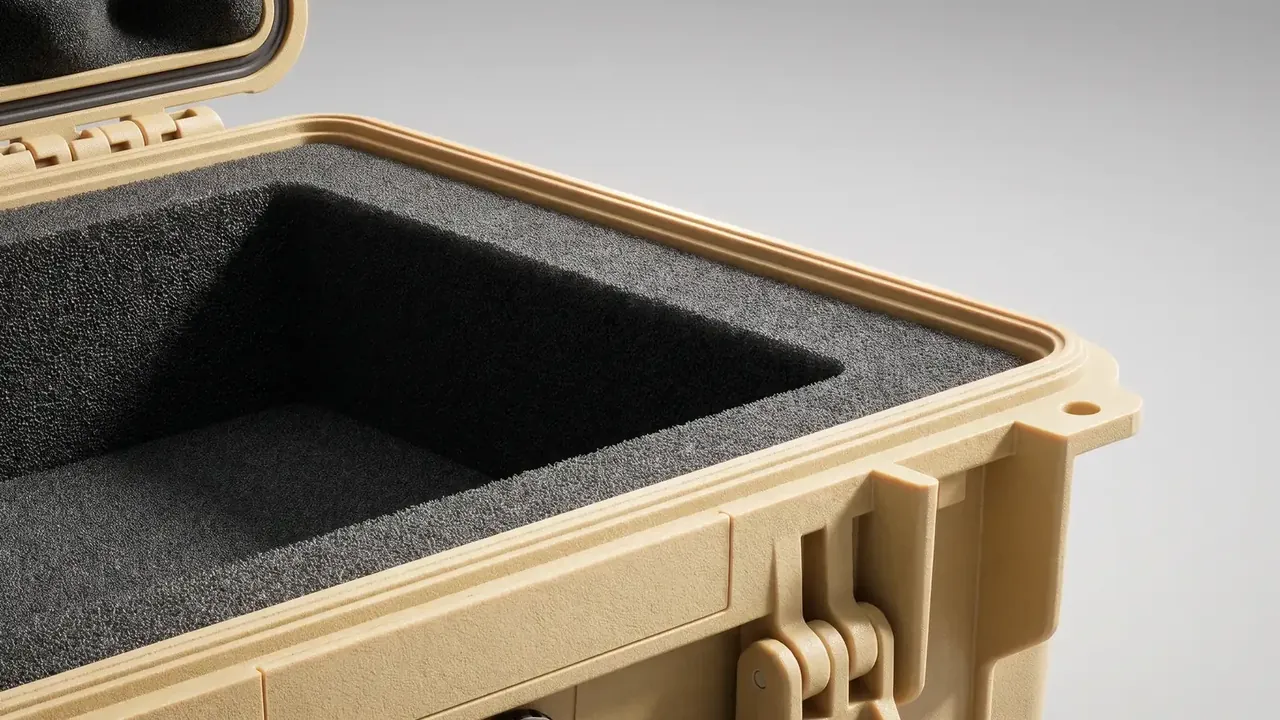
The vent opens between 30 and 70 mbar, passes 300 ml per minute at 70 mbar, and holds 1 bar of water for 30 minutes; water pressure is the item most often skipped.
Desiccant is sized at 20 g per 10 litres, weighed before and after 48 hours of damp heat, failing above 10 percent gain. The condensation test holds 40 degrees at 93% relative humidity for 48 hours, then minus 10 degrees for 4 hours.
5. Drop, Vibration and Batch Records
Drop height is 1.2 m onto 50 mm steel plate, once per face plus every edge and corner, then an insulation repeat.
Vibration runs 10–500 Hz at 1.5 g for 30 minutes per axis, then shielding and latch force are re-read; more than 3 dB of loss means the gasket has moved. Thermal rise is measured with a 40 W load for two hours, within 15 K.
| Item | Sampling | Record |
|---|---|---|
| Insulation and withstand | 3 per batch | Reading per unit |
| Sealing and condensation | 3 per batch | Paper and weight |
| Shielding | Once a quarter | Frequency and dB |
| Drop and vibration | 1 per batch | Failure location |
Batch records carry material grade, flammability report, gasket batch, air-tightness log and thermal curve. Flammability follows UL94 V-0, and the bar thickness must match the wall.
Conclusion
Acceptance rests on five data sets: insulation and withstand, sealing, shielding and grounding, condensation control, and mechanical plus records. A dry pass is only the start; insulation, attenuation and latch force after damp heat are what anyone can reproduce. Put the point, figure and sample number into the report, and a waterproof plastic box for electronics earns its rating.
This article discusses only the container (case body) side of specifications and design intent, and does not cover any handling, loading or use of the contents.
Related Reading
- Grades and testing of waterproof hard cases
- How an EMI shielding case is built
- Specifications and internals of instrument cases
- Applications for electronic equipment cases
Related Products
- 8 Series — Gun Cases; Military Equipment Cases; Camera Equipment Cases; Drone Cases; Watch Cases; Knife Cases; First Aid Cases; Electronics Equipment Cases
- WL8-2812 PP Gun Case — model WL8-2812
- All protective cases and toolboxes: 7 series, 158 models