

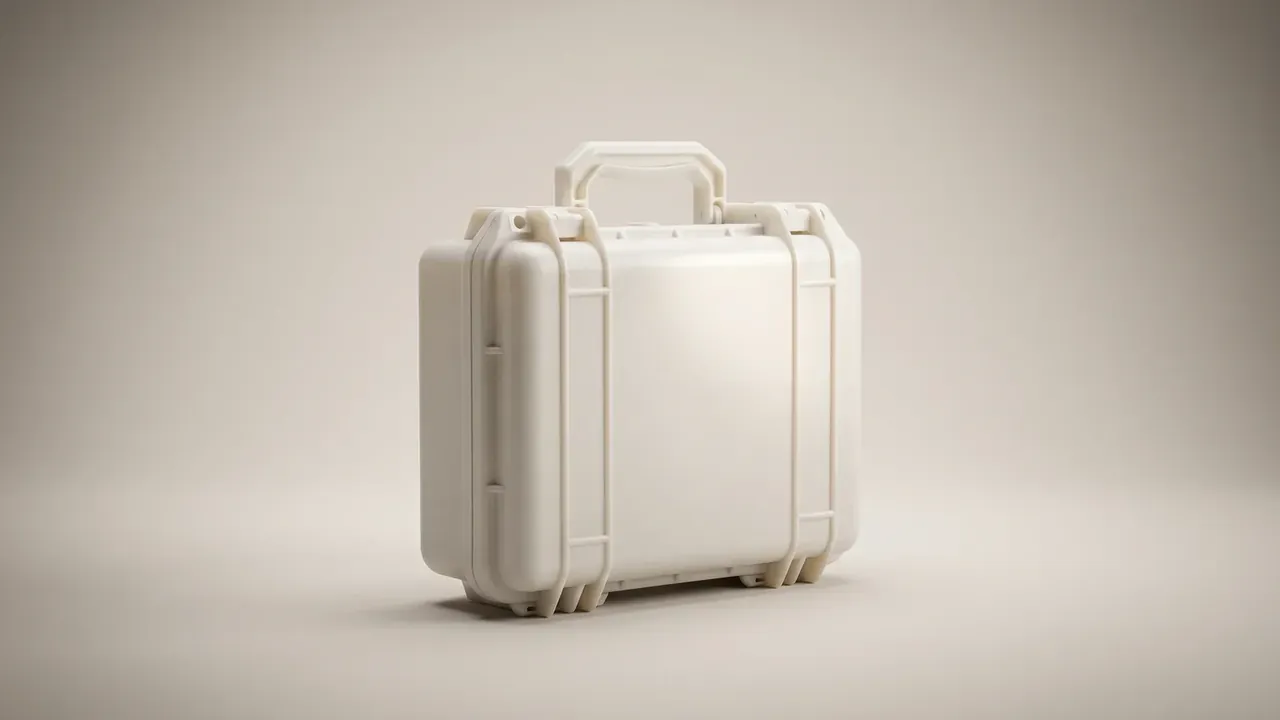
Quick answer: A waterproof plastic box rated IP67 has passed one short immersion, not a season in the rain. Acceptance adds four checks beyond the label: gasket set after 168 hours at 70 C, a fold test at minus 20 C, opening force under a 15 kPa differential, and a re-test after vibration.
Table of contents
- What IP67 and IP68 Actually Differ In
- Gasket Set After 168 Hours at 70 C
- Opening Force in Cold and Under Pressure
- Vibration Seepage and Replacement Intervals
- FAQ
1. What IP67 and IP68 Actually Differ In
Start by rejecting a habit: reading the IP67 moulded into the lid as a ceiling, then storing the box outdoors on that basis. IP67 is one short immersion with fixed depth and duration, modelling the rescue window after a drop.
IP68 has no fixed depth or duration. Buyer and maker agree the numbers in writing, and two boxes both marked IP68 can be tested at 2 m for one hour or at 10 m for 24 hours.
| Item | IP67 short immersion | IP68 continuous immersion |
|---|---|---|
| Depth | Fixed by the standard, one metre | Agreed, commonly two metres |
| Duration | 30 minutes | One hour to 24 hours |
| Covered use | Dropping, rain, washing down | Long soaking, underwater work |
| Evidence | Type-test report | Contract declaration plus report |
A 60 litre waterproof plastic box packed with equipment weighs about 25 kg, so it sinks and is recovered after half an hour. The rating covers the rescue window; the job hands you the recovery time.
The first reason to reject a batch is a mismatch between label and use: soaking for weeks needs an IP68 agreement, not a signature on an IP67 page.
2. Gasket Set After 168 Hours at 70 C
Leakage in a waterproof plastic box is rarely a lid that will not close. It is a gasket that no longer returns to its section: fitted at 20 percent when new, it fills the micro-irregularities of the rim; after half a year the same squeeze fills half.
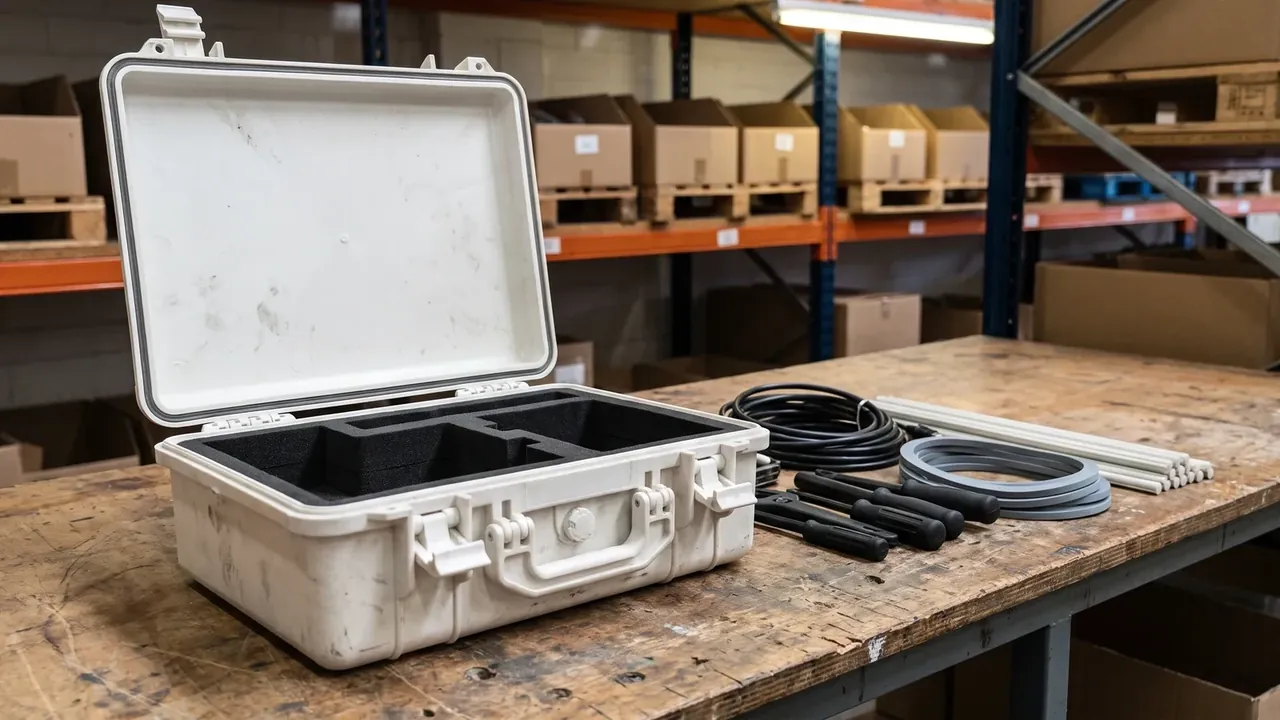
Aging must be measured: 70 C for 168 hours, roughly two years of ambient exposure, and a set above 35 percent means the gasket can no longer follow the rim.
| Test | Condition | Limit | Failure seen in the field |
|---|---|---|---|
| Hot air aging | 70 C, 168 hours | Tensile retention 80 percent | Gasket hardens, contact drops |
| Compression set | 20 percent squeeze, 70 C, 168 hours | 35 percent maximum | Poor rebound, gap at the rim |
| Cold fold | Minus 20 C, 4 hours | No cracking | Tearing when opened in winter |
Section shape matters as much as compound: a solid rectangular profile resists compression but cannot be pressed home in a shallow groove.
Thumb pressure is the field test: flatten a third, release, and replace if it has not recovered in three seconds.
3. Opening Force in Cold and Under Pressure
Cold is the least considered condition. Silicone hardens at minus 20 C, and a box opening at 80 N in a workshop needs 180 N after a night in a cold store, so operators lever on the sealing face.
Pressure adds a second invisible load: an air-freight hold creates roughly 15 kPa across the wall, nearly 900 N on a 60 litre lid.
- Vent diameter: 3 mm or more, balancing 15 kPa within 0.3 seconds
- Vent diaphragm: fluoroelastomer, still flexible at minus 20 C
- No vent: leave a 0.2 mm equalising gap at the rim
- Opening force ceiling: 180 N, above which a lever recess is required
- Lever position: beside the latch boss, never on the sealing face
4. Vibration Seepage and Replacement Intervals
Transport failures in a waterproof plastic box never show up in a static immersion test. The box is thrown in a truck bed, the rim rubs the gasket, grit reaches the sealing face, and an almost invisible seepage path opens.
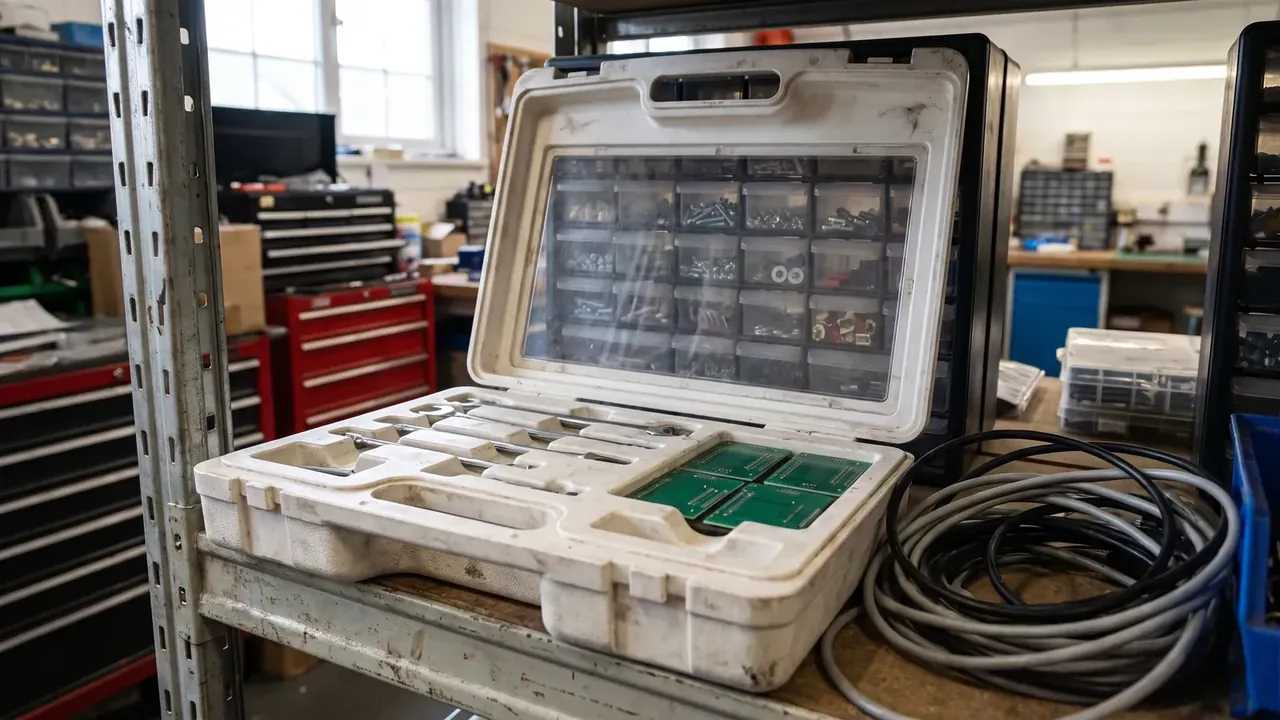
Random vibration at 1.04 Grms for two hours per axis, then a return to the tank, is the sequence that finds it.
| Failure mode | Direct cause | Field response |
|---|---|---|
| Beads of water on the rim | Gasket compression set | Replace gasket, recheck rebound |
| Water pooling at the base | Torn vent diaphragm | Replace vent, never seal with adhesive |
| Lid sucked shut | Differential above 15 kPa | Fit a vent, or lever a corner |
| Seepage at a corner | Hairline crack from a drop | Locate with 0.03 MPa air hold for 60 seconds |
| Latch springs open | Boss wear of 0.3 mm | Replace the boss, no shim packing |
Intervals cannot rest on the calendar: outdoors, change the gasket at 24 months; a tote opened daily counts 200 closures. Three signals pull the date forward: fine cracks, grit in the groove, latch travel 2 mm shorter than new.
Conclusion
The waterproof boundary of a waterproof plastic box is set by four variables at once: the duration the rating covers, the rebound left in an aged gasket, the opening force created by cold and pressure, and the fretting wear that follows vibration. Miss any one and the box leaks while the label reads compliant. Checking these four instead of the logo is what makes a waterproof plastic box predictable over years.
This article discusses only the container (case body) side of specifications and design intent, and does not cover any handling, loading or use of the contents.
Related Reading
- Checks and acceptance for hard waterproof cases
- Impact and sealing requirements for airdrop cases
- Pallet marking and stacking rules for case bodies
Related Products
- 8 Series — Gun Cases; Military Equipment Cases; Camera Equipment Cases; Drone Cases; Watch Cases; Knife Cases; First Aid Cases; Electronics Equipment Cases
- WL8-2812 PP Gun Case — model WL8-2812
- All protective cases and toolboxes: 7 series, 158 models