

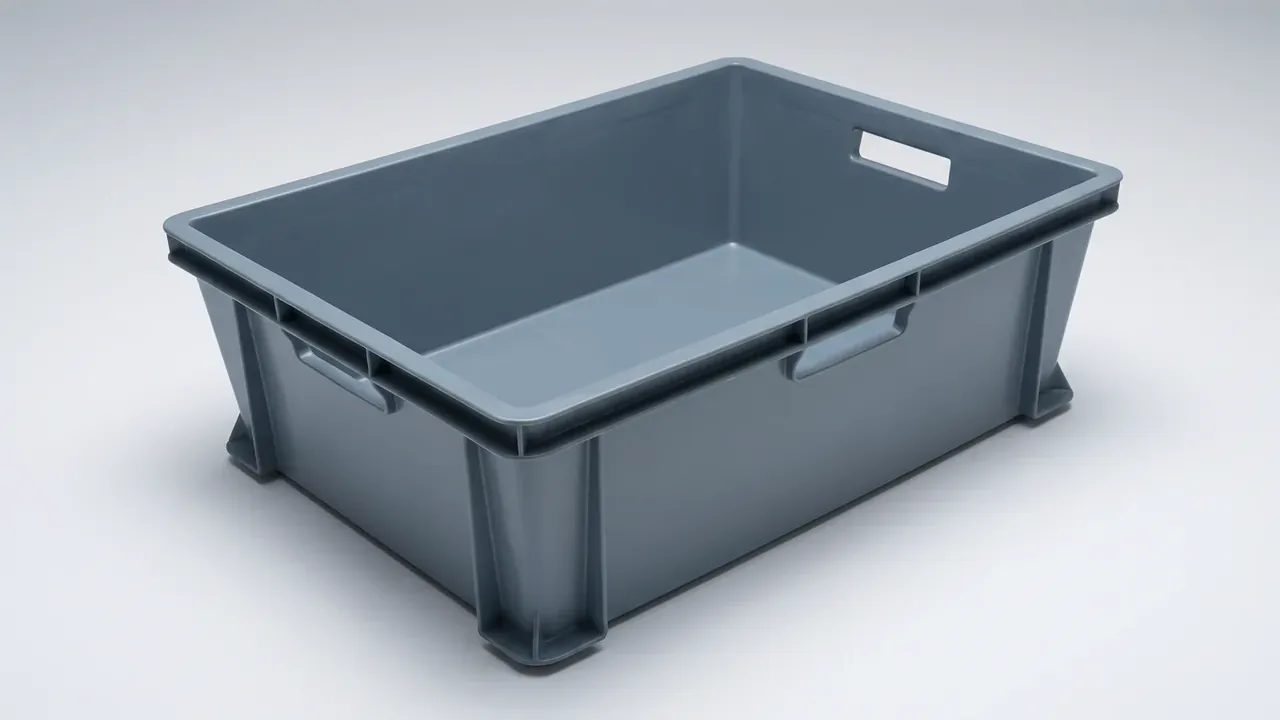
Quick answer: Inspect a waterproof plastic box with hinged lid on four lines and six measured readings, not on the feel of a closing lid. This checklist gives numbers for hinge sag, lid gap, latch preload and cold opening, plus what to do when a reading drifts.
Table of contents
- Four acceptance lines for a hinged lid box
- Hinge life and lid sag
- Latch preload and lid gap
- Water test and cold opening
- Grading and filing
- FAQ
1. Four acceptance lines for a hinged lid box
The common mistake on a waterproof plastic box with hinged lid is watching one point: the lid closes, so it passes. Closing and sealing are different events.
| Line | What to check | Gauge | Verdict |
|---|---|---|---|
| Size | Lid gap, rim flatness | Feeler, straight edge | Gap under 0.4 mm |
| Seal | Gasket squeeze, corners | Caliper, loupe | 25 % to 35 % |
| Hardware | Hinge alignment, latch pull | Mandrel, force gauge | 80 N to 120 N |
| Paper | Sample state, clause, retained piece | Sheet | Sheet complete |
The size line reads the shape where lid meets rim; the seal line reads how hard it is pressed. Hardware decides whether both hold after a few thousand swings. The paper line gets skipped, yet it decides whether you still hold comparable data three months later.
2. Hinge life and lid sag
The hinge is the only moving part on a waterproof plastic box with hinged lid, so it fails first.
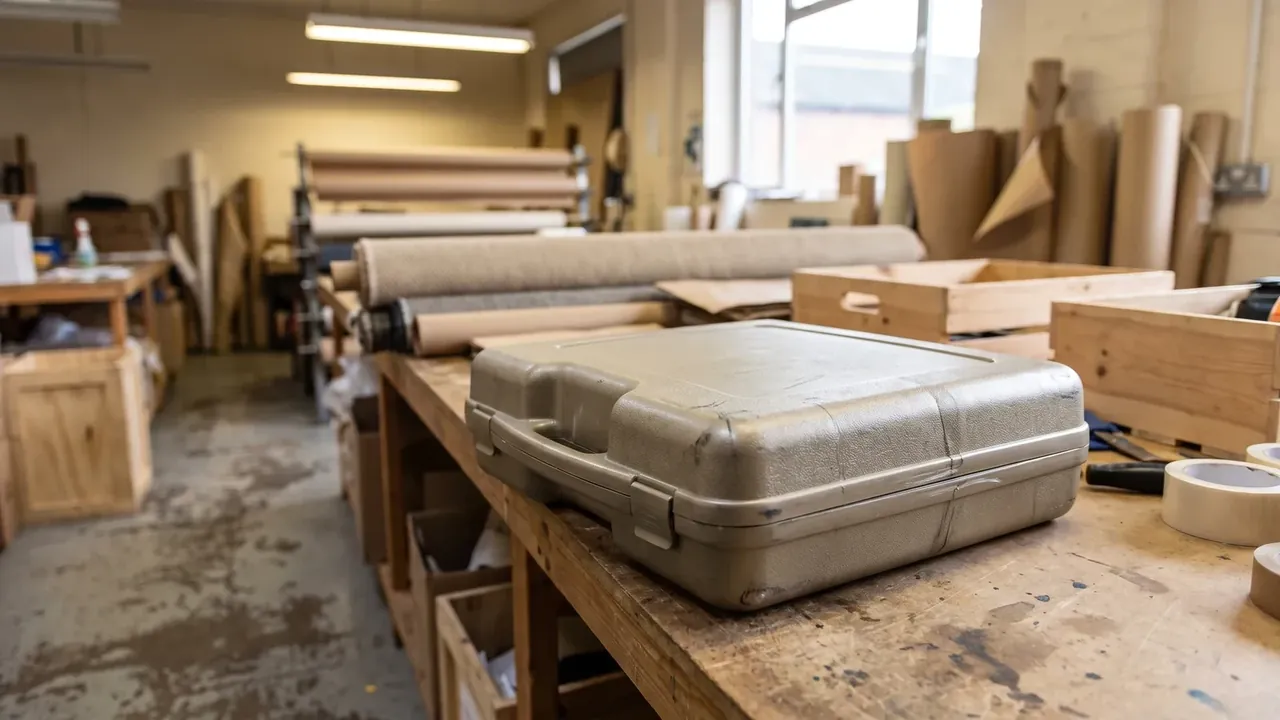
Run 5000 cycles at 25 openings a minute, dry, no lubricant. Stop every 1000 cycles and read sag at the lid front edge; past 1.2 mm the test ends. A 4 mm pin in 304 stainless reaches 5000, while a 3 mm carbon pin loosens near 2000. Read the stop angle too, commonly 105 degrees; a smaller angle lets the lid rebound onto the gasket. Twin hinges need a check: past 0.3 mm of drift, one side loads first and lifts the gap. After the run, look for a bright band at gasket corners, meaning squeeze is uneven.
3. Latch preload and lid gap
Preload is the only part of a latch on a waterproof plastic box with hinged lid that can be written as a number.
Close the box, pull the latch slowly with a force gauge, read the release value. Three pulls on each of two latches, averaged, must land between 80 N and 120 N. Under 80 N the gasket is not compressed and rain walks in along the rim. Over 120 N operators hammer the latch.
Walk a 0.05 mm feeler around the rim and log where it enters; no gap may exceed 0.4 mm. Read six points: mid long side, mid short side, four corners.
Repeat both after 5000 cycles. A preload loss beyond 15 % means the boss or the rim has worn.
4. Water test and cold opening
Only after the first three lines pass does a waterproof plastic box with hinged lid go into water.
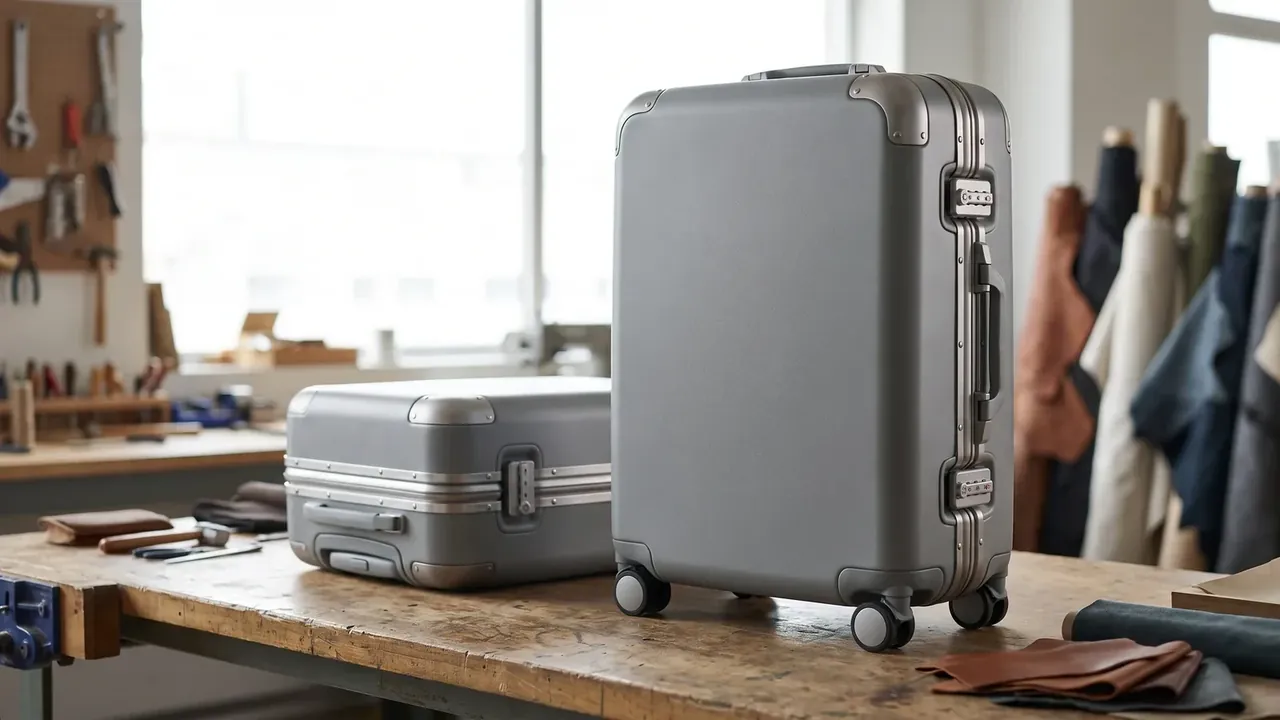
Immerse at 1 m for 30 minutes, dry the outside, then open: no visible beads on the inner wall. For rain, spray at 3 mm/min for 30 minutes, nozzle on the lid rim and hinge junction, the weak strip of any hinged design. Cold opening runs alone: chill at -20 °C for 4 hours, pull the lid within 30 seconds, fail above 180 N.
Cold is the item most often dropped, yet most winter complaints start there. At -20 °C the gasket doubles in hardness and the lever arm is long, so force can rise 60 %.
5. Grading and filing
Grade a deviation on a waterproof plastic box with hinged lid before deciding what to do with it.
- Grade A: beads after immersion, a break in a corner gasket, a cracked hinge root. Reject the lot.
- Grade B: gap of 0.4 mm to 0.8 mm, preload of 60 N to 80 N. Rework, then redraw 32 units.
- Grade C: colour shift, skewed label, rib flow marks. Concede and record.
- Retain first, last and one deviating unit per lot for 12 months.
- File sheet, photos and raw readings together under the lot number.
| Reading | Target | Drift looks like |
|---|---|---|
| Lid gap | Under 0.4 mm | Rain seeps in a line |
| Gasket squeeze | 25 % to 35 % | Low leaks, high lifts the lid |
| Hinge sag | Under 1.2 mm | Front edge lifts off the rim |
| Latch preload | 80 N to 120 N | Low leaks, high cracks the boss |
| Cold opening | Under 180 N | Hard to open in winter |
| Immersion | 1 m for 30 minutes | Beads on the inner wall |
Conclusion
Four lines and six readings turn a hinged lid inspection into arithmetic. Closing is only the start; holding pressure, opening by hand and surviving cold are the verdict. File deviations by grade and keep samples for a year, and the next lot has a baseline. Inspect the waterproof plastic box with hinged lid this way and the record survives a second look.
This article discusses only the container (case body) side of specifications and design intent, and does not cover any handling, loading or use of the contents.
Related Reading
- Clause comparison for waterproof hard cases
- Impact and sealing checks for airdrop cases
- Stacking verdicts for mould storage cases
- Process order on a case production line
Related Products
- 8 Series — Gun Cases; Military Equipment Cases; Camera Equipment Cases; Drone Cases; Watch Cases; Knife Cases; First Aid Cases; Electronics Equipment Cases
- WL8-2812 PP Gun Case — model WL8-2812
- All protective cases and toolboxes: 7 series, 158 models