

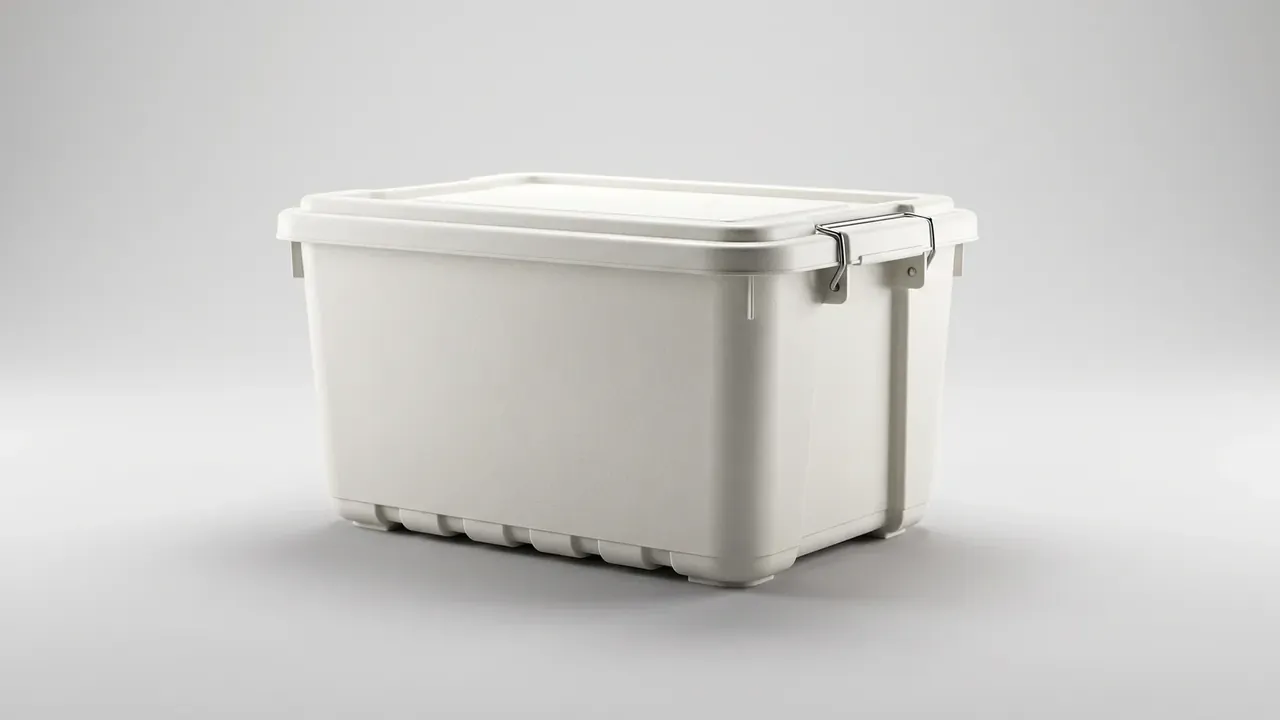
Quick answer: Acceptance of a waterproof plastic utility box comes down to three numbers: which test each IP class represents, an O-ring cord of 2.5 to 4 mm compressed to 25 percent, and a 30-minute immersion at one metre adding no more than 0.5 g. Pass all three and the batch ships.
Table of contents
- IP Ratings for a Waterproof Plastic Utility Box
- O-ring Cord and Groove Compression
- Two to Four Latches and Holding Force
- A 30-Minute Immersion at One Metre
- Sampling Ratios and Disposition
- FAQ
1. IP Ratings for a Waterproof Plastic Utility Box
A waterproof plastic utility box of 1 to 15 litres weighs 0.4 to 1.2 kg and carries screwdrivers, hooks or connectors. Being light, it drifts instead of sinking when dropped.
A rating decision starts by separating splash, jet and immersion, whose pressures differ by an order of magnitude. Mix the three and an IP54 body looks immersible.
| Class | Test condition | Reading for a 1 to 15 litre body |
|---|---|---|
| IP54 | Dust 5, splashing 10 minutes | Dust and slanting rain only |
| IP65 | Dust 6, 6.3 mm nozzle, 12.5 l/min, 3 minutes | Washable, not immersible |
| IP67 | One metre, 30 minutes | Survives a short drop; wipe dry first |
| IP68 | Manufacturer-set, 1.2 m for 60 minutes here | Valid only on a written declaration |
The unit of judgement is not whether water enters but whether the amount is harmful; on a small box that threshold drops to 0.5 g.
2. O-ring Cord and Groove Compression
Cord diameter is the first item cut when a project runs over budget. A 2.5 mm cord saves space, but a groove machined 0.2 mm off drops compression below 18 percent and the lid only rests on the seal.
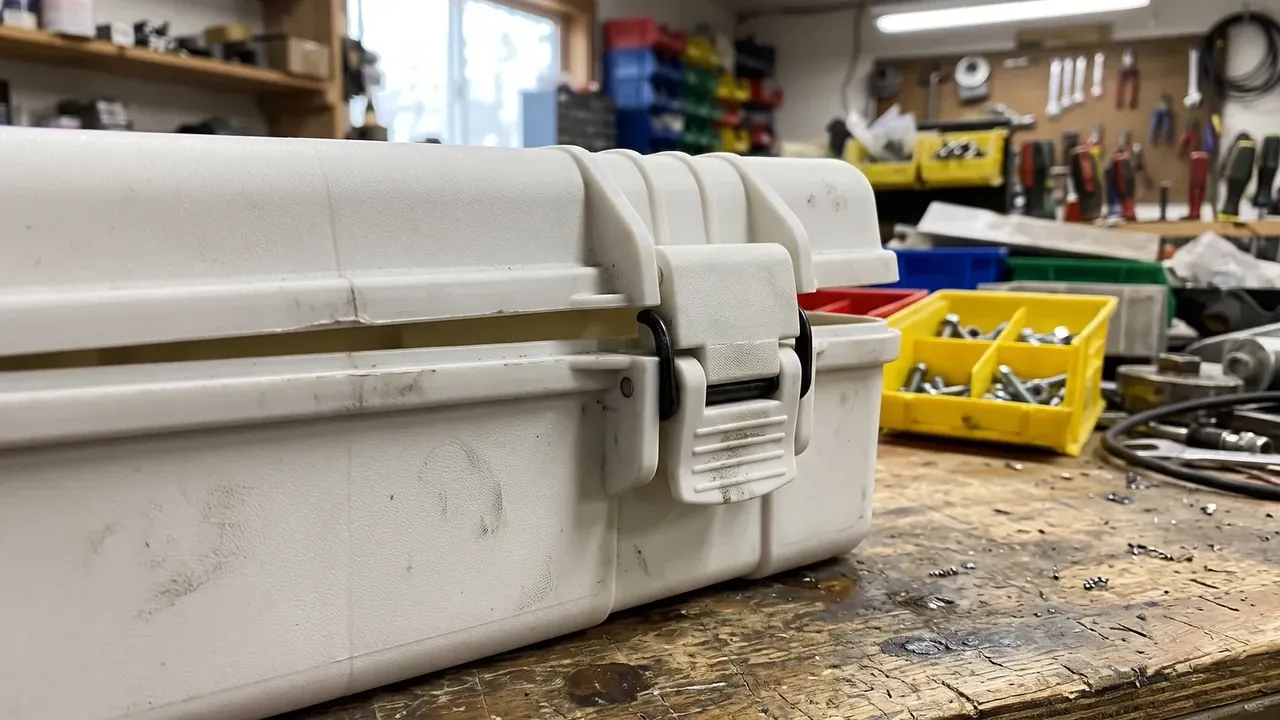
The target is 25 percent. A groove 1.9 mm deep with a 2.5 mm cord squeezes 0.6 mm, close to 24 percent; the same groove with a 4 mm cord reaches 52 percent, and the cord flattens within three months. Silicone holds below 30 percent, nitrile resists oil but stiffens in cold, and groove width runs 15 to 20 percent wider than the cord.
A caliper and an offcut settle this.
3. Two to Four Latches and Holding Force
Latch count has to match body stiffness. The lid bows as it closes, and the span between two catches is where pressure lifts the rim.
- Two latches: under 5 litres, 45 N each, spacing no more than 180 mm
- Three latches: 5 to 10 litres, the middle one opposite the handle
- Four latches: 10 to 15 litres, symmetric, so three still seal
- Holding test: pull vertically and read the gauge at 2 mm of travel
- Boss wall: 2.2 mm or thicker, since 1.8 mm turns brittle at minus 10 degrees Celsius
A single failed latch is the most common defect: one side breaks, the lid still looks closed, and only one edge is loaded.
A four-latch box can lose one; a two-latch box that loses one is open, which is why small models often carry four.
4. A 30-Minute Immersion at One Metre
Few workshops own an immersion tank, so a one-metre PVC pipe with a sealed base, or a ballasted drum, gives the same condition. Put a dry paper towel inside, weight the box, start the clock.
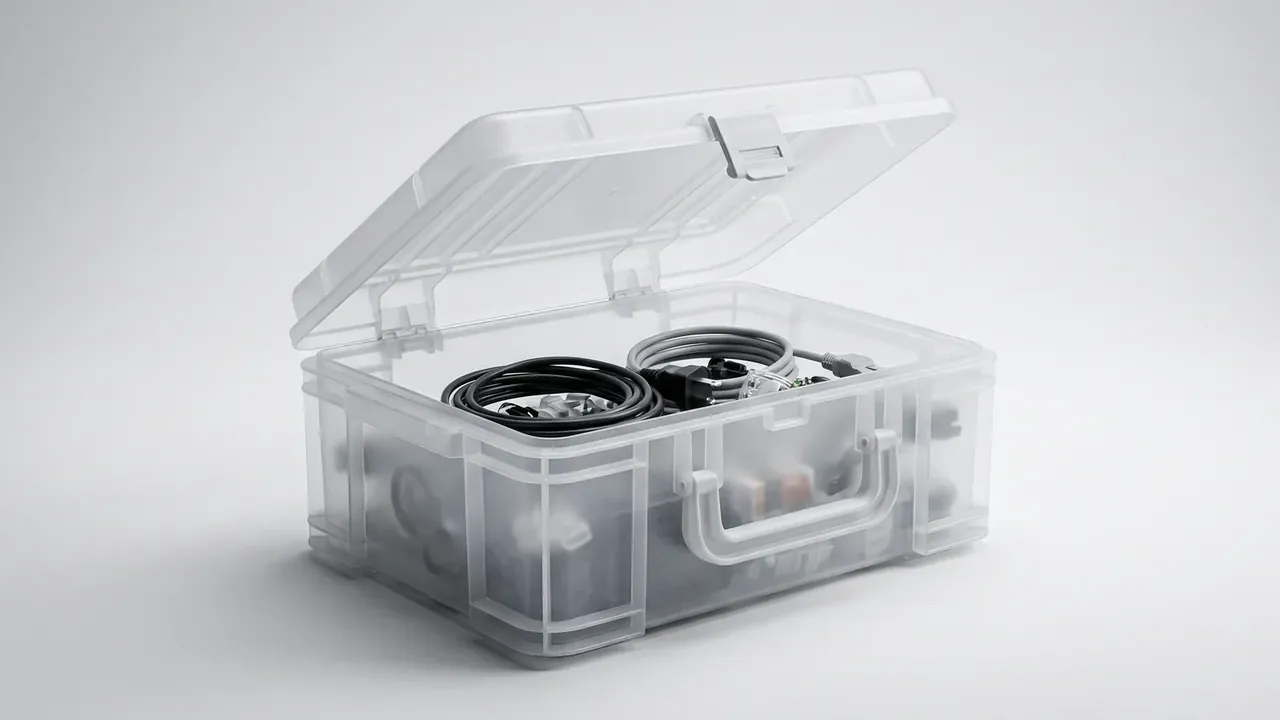
Weighing beats the towel trick: record the mass, dry the outside, weigh again, and 0.5 g is a pass.
Flotation is often read as a defect. A 15 litre box displaces 15 kg while weighing 1.2 kg, so it always floats; the trouble starts when pooled water in the lid pours in.
A raised dam inside the lid keeps that pool at the rim, or a 2 mm drain hole with a one-way membrane stays shut until the catches release.
Release one catch before the other and the water runs off.
5. Sampling Ratios and Disposition
Volumes are too high to immerse every unit, so sampling follows risk: the seal and immersion test get three units, latches five.
| Check | Sample | Limit | Action when out |
|---|---|---|---|
| Cord diameter, compression | 3 per batch | 2.5 to 4 mm, 25 percent plus or minus 3 | Replace the cord batch |
| Immersion gain | 3 per batch | 0.5 g maximum | Pull six more, then rework |
| Latch holding force | 5 per batch | 45 N minimum | Recheck boss wall |
| Opening force | 3 per batch | 25 to 70 N | Recheck groove |
| Rim warp | 3 per batch | Gap no more than 0.3 mm | Review mould cooling |
The hard part is choosing between a batch and a unit. Seal deviation is systematic, so swapping a single part changes nothing; a broken latch is a local stress point and can be sorted if the fracture site is recorded.
Reworked boxes dry eight hours before retesting.
Conclusion
The sealing ability of a waterproof plastic utility box is a product of millimetre-scale features: cord diameter, groove depth, boss wall and rim flatness. Let one drift out of tolerance and the other three cannot compensate. Keeping the rating test, the compression figure and the immersion gain in one record is what makes a waterproof plastic utility box consistent from batch to batch.
This article discusses only the container (case body) side of specifications and design intent, and does not cover any handling, loading or use of the contents.
Related Reading
- Checks and acceptance for hard waterproof cases
- Specifications for mould storage boxes
- Process steps and self-checks in case production
- Sealing and strength of artillery shell box bodies
Related Products
- 8 Series — Gun Cases; Military Equipment Cases; Camera Equipment Cases; Drone Cases; Watch Cases; Knife Cases; First Aid Cases; Electronics Equipment Cases
- WL8-2812 PP Gun Case — model WL8-2812
- All protective cases and toolboxes: 7 series, 158 models