

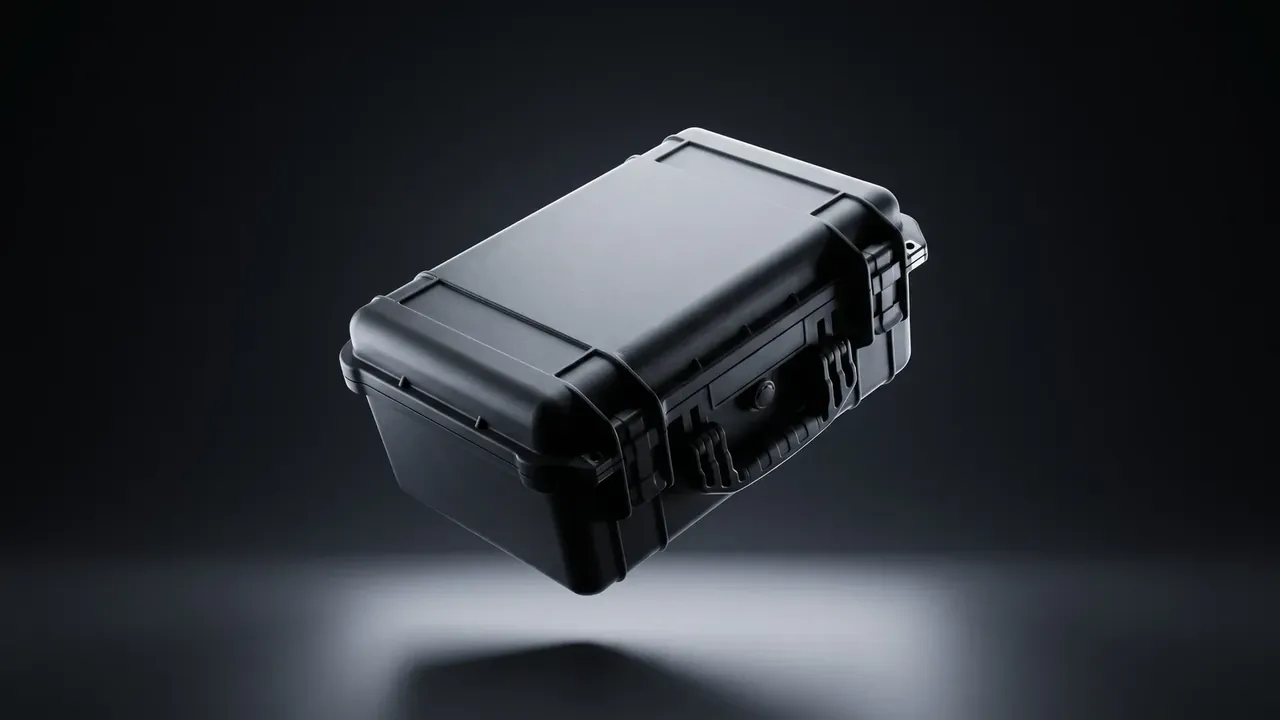
Quick answer: A Waterproof rolling equipment case is accepted in three layers: ingress rating, wheels and handle, then a batch seal re-check. IPX6 runs 3 minutes at 100 kPa through a 12.5 mm nozzle; IPX7 sits 1 m deep for 30 minutes and passes at 50 percent RH; an 8 km walk over 200 kerbs allows 1.5 mm of tread loss.
Table of contents
- How Acceptance Is Layered
- Ingress Testing: Jets and Immersion
- Walk, Wheel and Handle Trials
- Seal Structure and Batch Re-Checks
- Sampling, Marking and Lot Verdicts
- FAQ
1. How Acceptance Is Layered
A Waterproof rolling equipment case is judged by consequence, then by sampling. Class A is outright failure: torn gasket, through-wall crack, cracked wheel boss, seized handle. Class B is service life: mist inside, wandering wheels, weak latch hold; class C is appearance.
One class A failure holds the lot, while B runs at AQL 1.5 and C at AQL 4.0 on level II, so a 500-unit lot draws 50. Those numbers belong in the contract annex.
| Class | Items | Sampling | Verdict |
|---|---|---|---|
| A | torn gasket, crack, cracked boss | full | zero tolerance |
| B | mist inside, wheel drift, weak latch | AQL 1.5 | Ac 2 Re 3 |
| C | scratches, colour drift, print offset | AQL 4.0 | Ac 5 Re 6 |
2. Ingress Testing: Jets and Immersion
Both digits must be declared. IPX5 and IPX6 are jets, IPX7 is immersion, and a case marked IPX6/IPX7 has to pass both; a jet says nothing about standing water.
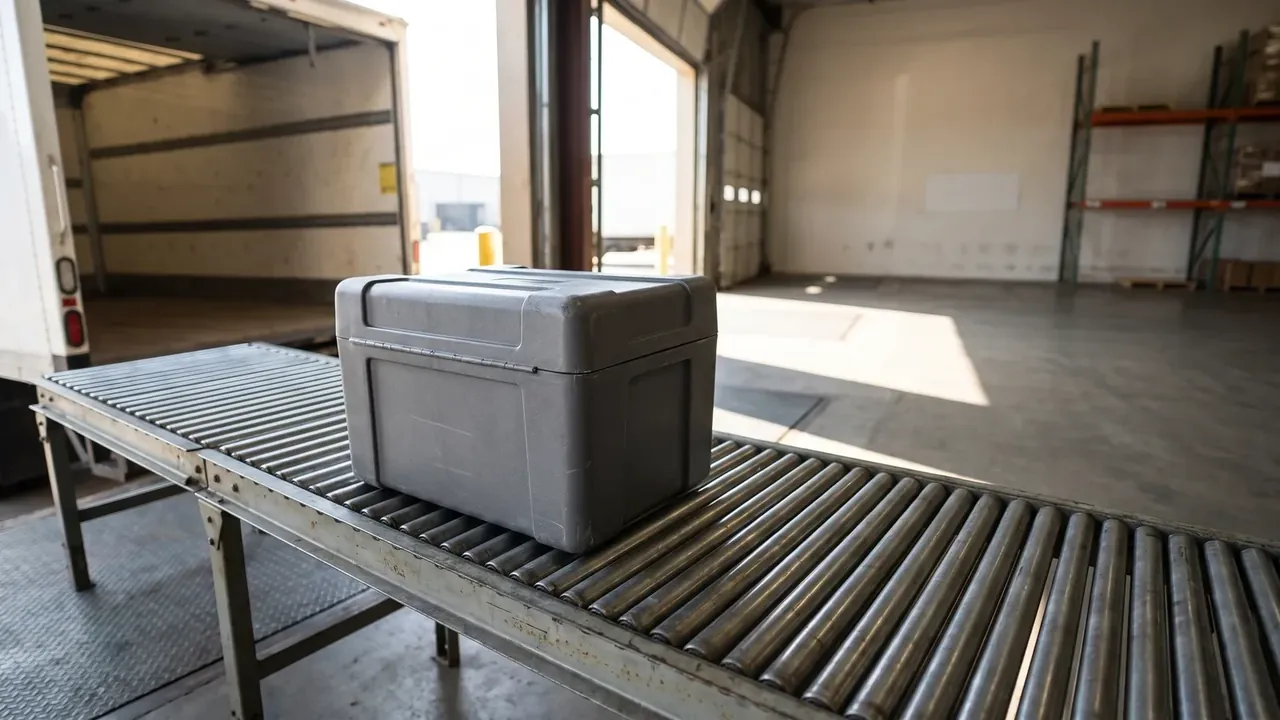
Conditions go into the sheet: IPX5 runs a 6.3 mm nozzle at 30 kPa, 12.5 L per minute, 2.5 m away, one minute per face; IPX6 runs a 12.5 mm nozzle at 100 kPa for three minutes on a turntable at 1 rpm. Latches closed, purge valve shut.
A Waterproof rolling equipment case is judged on data during immersion: a logger inside, 1 m deep for 30 minutes, passing at 50 percent RH or less within two hours with no water mark inside.
| Test | Condition | Verdict |
|---|---|---|
| IPX5 jet | 6.3 mm, 30 kPa, 2.5 m, 1 min per face | no water mark |
| IPX6 jet | 12.5 mm, 100 kPa, 3 min | no water mark |
| IPX7 | 1 m deep, 30 min | 50 percent RH or less |
3. Walk, Wheel and Handle Trials
For a Waterproof rolling equipment case, the walk covers 8 km of concrete with 200 kerbs of 20 mm and 50 thresholds of 35 mm. Four numbers decide it: tread loss under 1.5 mm, bearing rise under 15 K, boss bolts at 6 N·m, drift under 20 mm per 10 m.
The handle takes 3000 cycles at 100 N over 1050 mm, then 500 N held 60 seconds with set under 2 mm. A tumble of 50 turns at 5 rpm closes the sequence, since bumpers and bosses fail first.
4. Seal Structure and Batch Re-Checks
The gasket is EPDM at 70 Shore A in a 6.5 mm by 5.0 mm groove at 30 percent compression. Corners are moulded whole, never joined, since a joint is the usual entry point.
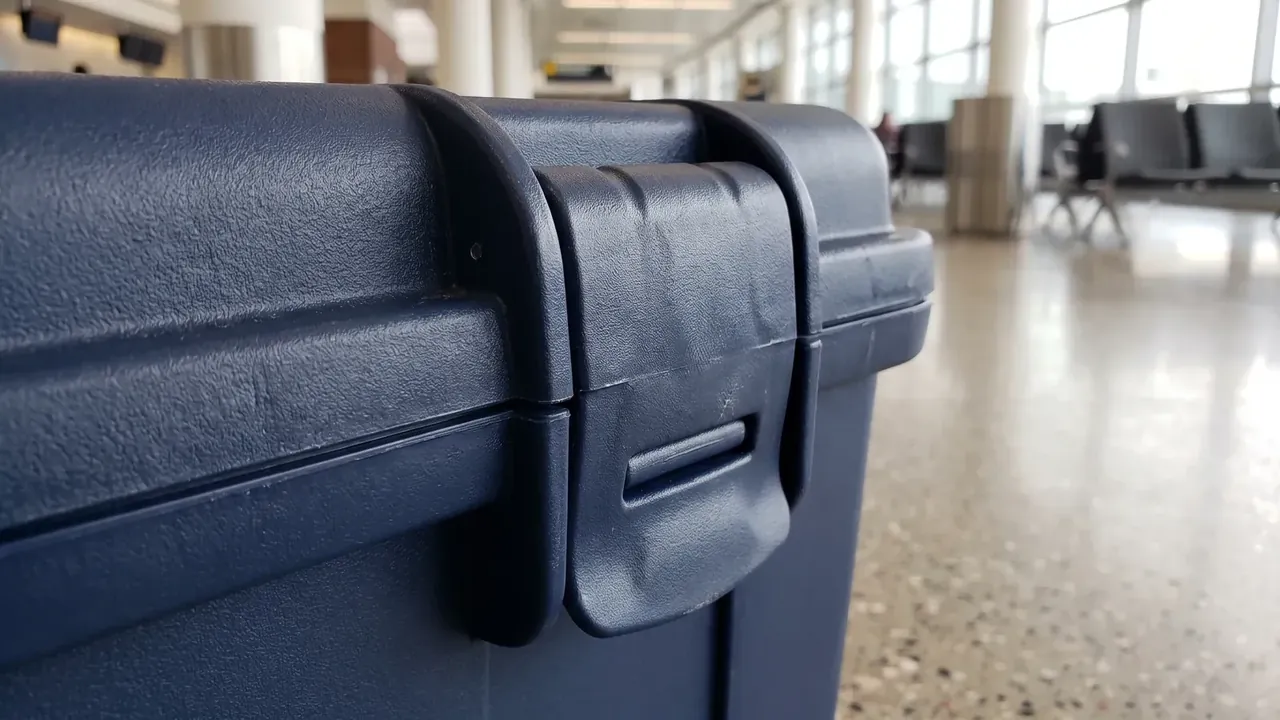
On a Waterproof rolling equipment case, hinge pins carry O-rings and screw holes stay blind. Each batch re-checks three cases in 0.5 m of still water for two hours, plus one case at 72 hours of neutral salt spray.
5. Sampling, Marking and Lot Verdicts
Marking carries the ingress rating, rated load and an eight-digit lot code that survives 100 strokes of a 500 g eraser. Rating and load appear together, or a Waterproof rolling equipment case travels as ordinary cargo.
At 500 units and 50 samples, one class A failure holds the lot, B is Ac 2 Re 3 and C is Ac 5 Re 6. Reworked lots take a suffix, double sampling and one more immersion run.
| Lot | Sample | A | B | C |
|---|---|---|---|---|
| 151 to 280 | 32 | 0 | Ac 1 Re 2 | Ac 3 Re 4 |
| 281 to 500 | 50 | 0 | Ac 2 Re 3 | Ac 5 Re 6 |
| 501 to 1200 | 80 | 0 | Ac 3 Re 4 | Ac 7 Re 8 |
Conclusion
Acceptance turns three questions into numbers: does water get in, do the wheels roll, and can the lot be traced. Declare both digits, fix the walk and handle conditions, and put sampling and verdicts in the contract annex. A Waterproof rolling equipment case that answers all three on paper passes on the bench.
This article discusses only the container (case body) side of specifications and design intent, and does not cover any handling, loading or use of the contents.
Related Reading
- Reading ingress ratings on hard cases
- How a waterproof shell is sealed
- Test items for air transport cases
- Service rhythm for wheeled cases
Related Products
- 8 Series — Gun Cases; Military Equipment Cases; Camera Equipment Cases; Drone Cases; Watch Cases; Knife Cases; First Aid Cases; Electronics Equipment Cases
- WL8-2812 PP Gun Case — model WL8-2812
- All protective cases and toolboxes: 7 series, 158 models