

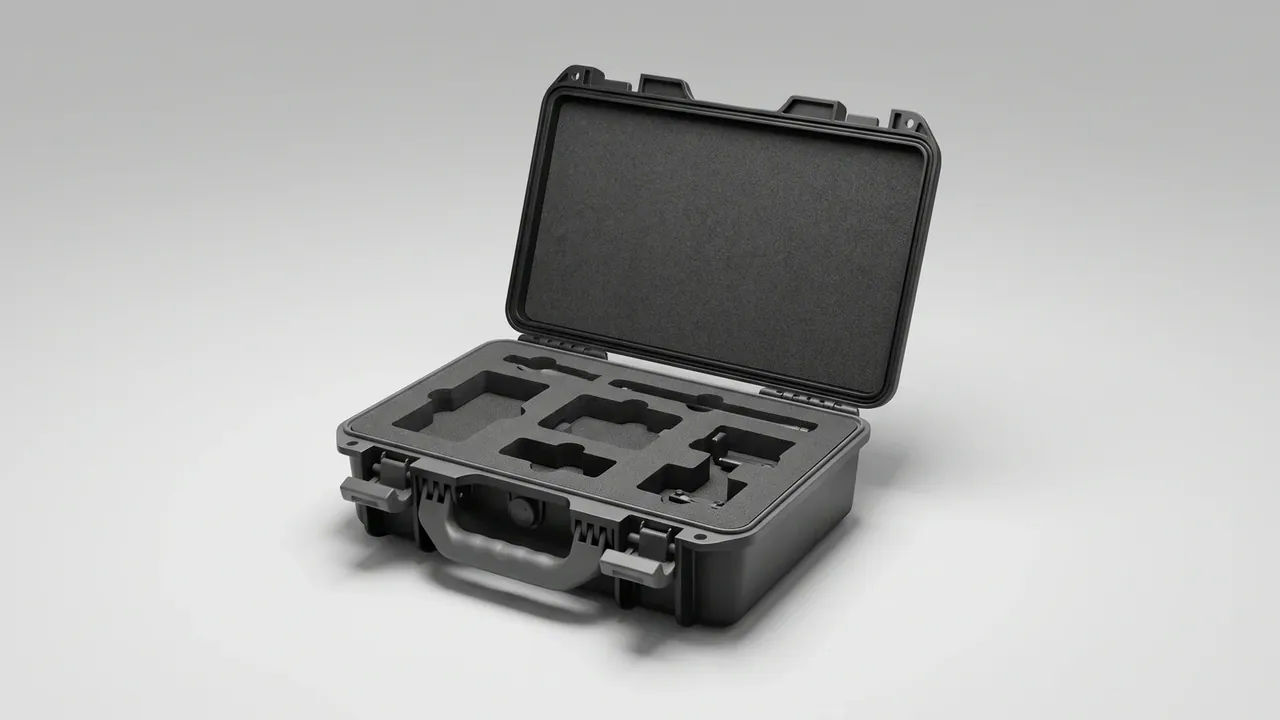
Quick answer: A weapon storage cabinet wins on anchoring, lock control and a handover log, and loses on weight, door swing and humid rooms. Compare it with a tool cupboard, a rotomoulded case and a flight case on IP rating, salt spray and movements per retrieval.
Table of contents
- Judging a weapon storage cabinet against alternatives
- The IP line: who actually reaches IP67
- Four cases where the alternatives win
- Turning clauses into a comparison table
- Three costs: weight, aisle and upkeep
- FAQ
1. Judging a weapon storage cabinet against alternatives
Start with what the room must guarantee, not steel thickness or price: standing upright, keeping dust and water out, proving who opened it.
A weapon storage cabinet does all three with anchor bolts, a gasket and graded keys; alternatives do one and leave the rest to procedure.
| Option | Anchoring | Empty weight | Ingress rating | Hand movements per retrieval |
|---|---|---|---|---|
| Weapon storage cabinet, 1.5 mm steel | Anchor bolts or tip bracket | 78 kg | IP55 | 3 |
| Steel tool cupboard, EVA insert | Self-weight only | 45 kg | None stated, 3 mm gap | 3 |
| Rotomoulded case, 4 mm wall | None; strapped | 12 kg | IP67 | 5 |
| Magnesium flight case | None; corner straps | 9 kg | IP67 | 5 |
A six-fold spread in empty weight settles more than a brochure: nobody carries 78 kg alone, anybody carries 12 kg twice.
2. The IP line: who actually reaches IP67
IP is two digits: IEC 60529 runs 0 to 6 for solids and 0 to 8 for liquids, so IP55 is dust-protected and jet-resistant, IP67 dust-tight plus 1 m for 30 minutes.
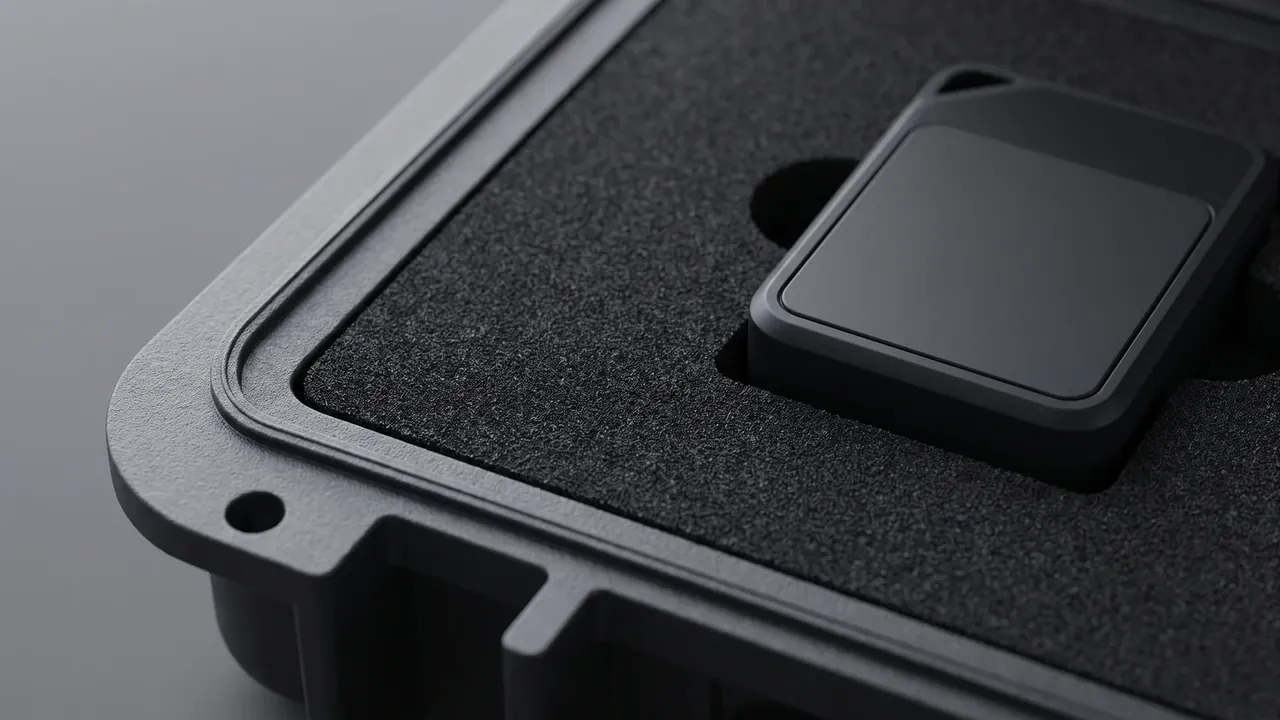
Most weapon storage cabinets stop at IP55, and the door is the reason, not the steel. Compression tracks latch count: at 1.8 m, three-point locking presses 60 percent of the gasket and leaves a 1 to 2 mm gap, while five-point locking evens it out.
Cases reach IP67 with a continuous gasket and two draw latches, at the price of a hand press on every closing.
Salt spray widens the gap. At 480 hours to ISO 9227 a powder-coated body rusts at folds and welds; 304 reaches 720 hours, 316 clears 1000, while polyethylene chalks after 3000 hours of ultraviolet.
Humidity is the usual omission: in MIL-STD-810H Method 507.6, still air nears saturation and steel films over within 12 hours.
3. Four cases where the alternatives win
- Moving three times a week or more. A 12 kg case goes in one hand; a 78 kg cabinet needs two people and a pallet truck.
- Low unit value, one person on duty. A tool cupboard with an EVA insert costs a third of a cabinet and skips handover.
- Open siting above 720 salt-spray hours. Specify 316 stainless, or keep cases outside.
- Transport between buildings, then a flight. A 9 kg magnesium case with a pressure valve survives cabin pressure.
Salt spray is not uniform: it eats folded edges, weld spots and screw holes first, so rust outside means the structure has thinned.
4. Turning clauses into a comparison table
A clause is not decoration: each one lands on a named part and produces a visible failure.
| Clause | Covers | Part it lands on | Visible failure |
|---|---|---|---|
| IEC 60529 IP5X, IPX5 | Dust, water jets | Door gasket, latch compression | Grit at latch roots, broken imprint |
| ISO 9227, 480 h salt spray | Coating durability | Folded edges, welds, screw holes | Blisters at folds, rust at welds |
| MIL-STD-810H Method 507.6 | Damp heat | Interior, shelf underside | Beading under shelves, whitened paint |
| MIL-STD-810H Method 514.8 | Vibration | Shelf brackets, lock cylinder | Cracked bracket welds, stiff key |
| IEC 62262 IK10 | Impact | Door skin, latches | Dents in the door, latches skewed |
A report counts only with a method number, a level and a duration; IP55 without a laboratory is not evidence.
5. Three costs: weight, aisle and upkeep
The weight account is more complex than it looks. A 78 kg cabinet reaches 120 kg loaded, near 2 kN/m² over 0.6 m², the live load upper floors are built for. A 900 mm body will not pass an 850 mm clear opening. Two 450 mm leaves take 900 mm and leave 300 mm in a 1.2 m corridor. Upkeep adds gaskets every 24 months, cylinders every 36 and 60 kg per shelf, a limit that creeps as brackets sag 5 mm a year. Add the three and you have the ownership cost of a weapon storage cabinet.
Conclusion
The useful part of a comparison is not the strengths but the edges where a weapon storage cabinet stops working: weight rules out frequent moves, door geometry caps it at IP55, damp heat demands ventilation.
Inside them it is the least troublesome option in the room; outside any one, an alternative wins.
This article discusses only the container (case body) side of specifications and design intent, and does not cover any handling, loading or use of the contents.
Related Reading
- How a weapon storage cabinet is specified
- Weapon storage cabinet layouts for three rooms
- Cartridge box materials compared
- Case requirements across five industries
Related Products
- 8 Series — Gun Cases; Military Equipment Cases; Camera Equipment Cases; Drone Cases; Watch Cases; Knife Cases; First Aid Cases; Electronics Equipment Cases
- WL8-2812 PP Gun Case — model WL8-2812
- All protective cases and toolboxes: 7 series, 158 models