

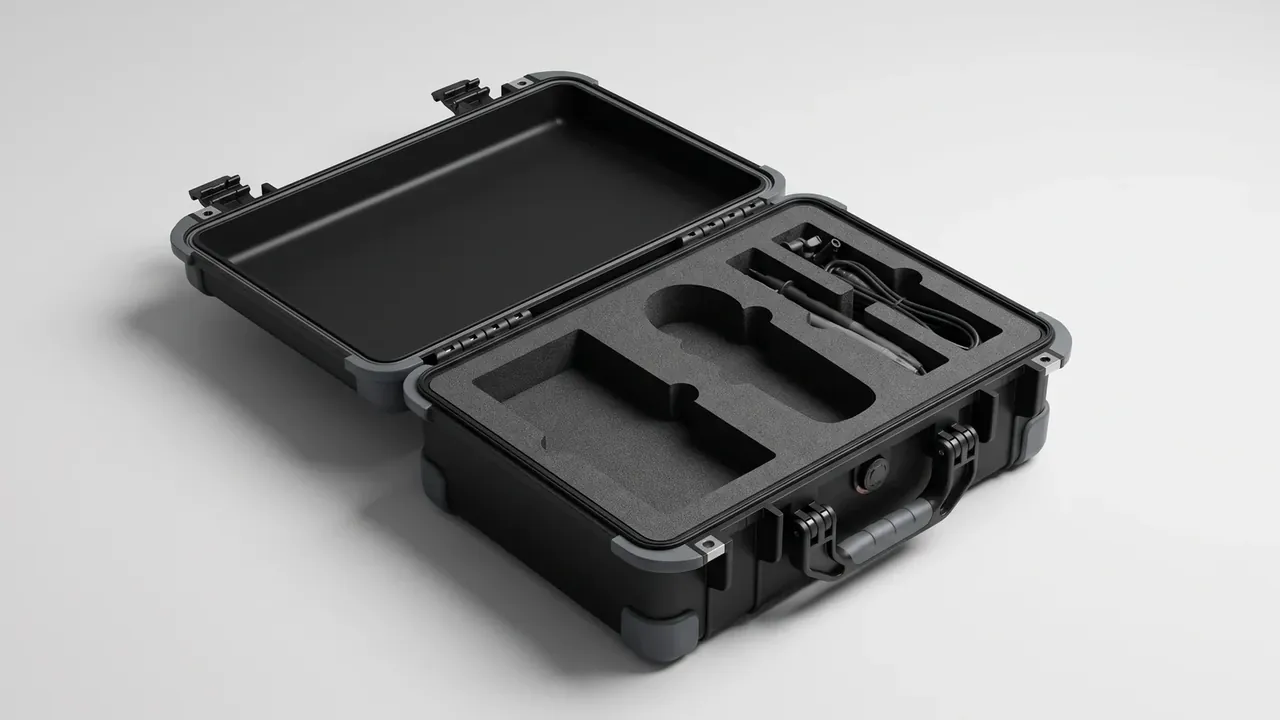
Quick answer: A Weapon Storage Cabinet survives a minus 20 °C store on three things: body forming, door overlap, latch count. All three are measurable on a sample.
Table of contents
- What a Weapon Storage Cabinet Faces in a Cold Store
- How the Body Is Formed: Three Routes and Their Cost
- Latch Points, Overlap and Sealing: Three Overlooked Details
- From Sample to Production: Four Things to Prototype
- FAQ
1. What a Weapon Storage Cabinet Faces in a Cold Store
A northern depot runs at minus 20 °C overnight; at shift change the door stands open half an hour while the corridor holds minus 5 °C. That swing is harder than cold alone: the body shrinks overnight, then moist air meets the cold inner door face and lays a film of water within five minutes.
Steel condenses early; a 6 mm moulded wall lags half an hour but turns brittle, and the latch seats take stress first.
A Weapon Storage Cabinet belongs in such a store on three measurable figures: notched impact at minus 20 °C, door-to-frame overlap, latch count.
| Part | Practice | Behaviour in cold | Measure |
|---|---|---|---|
| Body, steel | 1.5 mm sheet, welded | Condenses early | Gauge, seams |
| Body, moulded | 6 mm wall, one piece | Late, yet brittle | Wall, impact |
| Door overlap | 12 mm double fold | Short overlap chills the bolt | Overlap |
| Shelf | 40 kg distributed | Welds crack first | Load, brackets |
| Finish | 480 hours salt spray | Condensate blisters it | Salt-spray hours |
The first two set service life; the rest decide daily feel.
2. How the Body Is Formed: Three Routes and Their Cost
Forming gets one line in a quotation, yet it sets wall uniformity, seam count and reparability.
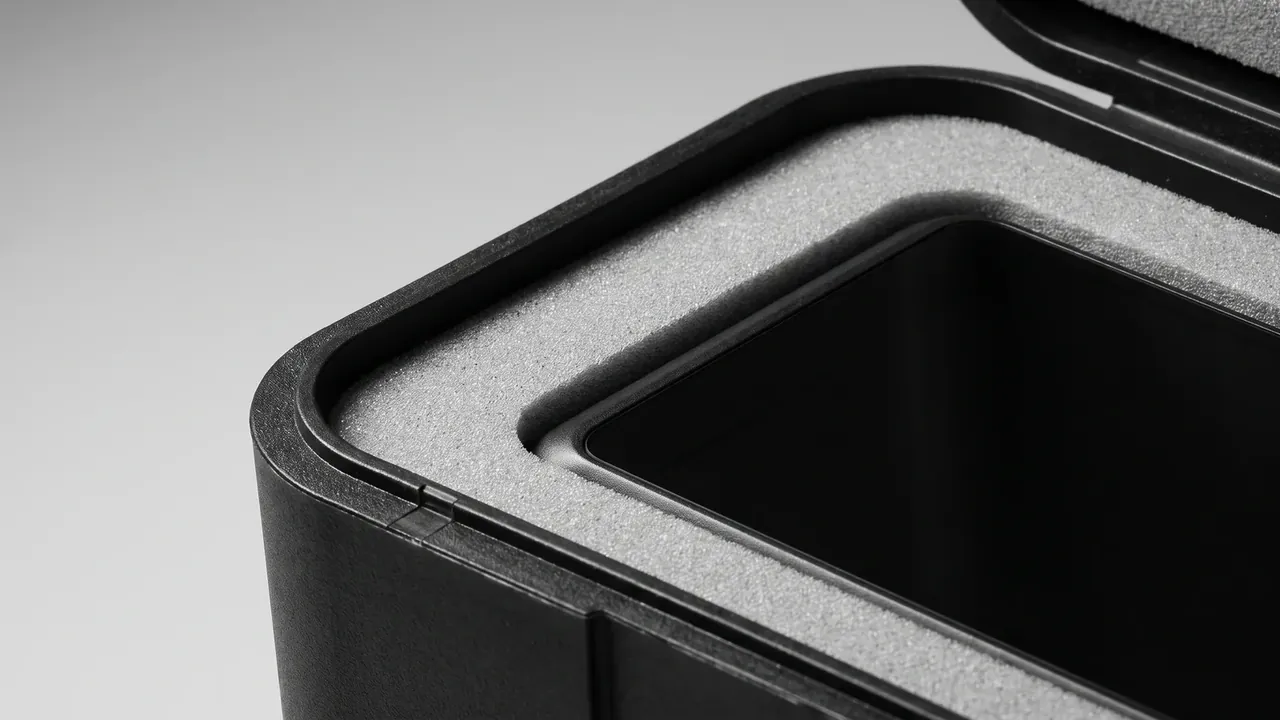
Three routes, three trade-offs:
- Bent steel: four sides folded, four seams welded. Cheap tooling, fast resizing, but condensate creeps along a weld and rust starts inside in about two years.
- Rotomoulded: powder fuses as the mould turns, a 6 mm wall thickening to 8 mm at the corners, no seam to leak. Tooling costs more; resizing means a new mould.
- Profile frame: corners lock on aluminium profiles, panels swap individually. Quick to assemble, cheap to repair, but every joint is another line to seal.
Choice follows the site: a store that moves favours steel, a fixed store past three hundred units can match cost with moulding.
3. Latch Points, Overlap and Sealing: Three Overlooked Details
Three-point locking means three bolts, not three cylinders, so the door carries load evenly. A single-point lock leans on door stiffness, and past 1.2 m of door height the unlocked edge can be pried open a finger's width.
Overlap is door edge resting on the frame: twelve millimetres usual, below eight the cold air chills the bolt until it will not turn.
Gasket compression beats gasket material: thirty percent returns well, half takes a set and leaks within three years.
Stacked, those details explain the price of a cold-store Weapon Storage Cabinet: double fold, three bolts, cold-grade rubber, a corner rib, together a fifth of unit price. None of it shows on a finished unit, so a buyer reads the latch feel, the gap evenness, and whether the supplier will cut a sample open. One who says the sample sits with another customer is often shipping the temperate version under a new label.
4. From Sample to Production: Four Things to Prototype
Prototyping a Weapon Storage Cabinet is four difficult details, built alone and measured before tooling.
| Item | Check | Pass |
|---|---|---|
| Corner wall | Cut diagonally, caliper at three points | 5.5 mm or more |
| Latch seat | Fit door, pull-test closing force | 40 to 60 N |
| Gasket | Thickness before and after closing | 25 to 35 percent |
| Shelf bracket | 40 kg distributed, 24 hours | 5 mm at most |
Corner wall is easiest to fake: moulding runs thick at the bend unless the curve thins it, and only a section shows which happened.
At volume, watch batch consistency: wall thickness can drift a millimetre between the first and fiftieth batch from one mould.
Conclusion
Cold-store performance of a Weapon Storage Cabinet comes down to the wall the forming route allows, the sealing margin the overlap provides, and the load spread the latch count delivers. None appears in a visual inspection. Turn them into a cut section, a pull test and a static load, and watch each one happen, since only then does a quotation compare like with like.
This article discusses only the container (case body) side of specifications and design intent, and does not cover any handling, loading or use of the contents.
Related Reading
- Weapon Storage Cabinet specifications
- How a long weapon case is built
- Zoning and stacking in a case warehouse
Related Products
- 8 Series — Gun Cases; Military Equipment Cases; Camera Equipment Cases; Drone Cases; Watch Cases; Knife Cases; First Aid Cases; Electronics Equipment Cases
- WL8-2812 PP Gun Case — model WL8-2812
- All protective cases and toolboxes: 7 series, 158 models