

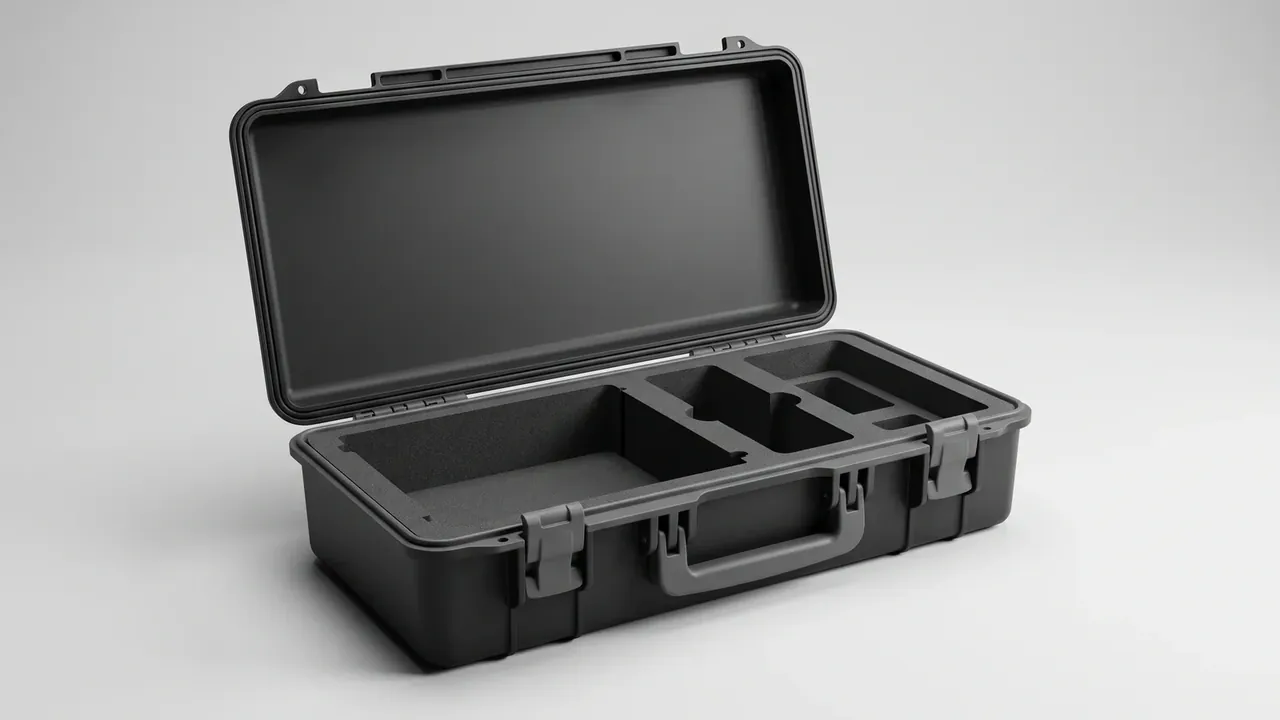
Quick answer: Quotes for the same Weapon Storage Cabinet drawing can span forty percent, and the gap is rarely the steel or the plastic: it sits in four things a drawing cannot show, namely the order band, who pays for tooling and keeps it, when delivery starts counting, and who carries the cost of credit.
Table of contents
- Where the 40 Percent Goes
- Order Band and Tooling Ownership
- When the Clock Starts: Five Milestones in 45 Days
- Why Batch Two Should Match Batch One
- Payment Terms and Six Quote Traps
- FAQ
1. Where the 40 Percent Goes
Send one Weapon Storage Cabinet drawing to six plants and the unit prices come back between 1,860 and 2,610 yuan, a spread of almost exactly forty percent. Rebuilt into the same cost breakdown, those six quotes land near 34 percent material, 17 percent hardware, 13 percent labour, 9 percent finishing, 8 percent tooling amortisation, 9 percent packing and freight, and 10 percent overhead and margin. No single line differs by forty percent; several differ by a few points each and the total multiplies.
| Line | Loose wording | Comparable wording | Typical spread |
|---|---|---|---|
| Body sheet | Cold rolled steel | 1.2 mm SPCC, grade and mill named | 8% |
| Insert | Foam | EVA at 35 kg/m³, CNC cut | 11% |
| Locking | Three-point lock | Three-point plus key tiers, cylinder origin named | 9% |
| Tooling | Included in unit price | Priced separately, life and ownership stated | 6% |
| Packing | Wooden crate | Fumigation-free crate, barrier bag, delivered and unloaded | 5% |
A low bid usually saves in three places: sheet 0.2 mm thinner, foam one density grade down, tooling folded into the unit price but charged again the moment the mould is altered. None of it shows on a finished cabinet, which still locks, stacks and rolls; the difference surfaces in year two or three.
Level the field before comparing numbers, with one question: does this price include tax, does it arrive at my door, and does it include the insert and the keys. If those three answers do not line up across suppliers, you are not comparing six prices, you are comparing six products.
2. Order Band and Tooling Ownership
A minimum order is a staircase, not a figure. On the same design, a hundred units run about 18 percent above the three-hundred price, five hundred is broadly level, and a thousand brings another 12 percent down. The steps come from changeover: a mould goes on the machine, temperatures settle, trial shots run, the first article is signed off, and a dozen units are scrapped in the process. Spread that over a hundred units and each one carries a visible share; spread it over a thousand and the share disappears.
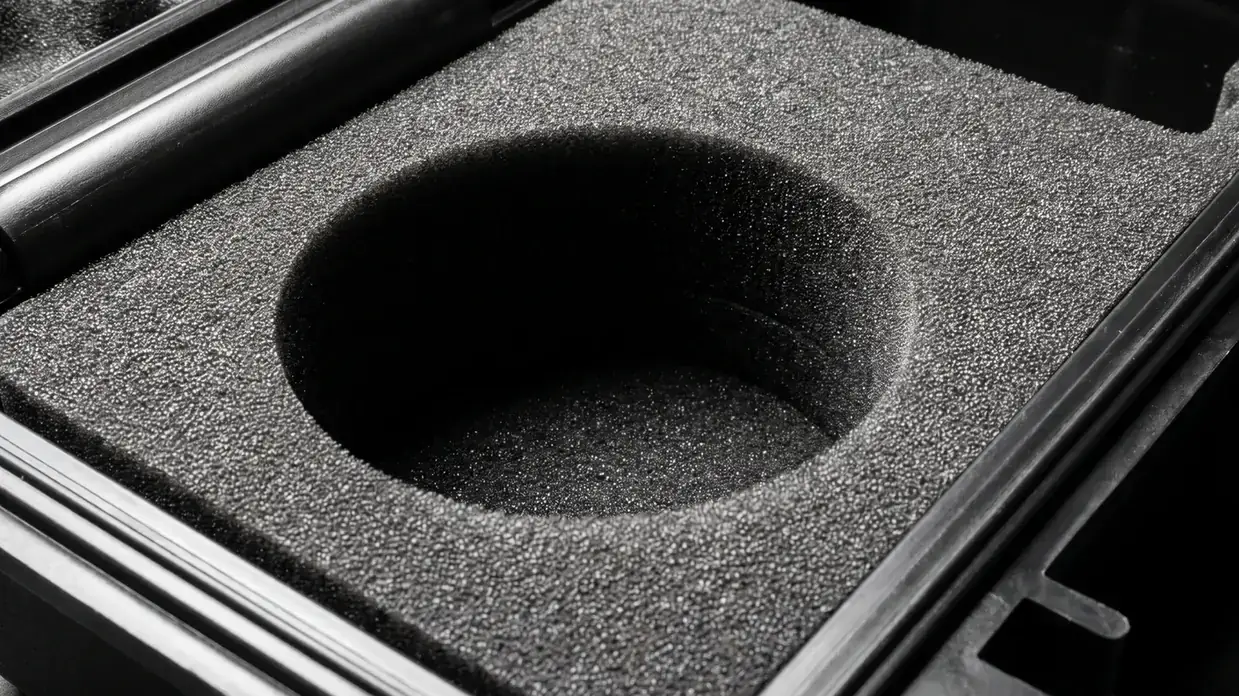
The round pocket in that photo was not carved by hand; a steel-rule die pressed it in one stroke. Die cost is quoted separately, 800 to 2,500 yuan a set depending on pocket geometry. It is small money next to the cabinet mould, which is exactly why it gets blurred: "insert included" can mean the die is paid for, or that the supplier picked the nearest shape already on the shelf.
Cabinet tooling is an order of magnitude larger. Press tooling with welding fixtures runs about 32,000 yuan; a rotomould around 90,000. The first is rated near 200,000 strokes, the second around 50,000 mould cycles, roughly 30,000 cabinets. How you write the tooling clause matters more than the amount:
| Clause | Who pays | Where the tool sits | On changing supplier | Fits |
|---|---|---|---|---|
| Buyer owns | Buyer pays once | Supplier plant, buyer may inspect | Can be negotiated out | Long-running model |
| Supplier owns | Amortised into unit price | Supplier's own | Stays behind | Trials, small runs |
| Amortise then transfer | Deducted per unit, title passes at 3,000 | Supplier plant | Collectable once target met | Mid-volume |
Which one to take depends on how long the model lives. For three years or more with no design change, pay once and own it, because an amortisation clause usually deducts two to three times the real tooling cost and the supplier earns the difference on the time value. For a single campaign, amortising is cheaper, at the price of starting from a bare mould next time.
Whatever the clause, three items belong in the contract: the tool number, the text stamped on the mould plate, and an annual right to inspect. A mould left unattended for three years is often found with rusted guide pins and a repaired cavity.
3. When the Clock Starts: Five Milestones in 45 Days
From drawing freeze to goods in your store, 45 days is the common rhythm: 3 days to confirm the drawing, 7 for the prototype, 18 for tooling, 12 for the first batch, 5 for packing, with 3 to 7 days of freight on top.
| Milestone | Days | Usual snag | What the contract should say |
|---|---|---|---|
| Drawing freeze | 3 | Pocket geometry keeps moving | Fixed freeze date, later changes priced separately |
| Prototype | 7 | Die scheduling | Whether sample cost offsets the order |
| Tooling | 18 | Tool steel and heat treatment | Agreed date for first trial |
| First batch | 12 | Colour and wall thickness | Release only after first-article sign-off |
| Packing | 5 | Crates and shipping marks | Mark drawing approved in advance |
The argument is almost always about the start date. The plant counts 45 days from contract signature, you count from drawing confirmation, and the three to ten days in between are usually the rework days. One sentence, counted from the day after first-article approval, removes most of that dispute.
The genuinely long item is not the body, it is the lock. Three-point lock bodies are bought in, 25 days standard, and 35 in a peak season when every depot orders at once. Ask whether the lock is on the shelf or on order; the answer predicts delivery better than any capacity claim.
Penalties are conventionally 0.3 percent a day capped at 5 percent, but the more useful addition is a right to cancel the undelivered balance, with the tooling balance waived, once a supplier-caused delay passes 15 days. Scheduling priority changes once that line exists.
4. Why Batch Two Should Match Batch One
Consistency across batches is the hardest thing to write into a contract and the first thing to fail on the second run. The first batch is a trial: an engineer stands at the machine throughout. The second goes on shift with the settings copied from a notebook, one digit wrong on hold time, and the wall moves 0.4 mm.
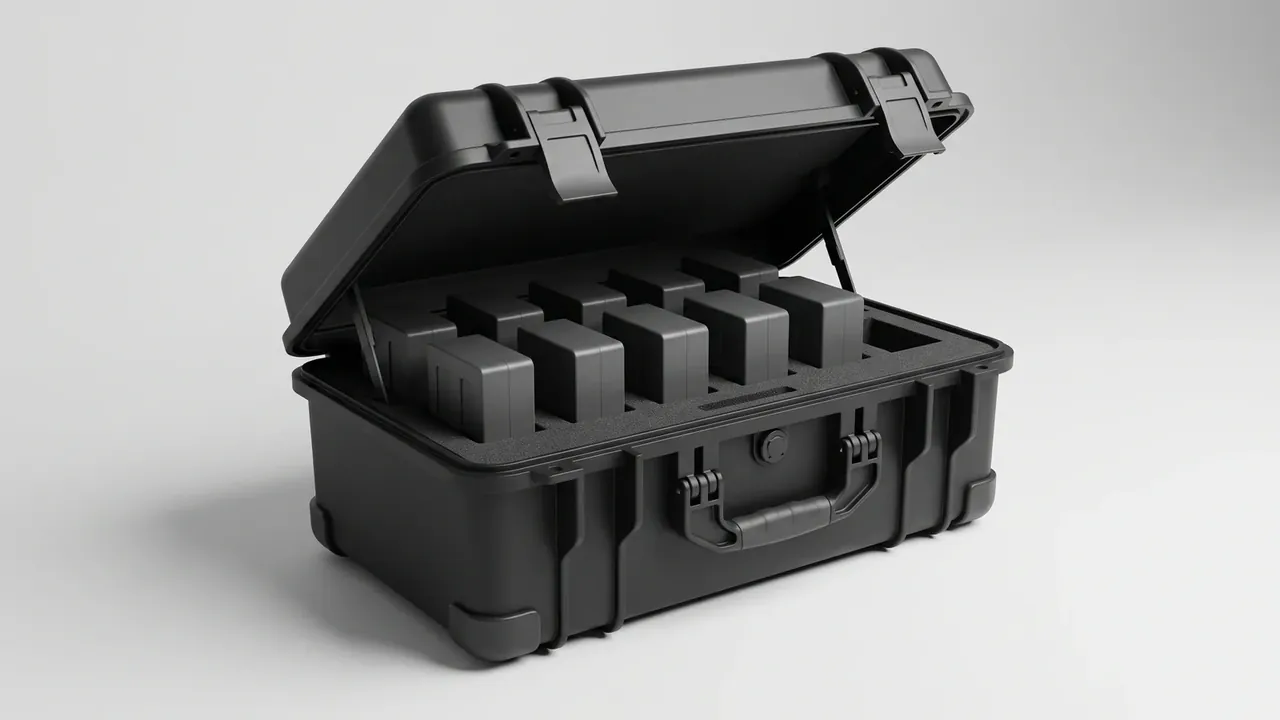
The twelve pockets in that photo came off one cycle, and the wall thicknesses differ visibly across them, which is the whole point of a signed first article: keep the best unit of batch one and stand batch two beside it.
Five clauses that actually work:
- Three first articles signed and dated: one stays at the plant, one with the buyer, one travels with the goods.
- Colour difference judged at ΔE 1.5 or less, with the whole batch rejected above it; "different lighting" is not an answer.
- Wall thickness within ±0.5 mm, measured at five points and recorded at the lowest.
- Foam density 35 kg/m³ plus or minus 3, verified by weighing, not by reading the supplier's test report.
- Acceptance sampling at AQL 2.5, with retained samples kept 24 months.
Change orders are the other quiet leak. Going from six pockets to nine looks minor; it means a new die, a new layout, new packing locations, and 35 yuan a unit is a fair price. Without a clause requiring a written quotation countersigned by the buyer, that 35 becomes 60 the week before shipment.
5. Payment Terms and Six Quote Traps
Payment on a Weapon Storage Cabinet usually splits three ways: 30 percent deposit, 40 before dispatch, 30 after acceptance. The shape balances risk, since the deposit buys material, the dispatch payment covers labour, and the balance is held against inspection. Asking for 60 days pushes the price up about 2.5 percent; accepting a bank acceptance bill costs the supplier a discount of roughly three points annualised. Credit is never free, it is only renamed.
Six lines to walk through on every quote:
- Whether the price includes 13 percent VAT, and whether the invoice is special or general.
- Whether freight ends at the plant or at your door, who unloads, and whether upper floors cost extra.
- Whether tooling is separate or amortised, and whether deductions stop once the target volume is reached.
- Substitution clauses: above twenty percent regrind, impact strength drops about thirty percent and the surface starts to bloom within six months.
- How changes are priced, by labour hour or by a flat per-unit adder.
- Whether sample charges are refundable or deductible from the first order.
Item six is the one people let go because the sum is only a few thousand yuan and it feels petty to raise. It stops feeling petty when the first order ships and the answer is that samples are costed separately. One line in the contract settles it.
Worth adding as well: the supplier pays freight on any return caused by failed inspection. It does not move the unit price, but it changes how hard the plant inspects before loading, because a return costs more than the check.
Conclusion
The useful information in a Weapon Storage Cabinet quotation is not the total but four footnotes: which order band the price assumes, who owns the tooling, when the delivery clock starts, and how the credit period is priced. Get those four in writing and a forty percent spread narrows to under ten, with the remainder being the real difference in process and management. Working through that list once beats three rounds of haggling.
This article discusses only the container (case body) side of specifications and design intent, and does not cover any handling, loading or use of the contents.
Related Reading
- Weapon Storage Cabinet specifications
- How to write an inquiry: drawings, quantities, acceptance
- Six checks in a supplier qualification audit
- How trial moulding and first-article approval work
- Documents needed for a custom case project
Related Products
- 8 Series — Gun Cases; Military Equipment Cases; Camera Equipment Cases; Drone Cases; Watch Cases; Knife Cases; First Aid Cases; Electronics Equipment Cases
- WL8-2812 PP Gun Case — model WL8-2812
- All protective cases and toolboxes: 7 series, 158 models