

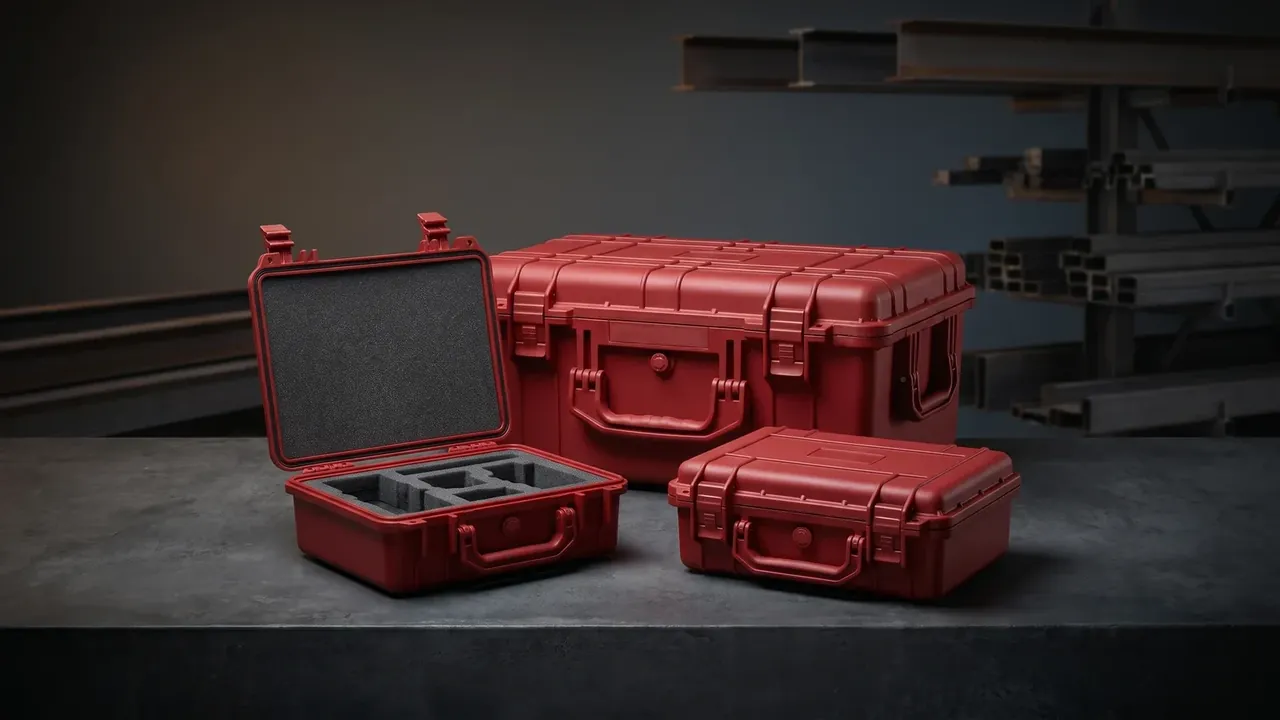
Quick answer: A Weapons Consolidated Tool Kit passes through four acceptance layers: incoming, in-process, final and type test. Final inspection samples by AQL and proves batch consistency; type testing proves design limits. A verdict table carries numbers and actions, never words like good or normal.
Table of contents
- Acceptance Layers of a Weapons Consolidated Tool Kit
- Inspection Items From Appearance to Seal
- Four Tests, Methods and Pass Limits
- Sampling Rules and Batch Definition
- Disposition and Re-inspection of Failures
- FAQ
1. Acceptance Layers of a Weapons Consolidated Tool Kit
A Weapons Consolidated Tool Kit passes four layers, and none replaces another. Incoming checks resin grade and colour, in-process wall thickness and assembly, final batch consistency, type testing destructive work such as drops and rain. The common error is using a two-year-old type report after the mould number changed.
A batch is one mould number, one material lot and one colour, capped at 500 pieces.
The layers share one verdict table: seal good is not a verdict, 20 kPa held 60 seconds with 0.5 kPa loss is.
2. Inspection Items From Appearance to Seal
Inspection of a Weapons Consolidated Tool Kit has seven final items: appearance, dimensions, wall thickness, air tightness, latch cycling and retention, gasket compression, marking. The first five run on every case, the last two by sample. Colour is read at ΔE 2 or less; flow marks are graded by area, 20 × 5 mm maximum.
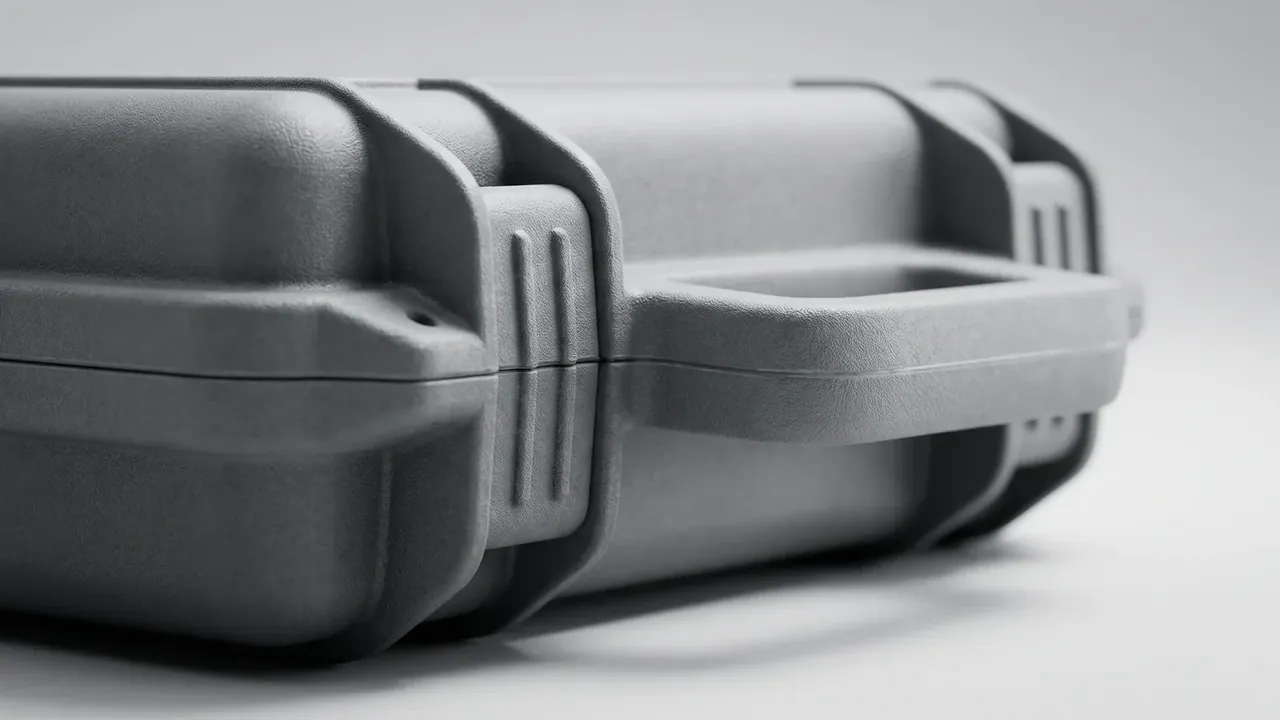
Wall thickness keeps drawing zones but is measured at three points: base centre, side wall middle, lid diagonal. The points are fixed in the procedure, and the lowest reading counts, not the average.
Air tightness is often skipped because it needs an air line: charge to 20 kPa, hold 60 seconds, allow 0.5 kPa. On failure check groove debris, then gasket density, then shell.
3. Four Tests, Methods and Pass Limits
Four tests on a Weapons Consolidated Tool Kit are all destructive, and the sample never ships. Drop height is 1.2 m, once on the base, once on the lid and once on each of four sides, six drops in total, followed by a check for cracks, released latches and water inside.
Rain follows IPX5: 6.3 mm nozzle, 12.5 litres per minute, 3 m away, 3 minutes per face. Salt spray is neutral 5 percent sodium chloride at 35 °C for 48 hours. Vibration runs 10 to 55 Hz at 0.35 mm amplitude for 30 minutes on each of three axes.
| Test | Condition | Pass limit |
|---|---|---|
| Drop | 1.2 m, six faces once each | no crack, no released latch, no water inside |
| Rain | IPX5, 3 minutes per face | no water inside, gasket not displaced |
| Salt spray | 5 percent NaCl, 35 °C, 48 h | at most 2 rust spots, each 1 mm or less |
| Vibration | 10 to 55 Hz, 0.35 mm, 30 min per axis | no crack, no loose fastener, no released latch |
Sequence matters: vibrate before dropping, or a screw loosened by vibration is written off as poor assembly.
4. Sampling Rules and Batch Definition
Sampling a Weapons Consolidated Tool Kit follows GB/T 2828.1 at general level II. A batch of 501 to 1200 pieces draws 80 samples; major defects at AQL 2.5 accept 5 and reject 6, minor defects at AQL 4.0 accept 7 and reject 8. Those numbers belong in the contract.
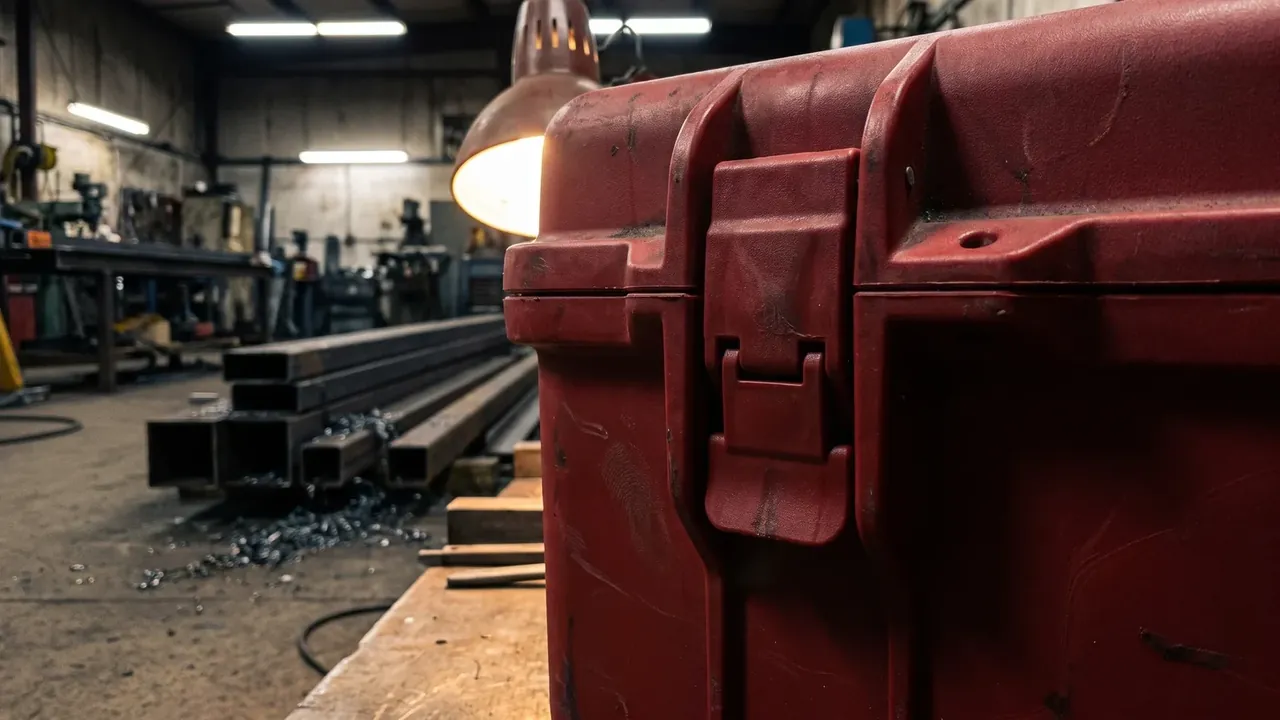
Critical items run 100 percent: air tightness, latch retention, no loose parts in the cavity. Acceptance number zero, so one failure isolates the batch. Switching rules too: five accepted batches return to normal, one rejection tightens, five more restore it.
5. Disposition and Re-inspection of Failures
Failed Weapons Consolidated Tool Kit units are tagged and quarantined with batch, quantity and defect, then reviewed. Three routes exist: return, rework, concession. Rework covers appearance and replaceable parts only; a cracked shell or thin wall is never reworked.
| Defect class | Example | Disposition |
|---|---|---|
| Critical | air loss above limit, broken latch | whole batch returned |
| Major | wall below minimum, envelope out of tolerance | tightened sampling |
| Minor | colour shift, light flow mark | concession, recorded |
Re-inspection covers no fewer items and doubles the sample. A second failure ends rework: return or downgrade with written approval. Three records close the loop: photos, data, signature.
Conclusion
Acceptance is worth little unless it repeats: same case, another inspector, another gauge, same verdict. That takes separate layers, numeric limits, sampling in the contract, disposition in advance. Done that way, acceptance of a Weapons Consolidated Tool Kit stops being a glance and a signature.
This article discusses only the container (case body) side of specifications and design intent, and does not cover any handling, loading or use of the contents.
Related Reading
- Acceptance and verdicts for military packing boxes
- Inspection points for military supply cases
- Final inspection flow for transit cases
- Quality control in case assembly
Related Products
- 8 Series — Gun Cases; Military Equipment Cases; Camera Equipment Cases; Drone Cases; Watch Cases; Knife Cases; First Aid Cases; Electronics Equipment Cases
- WL8-2812 PP Gun Case — model WL8-2812
- All protective cases and toolboxes: 7 series, 158 models