

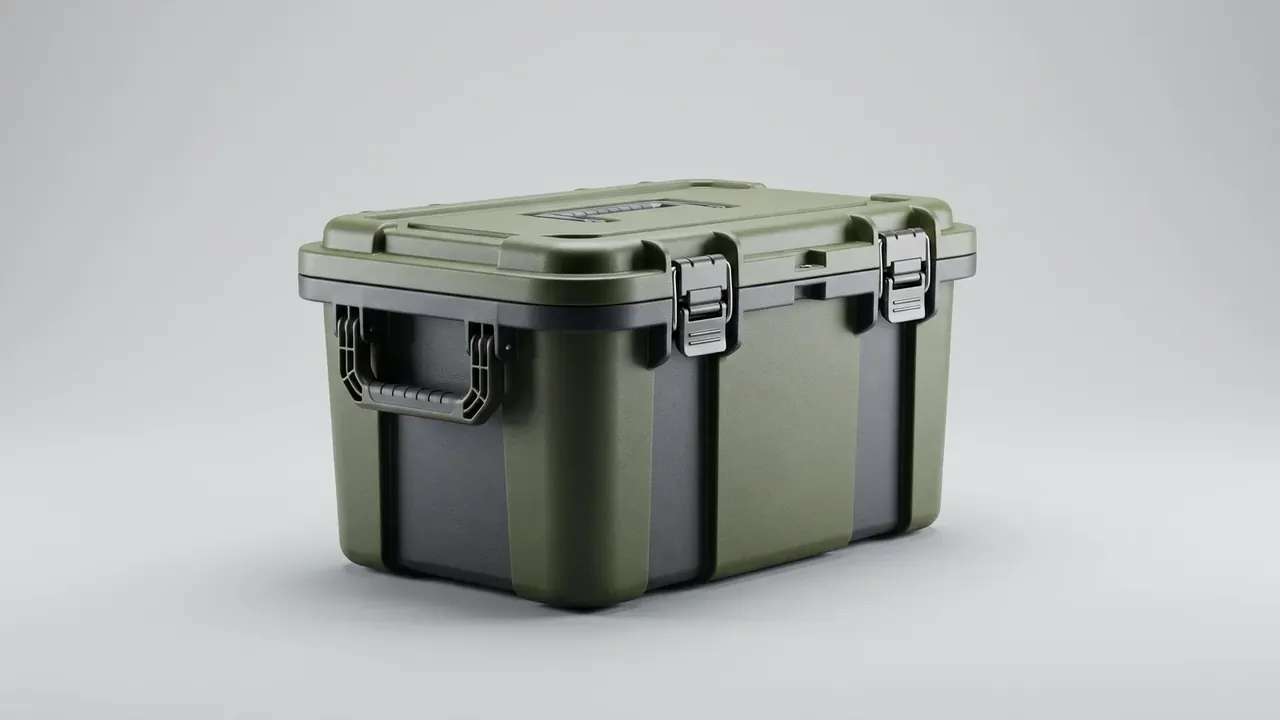
Quick answer: Choose a Wheeled Transit Case for the route, not for the feel of the handle. Check the outline against pallet and truck modules, then whether wheels carry load during stacking and forklifting, then how fast a set can be swapped and what each handover verifies. Wheels only cover the last kilometre.
Table of contents
- Five criteria for a Wheeled Transit Case
- Matching the case to the load unit
- Stacking and forklifting without wheel load
- Swappable wheel sets and spares
- Checks at each handover
- FAQ
1. Five criteria for a Wheeled Transit Case
A Wheeled Transit Case differs from a rolling tool case in its route, not its wheels. It crosses a store, a dock, a truck body and a gravel yard, so the load path changes with every surface.
The order is outline, stacking, forklifting, swappable wheels, handover checks. An outline that misses the load unit makes the rest worthless.
| Criterion | What to measure | Usual mistake |
|---|---|---|
| Outline | length, width, height vs module | reading volume only |
| Stacking | base bearing face, layers | letting wheels act as feet |
| Forklifting | clearance, fork opening | assuming wheels mean pushing |
| Wheel set | swap method, spares | sending the case back |
| Handover | check items, pass limits | signing without looking |
2. Matching the case to the load unit
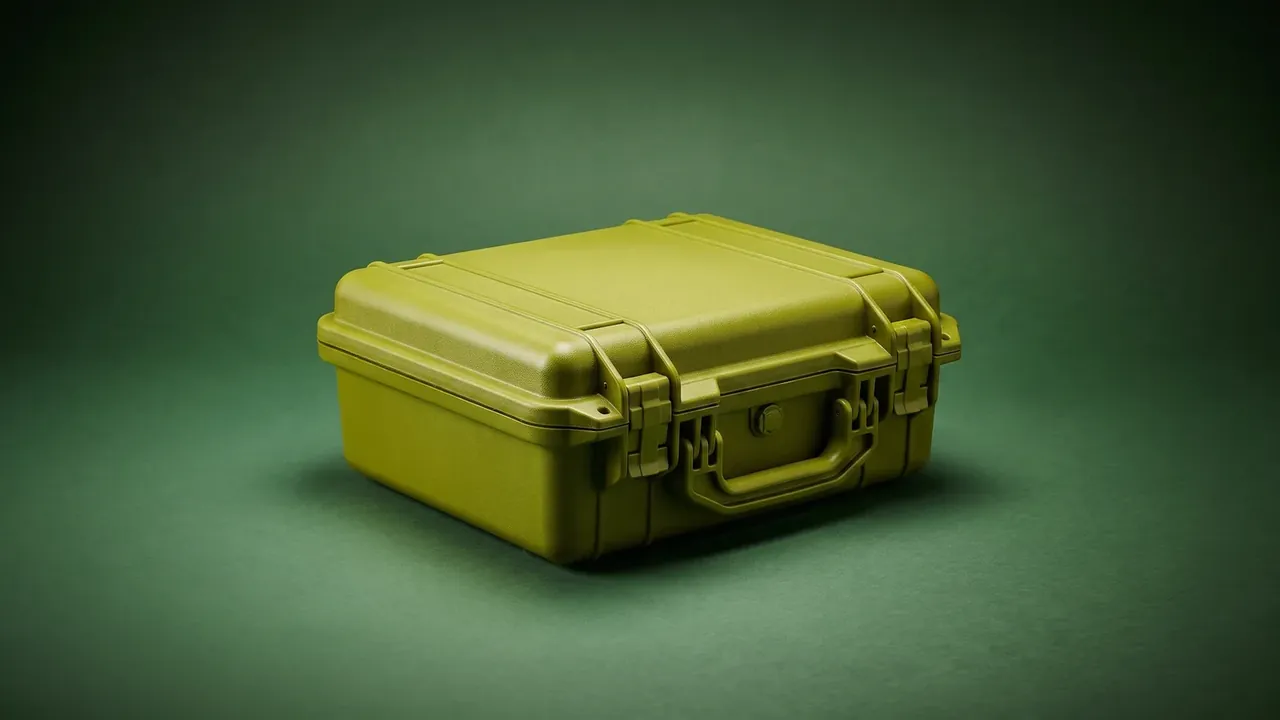
The outline of a Wheeled Transit Case follows the load unit. A 1200 by 800 mm pallet takes two 600 mm wide bodies exactly; build to 620 mm and two no longer fit while one wastes 400 mm.
An air pallet of 3180 by 2440 mm takes 1200 mm bodies two across, leaving a gap that swallows small parts. Height matters as much: a 2400 mm body takes three 800 mm layers, and at 820 mm you lose one.
3. Stacking and forklifting without wheel load
Stacking is where wheel sets fail. A wheel is elastic, and two layers above put over a hundred kilos on one wheel, which flats within hours.
Let the feet carry the stack. With feet 10 mm below the lowest wheel point, the base lands first: three layers at 42 kg a case means 126 kg passing through the floor ribs.
| Handling | Load path | Limit per case | Note |
|---|---|---|---|
| Three-high stack | base ribs and feet | 42 kg | wheels 10 mm clear |
| Forklift | fork opening and base | 500 kg | opening 100 mm minimum |
| Towed on a slope | two wheels | single wheel rating | tilt under 30 degrees |
| Two-person lift | side handles | 25 kg per side | span under 400 mm |
Forklifting needs that opening. Below 100 mm the forks will not enter and slings crush the side walls, so specify a through-channel base that takes forks and pallet truck alike.
4. Swappable wheel sets and spares
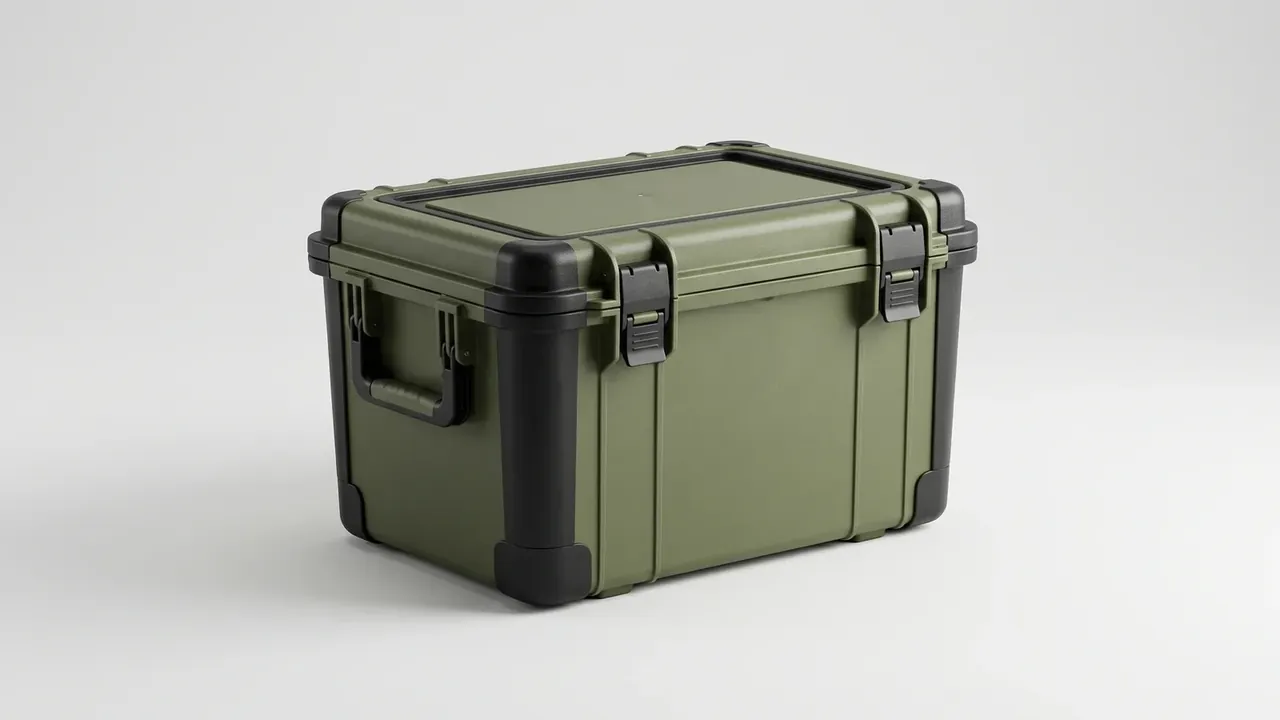
Treat the wheel set of a Wheeled Transit Case as a consumable. Tyres wear and bearings take grit; the question is how many days the case stands still afterwards.
Read the swap method. Four quick-release pins and one hex key give a six-minute change; a set moulded into the body means two weeks off the road. Carry spares at ten percent of the fleet.
Wheel data must match the route. A solid wheel at 90 Shore A runs near 70 decibels and lasts about 20 km; a pneumatic bites its tyre below 1.5 bar. A 2 mm tread mark says when to change.
5. Checks at each handover
Most failures of a Wheeled Transit Case happen in the ten minutes of a handover rather than on the road, and judgement without a standard leaks.
| Check | Pass limit | Action |
|---|---|---|
| Rim gap | under 1 mm | re-latch, then sign |
| Latch | tongue fully down | half-closed counts as open |
| Wheel play | axial under 2 mm | fit the spare set |
| Foot crack | under 5 mm | add a pad, repair on return |
Record surface type and distance for the leg too. Ten kilometres of gravel wears a wheel set three times faster than ten indoors, and the next leg needs that figure.
Conclusion
The five criteria form one chain: outline to the load unit, feet under the stack, clearance for the forks, wheels as consumables, four checks at each handover. Chosen along that chain, a Wheeled Transit Case lets its wheels do the last kilometre only.
This article discusses only the container (case body) side of specifications and design intent, and does not cover any handling, loading or use of the contents.
Related Reading
- The role of a transit case in logistics
- Choosing a shipping case
- Specifications for stackable cases
- Logistics support cases in the field
Related Products
- 8 Series — Gun Cases; Military Equipment Cases; Camera Equipment Cases; Drone Cases; Watch Cases; Knife Cases; First Aid Cases; Electronics Equipment Cases
- WL8-2812 PP Gun Case — model WL8-2812
- All protective cases and toolboxes: 7 series, 158 models