

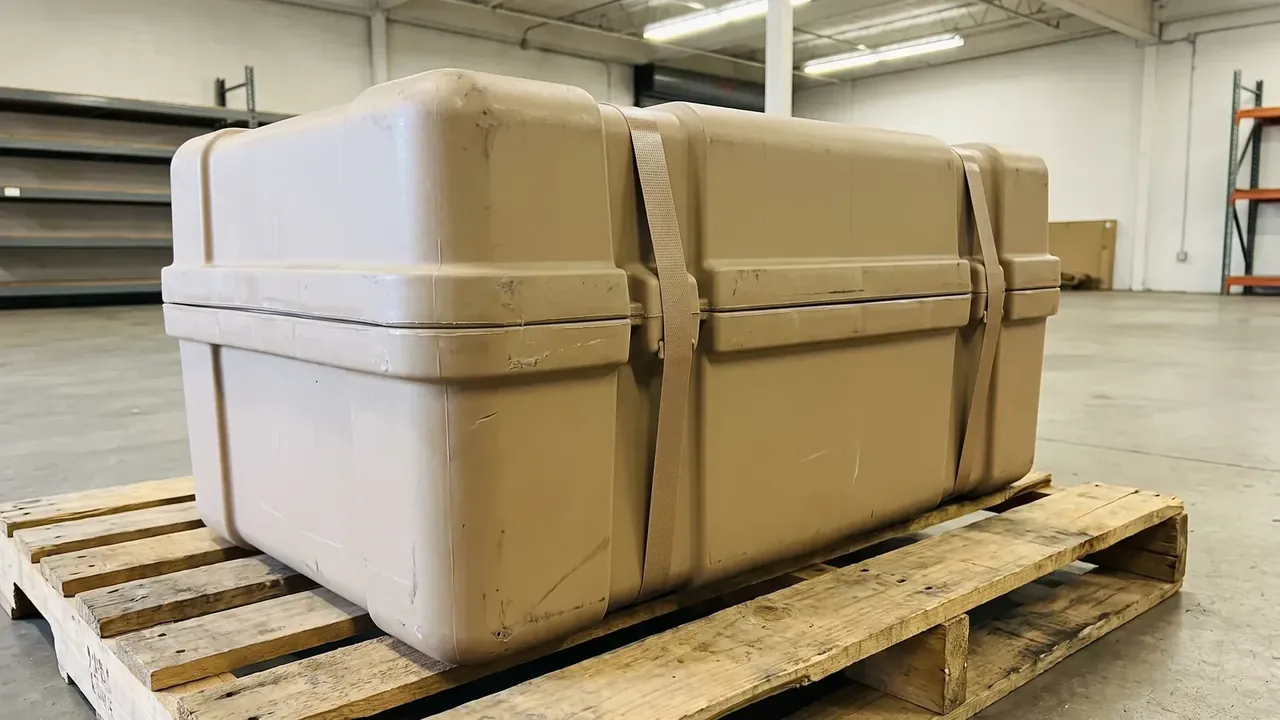
Quick answer: A Wireless video transmission system case pairs a 105 degree hinge stop with a 175 mm hold-down span, reading lid pressure drop across 40 transfers.
Table of contents
- Hinge stop angle of a Wireless video transmission system case
- Deflection of the divider hold-down strip
- Lid pressure drop after forty transfers
- Divider slack after retightening
- Stop setting for the video-link batch
- FAQ
1. Hinge stop angle of a Wireless video transmission system case
The lid halts at its stop on every opening; mismatch the angle and strip deflection and the divider loosens first. This shell is 620 by 430 by 240 mm outside, 550 by 365 by 175 mm inside, with a 4.4 mm wall, a 105° hinge stop and a 175 mm hold-down span over the divider. A wider stop biases the lid seal, so pressure drop climbs and the strip clamps tighter; a smaller stop looks good on pressure drop but slackens the divider. A Wireless video transmission system case logs the angle first in the video-link ledger.
Three angles of 100°, 105° and 110° take one shell each on one lid mould and one transfer rig, all at a 175 mm strip span. A stop outside assembly tolerance biases pressure drop first, and a shell with no batch number is left off the ledger for a Wireless video transmission system case.
| Stop grade | Hinge stop angle | Hold-down span |
|---|---|---|
| One smaller | 100° | 175 mm |
| Nominal | 105° | 175 mm |
| One larger | 110° | 175 mm |
One smaller grade pushes slack to 0.48 mm past 0.40 mm; one larger lifts pressure drop to 0.35 kPa past 0.28 kPa, clamping the divider tightest. Only 105° crosses neither, at 0.24 kPa and 0.32 mm. On the smaller grade a Wireless video transmission system case has no weak strip: a short travel lifts the strip less, so it cannot reseat the divider.
2. Deflection of the divider hold-down strip
A 175 mm strip span is the other grading line. The strip's own slight deflection keeps pressing the divider down, and the span decides whether it springs back or keeps a permanent bow after 40 transfers.
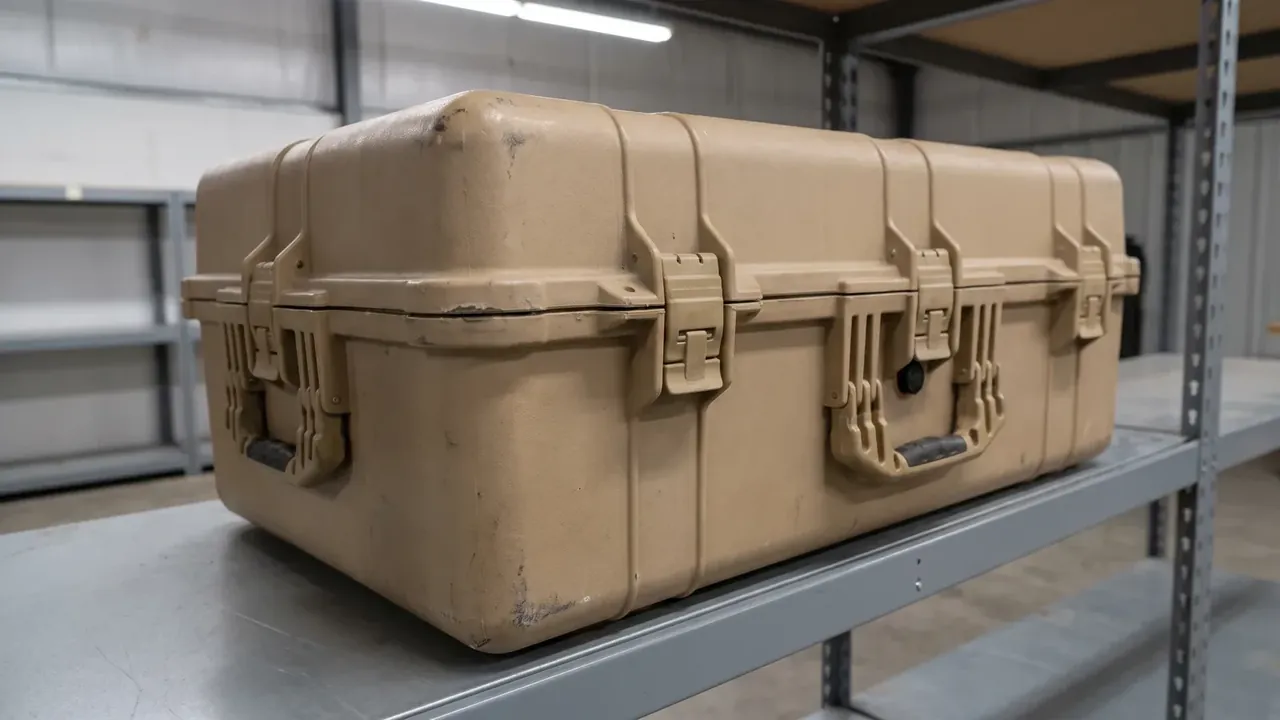
Four latches close at 405 N each on two seals at 20% compression, logged with the strip span. A stiffer strip eats the lid's rebound, and loose latches let the mouth slacken, so a high pressure drop is wrongly charged to the stop angle. A Wireless video transmission system case files strip reading and latch force together.
3. Lid pressure drop after forty transfers
The transfer rig moves the closed shell 40 times; after each stop an airtight bench settles 10 min and reads lid pressure drop to 0.01 kPa. The verdict uses the fortieth transfer, not the running total, because the release line asks whether stop and strip press the seal back. A Wireless video transmission system case grades at transfer 40; earlier readings are trend only.
| Transfer run | Cumulative count | Lid pressure drop |
|---|---|---|
| Run 10 | 10 transfers | 0.14 kPa |
| Run 25 | 25 transfers | 0.20 kPa |
| Run 40 | 40 transfers | 0.24 kPa |
Run 10 reads 0.14 kPa, Run 25 rises to 0.20 kPa and Run 40 settles at 0.24 kPa, with a smaller second-half gain, so the seal stops loosening. Pressure drop of 0.28 kPa and slack of 0.40 mm fill two ledger columns, and one empty column blocks release; the stretch past 40 transfers stays in trend only. The ledger for a Wireless video transmission system case takes the fortieth row.
4. Divider slack after retightening
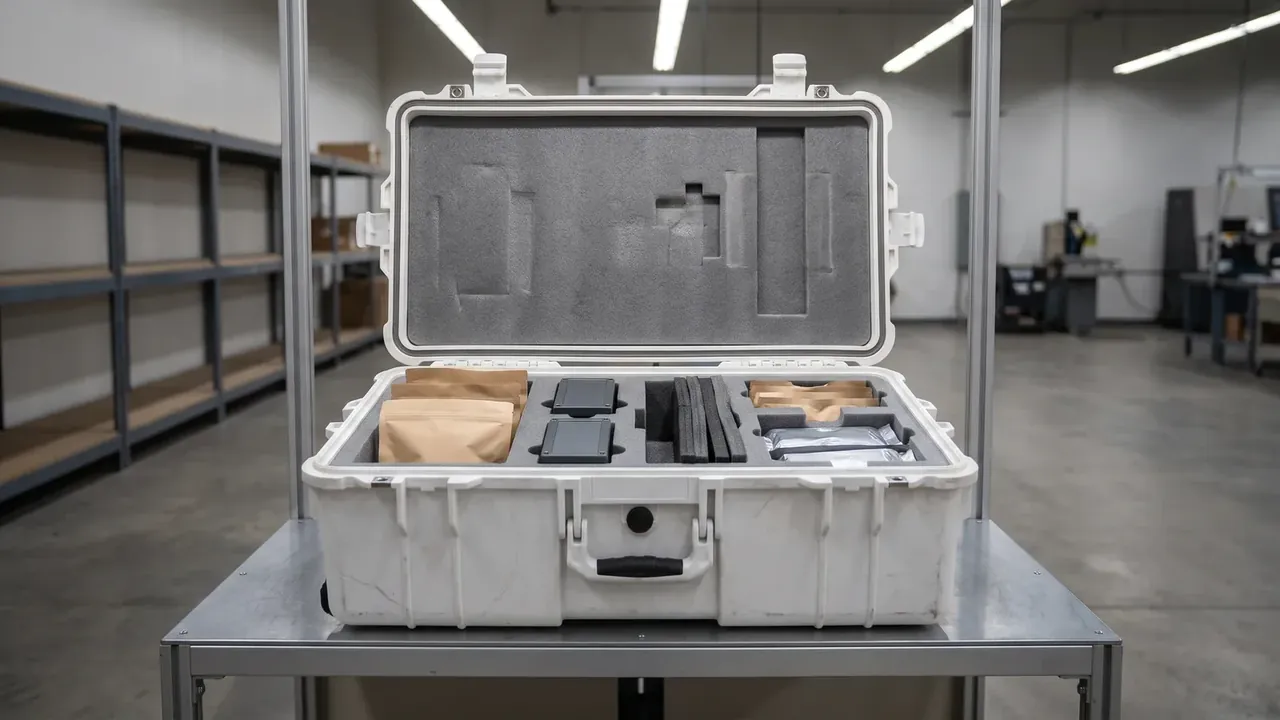
Transfers done, the four latches are retightened to 405 N on the same shell and divider slack is read with a feeler gauge to 0.01 mm once the strip returns to working deflection. Pressure drop and slack are separate: a wider angle raises pressure drop but clamps the divider harder, so slack shrinks.
| Pressure-drop value | Stop grade | Divider slack |
|---|---|---|
| 0.20 kPa | One smaller | 0.48 mm |
| 0.24 kPa | Nominal | 0.32 mm |
| 0.35 kPa | One larger | 0.22 mm |
Spread the three rows out: 0.20 kPa crosses on slack at 0.48 mm, 0.35 kPa on pressure drop at 0.28 kPa, and only 0.24 kPa crosses neither. A shell never retightened earns no grade; slack counts only after retightening. A Wireless video transmission system case keeps slack apart from pressure drop, taking the larger of both divider ends.
5. Stop setting for the video-link batch
The video-link batch closes on one line: the smallest stop whose transfer-40 pressure drop holds 0.28 kPa is the setting, and a wider angle goes back for mould rework. Empty weight 6.6 kg, load 17 kg, 4100 cycles and four latches at 405 N lock into the batch; a new hinge seat restarts the trial and recheck.
Release runs shell by shell: stop grade, strip span, transfer-40 pressure drop and retightened slack must come from one shell in one grade. A missing entry pulls only that shell, with no borrowing from another. A Wireless video transmission system case files assembly notes apart from transfer readings; drawing tolerances trace to the rig, and two seals at 20% go in the lid book.
Conclusion
Grading a Wireless video transmission system case for a video-link batch means three readings together: a 105° stop holds transfer-40 lid pressure drop to 0.24 kPa, a 175 mm strip span keeps divider slack at 0.32 mm, and each holds its own line. One crossed column sends that shell back alone. JUNZHIJIA files 4100 open-close retest records by batch; drawing tolerances are issued by Kexin New Materials (Guangdong) Co., Ltd. against the rig condition.
Related Reading
- Choosing Pelican Alternative Cases: Spec Comparison and Pitfalls
- Tripod/Panhead Cases & Wireless Video-Link Cases
- Film Production Equipment Case: Turnover Protection for Camera and Lighting Gear
- Wireless microphone & soundcard moisture-proof case
Related Products
- 8 Series — Gun Cases; Military Equipment Cases; Camera Equipment Cases; Drone Cases; Watch Cases; Knife Cases; First Aid Cases; Electronics Equipment Cases
- WL8-2812 PP Gun Case — model WL8-2812
- All protective cases and toolboxes: 7 series, 158 models