

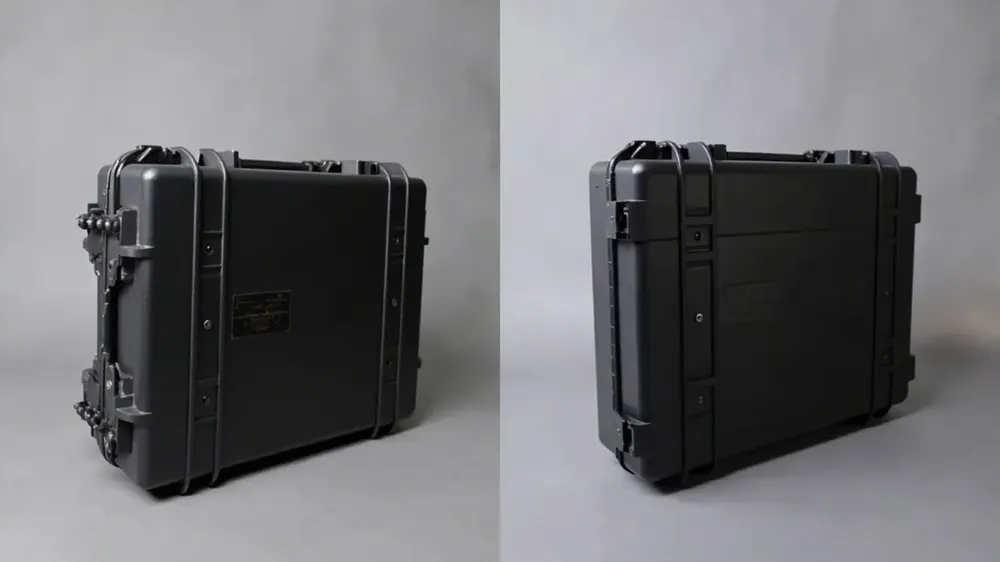
Search "protective case" and Pelican shows up in most results. It did set the bar for rugged, waterproof, customizable cases — and set the price bar too. The market is now full of look-alikes with nearly identical shapes at a much lower price. The question is which are usable alternatives and which are just plastic shells that resemble the original. This guide takes no side; it teaches you to separate real alternatives from look-alikes using a set of verifiable specs.
First, Know What You Are Buying
A Pelican-class case does not sell "a box that holds things" but a verifiable protection capability: sealing class, drop resistance, latch life, liner support. A real share of the premium pays for verifying those capabilities — testing, certification, QC. Whether an alternative holds up depends not on how it looks but on whether it reproduces those capabilities at lower cost and can prove it with data.
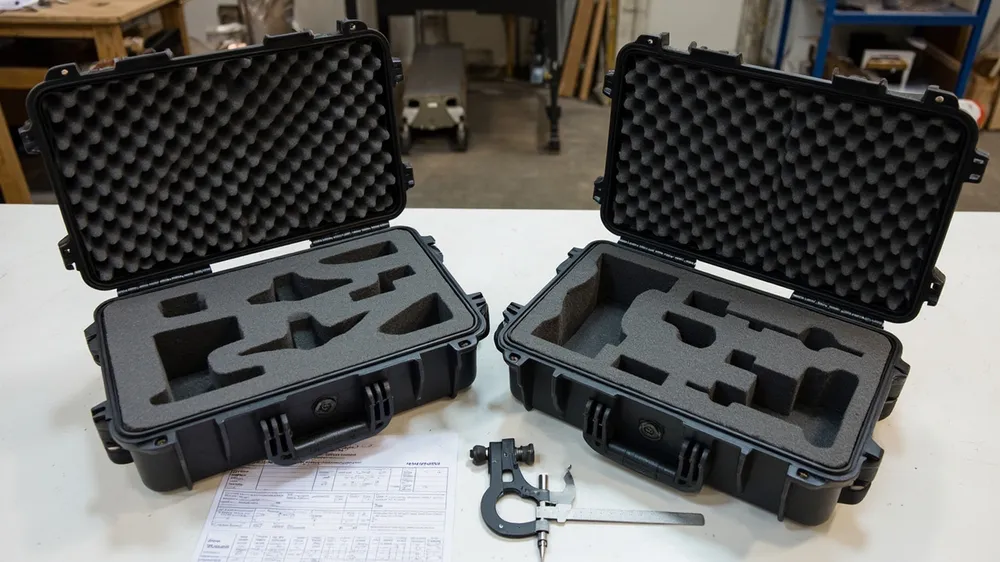
Six Hard Specs You Must Check
| Spec | Premium delivers | Look-alike cuts | How to verify |
|---|---|---|---|
| Gasket | One-piece, resilient, ageing resistant | Segmented glue, deforms | One-piece? press and watch rebound |
| Latch / hinge | Metal pin, fatigue tested | All-plastic, loosens | Cycle life, metal pin? |
| Wall & rib | Uniform, ribbed | Locally thin | Caliper walls, check ribs |
| Liner density | High-density EVA, precise | Low density, loose | Weigh, press rebound |
| Pressure valve | Standard, vents | None or fake | Does it truly vent? |
| Cert / test | IP, drop reports | No data | Ask for reports |
Of these six, gasket, latch, wall and liner are where look-alikes most often "look same, act different". For shell strength see wall thickness and structural design; for latch life see hinge and latch durability design.
Sealing: The Gasket Matters More Than the "IP67" Print
Many shells print "IP67", but real sealing comes from the perimeter gasket. Beyond the class printed, check:
- One continuous piece: a glued segmented gasket leaks at the seam.
- Resilience: presses back fast, meaning low compression set, not aged.
- Compression: when closed, the gasket is evenly flattened, not floating locally.
For the IP class system see IP69K vs IP67; for gasket ageing see gasket ageing and replacement. Note: IP69K is high-pressure high-temp jetting, not needed for daily cases.
Latch and Hinge: Metal Pin Is the Divide
Latches and hinges decide cycle life. All-plastic latches commonly loosen after a few thousand cycles; metal-pin latches last an order of magnitude longer. A real alternative at least uses metal at the latch pivot and provides fatigue data.
For selection see hinge and latch durability design: pivot material, open-force curve, accidental-open resistance. For air travel see TSA lock and airline travel cases.
Wall and Material: A Thin Shell Cannot Protect
Shells all look black and hard; the difference is wall distribution and ribs. Cheap look-alikes thin the non-visible faces, so cracks start there on drop. Verify by:
- Caliper: measure wall at corners, flats and latch bases; check uniformity.
- Ribs: long sides should have ribs against bending.
- Grade: PP/ABS/PC each have strengths — see polycarbonate material and aluminium vs plastic case.
Whether the material is virgin also matters — high recycled ratio hurts strength and weathering; see virgin vs recycled material.
Liner: Density Decides Protection
However rigid the shell, the liner does the protecting. Look-alikes often cut here: one density class lower, looser cavities, same look, far less protection. Check:
- Press rebound: low-density foam stays compressed.
- Weigh compare: same-size liner, the light one is usually lower density.
- Cavity fit: does the gear rattle? See drone case foam insert design and EVA thermoformed liner process.
- Re-cuttable: can it be replaced? See foam relining and recutting.
The Truth About Price Composition
| Premium goes to | Premium | Real alternative |
|---|---|---|
| Tooling & tolerance | High investment, tight | Same in-house tooling cuts cost |
| Test & cert | Full reports | Shared third-party reports cut cost |
| Brand & channel | High share | De-brand, direct factory |
| QC consistency | Strict | Depends on factory |
A real alternative saves on "brand and channel", not on "tooling, testing, QC". If an alternative cuts the latter three, it is not saving brand fee but safety margin. For total-cost view see total cost of ownership.
Factory Capability Is the Root of Trust
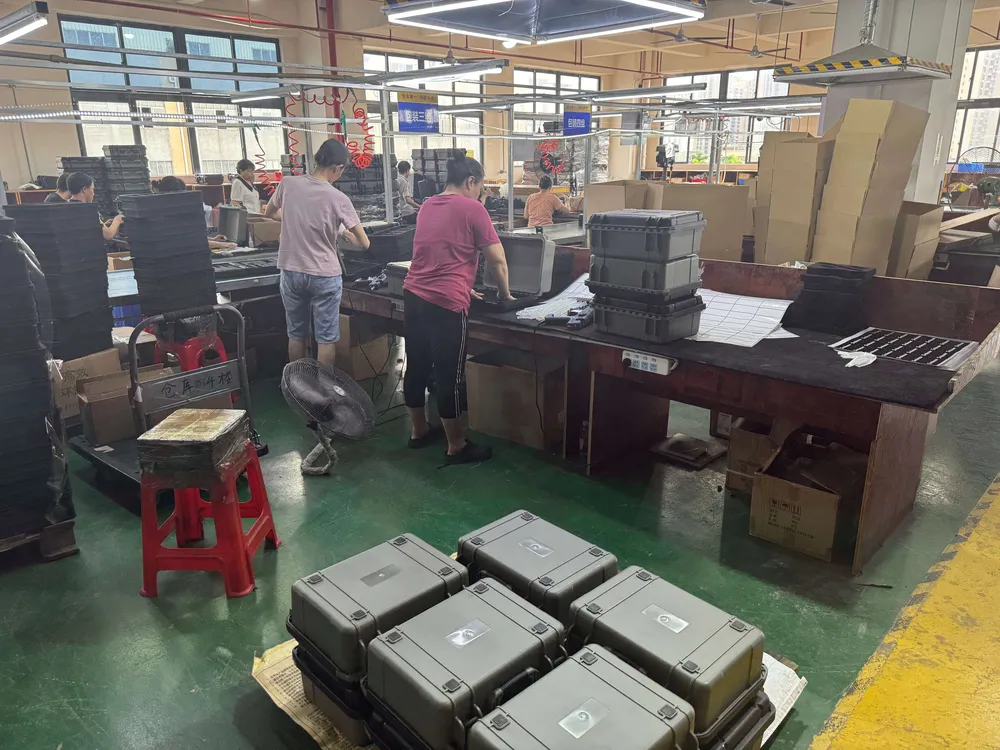
Only a factory that controls tooling, moulding, liner and testing in-house can make a real alternative; a trader that only assembles and labels makes a look-alike shell. To evaluate a factory see drone case manufacturing factory; for audit see how to audit a case factory (if published). Industry trends in protective case industry trends.
Pitfall List
First, judge by shape not spec — looks same is not acts same. Second, trust print not data — ask for the IP report, not the slogan. Third, ignore liner density — one class lower, one step less protection. Fourth, latch with no metal pin — loosens in thousands of cycles. Fifth, no pressure valve — lid hard to open across altitude. Sixth, recycled shell — see virgin vs recycled.
Procurement Decision Flow
Write requirements as verifiable clauses: protection class, drop height, loaded state, liner density, latch life, valve needed. Then ask candidates for matching data and tick the table item by item. One that ticks all and prices clearly below premium is a real alternative; one that cannot produce data on any item should be risk-priced — either discount hard or walk away.
For writing requirements and negotiating see how to write a case RFQ and how to negotiate case price.
In Summary
A Pelican alternative is not "a cheap shell" but "reproducing a verifiable protection capability at lower cost". Judge it on six hard specs: one-piece resilient gasket, metal-pin latch, uniform ribbed wall, enough liner density, a truly venting pressure valve, and test data. All six passing from an in-house-tooling factory is a real alternative; any item without data means the saving comes from cut safety margin. To start, write your protection class, drop and liner-density requirements as clauses, then ask candidates to evidence each — done, the alternative moves from gamble to data review. For systematic material and durability trade-offs, cross-read aluminium vs plastic case and hinge and latch durability design.
For custom liners for specific gear see drone case foam insert design; for shell material trade-offs see polycarbonate material and virgin vs recycled.