

A7L-5726 Case: The Long-Body Version
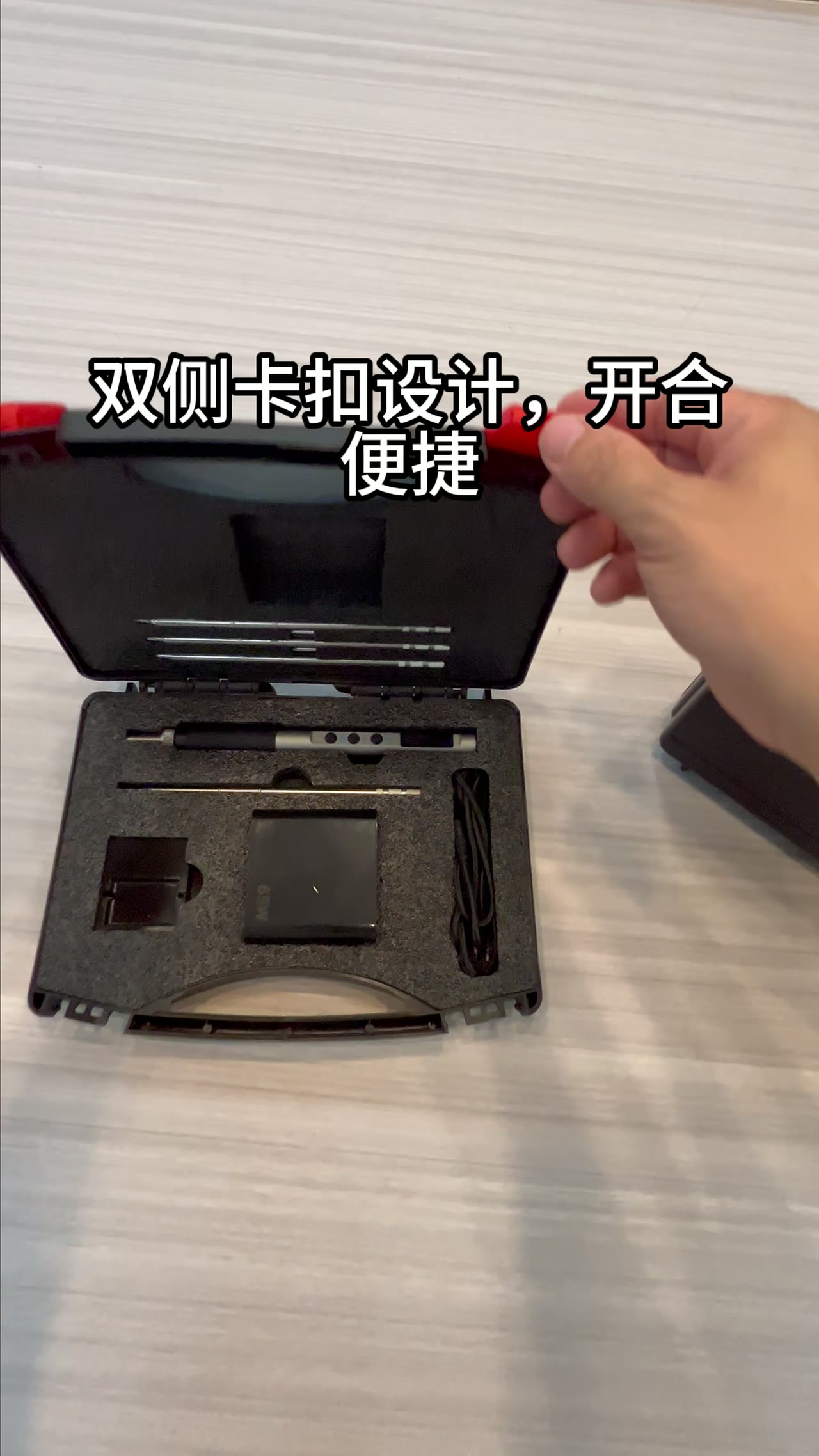
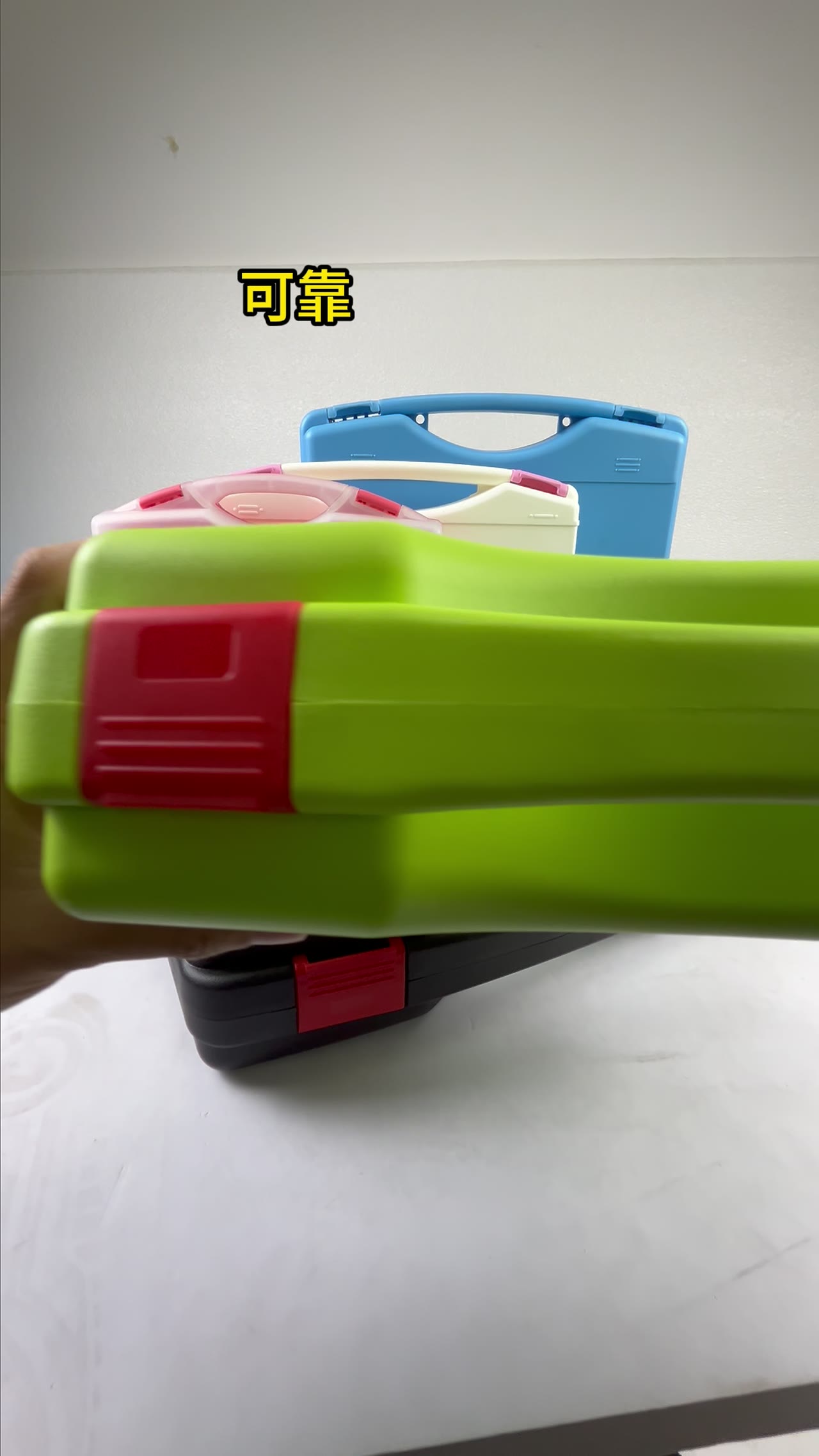
Stretching a standard case is not how a long-body shell works. Once the span passes 600 mm the wall stops behaving as a plate and starts behaving as a beam: with nothing under the middle, its own mass plus road vibration walks the lid downward and the long item bends with it. The clip shows length and an uninterrupted interior. It cannot show how the L/300 deflection line lands on a given span, where the supports belong, why a rib is 8 mm and not 15, or how much clearance a long item needs at each end.
01Past 600 mm, the Shell Behaves as a Beam
Over a short span the wall carries load in plane and barely moves. Past 600 mm, deflection at equal thickness grows with the fourth power of span, so doubling the span multiplies sag by sixteen. The working rule is a limit of L/300: 2 mm at 600 mm, 2.7 mm at 800 mm. That figure is a verdict threshold, not a precision calculation.
To decide whether the middle needs help, a load test beats arithmetic. Support the empty case at both ends, press 10 kg at the centre, and read the lid with a dial gauge. Anything past L/300 calls for a structural change, not a thicker wall: going from 4 mm to 5 mm buys roughly thirty percent less deflection and costs twenty percent more mass.
02How a Long Item Bends With No Mid Support
Rest a long item on two ends and its own weight pulls the middle down, again with span to the fourth power. A 1 m aluminium extrusion may sag only 0.3 mm under its own mass; at 1.6 m the same profile passes 2 mm. An empty case hides that. A rail, a calibration bar or an optical bench inside does not.
Worse is the bend that stays. Clamped at both ends with a free middle, the item flexes thousands of times in transit until some of it becomes plastic, and the holes no longer line up on the machine. Mid support is not there to hold the item up. It cuts the span: a 1.2 m free length becomes two 600 mm ones, worth a factor of sixteen.
03Supports Every 400 mm, Ribs at 8 to 15 mm
Space supports no wider than 400 mm: a 1.2 m interior needs three positions, both ends plus the middle, and a 1.6 m interior needs four. A foam pad alone is not a support. Load has to land on a rib or a parting line, because landing on flat wall presses a dent that never comes back.
Ribs run 8 to 15 mm tall; beyond 15 mm the sink mark migrates to the outer face. They sit across the long axis, and spacing matters more than height — opening rib pitch from 200 mm to 400 mm nearly halves the section modulus. Root radius stays at 1.5 mm or more, or the rib cracks as it cools. One ring rib at mid-span, tying lid and base together, beats a row of short ones.
04Continuous Interior: Fast Loading, Sagging Middle
A continuous interior is straight, and straight is fast. A 1.4 m rod slides in from end to end with no sectional alignment, which can halve handling time. The price is that no divider helps carry load, so the lid spans the whole length on its own stiffness. External ribs and a lid-side pressure strip have to make up the difference; packed foam will not stop the lid sinking.
Sag shows itself quietly. Closed and empty, nothing looks wrong. Loaded and lying flat for a day, the lid centre sits 1 to 2 mm low and the gasket stops sealing there. Tape a 3 mm strip of pressure-sensitive paper inside the lid, close it for 24 h, and read the imprint: a break longer than 100 mm needs structural work, and no amount of latch adjustment will close it.
05Sweeping 1 to 200 Hz Around a 5 to 30 Hz Mode
Transport vibration is swept from 1 to 200 Hz, and a long case usually puts its first bending mode somewhere between 5 and 30 Hz — the same band as truck floors and aircraft panels. At resonance the middle amplifies by 5 to 10 times, foam cannot damp it out, and the item swings fore and aft until it strikes an end wall.
Two ways out. Push the first mode higher with ribs or a shorter span so it clears 5 to 30 Hz, or leave 15 to 25 mm at each end and add soft supports to absorb the swing. The clearance is not slack to be trimmed away: an item with zero end clearance has nowhere to yield, so the impact goes straight into the wall and the latches.
| Deflection limit | ≤L/300, about 2 mm at 600 mm |
|---|---|
| Mid-span reinforcement trigger | span ≥600 mm |
| Support spacing | ≤400 mm |
| Mid rib height | 8–15 mm |
| Rib root radius | ≥1.5 mm |
| Vibration sweep | 1–200 Hz |
| First-mode avoidance band | 5–30 Hz |
| End clearance for long items | 15–25 mm |
FAQ
Can a standard mould simply be lengthened?
Not without structural changes. Double the span and deflection rises sixteenfold, so the original wall and rib layout sags in the middle and the gasket stops sealing. Lengthening means new rib positions, mid supports, and a fresh L/300 check.
Does a foam pad in the middle count as support?
Half of one. Foam absorbs vibration but lacks stiffness, takes a set after a few trips, and never actually cuts the span. Real support means load landing on a rib or parting line, with foam only softening the transition between them.
Is L/300 a standard or a rule of thumb?
A rule of thumb. Its value is speed: 600 mm of span may sag 2 mm, and past that the structure changes. Different loads and support layouts still need a physical load test before release.
Should a long item be clamped solid inside the case?
No. Clamping it solid removes the room to yield, so resonance drives impact straight into the end wall and latches. Leave 15 to 25 mm at each end, limited by foam and soft supports: small movement, no strike, and a safer item.