

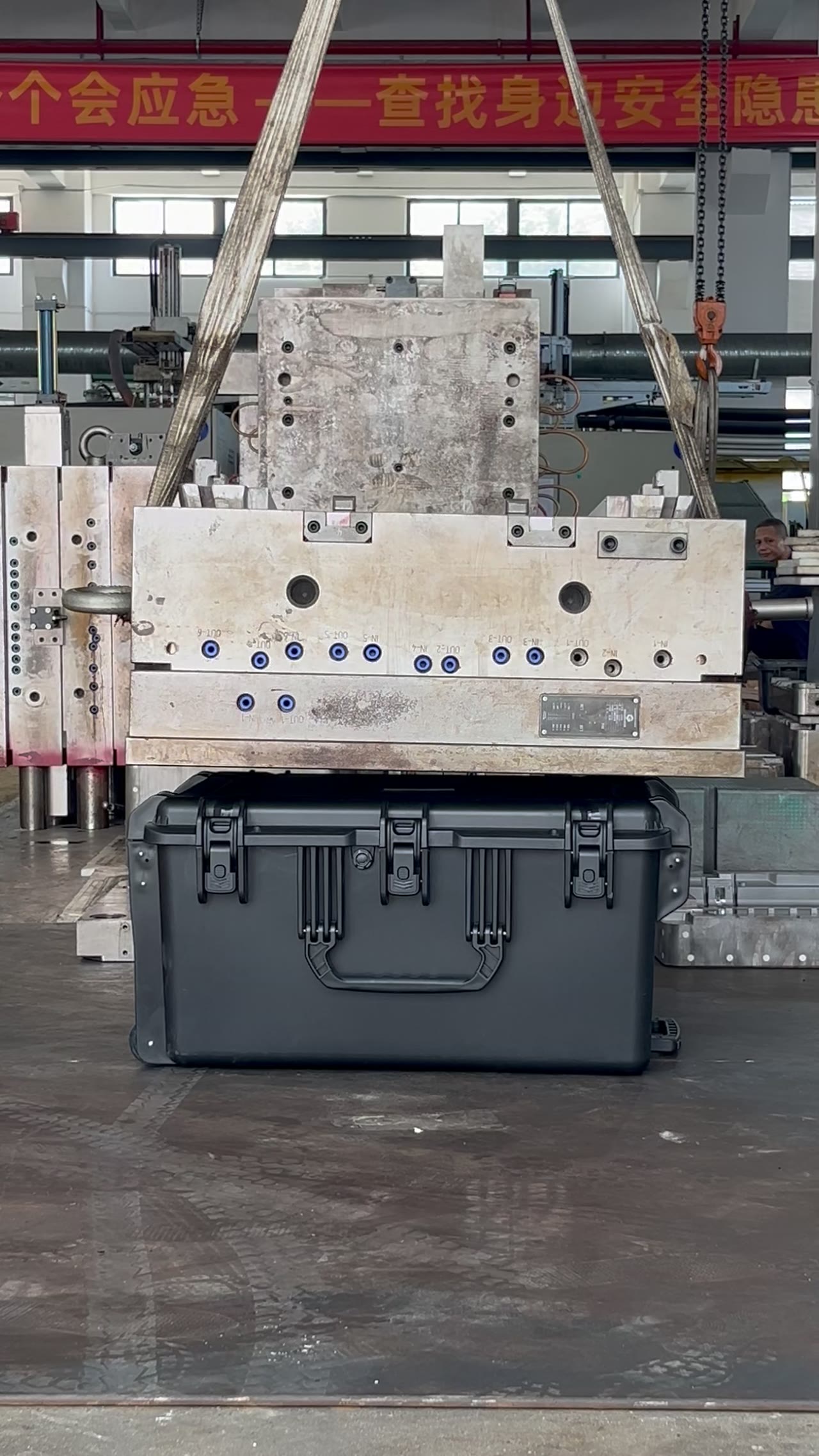
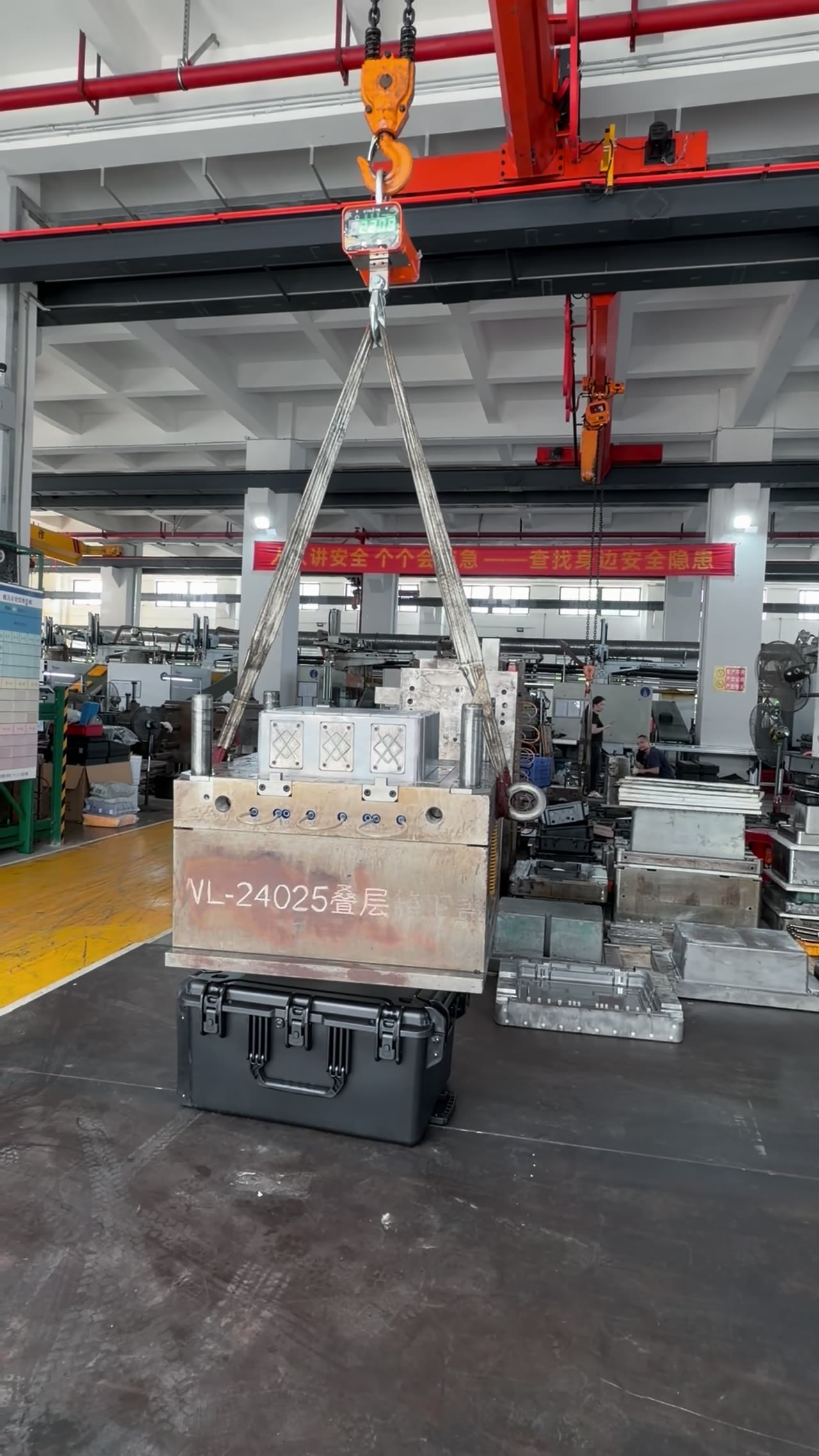
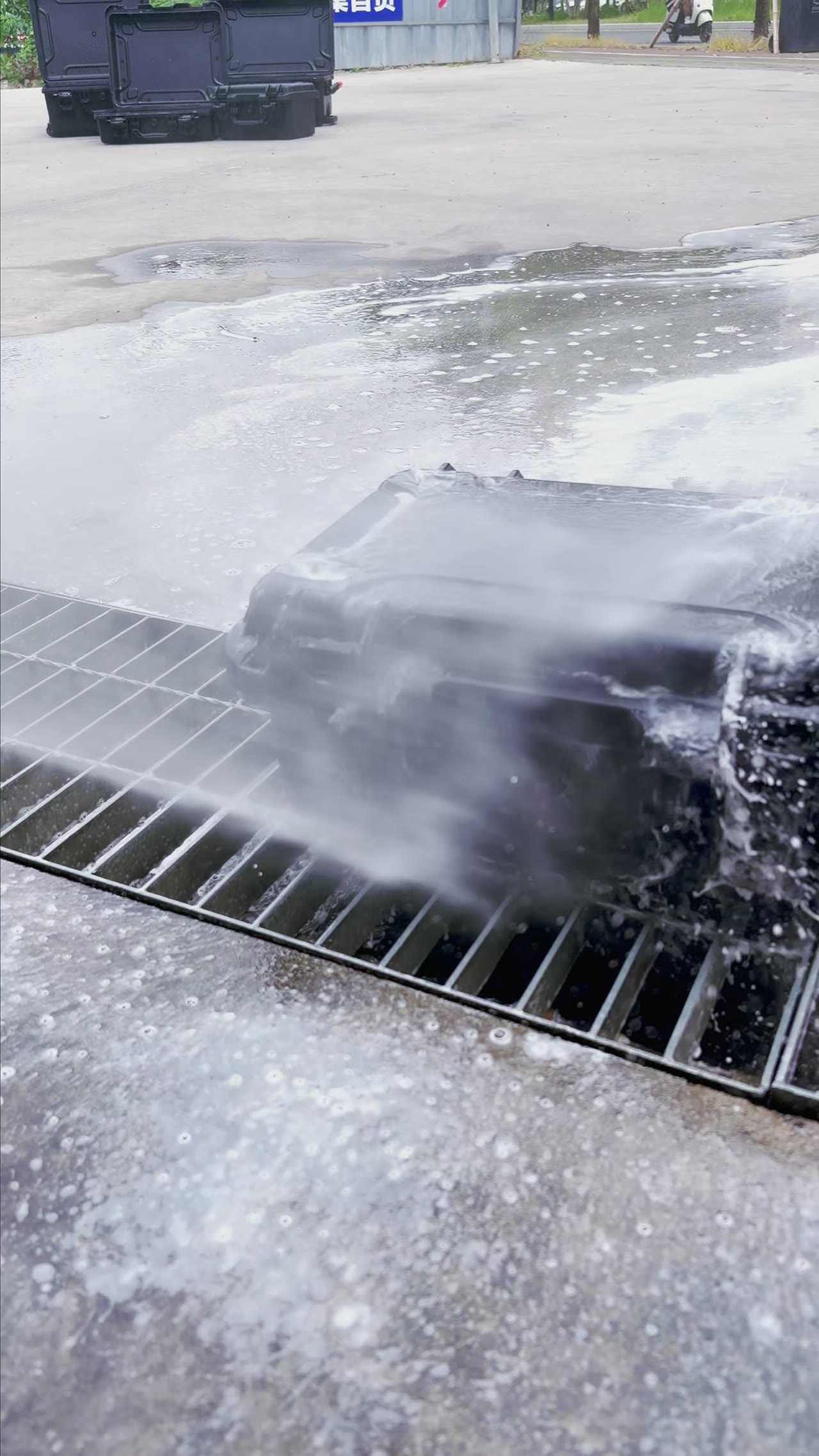
Can This Case Pass a Water Test?
Whether a case leaks is half hardware and half method. The glance you take when the lid opens is the weakest evidence available: water on a dark liner leaves almost no trace, and a few grams disappears under a cloth. The same case reads as a pass by eye, a seep by indicator paper, and a clear failure on a balance. The clip only shows the lid coming up. It does not show where the paper went, how much gain counts as a leak, or whether water trapped in a wall cavity is scored at all. This page deals with the judging side alone.
01Visual False Negatives: 5 to 20 Percent Missed
Moisture leaves almost no mark on dark liner, black foam or webbing seams. In practice the visual miss rate runs 5 to 20 percent: the amount that actually got in is already measured in grams, yet the eye calls the interior dry. This is not carelessness. Human contrast resolution for a damp patch is poor, and it gets worse under warm site lighting with the case throwing its own shadow.
Water also travels. What you see at the moment of opening is where the water stopped, not where it entered. It seeps in on one side, runs along a lid rib to a far corner, and the entry point looks dry while the corner shows a small damp patch, so the cause gets attributed to the wrong end of the case. Eyes answer whether, never where, and that gap is exactly why the miss rate stays high.
02Five to Twenty Sheets: Placement Beats Count
Indicator paper converts doubt into a yes or no. Lay 5 to 20 sheets on the liner before the test: one in each corner, one at the midpoint of each long side, one inside the latch line, one on the hinge side, plus two on the base. Whichever sheet changes colour marks the zone that took water, and the depth of the change hints at how much. Under 5 sheets leaves gaps in coverage; past 20 the paper starts soaking up water that would otherwise travel, creating dry spots that are artefacts.
Two rules matter. Keep the sheets clear of the gasket by a small margin, or they wick the water straight off the seam and hide the real path. Fix them in place so they cannot slide when the case is carried or tipped, because a shifted sheet reports nothing useful. Paper is reliable about presence and silent about quantity, and quantity is where the balance takes over.
03A 0.1 g Balance and a 0.5 to 5 g Threshold
Weighing is simple: weigh the whole case before and after, and the difference is what got in. A 0.1 g balance is the floor, since anything coarser lets droplets clinging to the shell outweigh the real leak. Set the threshold band at 0.5 g to 5 g. Half a gram sits at the noise level and triggers a reweigh; five grams is an obvious leak; anything between gets measured twice to rule out surface water and drift.
Dry the outside first, and spend the effort on latch seats, hinges and the lid step, because one pooled spot there is worth several grams. Let the case stand a moment afterwards so the remaining film partly evaporates, then record once two readings agree. The strength of weighing is that it produces a number. The weakness is that the number includes every source of water, including the part you failed to dry.
04Cavity Retention of 0 to 10 mL Still Counts
Lids and bases are usually double-walled, with ribs creating cavities between the skins. Water that passes the seam can sit in one, invisible when the case is open and often unwilling to pour out when it is tipped. Measured retention runs 0 to 10 mL, small in absolute terms, but it seeps back out on the next trip or sits as vapour that keeps the liner damp and ruins the foam.
Tip the open case onto each of four sides in turn and watch the seams for a trickle, then press the lid panel and listen for water shifting inside the wall. On a case with immersion history this is the easiest thing to overlook, so give it its own line on the inspection sheet rather than folding it into a general note that the interior looked dry.
05Rest 30 to 120 s, Then Spend 120 to 300 s on 6 to 10 Points
Let the case rest 30 s to 120 s before the lid comes up. Beaded water runs down, and water already at the seam keeps moving inward. Open it immediately and you are reading a process still in progress, so a case that is actively seeping gets signed off as dry. Waiting much longer than 120 s introduces the opposite error, because the seam begins to evaporate and a real leak reads light.
Work through 6 to 10 points in a fixed order: four corners, both long-side midpoints, inside each latch, the hinge side, the base, the wall cavities. Budget 120 s to 300 s for the walk so the inspection is actually detailed. Skipping a point buys one more false negative, and a fixed order is what makes two inspections comparable. The footage documents the run; acceptance lives on the formal sheet, and nothing on screen stands as a protection claim.
| Indicator sheets per case | 5–20 sheets |
|---|---|
| Weight gain threshold | 0.5–5 g |
| Balance resolution | 0.1 g |
| Inspection points | 6–10 points |
| Inspection time | 120–300 s |
| Water held in cavities | 0–10 mL |
| Visual false negative rate | 5%–20% |
| Rest before opening | 30–120 s |
FAQ
It looked dry inside, so why fail it?
Because the eye runs out of resolution. A few grams on dark liner is one faintly darker patch, and three seconds after the lid lifts the difference is gone; field studies put the visual miss rate at 5 to 20 percent. Put it on a balance instead. Half a gram triggers a reweigh, five grams fails it outright.
Can I use paper or weighing, not both?
They answer different questions. Paper says which zone took water, on the spot; weighing says how much in total, a figure you can recompute and compare. Paper alone misses leaks around 2 g and under, weighing alone gives the size but not the address. Run both and you get a number with a location.
Does water in the wall cavity count as a leak?
Yes. Retention typically runs 0 to 10 mL, hidden at inspection but seeping out later or sitting as vapour that soaks the liner. Tip the case onto four sides, pause on each, then press the lid and listen. Give cavities a separate line so they are not waved through with a general note about the interior.
Why wait before opening the lid?
So beads run off the walls and water already at the seam can finish travelling. Thirty to 120 s gives a settled reading. Open at once and the water is still in transit, so an active leak looks dry. Wait past 120 s and evaporation starts, which is just as misleading in the other direction.