

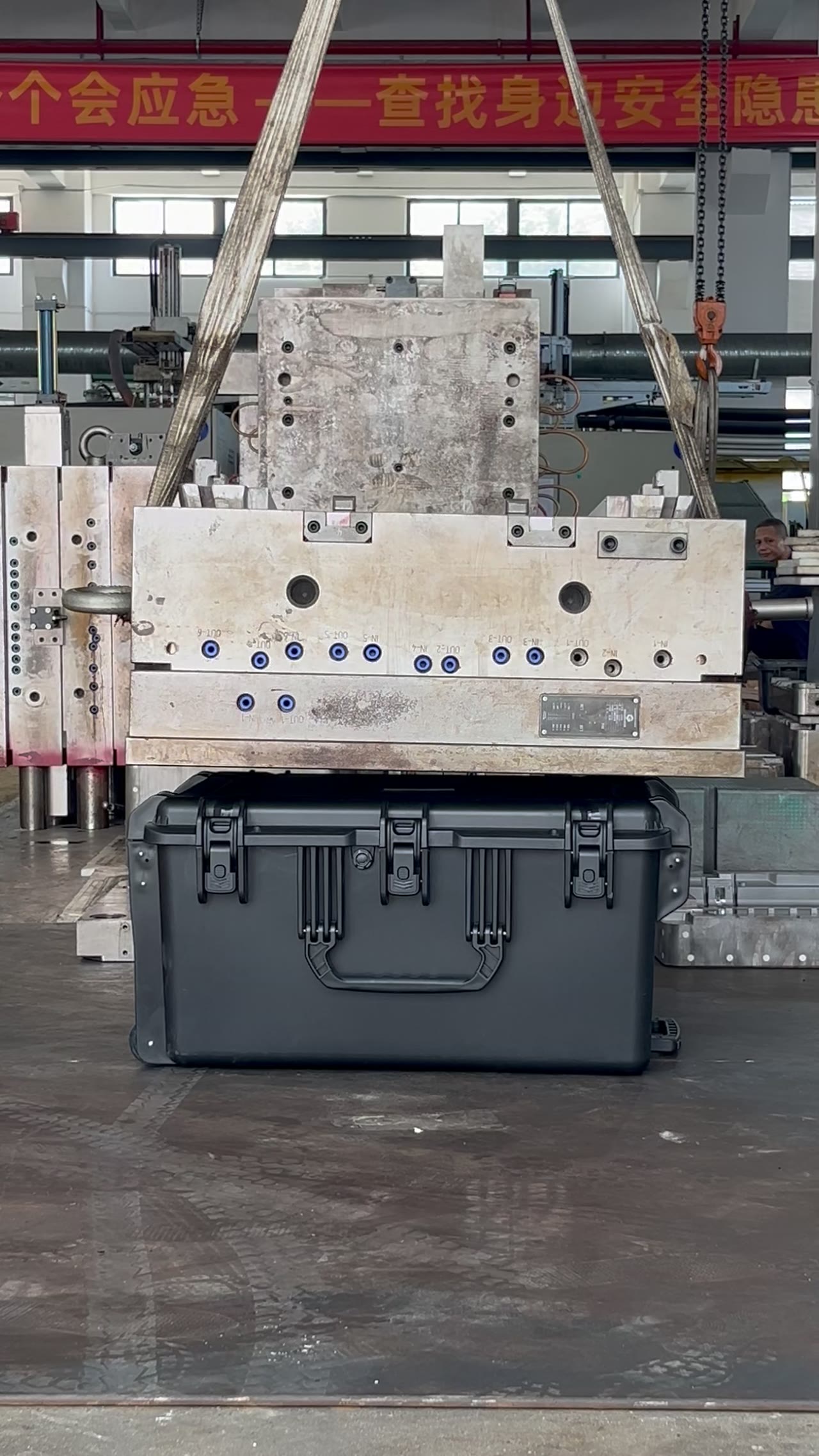
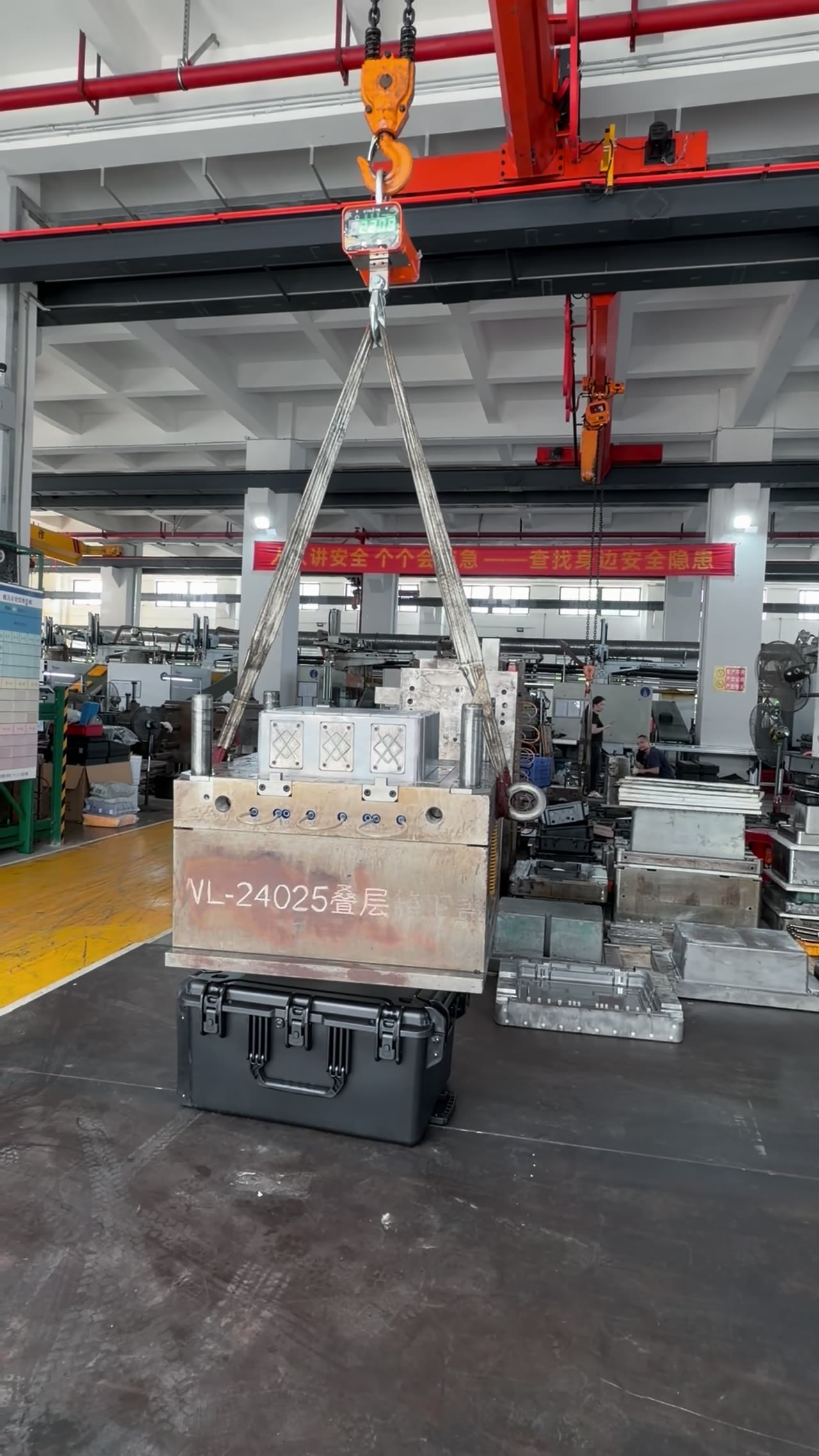
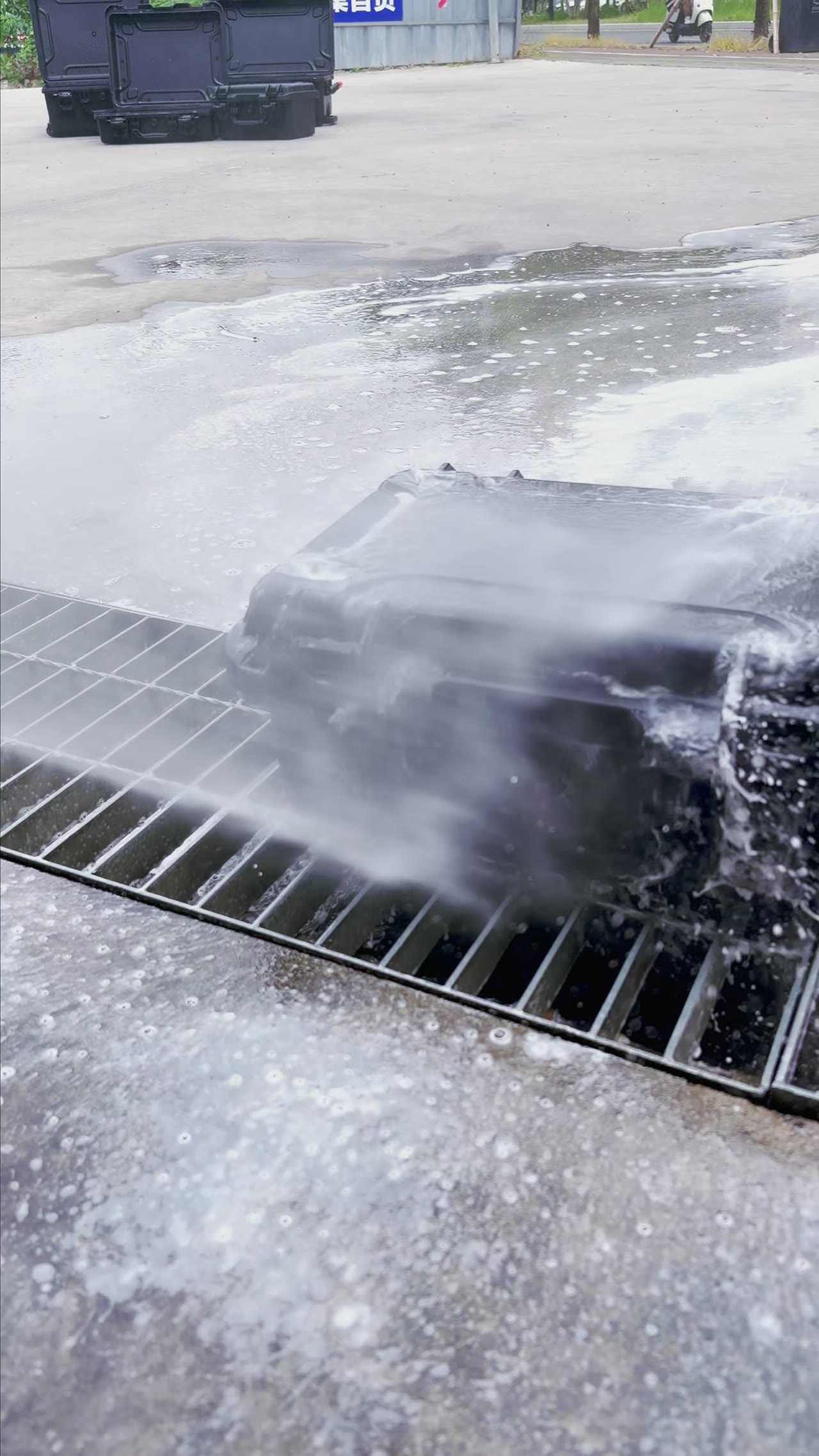
Drag Test: Case Against the Ground
Five metres and a hundred metres feel much the same at the handle. What the floor takes away is a different story. Drag resistance runs 60–400 N, the friction coefficient moves between 0.25 and 0.7 depending on surface, and the work those forces do has only two destinations: the ribs under the case, and heat at the contact patch. Wear over a single pull lands somewhere between 0.2 and 2.5 mm. This page follows that accounting: how much is gone, how much margin is left, and when lifting one end beats pulling.
01Resistance Is a Range, Because Friction Is
The same case drags differently on tile and on gritty asphalt. Measured friction coefficients fall between 0.25 and 0.7, with smooth tile near the bottom and coarse concrete or gravel near the top. Multiply that by weight and the pull needed lands anywhere in a 60–400 N band, which is why a resistance figure quoted without the surface behind it means very little to anyone trying to repeat it.
The coefficient shifts during the pull as well. Grit rolls first, then embeds; a water film replaces dry friction with boundary lubrication and resistance drops, until the ribs cut through and it climbs again. On wet gravel the case is being abraded rather than slid. Record floor type and cleanliness alongside the force, or the test cannot be repeated by the next person.
02The Work Lands on the Ribs, Not the Base
The underside is not a flat plate. It carries ribs 2–8 mm tall, and only the tops of those ribs meet the ground, so the entire friction work concentrates on a few narrow strips while the base panel stays clear of the floor. The intent is straightforward: make the sacrificial part stand proud, so the ribs wear and the panel survives.
Rib height is also the wear allowance, capped at 2–8 mm. Once the rib tops sit level with the base, the allowance is gone and the next thing abraded is the shell itself, which does not grow back. Turn the case over and bridge a straightedge across the ribs: whatever still stands proud is the margin left. Near zero means stop dragging it.
03Five Metres Against a Hundred: 0.2–2.5 mm
One pull covers anywhere from 5 m to 100 m, and wear lands between 0.2 and 2.5 mm. The band is wide because wear is not linear. The first few metres cut moulding flash and high spots and lose material fast; after that the contact flattens and the loss per metre falls away. Short repeated pulls therefore cost more than one long one.
Budget from the worst case. A case dragged 100 m a day, with ribs sitting at the low end of the 2–8 mm range, reaches the panel within a couple of months of site work. Nothing here is budgeted on an average. The arithmetic does not need precision, it needs direction: measure rib height, estimate daily distance, then divide.
04Lifting One End: 100–300 mm Changes the Contact
Lift one end 100–300 mm and pull, and the friction coefficient has not changed but the contact has: a face sliding becomes an edge sliding, the real contact area shrinks, and resistance follows it down. The cost is that weight moves onto two corners, which wear faster, and the centre of gravity shifts forward, so steering the case gets harder.
The split is easy to place. In the lower part of the 60–400 N range, on a clean floor with a light case, flat dragging is fine. Higher up, lifting one end pays for itself. Keep the lift under 300 mm: past that the case tips forward, the hand spends more effort on direction, and the friction saved is handed straight back.
05A 2–10 ℃ Rise as a Field Gauge for Wear Rate
At drag speeds of 0.3–1.2 m/s the contact patch warms by 2–10 ℃. That is small in absolute terms and still useful, because temperature rise and friction power are two views of one quantity: the pulls that heat the ribs most are the pulls that wear them most. Feel the rib tops after a run and the resistance shows up in your hand.
Close the loop with three entries per pull: distance covered, rib height remaining against the 2–8 mm original, and whether the rib tops are hot to the touch. Two of the three moving the wrong way at once is the signal to change method or retire the case. Footage shows the drag; the wear verdict comes off this sheet, not off the screen.
| Drag resistance | 60–400 N |
|---|---|
| Friction coefficient | 0.25–0.7 |
| Single drag distance | 5–100 m |
| Base wear | 0.2–2.5 mm |
| Drag speed | 0.3–1.2 m/s |
| Rib height | 2–8 mm |
| Lifted end height | 100–300 mm |
| Friction temperature rise | 2–10 ℃ |
FAQ
Why is drag resistance quoted as such a wide range?
Because the floor is part of the number. Friction coefficient runs 0.25–0.7, low on smooth tile and high on coarse concrete or gravel, and weight multiplies it. A resistance figure without the surface behind it cannot be reproduced, so the surface belongs in the record.
The ribs are worn flat. Is the case still usable?
The allowance is spent once the rib tops sit level with the base, and the shell itself becomes the wear surface. Bridge a straightedge across the ribs and look at what still stands proud. Near zero means stop dragging and start lifting.
How different are 5 m and 100 m pulls?
The force is similar, the material lost is not. A single pull of 5–100 m corresponds to 0.2–2.5 mm of wear, and the first few metres cut fastest before steady wear sets in. Daily short pulls cost more than one long one.
Does lifting one end really help?
In the upper part of the resistance range, yes. A 100–300 mm lift turns a face contact into an edge contact, shrinks the real area and drops the pull. The trade is faster wear on two corners, and past 300 mm the case tips forward and steering gets harder.