

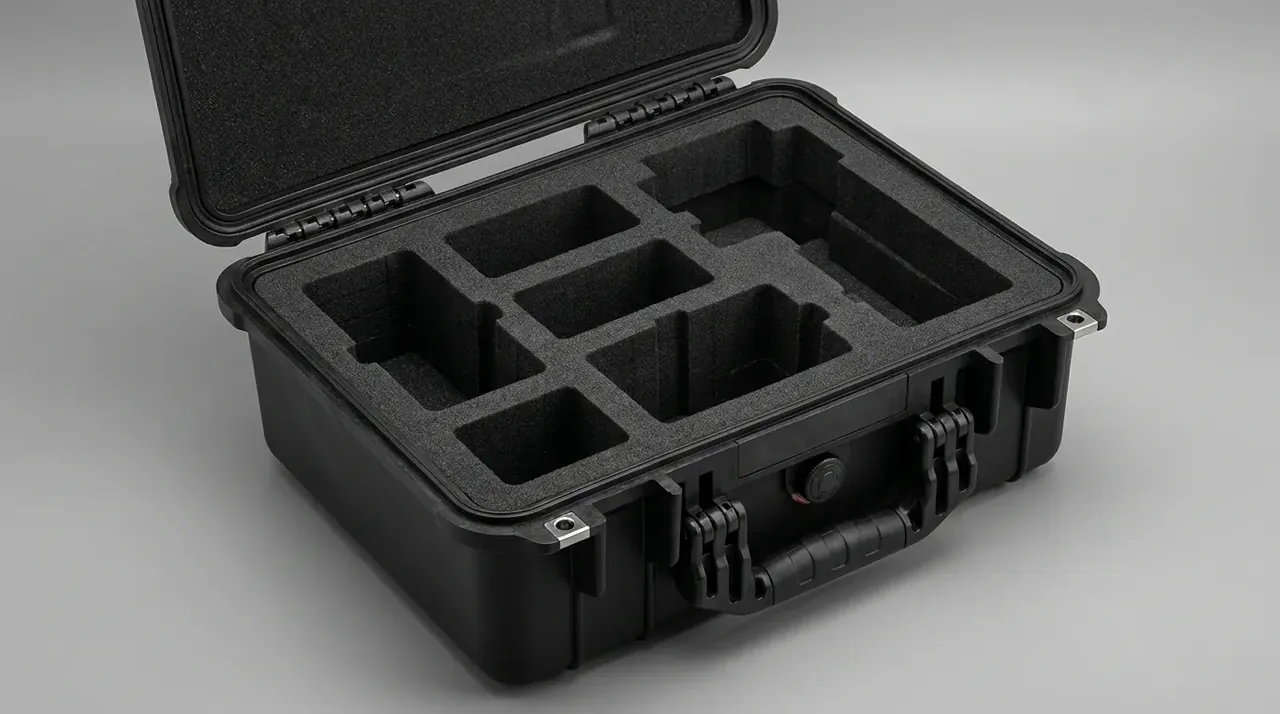
Quick answer: adr packaging status rests on one line of code: six UN segments plus the drop, stack and leakage tests behind the X, Y or Z class.
Table of contents
- One Line of Code Decides the Status
- Reading UN 4G/Y25/S/26/CN/1234
- X, Y and Z: Three Drop Heights
- Four Tests, Two of Them Optional
- Marking, Report, Quality Record
- FAQ
1. One Line of Code Decides the Status
A moulded case can hold 40 kg and survive a fall down a stairwell, and still be a plain tote on paper. What separates the two is a line of characters moulded into the wall. ADR 4.1.1.1 is blunt about it: packaging for dangerous goods must meet a defined performance level and carry the matching mark on every finished unit.
The mark is not decoration. It is the case's identity.
| Segment | Meaning | Example | Typical error |
|---|---|---|---|
| 1 | UN packaging symbol | UN | printed as EU, or as a bare square |
| 2 | Box code | 4G | 4H2 and 4G swapped |
| 3 | Packing group letter | Y | Z moulded, group II declared |
| 4 | Maximum gross mass | 25 | pounds written instead of kilograms |
| 5 | Contents form | S | liquids marked S |
| 6 | Year, country, maker | 26/CN/1234 | year one off the batch record |
Segment 3 is the one that gets edited. Move the letter and nothing physical changes, yet the declared group slides from II to III and the drop height falls from 1.2 m to 0.8 m. The test report still reads the same. The case no longer does.
2. Reading UN 4G/Y25/S/26/CN/1234
The order never varies. A moulded case maps to 4H1 or 4H2, with 4H2 adding a sift-proof requirement; the 4G on the sample belongs to fibreboard, and the sequence reads the same.
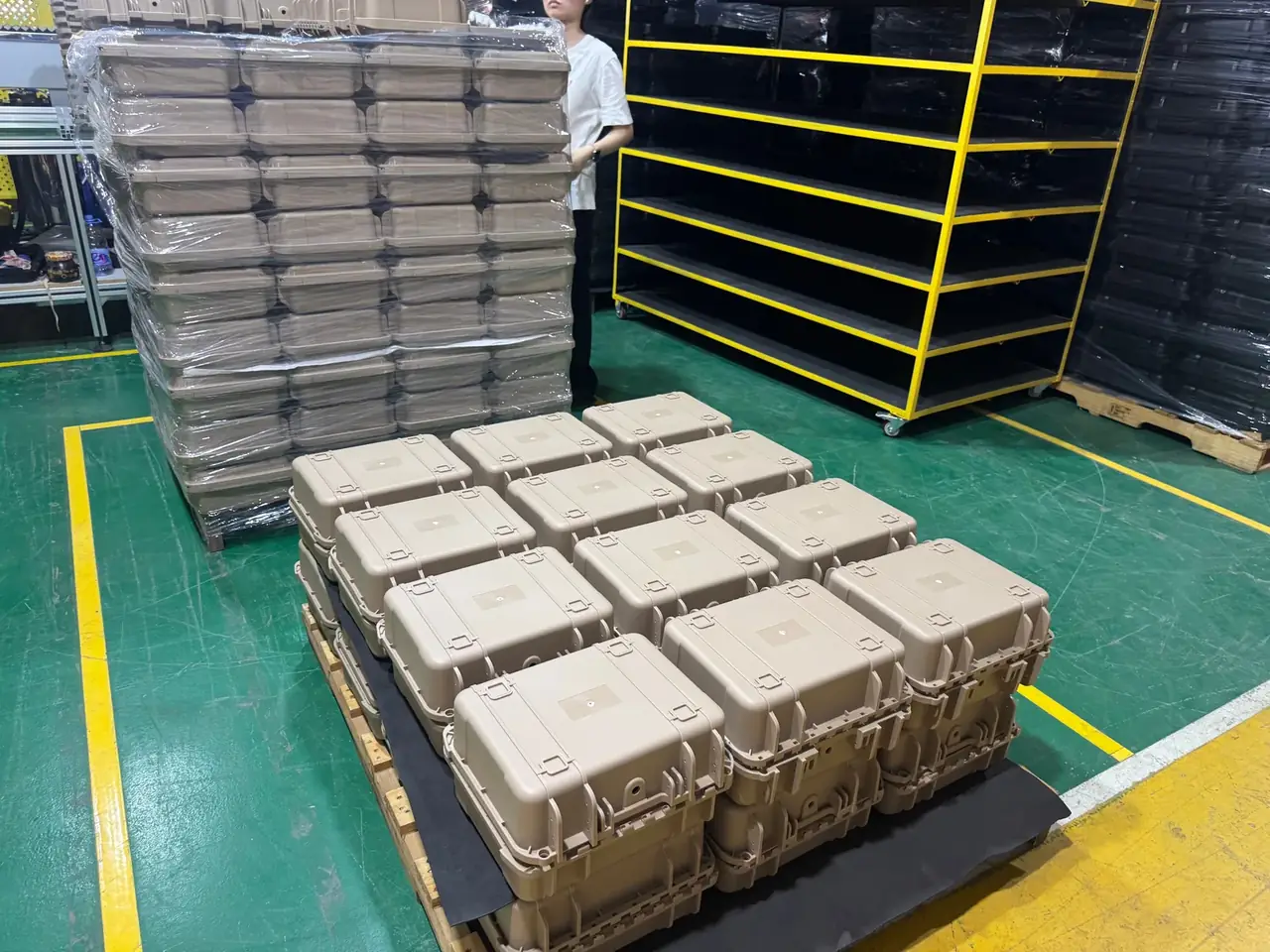
Segment 4 carries gross mass in kilograms, meaning case plus insert plus contents, not the empty shell. Gross mass fixes the drop height, and it also fixes how many tiers a stack can hold.
Segment 5 describes what may go inside. S suits solids or inner packagings; a case for liquids changes that letter. Get it wrong and the whole line is void, because the letter states the form the shell is approved to hold.
Segment 6 packs three facts: two digits of year, two letters of country, then the maker's number. This is what an inspector checks against the batch file. A year written one digit back turns an entire shipment into expired stock.
Character height runs 12 mm minimum on every finished unit, not on a carton label. Each case travels alone.
3. X, Y and Z: Three Drop Heights
The packing group comes from the shipper. The case maker does not decide it, only builds to the group it is given. On the mark the group appears as X, Y or Z; on the test floor as three drop heights.
| Group | Letter | Drop height | Stack |
|---|---|---|---|
| I | X | 1.8 m | 3 m for 24 h |
| II | Y | 1.2 m | 3 m for 24 h |
| III | Z | 0.8 m | 3 m for 24 h |
The gap between tiers is not only height. A 1.8 m fall lands about 1.22 times faster than 1.2 m and carries roughly 1.5 times the energy, so the wall moves from 3 mm to 4.5 mm, latches go from 2 to 4, and base ribs rise from 6 mm to 10 mm. At 0.8 m the wall may drop to 2.5 mm, but the stack requirement never relaxes.
All three stack at 3 m for 24 h. Stacking tests creep under sustained load rather than impact, which is why a case that passes the drop and fails the stack is rejected.
4. Four Tests, Two of Them Optional
Drop and stack apply to every case. Hydraulic and air tests apply only to packagings that hold liquid.
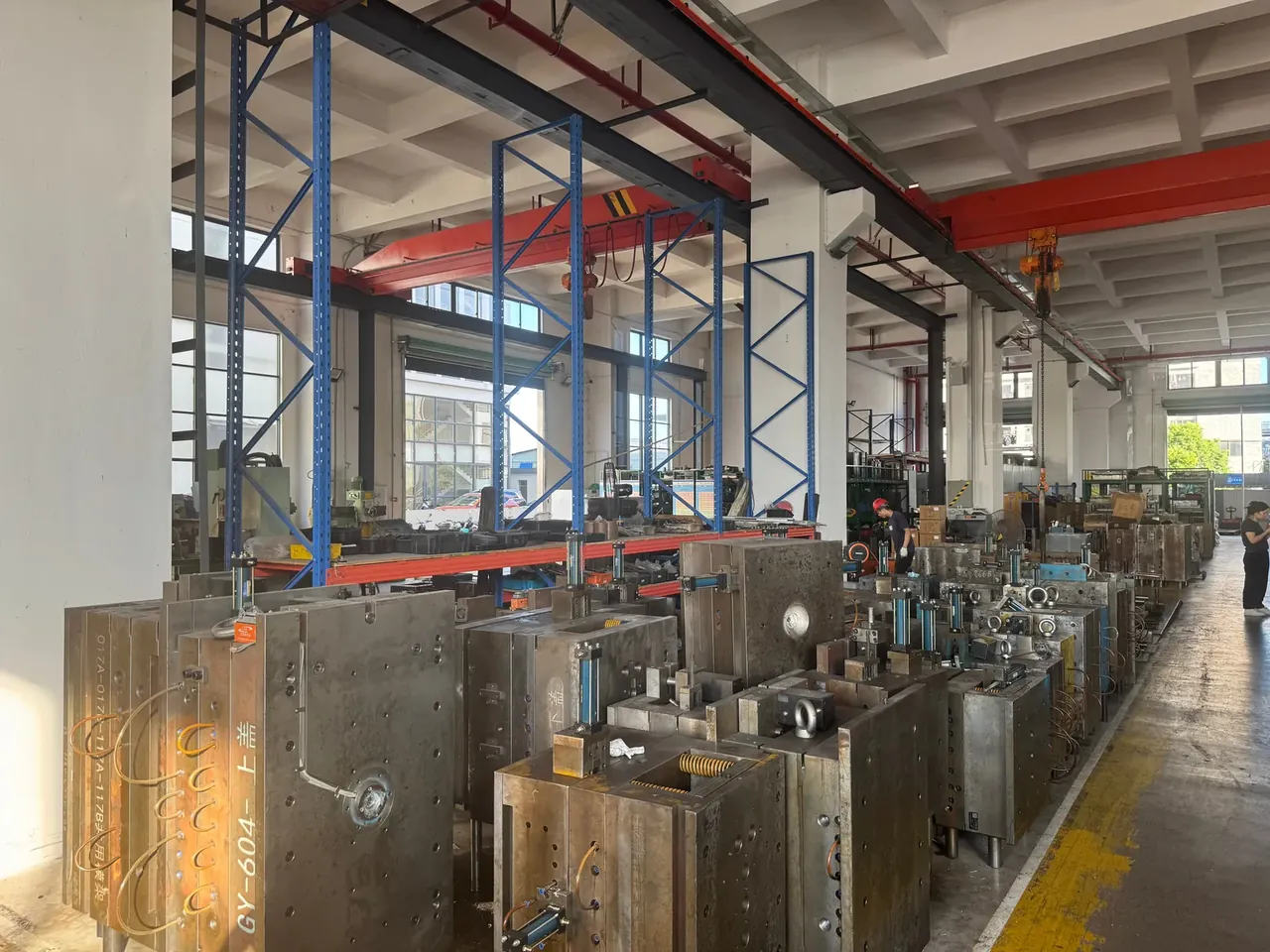
The drop runs face, edge, corner on one specimen; afterwards the case is opened and the insert checked for shift. The stack puts a 3 m equivalent load on the lid for 24 h and measures residual set.
| Test | Condition | Pass line | Who needs it |
|---|---|---|---|
| Drop | 1.8 / 1.2 / 0.8 m by group | no leakage, no spill | every case |
| Stack | 3 m for 24 h | no collapse, no permanent set | every case |
| Hydraulic | 100 kPa | no leakage | liquid packagings |
| Air | 30 kPa | no bubble release | liquid packagings |
For those two the work sits in the tool: no weld line through a wall, gate off load-bearing faces, base radius at 5 mm or more.
5. Marking, Report, Quality Record
A case offered as outer packaging hands over three items, and a missing one stops the inspection. First, the UN mark on the wall: six segments, 12 mm characters, every unit. Second, a performance report whose test items match the group and whose box code matches the hardware. Third, a production quality record listing batch, resin grade, tool number and date of marking.
The three have to line up in time. A report from 3 years ago, a tool that had its gate moved since, and a record that cannot bridge the two will send the shipment back for retesting.
The transport assessment and declaration are issued by a licensed body; the case carries the outer packaging and fixing duty only. Put that on the quotation and in the drawing notes, because it decides who reads which document after an incident.
Conclusion
Whether a case serves as outer packaging sits in six segments: UN, 4G or 4H2, Y, 25, S, 26/CN/1234. Change the group letter and the drop height follows at 1.8 m, 1.2 m or 0.8 m, while the 3 m / 24 h stack holds for all three. Line up mark, report and quality record, and the case earns the status rather than claiming it.
This article covers case-side specifications only and does not address any handling, loading or use of the contents.
Related Reading
- ADR and IMDG side by side
- General rules for dangerous goods packaging
- The overall UN certification route
- How airtight and leakage tests are run
- Preparing export customs documents
Related Products
- 8 Series — Gun Cases; Military Equipment Cases; Camera Equipment Cases; Drone Cases; Watch Cases; Knife Cases; First Aid Cases; Electronics Equipment Cases
- WL8-2812 PP Gun Case — model WL8-2812
- All protective cases and toolboxes: 7 series, 158 models