

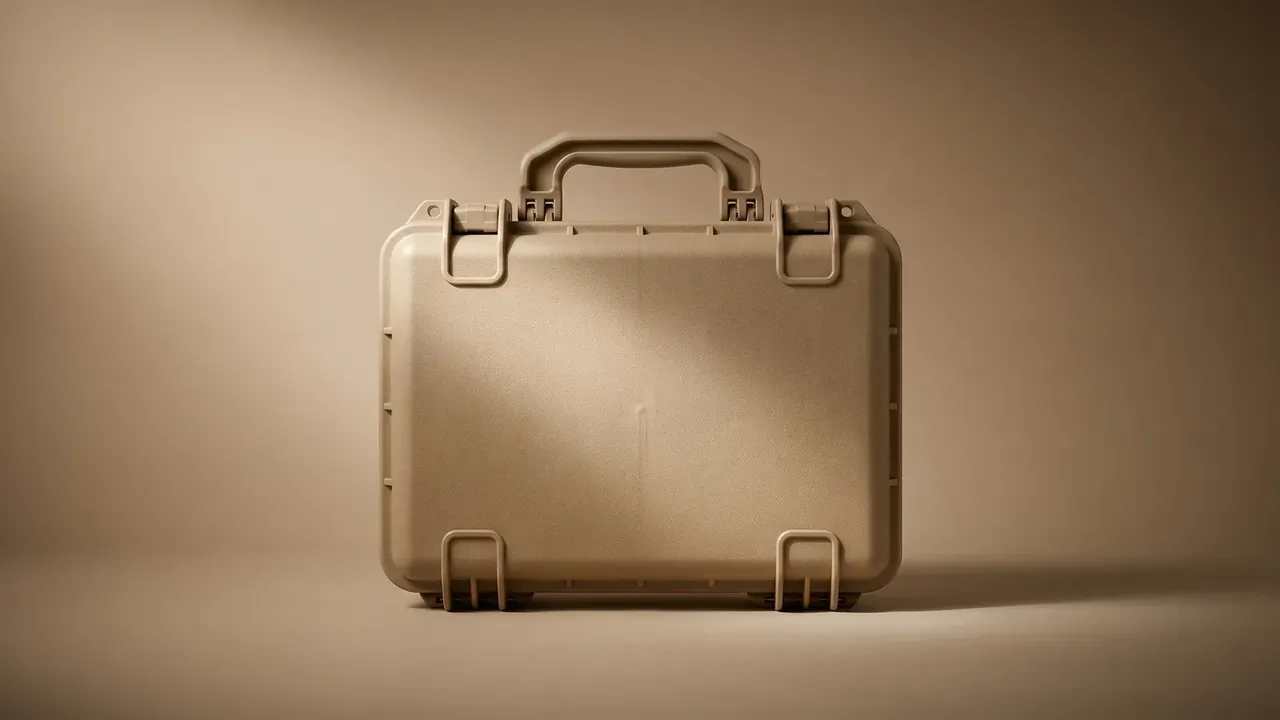
Quick answer: Seven in ten ammunition transit cases returned for repair have an intact body; the fault sits in the lid rim, where the gasket no longer compresses, the latch pin has loosened, or the pressure valve is blocked. Paint hides all three. A 90-day inspection, a 48-hour drying rule and three replacement lines take the same case from three years to six.
Table of contents
- What Fails First on an Ammunition Transit Case
- Four Checks on a 90-Day Cycle
- Cleaning and the 48-Hour Line
- Three Replacement Lines
- Four Habits That Double Service Life
- FAQ
1. What Fails First on an Ammunition Transit Case
Seven in ten cases returned for repair have a sound body; the fault is in the lid rim. A gasket that no longer compresses lets internal humidity catch up with the outside within half a day. A loosened latch pin drops the clamping force on the lid by a visible margin. A valve blocked with dust cannot equalise as temperature swings, so the gasket is pushed up and released again and again. None of the three shows from standing height, which is why repainting becomes the easy answer: paint covers the scuffs and the ageing pattern along with them. Three months later the same ammunition transit case is back, and the fault has spread from the gasket to the latch seat.
A cosmetic refresh and a functional repair are different jobs.
After two years, permanent set in the gasket is usually near thirty per cent: compression that started at 2.5 mm is down to 1.1 mm, and half an hour of rain leaves a water line inside.
2. Four Checks on a 90-Day Cycle
Ninety days is the visible step for gasket ageing in most stores: enough temperature cycling to expose an early crack, not enough to let it become a failure. The checks run from the moving part to the static one.
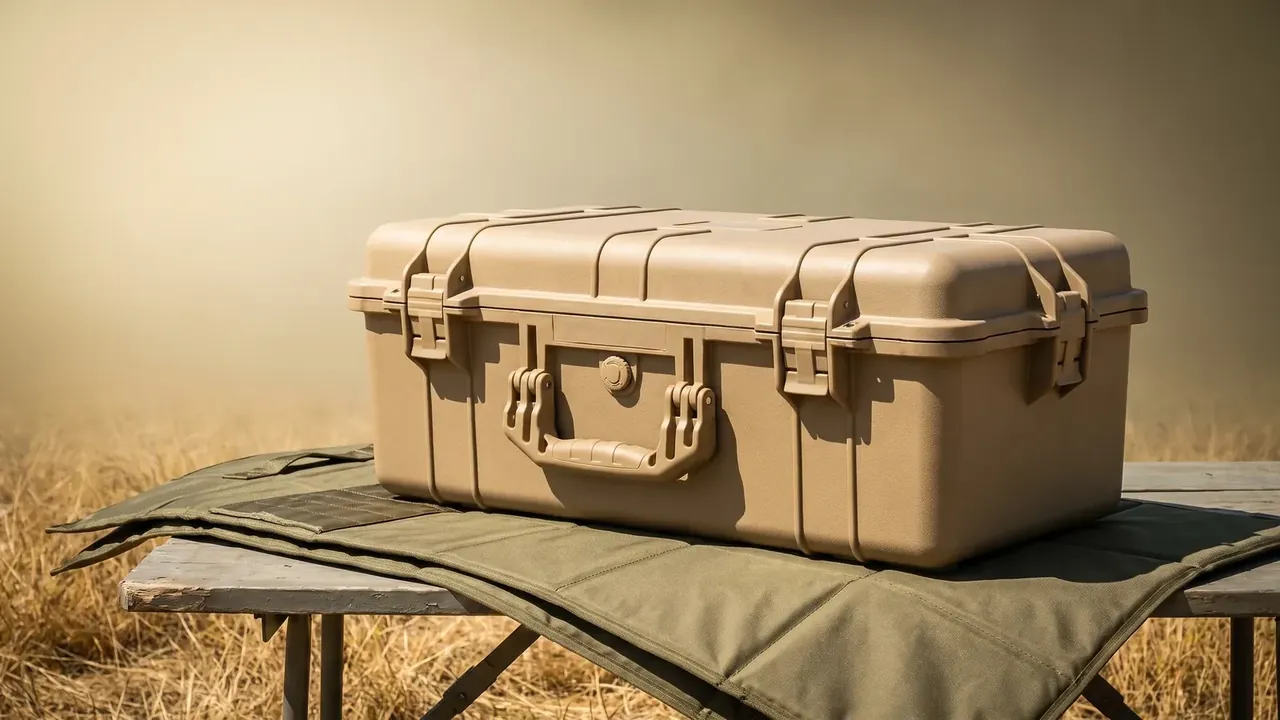
| Order | Check | How | Judge as faulty |
|---|---|---|---|
| 1 | latch feel | press with one hand, listen | two hands or a double click |
| 2 | lid gap | look for light along four sides | any gap over 1 mm |
| 3 | gasket rebound | press with a nail, release | slower than 1 second |
| 4 | valve breathing | press the valve core | stiff, or dust pushed out |
The second check is skipped most, because it means kneeling. Yet light is the only reading that reflects gasket and latch together; an even line on all four sides means the seal still works.
Record a conclusion for each of the four, not the word normal; a gasket note moving from springy to slow is the spare-part signal, a quarter before a leak appears.
3. Cleaning and the 48-Hour Line
Washing has two hard limits: pressure and drying time. Above 0.3 MPa aimed at the gasket root, the rubber lifts out of its channel, so the ammunition transit case looks clean and seals worse. Work top down, pushing grit out of the rim rather than into the channel.
Closing early leaves a shallow pool inside.
The 48 hours after washing are the drying window. Internal humidity must fall below 45 per cent before the lid is shut; in damp stores, add desiccant and leave the lid ajar. Sealed above that figure, moisture condenses and re-evaporates with every day-night swing, and a gasket root in condensate ages twice as fast.
4. Three Replacement Lines
Any one of the three means replace the part or withdraw the case. Repainting, patching and strapping keep a case that no longer seals on the road.
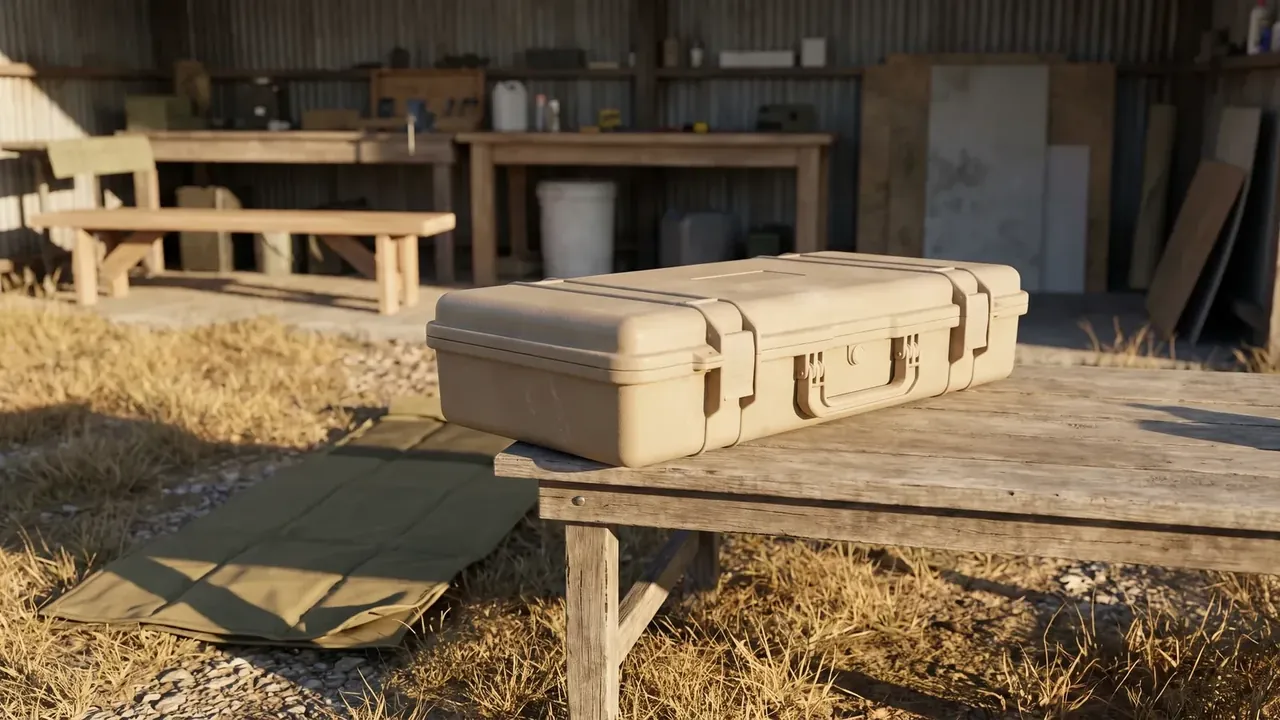
| Criterion | Measurement | Replacement line |
|---|---|---|
| permanent set in gasket | caliper on free thickness | over 30% |
| latch pin clearance | feeler gauge, pin to bore | over 0.8 mm |
| body crack | length along the crack | over 25 mm through a rib root |
A soft line sits alongside: three or more consecutive fine cracks put the gasket in the spares bin while set stays under 30 per cent, since the next cold handling can tear a whole section.
5. Four Habits That Double Service Life
- Wipe the gasket channel before every closure; grit is the direct abrasive.
- Leave the lid ajar, unlocked, in long-term store so the gasket is never held under load.
- Replace the gasket every two years rather than at failure; one costs about three per cent of the case.
- Keep the ammunition transit case out of sustained exposure above 60 °C, reached easily inside a vehicle in summer.
The third habit does most of the work. The gasket is the only part renewable on a schedule that brings sealing back to as-new; every other aged component means scrapping the case. A two-year cycle instead of three lifts case life from three years to six, for the price of one extra gasket.
The least useful habit is repainting: paint stops no ultraviolet light and restores no compression.
Conclusion
Maintenance on an ammunition transit case is not about making it look clean; it is about keeping three unseen places in working order. The 90-day cycle supplies the timing, the 48-hour rule covers the stretch after washing, and the three lines say when to stop. Treat the gasket as a consumable and six years is easy — the hard part is resisting the paint.
This article discusses only the container (case body) side of specifications and design intent, and does not cover any handling, loading or use of the contents.
Related Reading
- Metal ammunition box maintenance
- Transit case configurations by scenario
- Storage case upkeep essentials
- Transit case problems and fixes
Related Products
- 8 Series — Gun Cases; Military Equipment Cases; Camera Equipment Cases; Drone Cases; Watch Cases; Knife Cases; First Aid Cases; Electronics Equipment Cases
- WL8-2812 PP Gun Case — model WL8-2812
- All protective cases and toolboxes: 7 series, 158 models