

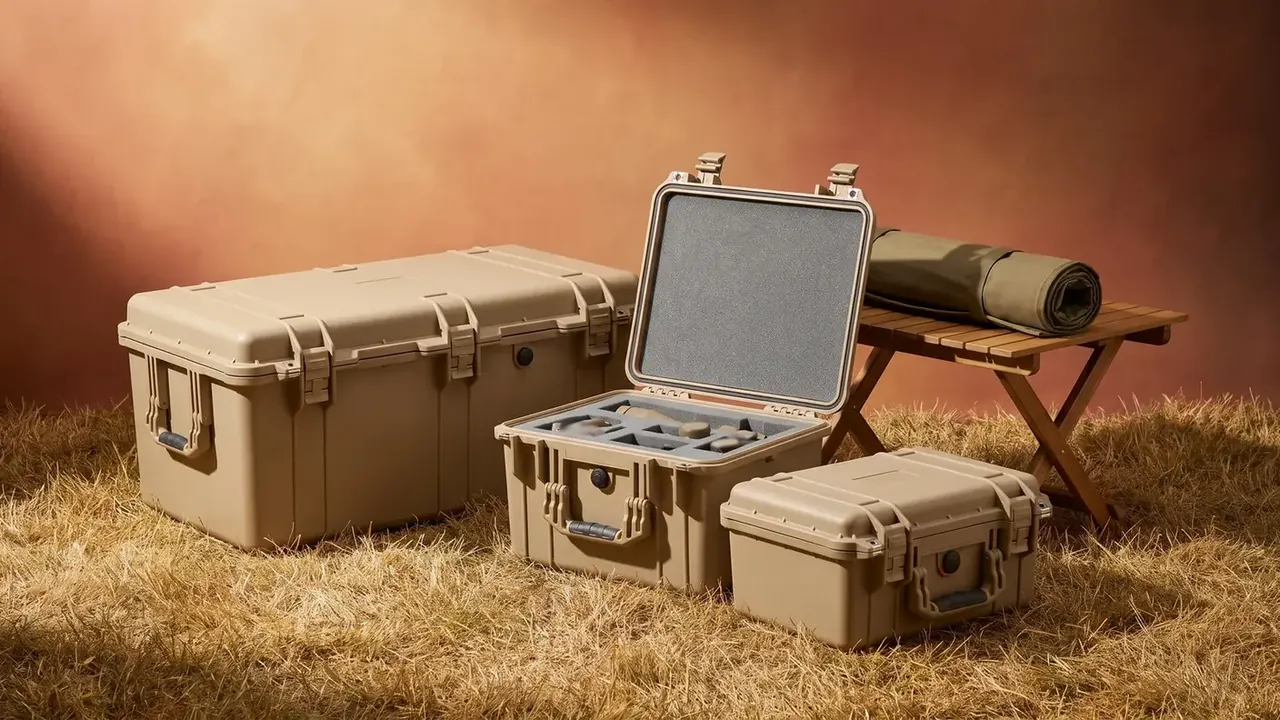
Quick answer: Most risk in buying an ammunition transit case sits in the wording rather than the price: standards named without clause numbers, mould ownership unwritten, lead time not tied to machine tonnage. What follows is a four-page request pack and four clauses you can paste into a contract.
Table of contents
- The RFQ pack behind an ammunition transit case quote
- MOQ and mould ownership in one clause
- Lead time follows mould sets and machine tonnage
- Payment terms and the condition behind the date
- Six omissions hidden in a low quote
- FAQ
1. The RFQ pack behind an ammunition transit case quote
Three quotes, thirty per cent apart, one drawing. That is how an ammunition transit case enquiry opens. It is the request pack: nobody wrote down what acceptance means, so each supplier prices the cheapest reading.
A usable pack runs to four pages: cavity dimensions with tolerances, wall thickness and resin, protection and test clauses, packing and marking. The first two drive cost, the last two decide acceptance.
| Test | Clause | Wording for the specification |
|---|---|---|
| Immersion | MIL-STD-810H method 512.6 | 1 m depth for 30 minutes, no water on inner walls after opening |
| Ingress | IEC 60529 | IP67, dust class 6 and temporary immersion class 7, third-party report required |
| Vibration | ASTM D4169 | Distribution cycle 13, 30 minutes random, latches stay engaged |
Citing clauses makes the quote dearer, but dear in a visible place. A pack that says only waterproof lets a supplier ship a case that sheds rain and seeps.
2. MOQ and mould ownership in one clause
The minimum order for an ammunition transit case is not negotiated from order size. It is amortised from the tool.
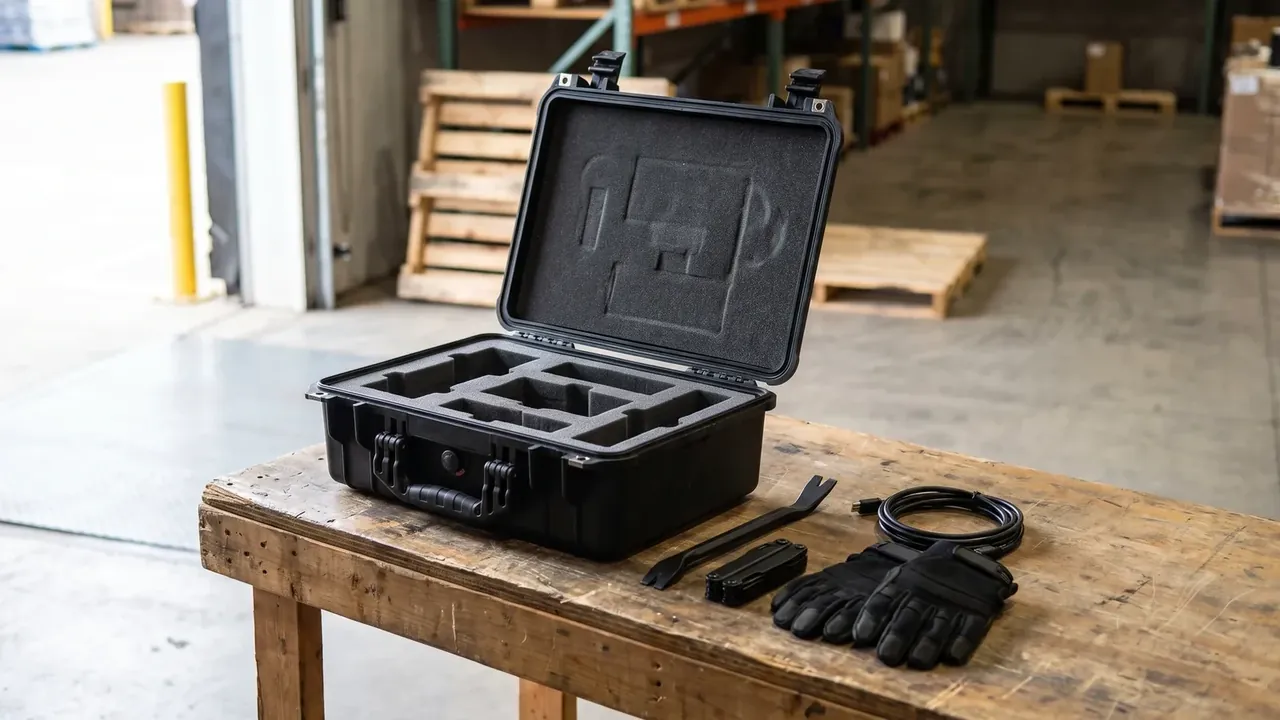
A body with a 1.2 m cavity needs a steel mould of about 3.8 tonnes, and one set often quotes in six figures. A minimum of three hundred pieces is really a request to pay that tool off within two years. Settle ownership before unit price, or year two brings a mould you cannot move.
| Item | Suggested wording | Without it |
|---|---|---|
| Title | Tooling paid by the buyer belongs to the buyer, supplier holds use rights only | No recovery, and a second tooling bill |
| Custody | After 12 months without an order, supplier confirms location and condition in writing | Tooling borrowed or stored outdoors |
| Transfer | Handover within 30 days of written notice, cost borne by the requesting party | Delivery dates become a bargaining chip |
A steel mould is rated near 200,000 shots, after which cavities drift.
3. Lead time follows mould sets and machine tonnage
Suppliers quote a round number, forty-five days, for instance. Whether it holds depends on two things they rarely mention.
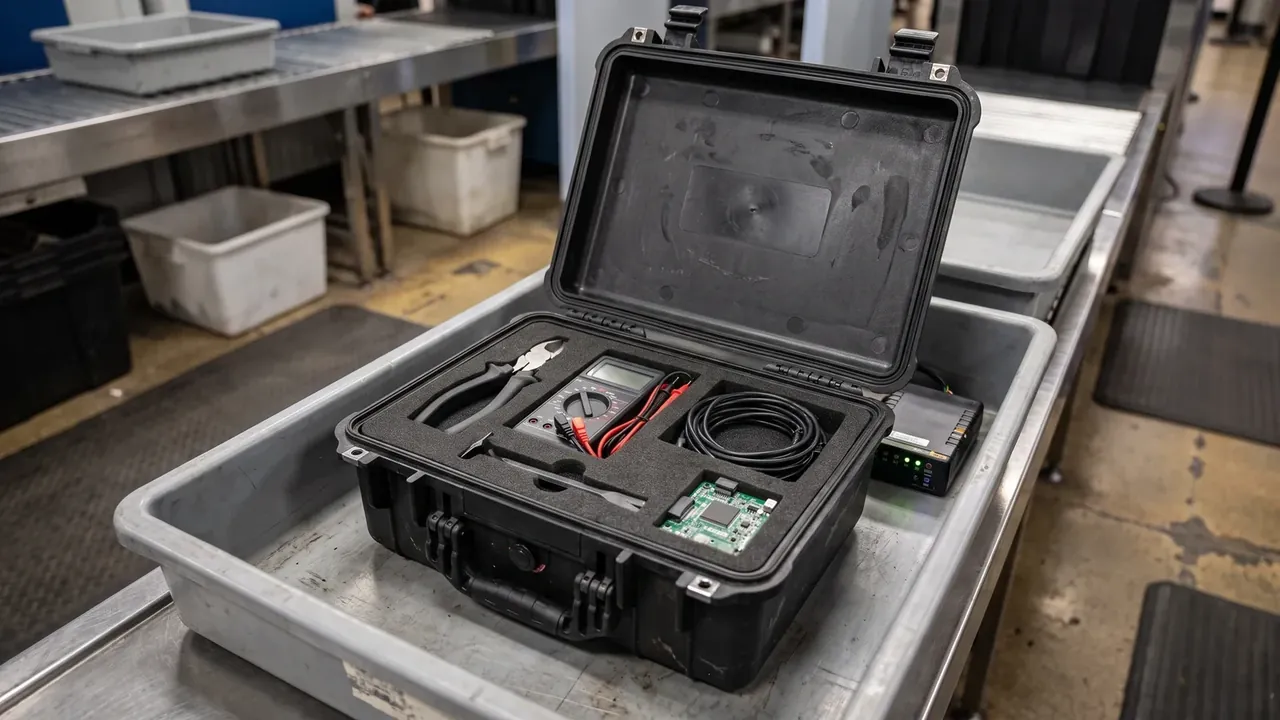
A case weighing 9.5 kg needs an 800-tonne press or a large rotomoulding arm, and those machines are the seasonal bottleneck. Running 26 days a month on two shifts, a four-cavity tool yields about 320 bodies a shift, near sixteen thousand a month. At five thousand pieces one tool set is enough, so the constraint moves back to toolmaking.
Four stages make a lead time usable: toolmaking 25 days, trials 12 days, production slot 18 days, testing and packing 5 days. Only the first and third sit inside the supplier's control. The second depends on how fast your correction notes arrive, the fourth on laboratory queues. So the contract should carry stage dates instead of one total, and define how long the buyer has to approve samples: five working days after dispatch, then approval is deemed given. That line removes most of the friction. Delay grows while neither side moves first.
4. Payment terms and the condition behind the date
Payment terms are not a favour. They are a price for risk.
Thirty per cent on order, sixty against a bill of lading copy, ten after acceptance, is the common shape. An ammunition transit case is made to order, so suppliers rarely accept open credit. Holding back ten per cent as an acceptance payment is easier to win than sixty-day terms, and it binds the first article to the batch.
If credit is essential, split it into a date and a condition. The condition is a passing third-party report plus a sample opened without seepage; the date is thirty days after that report. A date with no condition means nothing. A five per cent retention held twelve months covers gasket ageing and latch slack.
5. Six omissions hidden in a low quote
Low opening prices follow a pattern. Read for what is missing:
- Body only, foam priced per cubic decimetre and often costing more than the case;
- Full-container rates only, so five hundred pieces absorb a container of freight;
- Tooling to be agreed, the figure arriving after the deposit;
- Testing excludes third-party reports, leaving in-house data;
- Packing as cartons, when a 9.5 kg body needs a billed timber crate;
- Lead time counted from receipt of deposit, with no deadline for confirming arrival.
A quote is read best for what it omits.
Conclusion
Write the request pack as an acceptance document with clause numbers, fix tooling ownership, staged dates and payment conditions, and the price finds its level. A contract that reads clearly beats three points shaved off an ammunition transit case.
This article discusses only the container (case body) side of specifications and design intent, and does not cover any handling, loading or use of the contents.
Related Reading
- Configuring a case for store transfers and forward delivery
- Common problems and how they are solved
- Reading case structure and ingress rating
- How to use a supplier scorecard
Related Products
- 8 Series — Gun Cases; Military Equipment Cases; Camera Equipment Cases; Drone Cases; Watch Cases; Knife Cases; First Aid Cases; Electronics Equipment Cases
- WL8-2812 PP Gun Case — model WL8-2812
- All protective cases and toolboxes: 7 series, 158 models